

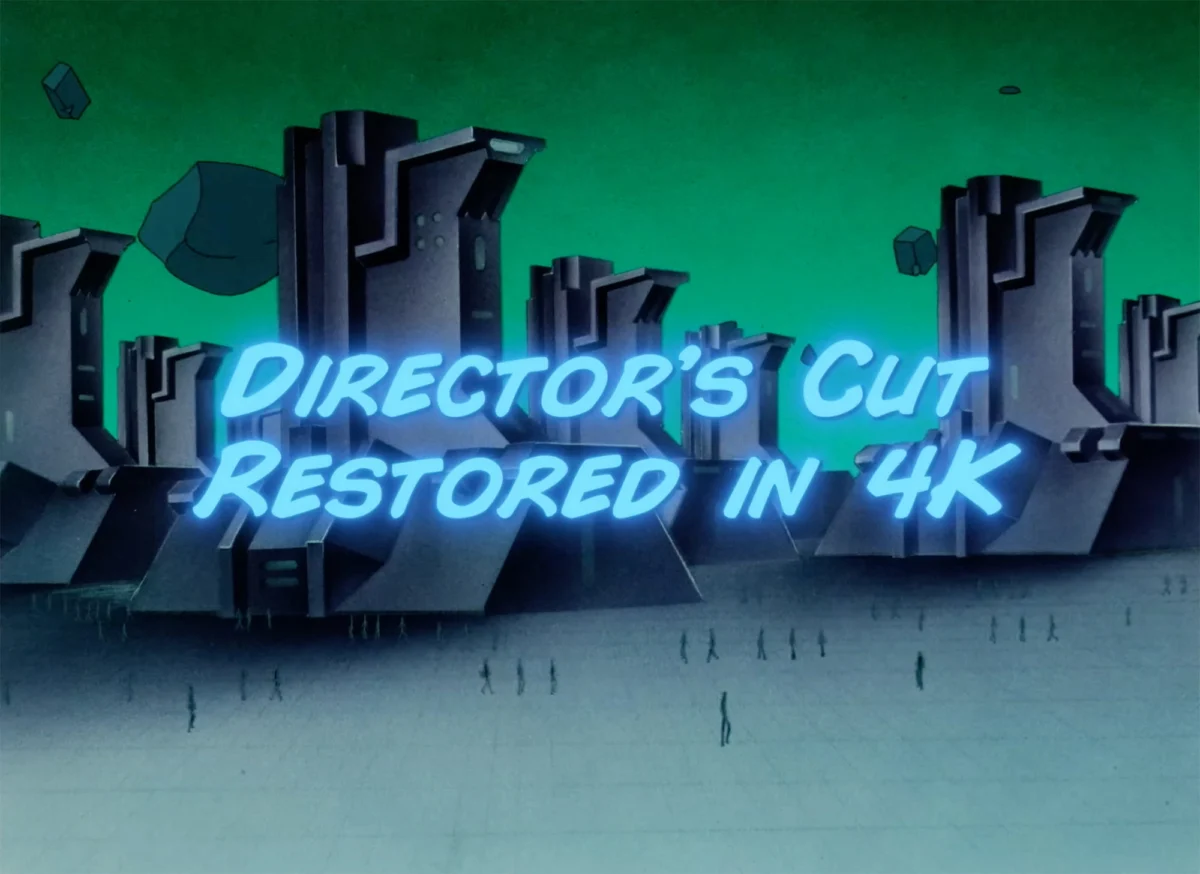
Janus Films has officially unveiled a new trailer for the highly anticipated 4K restoration of Gandahar, the visionary 1987 animated science fiction classic from French auteur René Laloux. This monumental re-release, set to captivate audiences starting August 28th, 2026, marks a significant moment for cinephiles and animation enthusiasts, presenting the original, uncut French version of Laloux’s final masterpiece. This initiative follows Janus Films’ successful 4K restoration of Laloux’s earlier work, The Time Masters, further cementing their commitment to preserving and reintroducing seminal animated cinema to contemporary audiences. The newly restored print promises to deliver the film’s enchanting and often unsettling visuals with unprecedented clarity, allowing viewers to fully immerse themselves in its unique artistic vision and profound narrative.
The Enduring Legacy of René Laloux: A Pioneer of Adult Animation
René Laloux (1929-2004) stands as a towering figure in the history of animation, renowned for his distinct approach to science fiction and his willingness to explore complex philosophical themes through the medium. Unlike much of mainstream animation, Laloux’s works were consistently aimed at adult audiences, characterized by their surreal aesthetics, profound narratives, and often unsettling allegories. His filmography, though relatively sparse, is incredibly impactful, with each feature recognized as a landmark in animated cinema.
Laloux’s journey into animation was preceded by his work in psychiatric institutions, where he utilized puppetry and animation as therapeutic tools, an experience that undoubtedly informed his unique understanding of human psychology and narrative construction. This background endowed his films with a distinctive, often melancholic, and deeply introspective quality. His collaboration with renowned artists was a hallmark of his career, lending his films their unforgettable visual identities. For Fantastic Planet (1973), he famously partnered with illustrator Roland Topor, creating a visually arresting world of giant, sentient beings and their subservient human counterparts. The film, which won the Special Jury Prize at the Cannes Film Festival, remains a benchmark for allegorical science fiction and non-conformist animation.

Following Fantastic Planet, Laloux collaborated with Jean "Moebius" Giraud for The Time Masters (1982), another space opera that delved into themes of time travel, destiny, and the search for identity. This film, with its intricate designs and sprawling cosmic landscapes, further solidified Laloux’s reputation as a master storyteller capable of weaving complex narratives within fantastical settings. The recent 4K restoration of The Time Masters by Janus Films was met with critical acclaim, setting a high bar for the upcoming Gandahar re-release and demonstrating the enduring appeal of Laloux’s work. These restorations are not merely technical upgrades; they are crucial acts of preservation, ensuring that the intricate hand-drawn artistry and meticulous storytelling are accessible to future generations in their intended glory.
Unpacking Gandahar: A Visionary Exploration of Utopia and Predestination
Gandahar, released in France in December 1987, represents the culmination of Laloux’s artistic and thematic preoccupations. Adapted from Jean-Pierre Andrevon’s 1969 novel "Les hommes-machines contre Gandahar" (The Machine-Men Against Gandahar), the film delves into a meticulously crafted utopian society on the planet Gandahar, where peace reigns supreme, and poverty is an unknown concept. This idyllic existence, however, is violently disrupted by reports of people at the frontiers mysteriously being turned to stone by an unseen enemy.
The narrative thrust begins with Sylvain, a brave yet inexperienced warrior, dispatched by the council of matriarchs to investigate this escalating mystery. His journey takes him through the bizarre and beautiful landscapes of Gandahar, leading him to uncover a sinister plot orchestrated by a gargantuan, ancient brain known as Metamorphis. Metamorphis, a seemingly benevolent entity, is revealed to be the architect of Gandahar’s destruction, paradoxically existing in a symbiotic yet destructive relationship with the very society it governs. Sylvain’s quest, joined by the enigmatic and beautiful Airelle, forces him to confront not only the immediate threat but also the very nature of time and destiny. The film’s central paradox, encapsulated in the chilling prophecy, "In a thousand years, Gandahar was destroyed, and all its people massacred. A thousand years ago, Gandahar will be saved, and what can’t be avoided will be," highlights its deep philosophical roots, exploring themes of predestination, free will, and the cyclical nature of existence.
Visually, Gandahar is a tour de force, largely due to Laloux’s collaboration with renowned French comic-book artist Caza (Philippe Cazaumayou). Caza’s distinctive style imbues Gandahar with a breathtakingly surreal quality, populating its environments with wondrously bizarre flora and fauna, and designing creatures that are both alien and strangely compelling. The "Deformed," a race cast out from Gandahar after failed scientific experiments, serve as a poignant reflection on societal outcasts and the unintended consequences of scientific ambition. Their visual representation, a blend of organic and grotesque, underscores the film’s nuanced exploration of beauty and monstrosity. This unique aesthetic ensures that Gandahar remains a "visceral, visionary head-trip," as described by critics, pushing the boundaries of what animated storytelling can achieve.

The Meticulous Process of 4K Restoration: Preserving Cinematic Heritage
The 4K restoration undertaken by Janus Films is a complex and painstaking process, essential for ensuring that films like Gandahar can be experienced by contemporary audiences with the clarity and fidelity intended by their creators. This process typically involves several critical stages:
- Scanning Original Elements: The first step involves scanning the original film negatives or interpositives at an ultra-high resolution, usually 4K (approximately 4000 pixels across the image). For a film like Gandahar, which was hand-animated using traditional cel animation techniques, these original elements are crucial.
- Digital Cleaning and Stabilization: Once scanned, the digital files undergo extensive cleaning. This involves meticulously removing dust, scratches, mold, and other physical imperfections that have accumulated over decades. Digital tools can also stabilize shaky images and correct warped frames, common issues with older film prints.
- Color Grading and Correction: The original color timing and palette are carefully restored. This often requires consulting surviving reference materials, original production stills, or collaborating with individuals who worked on the film’s initial release. The goal is to recreate the vibrant, often psychedelic colors that define Laloux’s aesthetic, ensuring they are true to the original artistic intent.
- Sound Remastering: Beyond visuals, the audio track is also meticulously cleaned and enhanced. This involves removing hiss, pops, and other sonic artifacts, while preserving the original dialogue, sound effects, and Gabriel Yared’s distinctive musical score. The sound is often mixed into modern formats like 5.1 surround sound, enhancing the immersive experience without altering the original artistic choices.
- Reconstruction of Uncut Versions: For Gandahar, a crucial aspect of this restoration is the re-incorporation of footage that was cut from the original US theatrical release. The 1988 American version, titled Light Years, was significantly edited and dubbed, losing much of its original philosophical depth and narrative nuance. The 4K restoration presents the complete, uncut French version, allowing audiences to finally experience Laloux’s vision as he intended, with its original French voice cast (Pierre-Marie Escourro as Sylvain, Catherine Chevallier as Airelle, and Georges Wilson as Metamorphis) and dialogue.
Janus Films, known for its dedication to world cinema, has a strong track record of bringing classic and obscure films back to prominence through high-quality restorations. Their efforts with Gandahar underscore the growing recognition of animation as a serious art form deserving of the same preservation efforts as live-action cinema. This commitment ensures that Laloux’s unique contributions to animation history are not only preserved but actively celebrated and introduced to new generations of filmgoers.
The Original Release and Its American Transformation: Light Years
When Gandahar first premiered in France in December 1987, it was met with a degree of critical appreciation for its ambitious narrative and striking visuals. However, its path to American audiences proved to be fraught with compromises. In 1988, the film was released in the United States under the title Light Years (or Les Années Lumière). This version underwent significant alterations, including extensive editing, a complete re-dubbing into English with a new script, and a re-scored soundtrack by Jack Maeby and Bob Wahrman, replacing Gabriel Yared’s original score. The English dub notably featured a voice cast that included Glenn Close, John Shea, and Christopher Plummer.

The decision to heavily modify Gandahar for the American market was a common practice at the time for foreign animated features, often driven by the belief that US audiences would not engage with subtitled or overtly complex narratives. However, these changes fundamentally altered the film’s tone, pacing, and thematic resonance. Key philosophical dialogues were simplified or removed, the narrative flow was disrupted, and the original artistic intent was diluted. The whimsical and often melancholic original score was replaced with something more conventional, further distancing the American version from Laloux’s vision.
Consequently, Light Years received a mixed reception in the US, often failing to connect with audiences or critics who might have appreciated the original’s nuances. Its fragmented presentation obscured the very qualities that made Laloux’s work so unique and intelligent. The re-release of the uncut French 4K restoration is therefore not merely an aesthetic upgrade but a vital correction, offering English-speaking audiences the opportunity to finally experience Gandahar as its creator intended—a crucial step in understanding its true place within animation history. This move by Janus Films rectifies a historical cinematic injustice, allowing the purity of Laloux’s vision to shine through.
Gabriel Yared’s Score and Caza’s Art: Pillars of Gandahar‘s Identity
Beyond Laloux’s direction and Andrevon’s compelling source material, Gandahar‘s immersive quality owes much to the contributions of its key collaborators. Gabriel Yared, the celebrated composer known for his work on films like The English Patient (for which he won an Academy Award), crafted a score for Gandahar that is as ethereal and enigmatic as the visuals themselves. Yared’s music for the film is characterized by its blend of electronic and orchestral elements, creating an otherworldly atmosphere that perfectly complements the alien landscapes and philosophical undertones. His compositions ebb and flow with the narrative, from moments of serene beauty to those of impending dread, enhancing the film’s emotional depth without ever overwhelming it. The restoration of this original score is paramount to experiencing Gandahar in its authentic form, as it is an integral part of its unique artistic tapestry.
Equally indispensable is the art direction by Caza (Philippe Cazaumayou). Caza’s distinct style, rooted in the French comic book tradition, is instantly recognizable and perfectly suited to Laloux’s imaginative worlds. His designs for Gandahar are a masterclass in speculative biology and architecture, creating a planet teeming with life forms that defy conventional classification. From the bioluminescent flora to the intricate structures of the Gandaharian cities and the grotesque forms of the Deformed, Caza’s artistry lends the film a palpable sense of wonder and otherworldliness. His vision ensures that every frame is rich with detail, inviting viewers to explore and ponder the intricacies of this fantastical universe. The collaboration between Laloux and Caza exemplifies the power of artistic synergy, where two distinct visions merge to create something truly extraordinary.

Broader Impact and Contemporary Relevance
The re-release of Gandahar in 4K arrives at a time when adult animation is experiencing a renaissance, with increased recognition for its artistic merit and storytelling potential. Laloux’s work, including Gandahar, serves as a powerful reminder of the genre’s rich history and its capacity to tackle complex, thought-provoking themes that resonate far beyond typical animated fare.
Gandahar‘s exploration of utopian ideals gone awry, the perils of unchecked scientific advancement, the nature of collective consciousness, and the inexorable march of destiny remains incredibly relevant in the 21st century. As humanity grapples with technological acceleration, ethical dilemmas in AI and biotechnology, and the looming specter of environmental collapse, the cautionary tales woven into Gandahar‘s narrative feel more pertinent than ever. The film’s message about self-reflection, the responsibility that comes with knowledge, and the delicate balance between progress and preservation offers profound insights that transcend its fantastical setting.
Furthermore, the continuous efforts by institutions like Janus Films to restore and re-release such cinematic treasures play a crucial role in shaping the ongoing discourse around film history and preservation. These initiatives ensure that influential works are not lost to time or neglect, but rather are revitalized and made accessible to new generations of filmmakers, critics, and audiences. The opportunity to witness Gandahar in its pristine, uncut 4K glory is not just a chance to revisit a classic; it’s an invitation to engage with a visionary piece of art that continues to challenge, mesmerize, and inspire. Its return to select US theaters starting August 28th, 2026, promises to be a significant cultural event, reaffirming René Laloux’s indelible mark on animation and science fiction cinema. For more information on screenings and the film’s legacy, audiences are encouraged to visit the official Janus Films website.