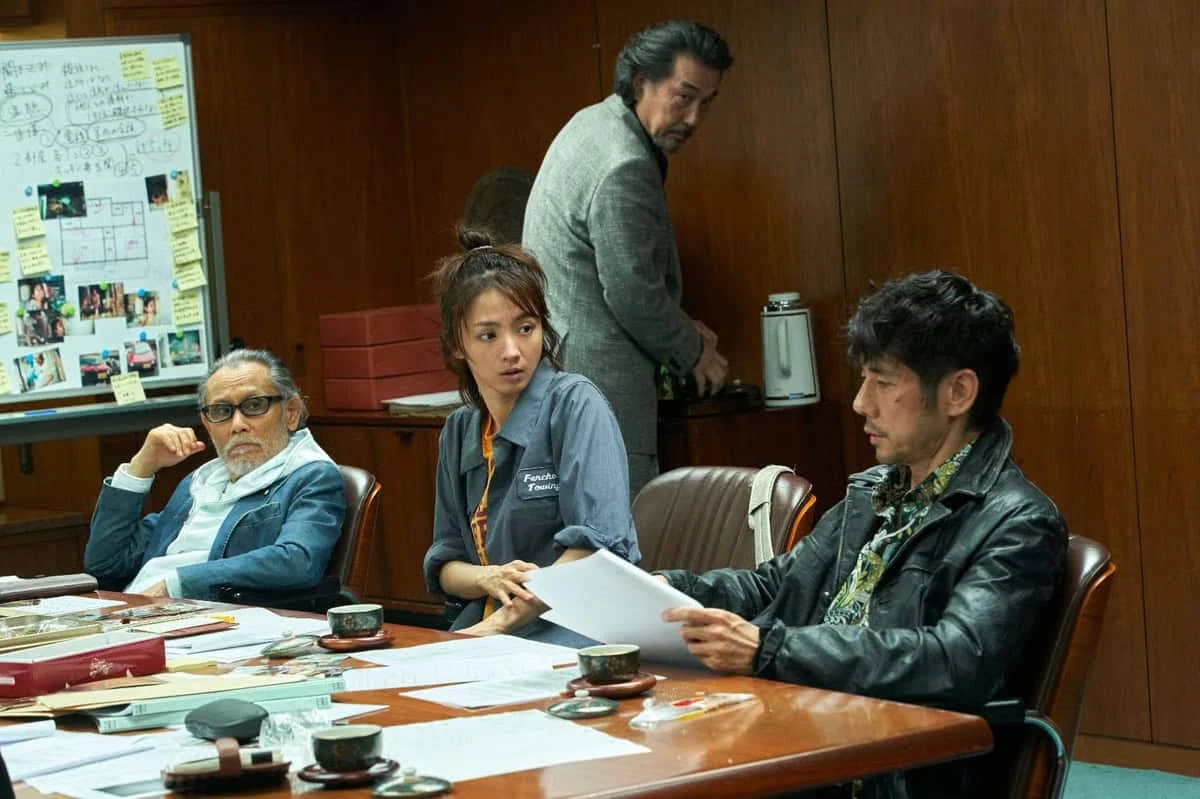
Eight years after the release of his critically acclaimed film "It Comes," acclaimed director Tetsuya Nakashima makes a highly anticipated return to the cinematic landscape with "The Brightest Sun." This compelling drama, adapted from Bunzo Uchiumi’s 1994 mystery novel "Toki ni wa Zange wo" (Sometimes, Repent), represents a culmination of Nakashima’s extensive creative vision, a project he reportedly nurtured for over 18 years. The 129-minute feature recently experienced its world premiere as a distinguished opening film at the 49th Hong Kong International Film Festival, marking a significant international debut. Its North American premiere is slated for the 2026 New York Asian Film Festival, with scheduled screenings on July 17 and 21, offering audiences a firsthand look at Nakashima’s latest directorial endeavor.
A Shadow of Controversy Precedes Release
The much-anticipated arrival of "The Brightest Sun" has been, regrettably, accompanied by a resurgence of scrutiny regarding Nakashima’s past professional conduct. Allegations brought forth by a former actress involved in his 2014 film "The World of Kanako" have cast a pall over the new production. The actress claimed that intimate footage, exposing her breasts, was filmed without her explicit and clear consent and was subsequently retained by the production team, despite assurances that it would be removed.
In response to these serious accusations, Nakashima issued a public apology. However, the former actress later countered, stating that the apology lacked direct contact and disputing certain aspects of his account. This controversy directly impacted the release schedule of "The Brightest Sun." Originally slated for a June 2025 release, the film’s premiere was postponed after its production committee announced an internal investigation into the reports concerning the earlier production.
Following a period of deliberation and inquiry, the committee released its findings in February 2026. The report indicated that Nakashima and the former actress had reached a settlement, thereby addressing the concerns that had led to the production delay. This resolution paved the way for the film’s eventual Japanese theatrical release, which has been rescheduled for August 28, 2026. The industry and audiences alike have been observing these developments closely, with the controversy underscoring the importance of ethical filmmaking practices and transparent communication on set.
A Labyrinth of Guilt and Interconnected Lives
"The Brightest Sun" plunges its audience into a complex narrative beginning with the brutal murder of private detective Yonemoto, portrayed by the seasoned actor Jiro Sato. Yonemoto is characterized as a man whose unpleasant demeanor likely garnered him a considerable number of adversaries, making his demise a subject of widespread speculation. Tasked with unraveling the mystery of his former colleague’s death are Satake, played by the esteemed Hidetoshi Nishijima, and Satoko, an assistant diligently learning the intricacies of the detective trade, brought to life by Hikari Mitsushima.
As Satake and Satoko delve deeper into the investigation, they uncover a disturbing connection between Yonemoto’s murder and a nine-year-old case involving the kidnapping of a newborn. At the heart of this cold case lies Arata, a boy who suffered from severe disabilities and now resides under the care of Akeno, portrayed by Kankuro Kudo. The detectives’ journey becomes an increasingly intricate and emotionally charged exploration as they navigate a tangled web of relationships, encountering parents, children, and caregivers whose lives have been profoundly shaped by enduring guilt and unresolved trauma.
Nakashima’s Signature Stylistic Approach
From its opening moments, "The Brightest Sun" establishes a thunderous pace, characteristic of Nakashima’s distinctive directorial style. The editing is almost relentless, employing rapid cuts that seamlessly transition between characters, historical periods, and fragmented pieces of information. This stylistic choice deliberately challenges the viewer, demanding constant engagement as revelations unfold at a breakneck speed, often before the full impact of the preceding scene can be processed.
While the tempo eventually moderates, the film’s expansive ensemble cast and intricate narrative structure continue to necessitate unwavering attention from the audience. Nakashima demonstrably eschews a conventional procedural rhythm, utilizing the investigation not merely as a puzzle to be solved, but rather as an entry point into a deeply interwoven network of fractured families and their interconnected struggles. The film’s ambitious scope and deliberate pacing contribute to an immersive, albeit demanding, viewing experience.
Portraits of Parental Anguish and Maternal Sacrifice
The film’s thematic core lies in its unflinching examination of broken individuals, each grappling with their own profound internal struggles. Satoko’s character exemplifies this, haunted by the consequences of a violent confrontation with her abusive former husband. Her protective actions, intended to safeguard their daughter, ultimately resulted in her separation from the child she fought to shield. Mitsushima masterfully embodies Satoko’s complex emotional landscape, portraying her as a figure who is simultaneously a victim, an aggressor, and a mother experiencing profound loss, capturing both her volatility and her deep-seated compassion.
Satake’s narrative arc is equally poignant, revealing a man consumed by unresolved grief over the death of his son, who had cerebral palsy. The inability to cope with the realities of his child’s condition and the subsequent wave of sorrow led him to alienate the remainder of his family. His strained relationship with his teenage daughter, coupled with the emotional and physical distance maintained by his wife, Yuki, played by Ko Shibasaki, underscores his deep-seated alienation. Nishijima delivers a powerful performance, portraying Satake as a man whose outward detachment barely conceals a profound and crippling self-loathing.
As the layers of the mystery are peeled back, the film introduces an array of other damaged individuals ensnared in extreme circumstances. Nakashima’s critique of parental failings is palpable throughout the narrative. Many adult characters are depicted as having neglected, rejected, exploited, or attempted to mold their children according to their own unmet emotional needs and desires. However, the director offers a nuanced perspective, partially absolving these parents by acknowledging the immense pressures and emotional toll associated with caregiving. Furthermore, Nakashima deliberately avoids presenting children as uncomplicated symbols of pure innocence. Some of the younger characters exhibit anger, defiance, and difficult behaviors, contributing to a world where pain and suffering circulate across generations, rather than flowing in a singular direction.
The Profound Impact of Disability and Societal Perceptions
A particularly striking and distinctive element of "The Brightest Sun" is its focused exploration of children with cerebral palsy and other severe disabilities. Arata’s character transcends his role as a mere plot device designed to elicit empathy from able-bodied protagonists. His existence serves as a stark illumination of the fear, selfishness, devotion, and exhaustion that surround him. More significantly, his presence compels the adult characters, and by extension the audience, to confront societal attitudes and perceptions concerning which lives are deemed valuable and which are considered burdensome. While the film’s approach to this theme may not always be subtle, it imbues the narrative with a profound emotional and ethical foundation that extends far beyond the mechanics of its central mystery.
A Stellar Ensemble Cast Delivers Powerful Performances
The film is elevated by a uniformly excellent ensemble cast, each actor contributing significantly to the intricate tapestry of the story. Mitsushima and Nishijima serve as the anchors for the numerous narrative threads, their performances grounding the complex plot. Haru Kuroki delivers an intense portrayal of another mother caught in a desperate struggle between guilt and the instinct for self-preservation. Kankuro Kudo is equally impressive, embodying a character whose initial suspicious demeanor gradually evolves into something far more tragic. Jiro Sato, despite his limited screen time, makes a memorable impact, while veteran actors Tsurutaro Kataoka, Shinya Tsukamoto, and Koji Yakusho lend considerable gravitas and authority to their smaller, yet crucial, supporting roles.
Pacing Challenges and Thematic Resonance
The hyperactive editing, while exceptionally effective in the initial stages of the investigation, effectively conveys both the urgency of the situation and the inherent confusion arising from a multitude of intersecting personal histories. However, as the film progresses, its 129-minute runtime begins to present challenges. The final act noticeably decelerates, and the cumulative effect of successive revelations, confrontations, and emotional climaxes becomes somewhat overwhelming. Nakashima appears reluctant to leave any narrative strand unresolved, which, while demonstrating his commitment to thorough storytelling, results in a conclusion that reiterates themes and ideas that have already been thoroughly explored in the preceding drama.
Conclusion: An Ambitious and Emotionally Potent Return
"The Brightest Sun" may not rank among Tetsuya Nakashima’s most strictly disciplined works, but it undeniably marks an ambitious and emotionally potent return for the director. The film’s relentless construction can, at times, be exhausting for the viewer, and its concluding act arguably overextends the narrative material. Nevertheless, its unflinching portrait of fractured parent-child relationships remains powerfully resonant. Crucially, the film eschews easy moral distinctions between the guilty and the innocent. It suggests that while confession may not erase past wrongdoings, it can indeed represent the arduous yet essential first step towards living with the weight of one’s actions and finding a path toward reconciliation. The film’s enduring strength lies in its complex portrayal of human fallibility and the enduring, albeit painful, journey towards acceptance and atonement.