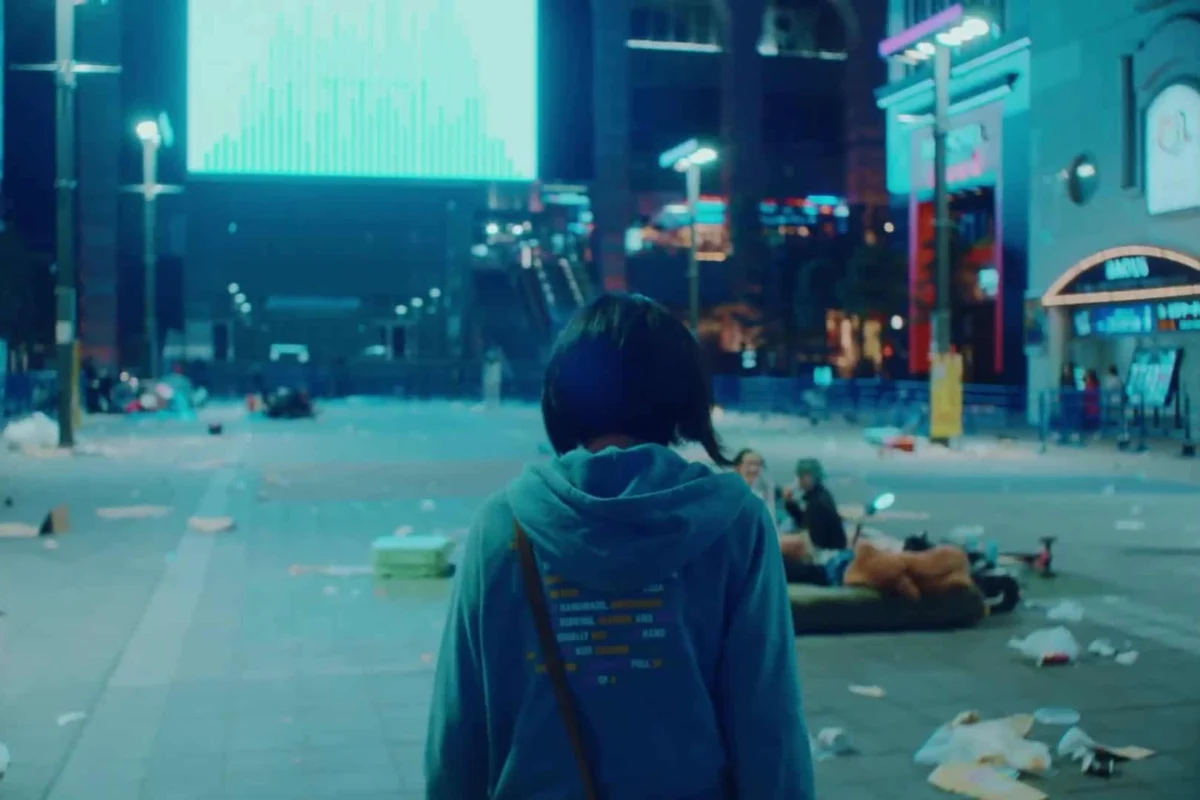
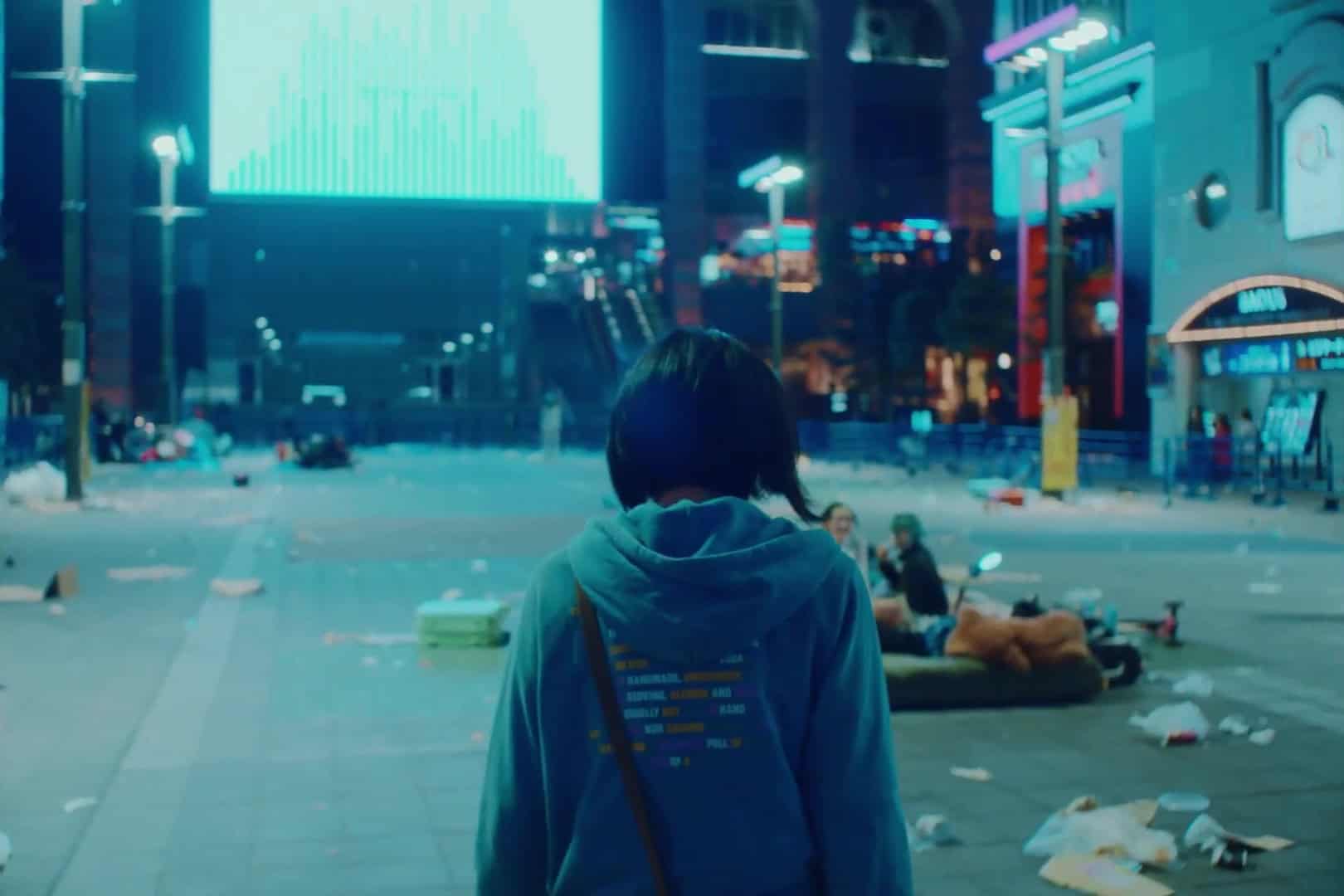
The film’s commitment to realism is further amplified by its production. Principal photography took place at many of the actual locations that form the backdrop of the narrative. These included the bustling Toyoko Square, the anonymous facades of nearby business hotels, the neon-lit interiors of host clubs, and the echoing chambers of karaoke boxes within Kabukicho. This immersive approach, however, presented significant technical challenges. The cacophony of the surrounding nightlife frequently interfered with sound recording, necessitating substantial dialogue to be re-recorded during post-production. While several scenes were artfully crafted to evoke the impression of footage captured with hidden cameras, a deliberate stylistic choice by Nagahisa, he has unequivocally stated that no covert or illegal filming practices were employed. The individuals visible in the background of these sequences were, in fact, trained extras, meticulously directed to enhance the verisimilitude of the urban landscape. “Burn” made its highly anticipated premiere in the NEXT section of the Sundance Film Festival on January 25, 2026. Following its international debut, the film opened in Japan on April 10, 2026, and its initial theatrical run was met with overwhelming public response. Numerous screenings across Tokyo, Osaka, and Hakata sold out within the first three days of its release, underscoring the film’s immediate resonance with audiences.
A Descent into Desperation and Exploitation
The narrative of “Burn” centers on Jurie Kobayashi, a young woman whose childhood was overshadowed by a profound and devastating experience within a cult religion. Raised in a household where her parents’ devotion to their faith permeated every aspect of their lives, Jurie endured prolonged periods of physical and emotional abuse at the hands of her father. The weight of this trauma was so immense that Jurie spent years harboring a fervent wish for his death. When her father’s sudden demise offered a grim respite, the mantle of control and mistreatment was unceremoniously assumed by her mother, perpetuating the cycle of abuse.
Unable to bear the suffocating reality of her home any longer, Jurie made the agonizing decision to leave her younger sister behind and seek refuge elsewhere. Following a cryptic message received through social media, she embarked on a journey to Shinjuku’s Kabukicho district, a place synonymous with both vibrant nightlife and a darker underbelly. Her destination was Toyoko Square, a known gathering point for displaced and vulnerable young people. It was there that she encountered a charismatic figure known only as KAMI. KAMI offered Jurie a lifeline, providing her with food, a rudimentary phone, a semblance of work, and a place to sleep. In this new environment, she was given a new name, Juju, and welcomed into a community that, on the surface, appeared to offer acceptance.
Initially, Juju perceived this community as her first true sanctuary, a place where she finally felt seen and valued. However, this fragile sense of belonging soon dissolved as the harsh realities of the group’s existence became starkly apparent. The members were ensnared in a destructive cycle of drug use, exploitation, and pervasive violence. A critical turning point arrived when Juju experienced a severe overdose, leading to her placement in temporary protective custody. This brief interlude of enforced safety proved to be a catalyst for further action. She managed to escape, not alone, but with her newfound friend, Mitsuha, and they returned to the unforgiving streets of Kabukicho.
Driven by an unwavering determination to rescue her sister, Juju began to engage in sexual services as a means to earn money. She meticulously saved her earnings in a coin locker, harboring the hope of accumulating ten million yen, a sum she believed would allow her to secure her sister’s safety and escape their circumstances. However, as she navigated this perilous path, the increasing number of deaths and disappearances among those around her began to gradually peel back the layers of deception, exposing the true, sinister nature of the individuals she had come to trust.
Societal Critique and Artistic Vision
Makoto Nagahisa’s “Burn” is more than just a narrative of individual struggle; it is a pointed and incisive critique of contemporary Japanese society. With a visual and thematic style that draws parallels to acclaimed directors such as Tetsuya Nakashima, Sion Sono, and Kim Ki-duk, Nagahisa crafts a stark portrait of a generation adrift. The film posits that a deficit in proper parental guidance and societal support has inadvertently created a generation that is lost, wandering aimlessly through their formative years.
The initial portrayal of the youths forming a sort of troupe is presented as a potential refuge, a source of solidarity in their shared marginalization. However, this illusion is swiftly shattered, revealing a grim reality where theft, drug addiction, and prostitution have become the normalized currency of survival. The inclusion of very young children within this group amplifies the disturbing nature of the depicted circumstances, highlighting the profound vulnerability of the youngest members of society. The presence of KAMI, the self-proclaimed protector of this community, further blurs the lines, transforming the group into something disturbingly akin to a cult. This creates a profound and tragic irony, as Juju finds herself ensnared in a situation eerily reminiscent of the abusive, controlling environment she so desperately sought to escape.
At its core, “Burn” delves into the insidious ways in which religiously justified abuse can profoundly suppress a young person’s autonomy. By examining Jurie’s childhood as a second-generation member of a cult, the film illustrates how such experiences can leave individuals susceptible to new authority figures who cunningly disguise control as protection. This theme resonates deeply with the film’s exploration of commercial sexual exploitation.
Addressing the Shadow Economy of Exploitation
“Burn” unflinchingly confronts the issue of “papakatsu,” a contemporary term referring to financially supported relationships that may involve sexual transactions, particularly as it pertains to the commercial sexual exploitation of runaway teenage girls in Japan. The film places a significant emphasis on individuals whose experiences of domestic abuse and homelessness render them dependent on adults operating within the periphery of Kabukicho’s vibrant nightlife economy. This aspect forms a substantial portion of the movie’s runtime.
Crucially, Nagahisa navigates this sensitive subject matter with considerable care and restraint, deliberately avoiding the sexualization of the concept. The implied sexual encounters are conveyed through evocative visual storytelling and subtle narrative cues rather than explicit depictions. The film largely eschews nudity, focusing instead on the emotional and psychological toll of these experiences on its young protagonists. This approach allows the audience to grasp the gravity of the exploitation without resorting to gratuitous or sensationalist imagery.
A Visually Arresting and Psychologically Resonant Landscape
The film’s visual execution is as compelling as its thematic concerns. Cinematographer Hiroaki Takeda employs a heavily voyeuristic style, frequently framing the action as if it were being captured by clandestine surveillance. This is achieved through a range of innovative techniques, including step printing, the incorporation of lo-fi video footage, dynamic double dolly shots, and the disorienting distortion of fisheye lenses. This deliberate aesthetic choice not only enhances the film’s sense of unease and realism but also mirrors the fragmented and often disoriented psychological state of the protagonist.
The juxtaposition of this polished, artful cinematography with the decidedly grimy and unsettling events unfolding on screen creates an intriguing amalgam. This stylistic tension serves to fully immerse the viewer in the lived reality and complex psychology of Jurie/Juju, making her journey all the more impactful.
A Strong Ensemble Anchors the Narrative
The success of “Burn” rests heavily on the shoulders of its talented cast, who deliver performances that are both nuanced and impactful. Nana Mori’s portrayal of Juju is a standout, capturing the essence of an emotionally unstable character desperately seeking connection, yet tragically finding it in the wrong places. Her performance is punctuated by a stutter that imbues her character with a palpable sense of vulnerability and foreboding, suggesting that something terrible is perpetually on the cusp of happening to her. This element is consistently cited as one of the most powerful aspects of the film.
Aoi Yamada offers a compelling performance as Mitsuha, a disillusioned young woman deeply entrenched in prostitution. Yamada imbues Mitsuha with a pragmatic outlook that is at once shocking and deeply empathetic. The mentor-mentee relationship that develops between Mitsuha and Juju provides a captivating dynamic, adding another layer of complexity to the film’s exploration of female solidarity amidst adversity.
Ryosuke Sota portrays Risu, Juju’s first friend within the Kabukicho community, with a compelling persona that further fleshes out the film’s depiction of the social ecosystem. Wataru Ichinose is convincing as KAMI, the enigmatic and manipulative cult-like figure who preys on the vulnerabilities of the dispossessed. Finally, Kanji Furutachi delivers a chilling performance as Juju’s violently patriarchal father, imbuing the character with a disturbing detachment that amplifies the shock value of his abusive actions. Together, this ensemble cast creates a tapestry of characters that are both memorable and integral to the film’s potent narrative.
A Resonant Cinematic Achievement
“Burn” stands as an exceptional film, one that evokes the spirit and artistic ambition of some of the finest Japanese productions of previous decades. Its visual style and narrative approach, characterized by a bold willingness to confront difficult social issues with artistic integrity, appear to be largely absent from much of contemporary local cinema. The film’s success at festivals and its strong initial box office performance suggest a significant audience appetite for such powerful and thought-provoking storytelling.
The film’s impact extends beyond its critical acclaim. By shedding light on the often-overlooked realities of youth exploitation and the systemic failures that contribute to it, “Burn” serves as a vital piece of social commentary. Its screening at prestigious events like Japan Cuts, a premier festival for Japanese cinema, further solidifies its position as an important cultural artifact. The film’s ability to resonate with audiences on both an emotional and intellectual level marks it as a significant contribution to contemporary Japanese filmmaking, prompting necessary conversations about societal responsibilities and the enduring search for hope in the face of profound adversity. The film’s commercial success and critical recognition underscore a growing global interest in Japanese cinema that tackles complex societal issues with artistic sophistication and raw emotional honesty.