Nearly three decades after its theatrical release, Barry Levinson, the acclaimed director behind films such as Rain Man and Diner, reflects on his star-studded 1996 drama, Sleepers, asserting that much of the contemporary discourse surrounding the film ultimately "lost the plot." With the film now re-released on 4K/Blu-ray, Levinson revisits the enduring themes and past controversies, arguing that the focus on the literal truth of its source material and a singular moral dilemma obscured the movie’s broader critique of institutional abuse and the resilience of human bonds.
The Genesis of a Gripping Narrative
Sleepers is based on Lorenzo Carcaterra’s 1995 book of the same name, a memoir that captivated readers with its harrowing account of childhood trauma and a meticulously planned revenge plot. The narrative unfurls in the late 1960s, introducing four inseparable teenage friends from Hell’s Kitchen, New York: Lorenzo "Shakes" Carcaterra, Michael Sullivan, John Riley, and Tommy Marcano. Their mischievous, albeit ill-fated, quest for a free hot dog leads to a tragic accident where they inadvertently injure an innocent bystander. This incident precipitates their incarceration at the Wilkinson Home for Boys, a state-run reformatory that quickly transforms into a crucible of unspeakable horrors. During their 6 to 18-month confinement, the boys endure relentless sexual and physical abuse at the hands of four sadistic guards, forever scarring their young lives.
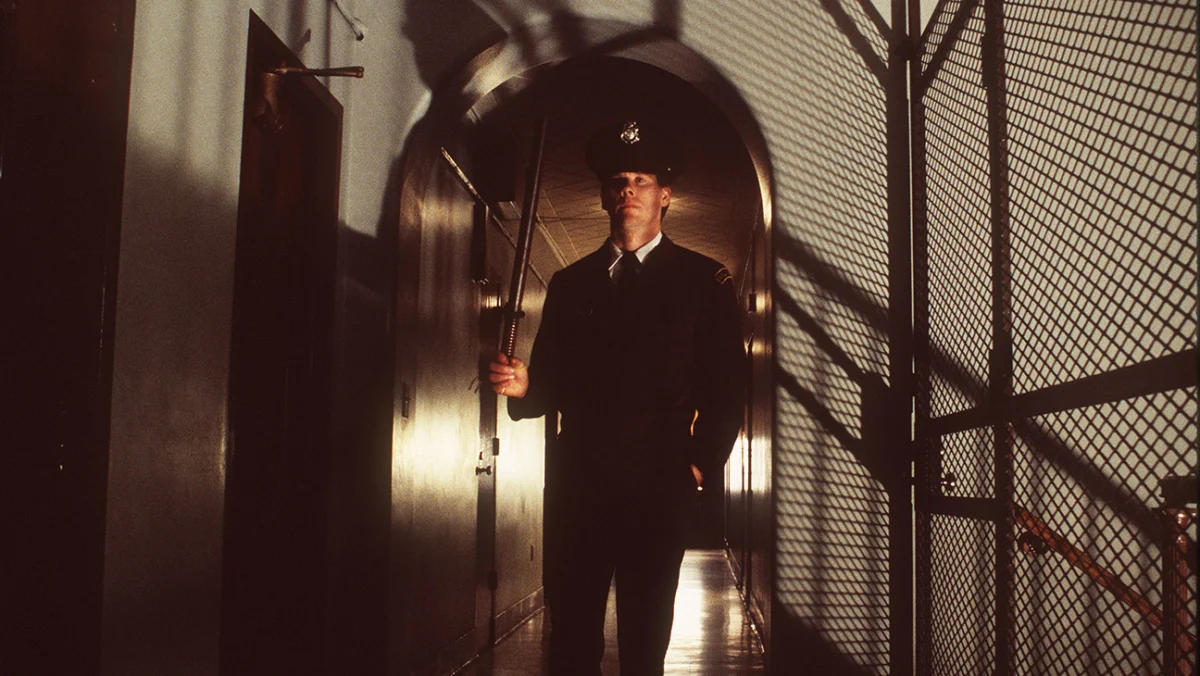
The film then fast-forwards to 1981, picking up with the now-adult friends. The paths of the quartet have diverged dramatically. John Riley (Ron Eldard) and Tommy Marcano (Billy Crudup), still haunted by their past, encounter their former lead abuser, Sean Nokes (Kevin Bacon), in a local restaurant. In a visceral, unplanned act of vigilante justice, they gun him down. This sudden, violent confrontation sets in motion a high-stakes legal battle, drawing in their childhood friends: Lorenzo "Shakes" Carcaterra (Jason Patric), now a low-level clerk at The New York Times, and Michael Sullivan (Brad Pitt), who has become an Assistant District Attorney. Driven by a pact forged in their youth and a burning desire for retribution, Shakes and Michael vow to exonerate their imprisoned friends and, more importantly, expose the systemic corruption and abuse that defined the Wilkinson Home.
Levinson’s adaptation masterfully weaves these two timelines, juxtaposing the innocence lost in childhood with the complex moral landscape of adulthood. The ensemble cast, a formidable collection of talent including Robert De Niro as the conflicted Father Bobby and Dustin Hoffman as the defense attorney Danny Snyder, underscored the gravity of the story. The film’s atmosphere was further enriched by a poignant score from legendary composer John Williams, whose work, Levinson notes, was intended to evoke a "touch of [Leonard] Bernstein" for its New York setting, adding a layer of melancholic grandeur to the unfolding drama.
The "True Story" Debate: A Distraction from Deeper Truths
Upon its release, Sleepers achieved significant box office success, grossing over $165 million worldwide against a budget of approximately $44 million. However, much of its public reception, particularly in the United States, became entangled in a heated debate over the authenticity of Carcaterra’s "true story" claim. Levinson recalls this as a profound misdirection, telling The Hollywood Reporter, "Why does film get caught in this cycle of whether something happened or didn’t happen? It’s a story… It, in some ways, took away from what the piece was. It doesn’t need to be authenticated in that regard for us to pay attention."

The controversy was ignited by journalistic inquiries that questioned the verifiable details in Carcaterra’s book. Critics and investigative reporters, notably from publications like New York magazine and Esquire, highlighted the absence of public records—such as court documents, social worker reports, or prison records—that could corroborate the specific events, names, and dates presented in the memoir. This scrutiny led to a significant public skepticism, challenging the book’s classification as non-fiction. Carcaterra, while steadfastly maintaining the core veracity of his experience, conceded that he had fictionalized names, dates, and certain circumstances to protect the identities of those involved and to avoid potential legal repercussions.
For Levinson, this emphasis on literal, factual accuracy overshadowed the more profound, thematic truths the film sought to convey. In an era where stories of institutional child abuse were beginning to emerge with increasing frequency, the film aimed to resonate with the emotional and spiritual truth of such experiences, regardless of the precise details of Carcaterra’s personal account. The director felt the incessant "noise" about authenticity detracted from the film’s powerful statement on systemic failures and the long-term impact of trauma. "It wasn’t the craziest, weirdest thing you’ve ever imagined," Levinson remarked, underscoring that the narrative’s plausibility should have been sufficient to provoke contemplation on the widespread problem of child abuse in correctional facilities.
Indeed, in today’s context, a 1996 film that unflinchingly portrays and implicitly condemns a dangerous ring of child predators within an institution feels remarkably prescient. The revelations of institutional abuse within various sectors—from religious organizations to state-run facilities—have become a distressing feature of public discourse in the decades since Sleepers‘ release. This broader context lends a chilling "spiritual truth" to the film, validating Levinson’s argument that the narrative’s power transcended the specifics of its "true story" claim.
The Nuance of Father Bobby’s Perjury
Another contentious aspect that drew critical attention was the moral quandary of Robert De Niro’s character, Father Bobby. In a pivotal moment of the trial, Father Bobby provides a false alibi on the witness stand to aid the exoneration of John and Tommy, the childhood friends he had mentored. Numerous critics expressed disbelief, rejecting the notion that a priest, sworn to truth and placing his hand on the Bible, would commit perjury. This narrow interpretation, Levinson argues, similarly missed the thematic depth and contextual layers embedded within the character’s motivation.
Levinson points to an often-overlooked detail: Father Bobby and his best friend had themselves spent time at the Wilkinson Home for Boys in their youth. While the film subtly implies the extent of Bobby’s personal victimization, it unequivocally establishes that his best friend was a victim of the same abusive environment. This shared past profoundly informs Father Bobby’s actions. His reluctant commitment to perjury, therefore, transcended a simple act of aiding vigilante justice. It became a desperate, albeit morally compromised, stand against the very institution that had scarred his own life and the lives of those he cared for.
"It got caught up in whether or not a priest would ever lie on the stand. You can certainly have that, but that’s not the point of the movie. It was a much broader piece than that," Levinson explains. Father Bobby’s decision was not an endorsement of dishonesty, but a profound, agonizing choice born from a deep understanding of the systemic evil he knew Wilkinson represented. His lie was not merely to help two men escape a murder charge; it was equally about dismantling the legacy of abuse and exposing the institution that had covered up such atrocities for so long. This perspective transforms his act from a moral failing into a complex, tragic response to profound injustice, underscoring the film’s exploration of moral ambiguities when faced with egregious wrongdoing.

Thematic Resonance and Casting Choices
Beyond the controversies, Sleepers delves into powerful themes that resonate deeply with audiences. The film is a stark exploration of trauma and memory, illustrating how the horrific experiences of childhood abuse continue to haunt and shape the adult lives of its protagonists. It also examines the delicate balance between loyalty and brotherhood, as the four friends navigate their fractured lives while bound by a shared, traumatic past and a pact for revenge. The narrative further explores the complex interplay between vigilante justice and the formal legal system, questioning whether a system that failed to protect its most vulnerable can truly deliver justice later on.
The casting process for Sleepers was a meticulous endeavor, particularly in finding actors who could credibly portray the characters across two distinct timelines. Levinson notes the challenge of casting both the young and adult versions, ensuring a seamless emotional and physical continuity. While the director cannot recall specific details from 30 years ago, he surmises, "We most likely looked for the adult versions of the characters first, and then figured out what kids could play the young versions of them." This approach likely helped anchor the mature performances, providing a clear emotional target for the younger actors.
The film brought together an impressive roster of established and rising stars. Brad Pitt, riding high on the success of 12 Monkeys and David Fincher’s Seven, lent his considerable gravitas to the role of Assistant DA Michael Sullivan. Levinson clarifies that Pitt’s involvement was not directly linked to Fincher’s co-founding of Propaganda Films (which brought the book to Levinson), suggesting Pitt’s interest was purely in the material.
Sleepers also marked the first of five collaborations between Levinson and Robert De Niro. Despite their fruitful partnership, Levinson admits he didn’t foresee it at the time: "To be honest, no. I was thrilled to use him, but I didn’t foresee beyond the first time we worked together." Their subsequent collaborations, including Wag the Dog, arose organically as suitable projects emerged.
Dustin Hoffman, who previously delivered an Academy Award-winning performance in Levinson’s Rain Man, was cast as the defense attorney Danny Snyder. Levinson thought Hoffman "would be a good choice here," and his portrayal added a layer of weary complexity to the legal proceedings. Hoffman’s physicality, constantly flipping pages and fidgeting in the courtroom, was a deliberate choice to convey his character’s internal struggles, including his alcoholism, without explicitly detailing them. "The physicality of it — as opposed to just sitting there — shows that the guy’s got some issues," Levinson observed.
The narrative choice to have Sean Nokes, the primary abuser played by Kevin Bacon, killed relatively early in the film’s second act was also intentional. While many revenge dramas build to the villain’s comeuppance, Sleepers subverts this expectation. Levinson affirms, "When I wrote it, it somehow just seemed appropriate." This decision prevented the film from devolving into a conventional revenge thriller, instead focusing on the ensuing legal and moral complexities. The "happenstance" of Nokes’s killing underscores the raw, impulsive nature of the act, shifting the narrative’s emphasis from a premeditated cycle of revenge to the desperate attempt to find justice within a flawed system.

The Disappearing Mid-Budget Film and Hollywood’s Shifting Tides
Beyond the specifics of Sleepers, Levinson used the opportunity of the interview to voice a broader concern plaguing the contemporary film industry: the significant decline of mid-budget movies. Historically, films costing between $15 million and $80 million were the "bread and butter" of major studios, offering diverse storytelling that appealed to a wide array of audiences. Sleepers itself, with its $44 million budget, exemplifies this category. Today, however, studios overwhelmingly prioritize blockbusters and tentpole franchises, often costing upwards of $150 million, leading to a noticeable void in the cinematic landscape.
"In general, taking me out of the mix, what’s happening right now is that there’s too much emphasis on the blockbuster, as opposed to, This [smaller] movie can make some money for us, and we can keep moving along," Levinson lamented. This strategic shift, driven by the pursuit of massive global returns from franchise properties, has severe implications for the industry. Data from various film industry analyses consistently shows a decreasing number of mid-range productions receiving major studio backing, with the market increasingly bifurcated between micro-budget independent films and mega-budget blockbusters.
Levinson argues that this singular focus on extravagance is a mistake: "That zone of movies around $40 million can ultimately succeed. It can also expand your audience rather than sharpening the audience to a smaller number." By narrowing their output to a specific type of film, studios risk alienating significant segments of the audience who are not interested in superhero epics or CGI-heavy spectacles. This sentiment is echoed by many cinephiles and industry veterans who observe that a substantial portion of the movie-going public feels underserved by the current theatrical offerings. Levinson shared that "certain people I’ve spoken to haven’t been to a movie in four years because they’re not interested in the movies that do well."
The repercussions extend beyond audience engagement. The decline of mid-budget films is also cited as a primary reason for the challenges in developing new movie stars. In the past, these films served as crucial proving grounds for emerging talent, allowing actors to hone their craft in complex, character-driven roles before ascending to blockbuster status. Now, the emphasis is less on star power and more on intellectual property (IP) or high-concept premises. "Where’s a breakout movie star? There are not many compared to what there used to be, that’s for certain," Levinson observed, highlighting the shift where "the IP or the high concept is the star."
Furthermore, the rise of streaming platforms and the omnipresence of the internet present additional challenges to traditional filmmaking. While streaming has opened avenues for some mid-budget content, it has also fragmented audience attention. Levinson noted the pervasive distraction of mobile devices, where individuals are "texting for hours at a time" even when ostensibly engaging with other forms of entertainment. This behavioral shift, where constant partial attention becomes the norm, fundamentally alters how stories are consumed and appreciated, potentially diminishing the immersive experience that cinema traditionally offers.
Levinson’s Enduring Vision
Despite these seismic shifts in the industry, Barry Levinson remains an active and passionate filmmaker. He firmly rejects the notion that filmmaking is exclusively "a younger man’s game," stating, "I don’t think age is the issue. It’s the ideas. What ideas do you want to do?" For Levinson, the drive to tell compelling stories transcends age, budget constraints, or prevailing industry trends.

He reveals that he has "two or three projects" ready to go, estimating their budgets at around $15 million to $20 million. His adaptability is evident in his past work; he points to having made The Humbling with Al Pacino for a mere $2 million, shooting it largely in his own home, and the found-footage horror film The Bay for a similar modest sum. "I have no problem working in all ways as long as I know the story that I want to tell," he asserts.
As Hollywood continues to navigate radical shifts, including ongoing mergers and acquisitions, Levinson maintains his focus on the craft of storytelling. His reflections on Sleepers serve not only as a look back at a powerful and controversial film but also as a commentary on the broader challenges facing an industry in constant flux. The legacy of Sleepers, as Levinson passionately argues, lies not in the literal truth of its details, but in its unflinching portrayal of trauma, justice, and the enduring human spirit in the face of institutional failure – a narrative as relevant today as it was three decades ago.