
The digital landscape of modern gaming has once again become a point of contention for consumers following a series of logistical and technical hurdles surrounding the transition of Obsidian Entertainment’s critically acclaimed RPG, The Outer Worlds, to its current-generation iteration. What was intended to be a celebratory move—delisting the original 2019 version in favor of the enhanced Spacer’s Choice Edition while offering a free upgrade path—has instead devolved into a complex situation involving platform-specific licensing issues, mandatory DLC requirements, and a growing wave of player dissatisfaction. As the original version of the game was officially removed from digital storefronts on May 27, 2024, the promised "free" transition for existing owners has proven to be far more restrictive than many players initially anticipated.
The Genesis of the Spacer’s Choice Edition
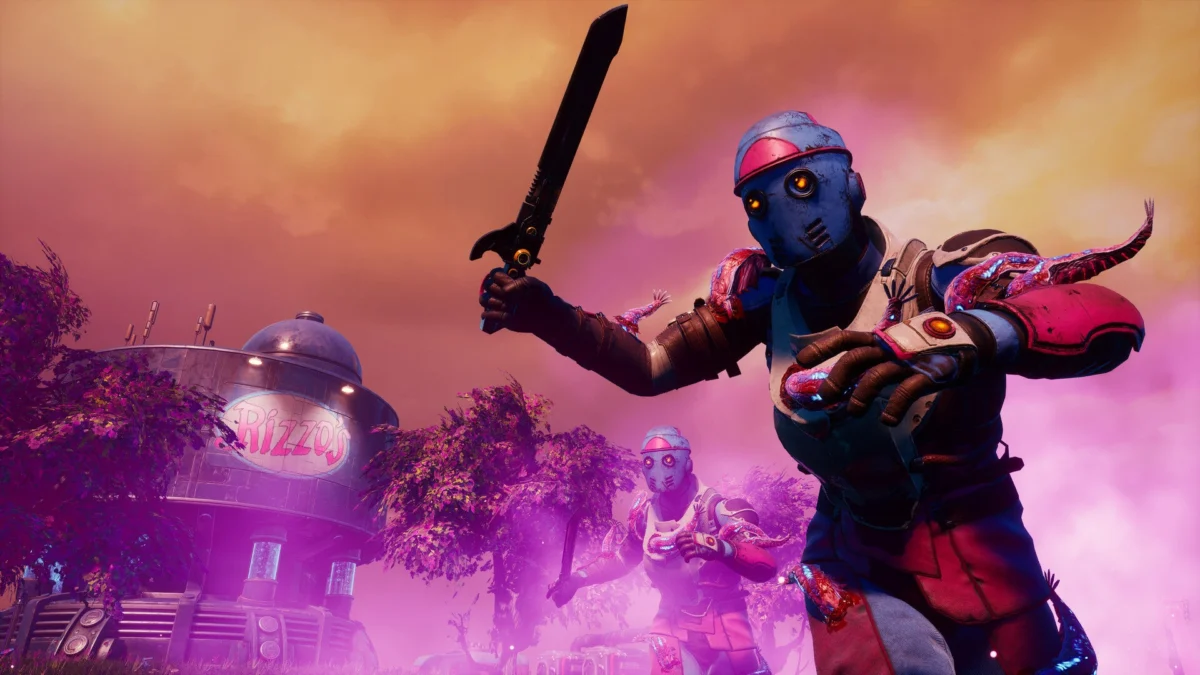
To understand the current friction, it is necessary to examine the history of the Spacer’s Choice Edition. Originally released in March 2023, this version was marketed as the definitive way to experience The Outer Worlds on PlayStation 5, Xbox Series X/S, and PC. Developed in collaboration between Obsidian Entertainment, the original creator, and Virtuos, the remaster promised improved graphics, better performance, an increased level cap, and the inclusion of all previously released downloadable content (DLC).
However, the launch of the Spacer’s Choice Edition was mired in controversy from the outset. Despite being a "current-gen" upgrade, the game suffered from significant performance issues, including stuttering, frame rate drops, and visual bugs that were not present in the original 2019 release. At the time, Private Division and Obsidian issued public apologies and released several patches to stabilize the experience. Furthermore, the upgrade was not free at launch; players who owned the original game and its expansions were required to pay a $10 fee to access the remastered version.
The narrative changed in May 2024 when Obsidian announced that the original version of The Outer Worlds would be delisted on May 27. To compensate for the removal of the legacy title, the studio announced a free upgrade path for current owners, ostensibly allowing anyone who owned the digital version of the base game to move to the Spacer’s Choice Edition without further cost.
The Delisting and the "Free" Upgrade Catch
The transition period began with the removal of the 2019 version of The Outer Worlds from the PlayStation Store, Xbox Store, and various PC retailers. The goal was to streamline the product offering, ensuring that new buyers would only see the Spacer’s Choice Edition, which includes all expansions. However, as the delisting date passed, players attempting to claim their free upgrades discovered a significant caveat that had not been clearly communicated during the initial announcement.

On May 28, 2024, Obsidian Entertainment’s support account (OESupport) confirmed via social media that the upgrade process was significantly more complicated than a simple "base game for base game" swap. Due to the architecture of digital entitlements on console platforms, the free upgrade was only being triggered for players who owned not just the base game, but also the Expansion Pass (which includes the Peril on Gorgon and Murder on Eridanos DLCs).
This revelation sparked immediate backlash. Many players had purchased the base game during sales leading up to the May 27 deadline, under the impression that ownership of the core title would guarantee them the Spacer’s Choice Edition. Instead, these players found themselves locked out of the upgrade unless they purchased additional content—content that is often no longer sold separately or is bundled in ways that make the "free" upgrade more expensive than simply buying the remaster outright.
Technical Logistics and Platform Discrepancies
The core of the issue lies in how Sony and Microsoft handle "entitlements"—the digital certificates that prove a user owns a piece of software. Because the Spacer’s Choice Edition is technically a separate product SKU (Stock Keeping Unit) rather than a patch for the original game, the storefronts must verify that a user meets specific criteria before allowing a $0 purchase.
In the case of The Outer Worlds, the Spacer’s Choice Edition is a "complete" package. From a backend perspective, the digital stores on PlayStation and Xbox are programmed to recognize "The Outer Worlds: Base Game + DLC 1 + DLC 2" as the equivalent of "The Outer Worlds: Spacer’s Choice Edition." For users who only own the base game, the system does not recognize a 1-to-1 match.
While Steam users on PC appeared to navigate the transition with fewer reported issues, users on GOG.com reported similar hurdles to their console counterparts. The discrepancy between platforms highlights a long-standing issue in the gaming industry: the lack of a standardized protocol for cross-generational upgrades and "Game of the Year" style transitions.
Official Responses and Remediation Efforts
Recognizing the mounting frustration, Obsidian Entertainment and Private Division have moved into a damage-control phase. In a statement released shortly after the entitlement issues came to light, the studio apologized for the confusion and offered a specific window for manual intervention.

"If you purchased the base game on Xbox One or PlayStation 4 between 4/30 and 5/27, or have any issues with the upgrade, please contact our support team and we’ll work with you to make it right," the studio stated. This suggests that the company is prepared to issue individual vouchers or manual entitlement overrides for players who can prove they purchased the game during the month leading up to the delisting.
However, this manual process has been criticized by the community as an inefficient solution to a problem that many believe should have been anticipated. Support queues have reportedly seen an influx of requests, leading to delays in response times. Furthermore, players who owned the game prior to April 30 but did not own the DLC feel left behind by a policy that seems to prioritize recent buyers over long-term fans.
Public Sentiment and Thematic Irony
The reaction on social media platforms like X (formerly Twitter) and Reddit has been a mixture of confusion and cynicism. A recurring theme in player feedback is the perceived irony of the situation. The Outer Worlds is a satirical RPG that focuses heavily on the absurdities and cruelties of hyper-capitalism, corporate bureaucracy, and "fine print" that traps workers and consumers in unfavorable contracts.
One viral comment noted, "It’s absolutely hilarious how this tends to happen most to games that are fiercely critical of capitalism." Players have pointed out that the confusion over "entitlements" and the "Expansion Pass requirement" feels like something that could have been a quest objective in the game’s fictional Halcyon Colony, where the "Board" often charges citizens for basic necessities under the guise of corporate "benefits."
Beyond the irony, there is a deeper concern regarding game preservation and consumer rights. When an original version of a game is delisted, it effectively disappears from the reach of new players. If the replacement version—in this case, the Spacer’s Choice Edition—has different system requirements or remains plagued by technical issues that the original did not have, the consumer’s ability to choose the "best" version of the product is revoked.
Broader Industry Implications
The Outer Worlds controversy is not an isolated incident; it reflects a broader trend in the gaming industry toward "version consolidation." As publishers look to maximize the tail-end revenue of their libraries, they often delist older versions of games to force new buyers toward more expensive "Ultimate" or "Enhanced" editions. Recent examples include the delisting of the original Grand Theft Auto trilogy in favor of the Definitive Edition, and the removal of the original Dark Souls: Prepare to Die Edition following the release of Dark Souls Remastered.

These transitions are rarely seamless. They raise several critical questions for the industry:
- The Definition of "Ownership": If a digital license can be rendered obsolete or complicated by a publisher’s decision to re-release a product, what does the consumer actually own?
- Technical Debt: Remasters are often outsourced to secondary studios. When the primary studio (Obsidian) and the publisher (Private Division) have to manage the fallout of a secondary studio’s (Virtuos) technical output, the lines of accountability become blurred.
- Communication Standards: The failure to explicitly state that the Expansion Pass was a prerequisite for the free upgrade is a failure of marketing and communication that has eroded trust.
Timeline of Events
To provide clarity on how the situation reached its current state, the following chronology outlines the key milestones:
- October 25, 2019: The Outer Worlds launches on PC, PS4, and Xbox One to critical acclaim.
- September 2020 – March 2021: Peril on Gorgon and Murder on Eridanos expansions are released.
- March 7, 2023: The Outer Worlds: Spacer’s Choice Edition launches on PS5, Xbox Series X/S, and PC. It is met with criticism for performance issues. A $10 upgrade fee is required for existing owners.
- May 2024: Private Division announces the original version will be delisted on May 27 and promises a free upgrade path for current owners.
- May 27, 2024: The original game is delisted from major digital storefronts.
- May 28, 2024: Players report being unable to claim the free upgrade. Obsidian confirms that ownership of the Expansion Pass is required for the entitlement to trigger.
- May 29, 2024 – Present: Obsidian support begins processing manual claims for players who purchased the game within the specific one-month window.
Conclusion and Analysis
The situation surrounding The Outer Worlds: Spacer’s Choice Edition serves as a cautionary tale for both developers and publishers. While the intent to provide a free upgrade path was likely a genuine attempt to regain goodwill after the remaster’s rocky 2023 launch, the execution failed to account for the rigid nature of digital storefront infrastructures.
For the average consumer, the term "free upgrade" implies a lack of additional barriers. By tying the upgrade to the ownership of specific DLC without clear, upfront communication, Obsidian and Private Division inadvertently created a scenario that mirrored the very corporate greed their game seeks to lampoon.
As the industry moves further into a digital-only future, the "entitlement" systems of consoles will need to become more flexible, or publishers will need to be far more transparent about the technical requirements of their promotional offers. For now, owners of The Outer Worlds who find themselves stuck in the bureaucratic loop are encouraged to contact official support channels, document their purchase history, and hope that the "Board" at Private Division makes good on their promise to "make it right."