


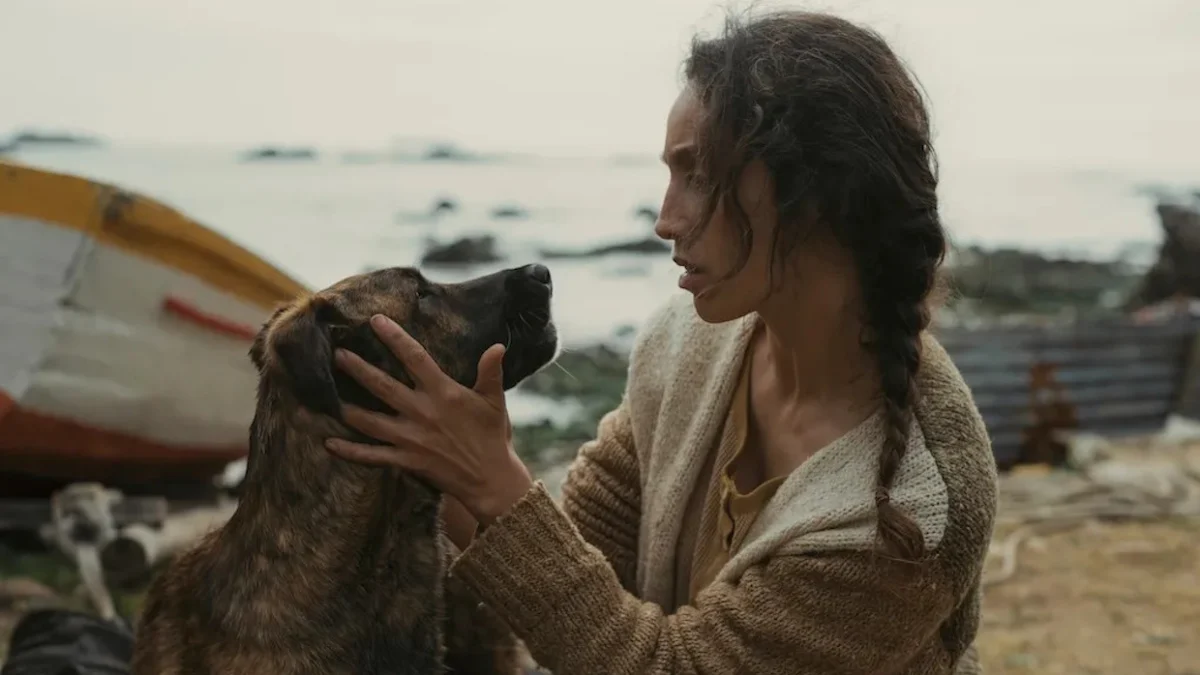
The premiere of Dominga Sotomayor’s latest feature, La Perra, at the Cannes Film Festival marks a significant pivot in the career of one of Chile’s most celebrated contemporary filmmakers. Known for her introspective, semi-autobiographical explorations of youth and memory, Sotomayor’s newest work ventures into the realm of literary adaptation, bringing a visceral and enigmatic energy to the screen. Adapted from the 2017 novel by Colombian author Pilar Quintana, La Perra (The Bitch) follows Silvia, a woman in her 40s living on a remote, windswept island off the southern coast of Chile. Silvia, portrayed by Manuela Oyarzún, leads a solitary life sustained by the collection and sale of seaweed until she adopts a stray puppy named Yuri. What begins as a narrative of companionship quickly dissolves into a complex study of power, domesticity, and the untamable nature of the landscape.
The Architecture of Isolation: A Chronology of Sotomayor’s Cinema
To understand the impact of La Perra, one must look at the trajectory of Sotomayor’s filmography, which has consistently been defined by what critics call an "architecture of isolation." Her 2012 debut, Thursday till Sunday (De jueves a domingo), was a masterclass in tension, set almost entirely within the confines of a family car during a road trip to northern Chile. The film won the Tiger Award at the International Film Festival Rotterdam, signaling the arrival of a director obsessed with the psychological effects of cramped, inescapable environments.
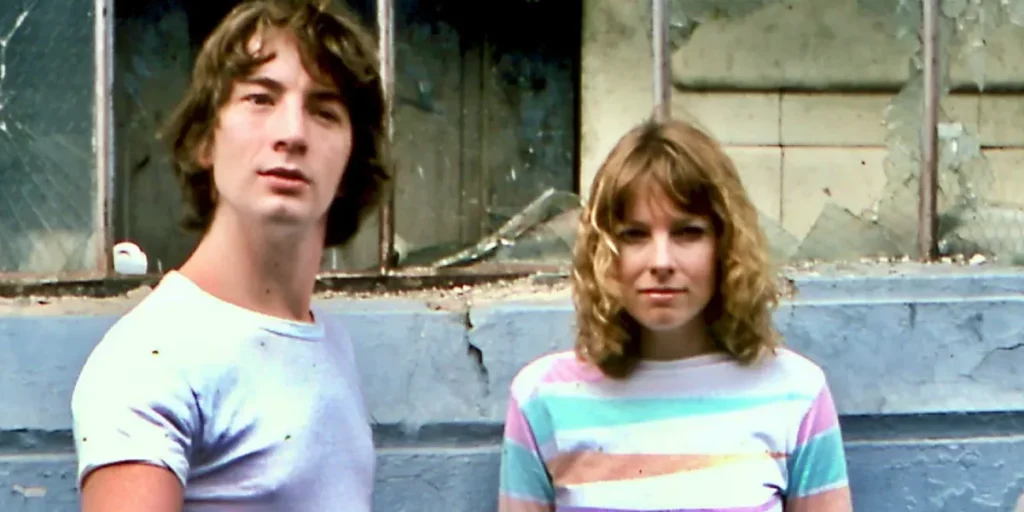
In 2018, Sotomayor achieved international acclaim with Too Late to Die Young (Tarde para morir joven). The film, which earned her the Leopard for Best Direction at the Locarno Film Festival—the first woman ever to receive the honor—was set within a bohemian commune at the foot of the Andes. While the setting was broader than a car, the emotional scope remained tightly bound to the internal lives of a small group of characters during Chile’s transition to democracy in the 1990s.
Her 2025 Netflix-produced feature, Swim to Me, moved into the affluent urban villas of contemporary Santiago. However, La Perra represents her most radical departure yet. While her previous works were deeply rooted in her own childhood memories, La Perra is her first project that does not draw directly from her personal history. By stepping away from the autobiographical, Sotomayor has found a new kind of creative freedom, allowing her to explore the "rawer, more obscure" facets of human and animal nature.
Adapting the Untamable: From Colombia to the Chilean Coast
The transition of Pilar Quintana’s novel from the humid jungles of Colombia to the frigid, maritime climate of Southern Chile was a deliberate choice by Sotomayor. In collaboration with co-writer Inés Bortagaray, Sotomayor sought to translate the "unexplainable" qualities of the book into a cinematic language that felt authentic to her own geographical sensibilities.
"I liked the book because it embodied the same qualities I like in cinema: there were lots of things in it that couldn’t be explained," Sotomayor noted regarding the adaptation process. The filmmaker expressed a lack of interest in a literal page-to-screen translation. Instead, she utilized the core themes of the novel—specifically the relationship between humans and animals—to construct an "imaginary geography."
The film was shot partially on the island of Santa Maria, but the production created a composite territory, blending real locations with invented settings to suggest a documentary-like reality that is entirely fictional. This includes a fabricated seaweed industry, where tractors ferry mounds of algae across the shore, a visual element designed to heighten the film’s atmospheric weight rather than reflect a literal economic practice.
The Thematic Core: Domestication and the Non-Human Perspective
A central pillar of La Perra is the concept of domestication. Sotomayor challenges the traditional "loyal companion" trope often found in animal-centric cinema. In La Perra, Yuri the dog is not a metaphor for Silvia’s childlessness or an emotional vacuum; she is a protagonist with her own agency.
Cinematographer Simone D’Arcangelo, known for his work on The Settlers (2023) and The Tale of King Crab (2021), employs a camera that frequently abandons the human gaze to follow Yuri’s independent movements. This shift in perspective underscores Sotomayor’s interest in the "permeable border between the human and the non-human." As the film progresses, the relationship between woman and dog shifts from affectionate to threatening, highlighting the impossibility of truly "owning" another living being.

The production’s approach to its animal actors further reflects this commitment to realism. Eschewing trained pedigree dogs, the production spent months searching animal shelters in Santiago. They eventually found an adult mutt with "wild energy" and a two-month-old puppy abandoned on a highway to play the younger version of Yuri. The result is a performance that is unpredictable and reactive, forcing lead actress Manuela Oyarzún to adapt her movements to the animals’ instincts.
Technical Craft: Visual Influences and Atemporality
Visually, La Perra draws from an eclectic range of influences that contribute to its "temporal limbo." Sotomayor and D’Arcangelo avoided a traditional storyboard, opting instead for a collage of photographs and references to 19th-century landscape paintings characterized by dramatic clouds and barren islands.
Specific artistic touchstones included:
- The Paintings of Carmen and Adolfo Couve: Sotomayor’s own relatives, whose work provided a psychological and atmospheric foundation for the film’s look.
- Lucien Freud and Francis Bacon: Influences for the film’s more visceral, psychological portraiture.
- Cinematic Precedents: Michael Roemer’s Vengeance is Mine (1984), Michelangelo Antonioni’s L’avventura (1960), and Nicolas Roeg’s Walkabout (1971).
The film’s use of time is intentionally disorienting. While it features modern elements like smartphones and contemporary cars, these are juxtaposed with vintage television sets and props from previous decades. This atemporality is further complicated by Sotomayor’s first use of a flashback sequence. Unlike traditional narrative flashbacks that use distinct color palettes or period-accurate markers to signal a shift in time, La Perra blends these eras seamlessly. The past is presented not as a tool for exposition, but as a standalone unit that captures the "feeling" of a memory rather than its facts.
Industry Context: The Divergence of Streaming and Auteurism
The production of La Perra also highlights the current state of the global film industry and the varying structures available to contemporary directors. Having directed Swim to Me for Netflix, Sotomayor has experienced the constraints of "straightforward" narrative structures required by major streaming platforms.
In contrast, La Perra was produced by RT Features, led by Rodrigo Teixeira, who granted Sotomayor complete creative freedom. This allowed for a "diffused, meandering" structure that the director describes as "dispersed cinema." Sotomayor’s ability to move between a high-profile Netflix commission and a radical, independent project like La Perra—both filmed within the same calendar year—demonstrates a rare versatility in the current landscape of Latin American cinema.
Broader Implications and Official Reactions
The selection of La Perra for Cannes reinforces the continued global dominance of the Chilean "New Wave." Alongside directors like Pablo Larraín and Sebastián Lelio, Sotomayor has been instrumental in bringing Chilean stories to the forefront of international cinema. However, her focus on the "intimate and private" rather than the overtly political sets her apart.
Industry analysts suggest that La Perra signals a growing trend toward "eco-cinema" or "post-humanist" narratives in Latin America, where the landscape and non-human actors are given equal weight to human protagonists. Initial reactions from festival critics have praised the film’s "cumulative disorientation" and its refusal to provide easy answers to its central enigmas.
By moving away from the safety of her own memories, Dominga Sotomayor has created a work that is simultaneously her most foreign and her most personal. La Perra stands as a testament to the power of cinema to invent territories, document "fake" realities, and explore the unsettling depths of the natural world. As the film begins its international festival run, it is poised to solidify Sotomayor’s reputation as a filmmaker who can find the vastness of the human experience even within the most confined and isolated of spaces.