The premiere was punctuated by a significant milestone in Travolta’s career: the presentation of an honorary Palme d’Or by Cannes Film Festival Director Thierry Frémaux. The award recognized Travolta’s five-decade contribution to global cinema—ranging from his breakout roles in Saturday Night Fever (1977) and Grease (1978) to his mid-career resurgence in Pulp Fiction (1994)—while simultaneously validating his transition into the director’s chair. Following its festival debut, the film was acquired by Apple TV+, where it has reportedly maintained a leading position among the platform’s most-streamed titles globally.
A Narrative of Experience and Sensory Memory
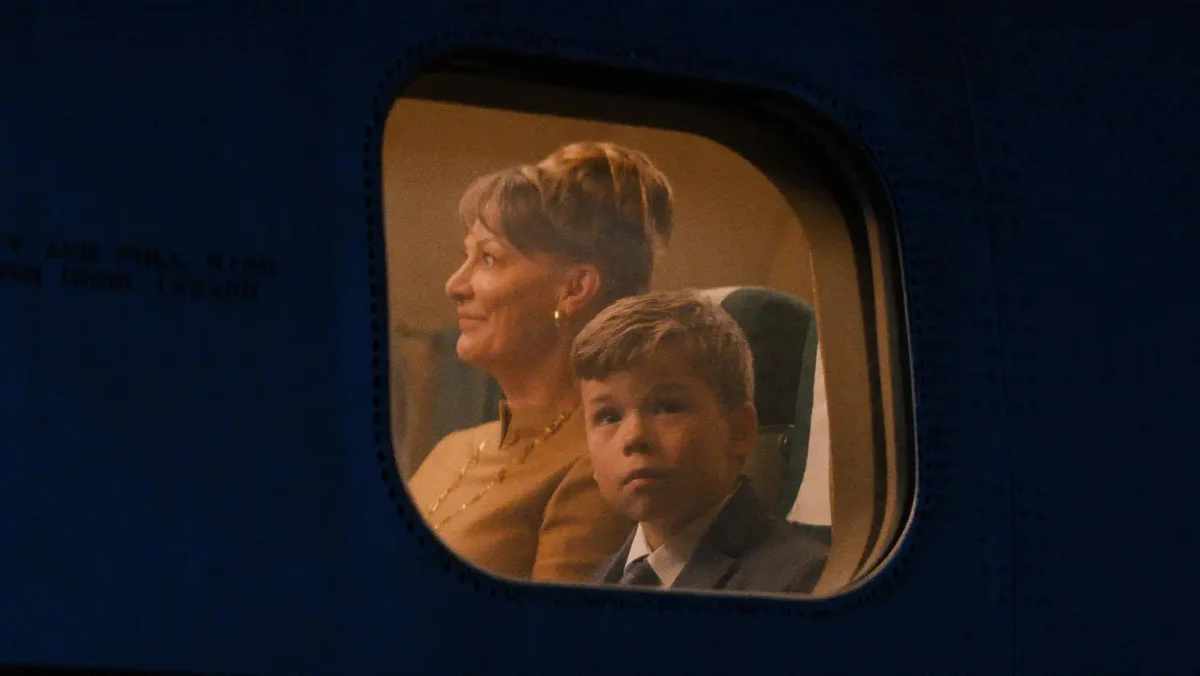
Set in 1962, Propeller One-Way Night Coach follows a young boy named Jeff, portrayed by Clark Shotwell, as he embarks on his first airplane flight. The narrative is driven by an internal monologue and voiceover delivered by Travolta, providing an adult’s retrospective lens on the fleeting, innocent observations of a child. The film is less concerned with traditional dramatic conflict and more focused on the "theology of the experience," capturing the specific aesthetic and cultural vibrations of the early 1960s.
The story mirrors Travolta’s own childhood fascination with aviation and the burgeoning jet age. Jeff’s journey is populated by a cast of characters who represent the eclectic social fabric of the era: his mother, Helen (played by Kelly Eviston-Quinnett), whose joie de vivre and interest in the world influence her son’s perspective; a captivating flight attendant (played by Ella Bleu Travolta); and various passengers who offer glimpses into the complexities of adult life, from grief to flirtatiousness.
The Mid-Century Aesthetic and Architectural Influence
A central pillar of the film is its meticulous attention to period detail, which Travolta describes as a "total-recall" of his own memories. The production design emphasizes the specific visual language of 1962, a time when architects and designers like Eero Saarinen and Frank Lloyd Wright were redefining the American landscape. The film prominently features the TWA Flight Center at New York’s Idlewild Airport (now JFK), utilizing its iconic red corridors and futuristic curves to establish a sense of hope and "The Jetsons-era" optimism.
The director’s focus extends to the tactile elements of air travel during the period—the colorful interiors of the aircraft, the elaborate meal services featuring Chateaubriand and chicken cordon bleu, and the designer uniforms of the flight attendants. This visual fidelity serves to contrast the "emptiness" and exclusivity of 1960s air travel with the crowded, utilitarian nature of contemporary aviation. By focusing on these details, the film functions as an homage to an era where design, fashion, and technology were viewed through a lens of collective vision and artistic ambition.
Chronology of Production and the Independent Path
The path to bringing Propeller One-Way Night Coach to the screen was a multi-decade endeavor. Travolta originally wrote the story as a private gift for his family in 1993. After printing 70 copies for personal distribution, the positive response led to its 1997 publication as a novella by Warner Books. Despite immediate interest from major studios in the late 1990s, Travolta delayed production for 27 years, citing a desire to maintain the story’s intimate, subjective tone.
The production finally commenced in late 2024, following a month and a half of intensive preparation. The film was shot over a condensed 15-day schedule:
- Five days in New York: Focusing on airport exteriors and the TWA terminal.
- Five days in Kansas: Utilized for interior cabin sequences and specific character-driven scenes.
- Five days in Los Angeles: Reserved for post-production integration and final pickup shots.
By choosing to self-finance the project, Travolta maintained total creative control over the runtime and the non-linear, stream-of-consciousness narrative structure. This independent approach allowed the film to bypass traditional studio pressures for increased conflict or a standard 90-minute feature length, resulting in the 60-minute format that Frémaux and other critics have praised as being "exactly what it had to be."
Directorial Influences and Technical Execution
While Propeller One-Way Night Coach is a personal debut, it bears the hallmarks of Travolta’s observations from working with master directors throughout his career. He cites the efficiency of Quentin Tarantino as a primary influence, specifically the concept that a director does not need to show every detail of an action to convey its meaning to an audience. This led to a production style characterized by minimal takes and a heavy reliance on thorough rehearsal, ensuring that the actors "owned" their characters before the cameras rolled.
The film’s cinematography employs specific techniques to mirror a child’s perspective. For instance, slow-motion sequences are used when Jeff encounters the flight attendant, reflecting how beauty can appear to arrest time in a young person’s mind. The lighting, described as "golden" and "dancing," was designed to evoke the specific quality of sunlight through an airplane window during a westward flight.
The soundtrack serves as a narrative engine, incorporating a curated selection of music from the era. The score includes:
- Brazilian Samba: Tracks by Antônio Carlos Jobim and Sérgio Mendes.
- American Standards: Vocals by Frank Sinatra, Tony Bennett, and Barbra Streisand.
- Jazz: Dave Brubeck’s "Take Five," synchronized with the architectural visuals of the airport terminals.
- International Cinema Homages: References to the soundtracks of Black Orpheus and A Man and a Woman.
Industry Response and Commercial Performance
The acquisition of the film by Apple TV+ represents a significant moment for the platform’s foray into prestige, auteur-driven content. According to industry analysts, the film’s success on the streaming service—reaching the number one spot in multiple global markets for seven consecutive days—demonstrates a viable audience for "uncynical" and shorter-form prestige cinema.
Eddie Cue, Apple’s Senior Vice President of Services, reportedly championed the film for its emotional resonance and its ability to transport viewers to a different era. Thierry Frémaux echoed this sentiment, noting that the film’s relatively low production cost compared to its high emotional and visual impact makes it a "model for the festival," proving that personal art can be made efficiently without sacrificing quality.
Broader Impact and Cultural Implications
Propeller One-Way Night Coach arrives at a time when the film industry is increasingly polarized between massive franchise blockbusters and ultra-low-budget indie fare. Travolta’s film occupies a unique middle ground: a high-polish, star-powered project that retains the soul and experimental structure of an independent short.
The film’s exploration of "resilience of character" is particularly relevant. While the story is set against the backdrop of the Cold War, the Bay of Pigs, and the threat of atomic conflict, it emphasizes the ability of the individual—and the child in particular—to recover and maintain hope. This theme of "post-World War II hopefulness" serves as a counter-narrative to the often-cynical tone of modern cinema.
Furthermore, the film’s success highlights a growing trend of established actors taking full creative and financial control of their legacies. By writing, directing, and producing a project so closely tied to his own life and his 1997 literary work, Travolta has established a blueprint for personal filmmaking that prioritizes vision over market-tested formulas.
As Propeller One-Way Night Coach continues its run on Apple TV+, it stands as a testament to the enduring power of sensory memory and the idea that the most specific, personal stories often hold the most universal appeal. The film not only marks a successful new chapter for John Travolta as a filmmaker but also serves as a vibrant preservation of a mid-century spirit that felt, for an hour on screen, entirely possible again.