The 30th Bucheon International Fantastic Film Festival (BIFAN) concluded its 2026 edition with a flourish, celebrating cinematic innovation and diverse storytelling across its competitive sections. Among the lauded productions was "The Only Child in the Butchery," the feature directorial debut of Yoo Hyoung-joon, which garnered significant attention and accolades. The film, a co-production of the Korea National University of Arts, was presented in the prestigious Bucheon Choice Korean: Features category, a testament to its quality and potential impact. Yoo’s journey to this directorial milestone is marked by a robust foundation in animation and filmmaking, having honed his skills in character animation at the California Institute of the Arts before pursuing directing at the Korea National University of Arts. His prior directorial efforts include the animated shorts "Kincet Side" and "Dream Merchant," alongside live-action shorts such as "As Seen" and "A Record to Be Remembered," all of which have showcased a developing artistic voice and a penchant for nuanced storytelling.
BIFAN 2026: A Showcase of Genre Cinema
BIFAN, held annually in Bucheon, South Korea, is one of Asia’s leading film festivals dedicated to fantasy, horror, science fiction, and thriller genres. The 2026 edition, marking its 30th anniversary, featured a comprehensive program spanning international and Korean cinema, attracting filmmakers, industry professionals, and cinephiles from around the globe. The Bucheon Choice section, in particular, serves as a vital platform for emerging talent and independent films, highlighting works that push creative boundaries and engage audiences with compelling narratives. The festival’s commitment to fostering genre filmmaking has solidified its reputation as a crucial event in the international film calendar.
"The Only Child in the Butchery" Takes Center Stage
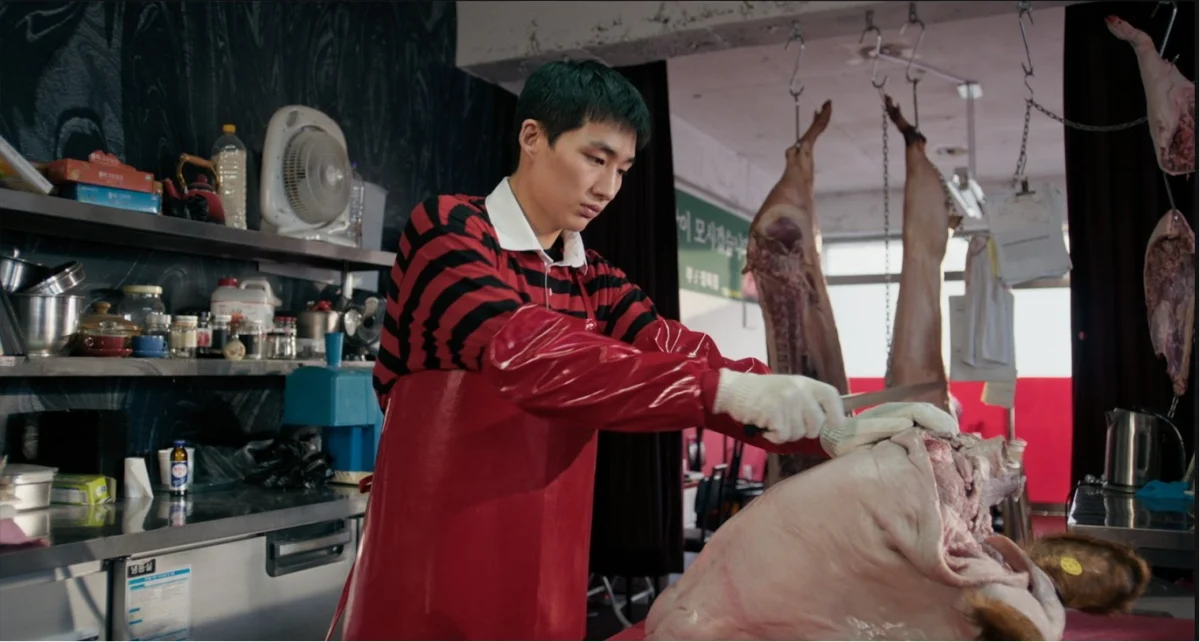
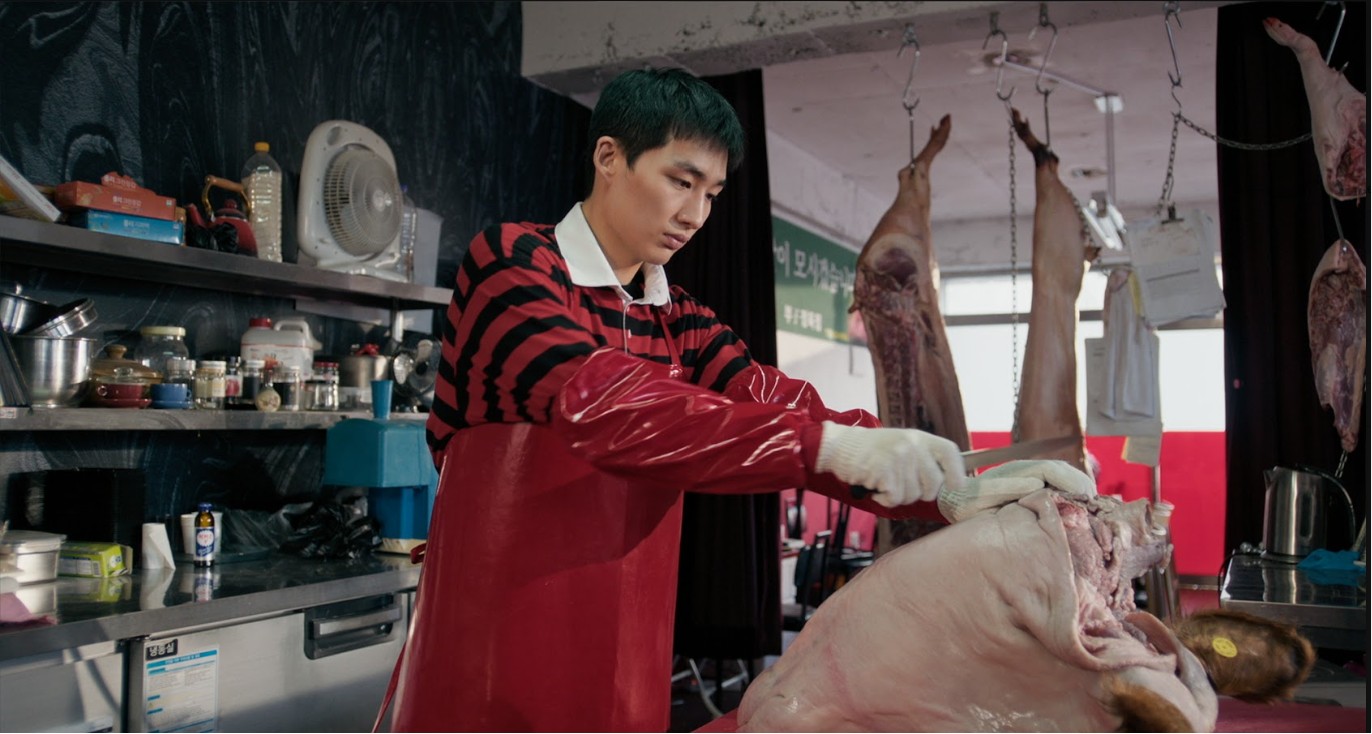
"The Only Child in the Butchery," with its 81-minute runtime, captivated the BIFAN jury, earning Yoo Hyoung-joon the coveted Best Director Choice award. The film’s narrative delves into the complex emotional landscape of Tae-seop (Kwon Ji-woo), an orphan who has spent his formative years and adulthood laboring unpaid in his adoptive father’s butcher shop. Raised by his aunt’s husband, whom he has always known as father, Tae-seop’s existence has been defined by a perpetual sense of debt, with his familial obligations framed as an insurmountable burden that precludes any aspiration for personal freedom or financial independence.
The film’s critical turning point arrives when Tae-seop, on the cusp of marriage to the woman he loves, finally requests the wages he believes he has rightfully earned. This plea is met with a cold rejection, reinforcing the manipulative dynamic where his upbringing is continually presented as a debt that can never be fully repaid. This stark realization, coupled with the discovery that his guardian is willing to expend significant funds to conceal an extramarital affair, ignites a profound shift in Tae-seop. He recognizes that the issue is not a lack of resources but a deliberate withholding, prompting him to embark on a path of anonymous blackmail. His objective is to accumulate sufficient funds to escape the butcher shop and establish a life of his own.
A Descent into a Labyrinth of Deceit
What begins as a seemingly straightforward plan to secure financial freedom quickly unravels into a complex web of deception. The introduction of a suspicious husband, the presence of the blackmailer (Tae-seop himself), the involvement of the police, and an unforeseen disappearance transform Tae-seop’s scheme into a convoluted narrative fraught with escalating stakes. This narrative arc allows Yoo Hyoung-joon to intricately explore the profound impact of choices on an individual’s life trajectory. Tae-seop’s decision to engage in blackmail, while morally reprehensible, is presented within the context of years of profound exploitation. His guardian’s act of taking him in as a child, initially perceived as benevolence, has become a tool of perpetual control, where any desire for autonomy is framed as an act of ingratitude.
The film masterfully portrays the suffocating pressure of perceived benevolence. Tae-seop is technically free to leave, but emotionally and financially, he remains ensnared by the butcher shop’s confines. His guardian has successfully instilled the belief that his upbringing within the family unit necessitates the forfeiture of his right to define his own future. Consequently, the butcher shop becomes both his workplace and his prison, and butchery evolves from a potential profession into an imposed identity.
Societal Commentary on Contemporary Korea
Beyond the personal tragedy of Tae-seop, "The Only Child in the Butchery" offers a poignant reflection on the challenges of sustaining relationships and achieving personal fulfillment in contemporary Korean society, where housing, marriage, and financial security are intrinsically intertwined. Tae-seop’s initial aspirations are not rooted in grand ambitions of wealth or revenge; rather, they are centered on securing the financial stability necessary to build a life with his partner. However, his economic dependence serves as a formidable barrier to progress, and the ensuing frustration gradually transforms him from a relatively ordinary young man into an amateur criminal.
In this regard, the film also functions as an unconventional coming-of-age narrative. Tae-seop’s awakening is not facilitated by formal education, romantic enlightenment, or a moral lesson. Instead, it arises from his stark realization that the familial structure he had trusted is fundamentally unequal and exploitative. Growing up, in this context, means confronting the reality of his exploitation. However, the methods he chooses to extricate himself from this situation lead to unforeseen and escalating consequences. Each attempt to assert control only further entangles him in a reality saturated with deceit, jealousy, and dangerous impulses.
A Masterclass in Narrative Construction and Performance
Despite its relatively brief running time, "The Only Child in the Butchery" presents a remarkably layered narrative. Yoo Hyoung-joon adeptly navigates through a spectrum of cinematic styles, commencing with an understated family drama before seamlessly introducing elements of adultery, surveillance, and blackmail. The inclusion of the police and the enigmatic blackmailer injects a potent blend of suspense and dark humor, with the director maintaining a delicate equilibrium between these often-contrasting tones. The situation intensifies in absurdity, yet the characters’ desperation never loses its emotional resonance.
The film’s twists are artfully constructed as a form of narrative guessing game. Information is seldom divulged upfront, and a significant portion of the tension is derived from the secrets the characters conceal from one another. Apparent victims frequently emerge as potential perpetrators, while individuals who seem to grasp the unfolding events are often operating with incomplete information. While some plot developments might verge on coincidental convenience, the constant shifts in perspective and revelation ensure that the story remains compelling and that its concise duration feels exceptionally dense. The violent sequences are thoughtfully integrated into the narrative, serving to propel the story forward, although the final act’s conclusion may strike some as abrupt.
Kwon Ji-woo delivers a compelling central performance as Tae-seop. He skillfully embodies the protagonist’s initial passivity without rendering him inert, gradually revealing the simmering resentment beneath his outwardly obedient demeanor. His increasingly nervous reactions as the scheme begins to unravel are equally effective, particularly as Tae-seop attempts to maintain an air of normalcy while grappling with the growing awareness that those around him may possess more knowledge than they let on.
Jeong Hyeong-seok is equally outstanding as the man Tae-seop has been conditioned to view as his father. His portrayal avoids reducing the character to a simplistic villain. Instead, it is his casual entitlement and ingrained sense of ownership that render him truly disturbing. He genuinely seems to believe that his act of taking in an orphan grants him the perpetual right to control that individual’s life. Ahn Min-young also delivers an impressive performance, particularly in her character’s reactions as the affair, the extortion attempt, and the disappearance converge. Her responses introduce an additional layer of unpredictability to an already volatile situation.
The film’s editing complements the narrative’s accumulation of misunderstandings, allowing each new revelation to reframe the audience’s perception of preceding events. The tonal shifts are frequent, but the transitions between mystery and humor are largely successful. Rather than detracting from the suspense, the comedic elements emerge organically from the characters’ increasingly desperate attempts to conceal their actions.
Symbolic Resonance and Thematic Depth
A recurring visual motif that lends significant thematic depth to the film is the image of the cow’s head. Intricately linked to Tae-seop’s unwanted existence within the butcher shop, this symbol effectively conveys the grotesque atmosphere surrounding the establishment. It also serves as a potent metaphor for how thoroughly his identity has been subsumed by the labor forced upon him. The reappearance of this image at the narrative’s conclusion provides an appropriately ironic visual resolution, returning Tae-seop to the emblem of the life from which he has desperately attempted to escape throughout the entire story.
Implications and Future Prospects
"The Only Child in the Butchery" stands as an engaging and multi-layered directorial debut that masterfully employs elements of crime and black comedy to dissect the ambiguous obligations that can arise within familial structures. While a few of its narrative turns may rely on fortunate coincidences, Yoo Hyoung-joon demonstrates a confident hand in navigating the shifting styles and tones. Kwon Ji-woo’s grounded performance anchors the increasingly bizarre developments, lending credibility to Tae-seop’s journey.
The film’s success at BIFAN 2026, particularly Yoo’s Best Director award, signals a promising future for the director on the international stage. The critical reception suggests that "The Only Child in the Butchery" has the potential to resonate with a broad audience, sparking conversations about economic disparity, familial coercion, and the consequences of desperation. As the film embarks on its festival circuit and potential wider distribution, its thematic relevance to contemporary societal pressures is likely to ensure its continued impact and critical discussion. The festival’s recognition underscores BIFAN’s role in identifying and championing filmmakers who are capable of delivering compelling narratives with both artistic merit and social commentary. The award signifies not only a personal triumph for Yoo Hyoung-joon but also a testament to the vibrant and evolving landscape of Korean cinema.