


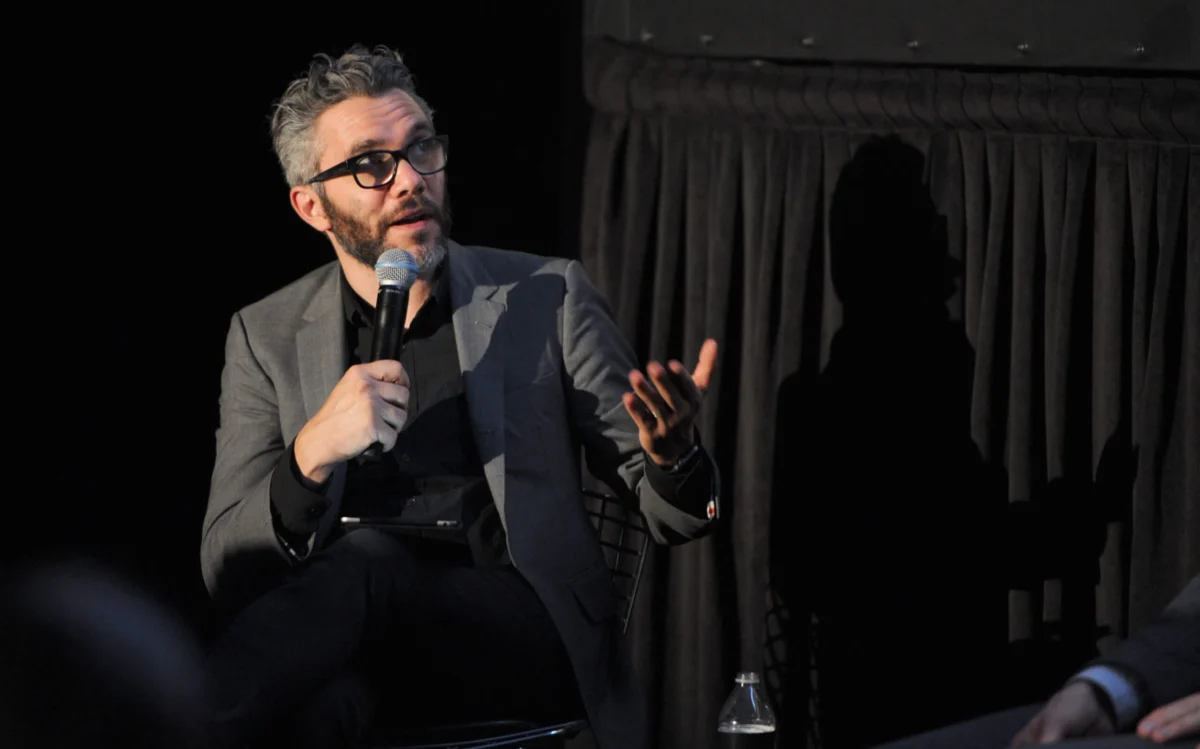
CBS News has officially appointed Nick Bilton, a veteran technology journalist and documentary filmmaker, as the new executive producer of 60 Minutes, marking a significant departure from the traditional leadership lineage of the most successful news program in American television history. The appointment comes at a pivotal moment for the broadcast, which has held the title of the number-one rated news program for 52 consecutive years. Bilton succeeds Tanya Simon, a 30-year veteran of the program who had served as executive producer since 2019. Unlike his predecessors, who typically climbed the ranks within the CBS News ecosystem, Bilton joins the network with no prior experience in running a traditional broadcast news operation, signaling a strategic shift toward digital-age storytelling and technological adaptation.
The move is the latest in a series of high-profile changes at Paramount Global, the parent company of CBS, following its merger with Skydance Media. Under the new leadership of Skydance founder David Ellison, CBS News and its editorial direction have come under intense scrutiny from both internal staff and industry analysts. Bilton’s arrival is widely viewed as a centerpiece of the vision held by CBS News editor-in-chief Bari Weiss, who seeks to modernize the division’s legacy brands while navigating a polarized political landscape and a rapidly evolving media economy.
A Non-Traditional Leader for a Legacy Brand
Nick Bilton’s career has been defined by his coverage of the intersection of technology, power, and culture. A former lead technology columnist for The New York Times, Bilton became a household name in media circles for his reporting on the early days of Silicon Valley’s giants. He is the author of several books, including Hatching Twitter, which chronicled the tumultuous founding of the social media platform. In recent years, Bilton has pivoted toward long-form visual storytelling, producing and directing documentaries for HBO and Netflix, including Unknown: Killer Robots and Biggest Heist Ever.
According to Bilton, his relationship with CBS News leadership began socially in Los Angeles, where he met Bari Weiss. Their professional collaboration deepened during the production of his recent documentaries, eventually leading to discussions about the future of 60 Minutes. Bilton’s lack of traditional newsroom management experience is a point of contention for some within the storied halls of the CBS Broadcast Center in New York. However, supporters of the move argue that his outsider perspective is exactly what is required to insulate the program against the "Nokia effect"—a reference Bilton uses to describe companies that fail to see technological disruption until it is too late.
The Corporate and Political Context of the Skydance Era
The leadership change at 60 Minutes cannot be viewed in isolation from the broader corporate maneuvers at Paramount Global. Following the merger between Skydance and Paramount, David Ellison has assumed a transformative role, overseeing a portfolio that includes the CBS Television Network, Paramount Pictures, and the Paramount+ streaming service. Ellison is currently exploring a potential merger between Paramount and Warner Bros. Discovery, a deal that would consolidate two of the largest media entities in the world.
Such a merger would require significant regulatory scrutiny and approval from the federal government. This corporate backdrop has led to internal anxieties at CBS News regarding the perceived political motivations behind editorial changes. In 2024, then-presidential candidate Donald Trump filed a lawsuit against 60 Minutes, alleging that the program deceptively edited an interview with his opponent, Kamala Harris, to present her in a more favorable light. In a move that shocked many veteran journalists at the network, Paramount chose to settle the lawsuit for $16 million.
The settlement was met with internal resistance. Longtime correspondent Scott Pelley and other senior staff members reportedly viewed the payout as an affront to the program’s editorial integrity. The atmosphere of uncertainty has been further compounded by the departure of veteran anchor Anderson Cooper, who announced his exit from the program earlier this month. Bilton has addressed these concerns directly, stating his commitment to editorial independence. "I will prove it with the work," Bilton said in a recent interview. "I’m dedicated to holding people in power to account."
Analyzing the "Nokia Moment" in Broadcast Media
Despite the internal turmoil, 60 Minutes remains a financial and ratings powerhouse. According to Nielsen data, the program’s viewership grew by 9% over the past year, an anomaly in an era where linear television audiences are generally in decline. This growth is a testament to the enduring strength of the 60 Minutes brand and its ability to attract a broad demographic even as news consumption shifts to social media and streaming platforms.
However, Bilton argues that current success can be a "lagging indicator" of a brand’s health. He points to historical examples where market leaders were at their peak just before a catastrophic decline triggered by technological shifts. "History tells you disruption doesn’t happen immediately when new technology comes along—it’s usually a few years later," Bilton noted. He cited the fact that Nokia saw its highest sales in 2008, the year after the iPhone launched, and The New York Times had record sales in 1999, just as the internet began to dismantle the traditional newspaper business model.
Bilton’s strategy for 60 Minutes appears to involve a "pivot before the precipice." While he has declined to provide specifics on his plan for the show, he has emphasized that he does not intend a "complete overhaul" that would alienate the program’s core audience. Instead, the focus is expected to be on diversifying the way 60 Minutes content is distributed and consumed, potentially leveraging AI, interactive digital formats, and more aggressive expansion into streaming ecosystems.
A Broader Programming Shakeup at CBS
The installation of Bilton at 60 Minutes is part of a larger pattern of restructuring at CBS under the Skydance-Paramount regime. Earlier this month, the network aired the final episode of The Late Show With Stephen Colbert. Despite the show’s consistent performance in the late-night ratings, the network declined to renew the program after 11 seasons, citing a desire to move in a different direction with its late-night strategy and cost structure.
These moves suggest a broader mandate to lean out the organization and retool its flagship properties for a post-broadcast world. The departure of Tanya Simon, who had been with the show for three decades, represents the end of an era. Simon was seen as a guardian of the "Don Hewitt" school of journalism—the founding philosophy of 60 Minutes that prioritized narrative-driven, high-impact investigative reporting. While Bilton shares a background in narrative storytelling, his medium and methodology are rooted in the digital and documentary spaces rather than the 20th-century newsroom.
Timeline of Key Events Leading to the Appointment
The following chronology outlines the series of events that culminated in the leadership change at 60 Minutes:
- September 2023: Initial reports surface regarding merger talks between Skydance Media and Paramount Global.
- Late 2023: Bari Weiss is appointed to a senior editorial role at CBS News, signaling a shift in the network’s ideological and strategic direction.
- Early 2024: Donald Trump files a defamation and deceptive editing lawsuit against CBS News over the 60 Minutes interview with Kamala Harris.
- June 2024: Paramount Global officially merges with Skydance Media, with David Ellison taking the helm.
- Early 2025: Paramount settles the Trump lawsuit for $16 million, leading to public and private pushback from CBS News veterans.
- May 2025: Anderson Cooper announces his departure from 60 Minutes.
- June 2025: CBS announces the cancellation of The Late Show With Stephen Colbert.
- June 2025: Nick Bilton is officially named Executive Producer of 60 Minutes, replacing Tanya Simon.
Implications for the Future of Journalism
The appointment of a technology specialist to lead a premier news program reflects a growing trend in the media industry where technical literacy and "platform thinking" are prioritized alongside traditional editorial judgment. For 60 Minutes, the challenge will be maintaining its reputation for "gold standard" journalism while adopting the rapid-fire pacing and algorithmic awareness of the modern media landscape.
The reaction from the broader journalistic community has been mixed. Media critics suggest that Bilton’s documentary background could bring a more cinematic and immersive quality to 60 Minutes segments. Conversely, purists worry that the lack of a traditional news background might lead to a softening of the program’s investigative edge or a shift toward "infotainment."
As Bilton prepares to meet with his new staff and unveil his specific roadmap in the coming weeks, the eyes of the media world are on CBS. Whether he can successfully navigate the internal skepticism of a veteran newsroom while satisfying the corporate demands of the Skydance-Paramount merger will determine the trajectory of 60 Minutes for its next half-century. For now, Bilton remains focused on the mission of the program. "We are on the precipice of change," he said. "The goal is to ensure 60 Minutes remains the most important hour on television, regardless of how or where people watch it."