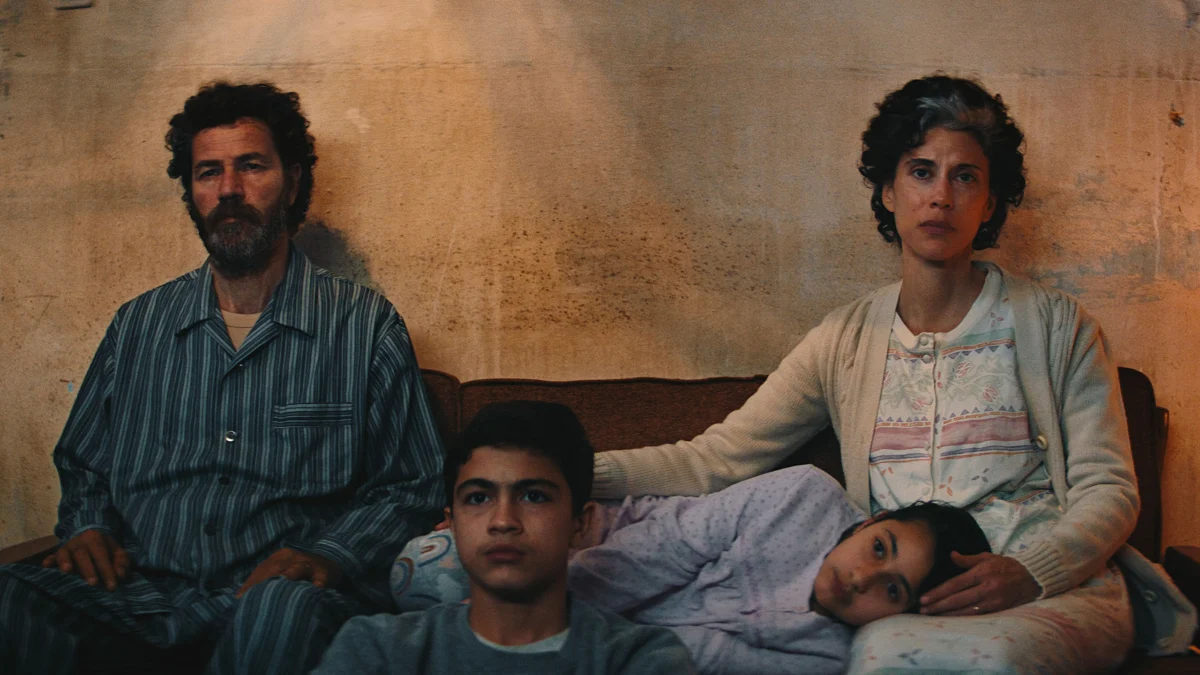
Cherien Dabis’s acclaimed third feature film, "All That’s Left of You," has transcended its specific narrative roots to resonate globally, garnering significant international attention and critical accolades. Premiering at the prestigious Sundance Film Festival in January 2025, the film embarked on a remarkable festival circuit, securing the Audience Award for Best International Feature at the Sydney Film Festival, the top prize at the Malaysia International Film Festival, an Audience Award at Leiden, and a Silver Yusr at the Red Sea International Film Festival. Its profound impact was further underscored by Jordan’s selection of the film as its official submission for the Academy Award for Best International Feature, where it successfully reached the shortlist. A subsequent nomination for Best International Film at the Independent Spirit Awards solidified its standing in the international cinematic landscape. This widespread recognition for a work deeply embedded in Palestinian history highlights a narrative power that speaks to universal themes of displacement, resilience, and familial bonds, extending its reach far beyond its regional origins.
The film meticulously chronicles the trajectory of a Palestinian family across three pivotal generations, commencing with the seminal events of the Nakba in 1948 and extending to the present day. The narrative opens in the historic city of Jaffa, where the patriarch, Sharif, makes a resolute stand to protect his ancestral home amidst the advancing Israeli forces. His unwavering refusal to abandon his land comes at a profound personal cost, leading to the scattering of his family and initiating a decades-long separation. The story then unfolds with deliberate pacing, tracing the family’s enduring struggles. Thirty years later, an aged Sharif resides in the West Bank alongside his son, Salim, Salim’s wife, Hanan, and their children. A harrowing encounter at a checkpoint serves as a brutal turning point, hardening the spirit of their eldest son, Noor, and ultimately steering the family toward unforeseen tragedy. Hanan’s poignant narration becomes the emotional anchor of this expansive historical account, imbuing the broad timeline with an intimate and deeply personal resonance.
A Generational Tapestry of Resilience and Resistance
Director and screenwriter Cherien Dabis navigates the complex historical and emotional terrain of "All That’s Left of You" with a quiet yet undeniable assurance. Dabis eschews a didactic approach, instead allowing history to serve as the very fabric of her characters’ lived experiences. The film’s profound meaning emerges organically through the personal journeys and interactions of its protagonists, rather than through overt pronouncements. Sharif embodies an unyielding devotion to his land, a symbol of deep-rooted connection and defiance. His son, Salim, carries the burden of daily humiliation and the quiet struggle for survival under occupation, a testament to the enduring spirit of his generation. Hanan, the family matriarch, represents the formidable strength required to maintain familial cohesion, her actions driven by a fierce and contained dignity. Noor, the youngest generation, embodies a nascent frustration with the perceived patience of his elders, a yearning for a more direct response to their circumstances.
The film’s deliberate pace, extending to a 146-minute runtime, demands a comparable patience from its audience. However, this investment is richly rewarded as each subsequent era deepens the emotional weight and complexity of the narrative. Dabis, whose earlier work "Amreeka" demonstrated a keen sensibility for stories of dislocation, here expands her canvas considerably without sacrificing the intimate focus on individual lives. This grander scope allows for a more comprehensive exploration of the intergenerational impact of historical events, illustrating how past traumas and struggles shape the present and future of the family. The film’s structural integrity ensures that the cumulative emotional charge intensifies as the narrative progresses, creating a powerful and lasting impact.
Performances Grounded in Authenticity
The performances within "All That’s Left of You" form the bedrock of its emotional power. Saleh Bakri delivers a performance of profound restraint as Salim, portraying a man who internalizes immense anger and sorrow to protect his children from the harsh realities of their world. His grounded portrayal is nothing short of devastating, capturing the quiet dignity of a father grappling with overwhelming circumstances. Cherien Dabis herself delivers a remarkable performance as Hanan, imbuing the character with both warmth and an unyielding inner strength. Her portrayal of a mother striving to preserve her family’s identity and well-being amidst profound adversity is deeply moving.
The casting of Mohammad Bakri as the elder Sharif alongside his real-life sons, Saleh and Adam Bakri, lends the family dynamic an almost documentary-like authenticity. This familial connection infuses their interactions with a palpable depth and history, enhancing the film’s credibility and emotional impact. Maria Zreik, alongside the young actors who portray Noor, completes an ensemble cast that consistently transcends mere performance. Each actor brings a lived-in quality to their role, imbuing the film with a raw, unvarnished truth that eschews superficial polish. The collective commitment to authenticity creates a powerful sense of verisimilitude, allowing the audience to connect deeply with the characters’ experiences.
Craftsmanship Elevating the Narrative
The technical and artistic contributions to "All That’s Left of You" are integral to its success in conveying its complex narrative and emotional depth. Christopher Aoun’s cinematography masterfully shifts between the warm, golden hues of pre-1948 Jaffa, evoking a sense of idyllic past, and the starker, more somber tones of the occupied present. Even in its most harrowing moments, Aoun’s visual language retains a profound beauty, underscoring the enduring human spirit against a backdrop of hardship.
Tina Baz’s editing is a quiet triumph, seamlessly weaving together four distinct time periods into a cohesive and engaging narrative flow. Her skilled hand ensures that the audience remains anchored within the story, never feeling adrift amidst the temporal shifts. This intricate temporal architecture is crucial to understanding the long-term consequences of historical events on subsequent generations. Amine Bouhafa’s musical score plays a vital role in enhancing the film’s emotional resonance without resorting to sentimentality. The score rises and falls with the narrative, accentuating moments of sorrow and resilience alike, always serving the story with understated elegance. The overall craftsmanship of the production is characterized by a plain, unforced dignity, reflecting the respect and care with which the subject matter has been handled.
A Vital Witness to History
"All That’s Left of You" stands as a deeply moving cinematic achievement, a family saga that significantly expands the scope of what can be effectively conveyed within a single film. It manages to educate its audience without preaching, to mourn its losses without succumbing to despair, and to treat its viewers with a maturity that respects their capacity for nuanced understanding. The film’s concluding image is one that lingers, resonating long after the credits have rolled and the lights have returned to the theater. For individuals seeking cinema that bears honest witness to history, offering a profound exploration of human experience against a backdrop of significant geopolitical events, "All That’s Left of You" is an essential viewing. It is a work of profound empathy, unflinching tragedy, and unwavering pride, a testament to the enduring strength of the human spirit.
Context and Significance: The Palestinian Experience on Screen
The international success of "All That’s Left of You" arrives at a time when the global appetite for diverse and authentic cinematic voices continues to grow. The film’s focus on the Palestinian experience, a narrative often underrepresented or misrepresented in mainstream media, is particularly significant. By tracing the impact of the Nakba and subsequent decades of displacement and occupation on a single family, Dabis provides a deeply personal and humanizing perspective on a complex political reality.
The Nakba, meaning "catastrophe" in Arabic, refers to the mass displacement and dispossession of Palestinians during the 1948 Arab-Israeli War. This event led to the displacement of hundreds of thousands of Palestinians from their homes and lands, shaping the Palestinian identity and their ongoing struggle for self-determination. The film’s narrative arc, spanning from this foundational event to the present, allows for an exploration of the intergenerational trauma and resilience that have characterized Palestinian life for over seven decades.
Festival Circuit and Award Recognition: A Global Footprint
The film’s extensive festival run is a testament to its compelling narrative and universal themes. The Sundance Film Festival, a globally recognized launchpad for independent cinema, provided a prestigious platform for its premiere. The subsequent awards and recognitions underscore the film’s ability to connect with diverse audiences and critics alike:
- Sundance Film Festival (January 2025): Premiere and initial critical reception.
- Sydney Film Festival (June 2025): Audience Award for Best International Feature. This award, decided by public vote, highlights the film’s broad appeal and emotional resonance with a general audience.
- Malaysia International Film Festival (June 2025): Top Prize. This signifies critical acclaim and recognition from a key Asian film festival, demonstrating the film’s ability to transcend cultural barriers.
- Leiden Film Festival (October 2025): Audience Award. Another testament to the film’s connection with audiences, showcasing its ability to move and engage viewers.
- Red Sea International Film Festival (December 2025): Silver Yusr. This prestigious award from a major festival in the Middle East highlights the film’s cultural significance and artistic merit within its regional context and beyond.
- Academy Awards (Shortlisted for Best International Feature, February 2026): Jordan’s official submission and subsequent shortlisting represent a significant achievement, bringing Palestinian cinema to the forefront of global awards consideration.
- Independent Spirit Awards (March 2026): Nomination for Best International Film. This nomination from a prominent independent film awards body further solidifies the film’s critical standing and artistic merit.
Broader Implications and Impact
The widespread acclaim for "All That’s Left of You" has several important implications for cinema and the discourse surrounding the Palestinian experience. Firstly, it demonstrates that stories rooted in specific cultural and historical contexts can achieve universal appeal when told with artistic integrity and emotional honesty. The film’s success challenges the notion that audiences are only receptive to narratives that are detached from political realities.
Secondly, the film’s journey through major international film festivals and awards ceremonies provides a crucial platform for Palestinian voices and narratives. It contributes to a more nuanced understanding of the Palestinian struggle, moving beyond political headlines to focus on the human dimension of displacement and resilience. The film’s ability to resonate with audiences across different cultures suggests a shared human capacity for empathy and a desire to understand diverse perspectives.
Furthermore, the film’s critical and commercial success can encourage further investment in and distribution of Palestinian cinema, fostering a more robust and diverse global film landscape. By acknowledging and celebrating such works, the international film community actively participates in broadening the scope of cinematic storytelling and promoting cultural understanding. "All That’s Left of You" is not merely a film; it is a powerful testament to the enduring human spirit and a vital contribution to the ongoing global conversation about history, identity, and belonging.