
The annual media ritual known as the "upfronts"—the high-stakes week where television networks and streaming giants pitch their upcoming programming to advertisers—underwent a fundamental transformation in May 2026. While the stages at Lincoln Center and other iconic New York venues were once the exclusive domain of Hollywood A-listers and network executives, the 2026 presentations signaled a definitive shift in the media hierarchy. Creator-led content, once relegated to the periphery of "digital-first" strategies, has now moved to the center of the frame, sharing equal billing with live sports and premium scripted dramas. This evolution reflects a broader industry recognition that the distinction between "professional" studio content and "independent" creator content is rapidly dissolving in the eyes of both consumers and marketers.
The Economic Engine: A $44 Billion Shift
The primary driver behind this integration is a massive migration of advertising capital. According to the latest report from the Interactive Advertising Bureau (IAB), advertiser spending on creator-led content has reached an unprecedented scale. In 2025, the sector commanded $37 billion in ad spend; by the end of 2026, that figure is projected to climb to $44 billion. This growth rate significantly outpaces traditional linear television advertising, which has faced headwinds as viewership continues to fragment across digital platforms.
Brian Albert, Managing Director of YouTube Solutions, characterized this shift as a recognition of the cultural authority held by modern digital personalities. Albert noted during the YouTube Brandcast event that creators are no longer just "influencers" but are the "storytellers, tastemakers, and stars" of the current generation. The value proposition for advertisers is rooted in the "trust economy"—the intimate, high-engagement relationship creators build with their communities, which often results in higher brand recall and conversion rates than traditional 30-second spot placements.
YouTube’s Dominance and the Battle for the Living Room
The data supporting this shift is underscored by Nielsen’s monthly "The Gauge" reports, which track domestic television and streaming usage. As of February 2026, YouTube maintained its position as the most-watched streaming platform in the United States, accounting for 12.7% of total streaming viewership. This puts it significantly ahead of Netflix, which held an 8.4% share.
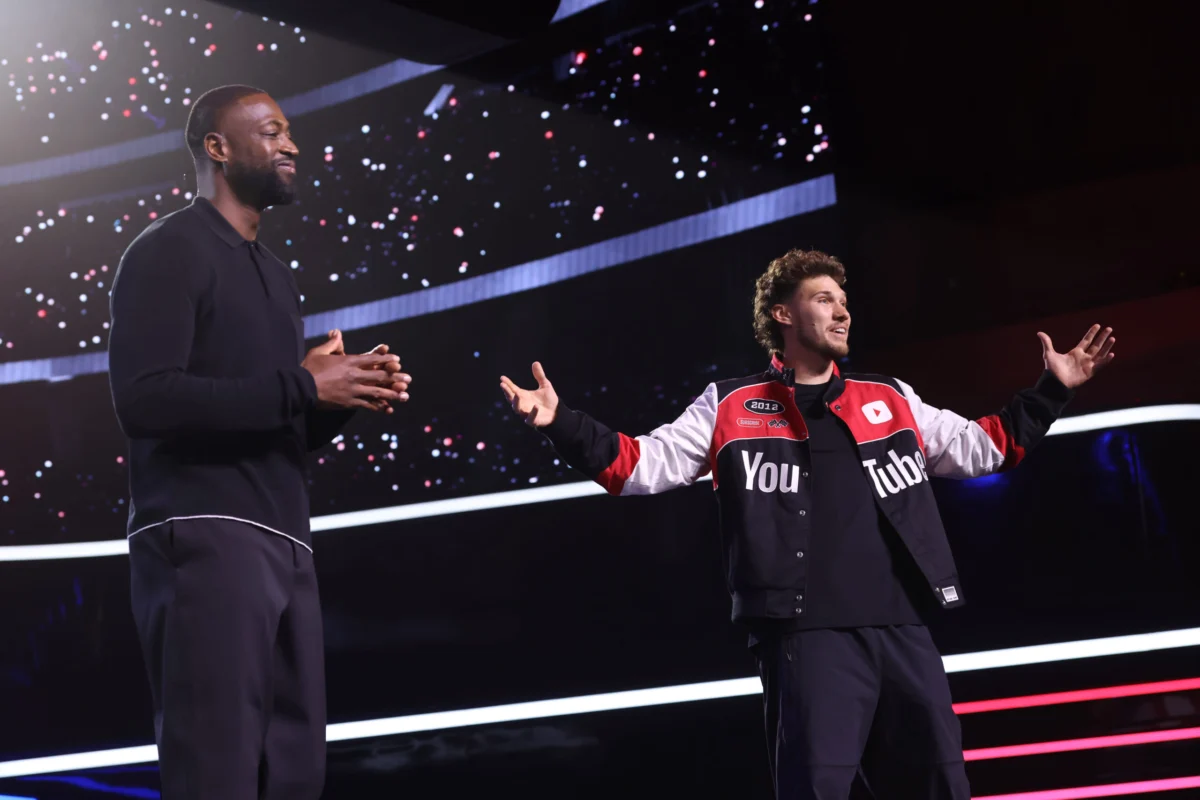
Crucially, YouTube’s growth is increasingly happening on the "big screen." As more consumers access the platform via Connected TV (CTV) apps rather than mobile devices, the viewing experience becomes indistinguishable from traditional television. This has forced media agencies to rethink their "upfront" commitments. During its Brandcast presentation on May 13, YouTube leveraged this dominance by showcasing a diverse roster of talent, including sports personality Dwyane Wade, creator Jesse "Jesser" Riedel, comedian Trevor Noah, and podcasting powerhouse Alex Cooper. The message to advertisers was clear: YouTube offers the scale of a broadcast network with the precision and engagement of a social platform.
Legacy Media’s Strategic Pivot: Fox and Warner Bros. Discovery
The 2026 upfronts revealed that legacy media companies are no longer viewing creators as competition, but as essential components of their own ecosystems. Warner Bros. Discovery (WBD) and Fox Corp. both dedicated significant portions of their presentations to creator-led initiatives, particularly within the unscripted, food, and lifestyle genres.
Warner Bros. Discovery has intensified its efforts to bridge the gap between social media and its linear networks. Karen Bronzo, WBD’s Chief Global Marketing Officer for U.S. Networks and News, emphasized that the company has been integrating influencers for several years to expand its reach. This year, the strategy reached a new milestone with the expansion of The Food Network into YouTube-first original programming. Chef Esther Choi, a digital-native star, is leading a new series specifically designed for the network’s social channels, allowing marketers to tap into a "one-to-one relationship" with fans that traditional broadcast formats struggle to replicate.

Fox Corp. followed a similar trajectory by launching Fox Creator Studios earlier this year. This digital-first division is focused on developing new formats with "next-gen talent." At Fox’s upfront pitch, the company highlighted the role of Gordon Ramsay—a figure who successfully straddles the world of Michelin-star dining, network television, and viral TikTok content. Fox’s free, ad-supported streaming service (FAST), Tubi, has become the primary laboratory for this experiment. By inking exclusive deals with YouTube stars like Jesser, Tubi is successfully siphoning Gen Z audiences away from traditional social feeds and into its own ad-supported environment.
The Professionalization of the "360-Degree" Podcast
The integration of creator content is perhaps most visible in the evolution of podcasting. What was once an audio-only medium has transformed into a "360-degree" content experience, where video versions of podcasts are distributed across YouTube, Spotify, and social media. This trend was epitomized by Amazon’s Wondery division, which used the upfronts to highlight its multiyear deal with Oprah Winfrey.
"The Oprah Podcast" now serves as a blueprint for modern creator content: it includes long-form video, audio distribution, and short-form social clips, all supported by a massive library of archival content. Angie More, Head of Creator Advertising Partnerships at Amazon, noted that creators are increasingly demanding the ability to reach audiences "everywhere," necessitating a platform-agnostic approach to advertising sales. For Amazon, the inclusion of a global icon like Winfrey alongside digital-native creators demonstrates that the "creator" label now applies to any talent that can command a direct, multi-platform audience.
Efficiency and the "Bang for the Buck" Argument
The movement toward creator-led content is also fueled by the escalating costs of live sports rights. As media companies pay billions for NFL, NBA, and MLB broadcast rights, they are forced to seek high-margin, lower-cost programming to balance their portfolios. While a single NFL game commands the highest ad rates in the industry, creator content offers what industry executives call "more bang for the buck."
The economics are simple: the production costs for a high-quality video podcast or a creator-led cooking show are a fraction of the cost of a scripted drama or a live sporting event. Furthermore, streaming platforms allow for more granular data targeting. Advertisers are no longer just buying "eyeballs"; they are buying specific demographics—such as the elusive Gen Z and Gen Alpha cohorts—who are more likely to trust a recommendation from a creator they follow than a celebrity in a traditional commercial.
Julie Clark, Senior Vice President of Media and Entertainment at TransUnion, observed that the content landscape has shifted so dramatically that the very definition of a "studio" is being rewritten. "Where there used to be a distinct difference between studio-led content and creator content, it’s merging into a singular view," Clark said. This "singular view" is now the baseline for how upfronts are contemplated and activated.
Implications for the Future of Media
The 2026 upfronts may be remembered as the moment the "walled gardens" of traditional Hollywood finally opened their gates to the creator economy. The implications of this shift are profound:
- Talent Mobility: The pathway to "stardom" is no longer a one-way street from digital to traditional. Talent like Gordon Ramsay and Dwyane Wade are moving toward digital formats, while creators like Jesser are being given their own series on major streaming platforms.
- Ad-Supported Growth: As subscription fatigue sets in for premium SVOD (Subscription Video on Demand) services, the demand for ad-supported inventory is surging. Creator content provides a nearly infinite supply of inventory that is naturally suited for mid-roll and pre-roll advertisements.
- Measurement Standardization: With billions of dollars at stake, the industry is moving toward more standardized measurement tools that can compare the impact of a YouTube view with a traditional Nielsen TV rating. The "merging into a singular view" described by industry experts requires a unified currency for advertisers.
As the week of presentations concluded in New York, the consensus among media buyers was that the traditional "upfront" is evolving into a "cross-platform" negotiation. The $44 billion projected spend on creators is not just a trend; it is a structural realignment of the media industry. For the legacy networks, the challenge is no longer just competing with YouTube—it is figuring out how to become more like it. For the creators, the challenge is maintaining the authenticity that built their communities while scaling their operations to meet the demands of the world’s largest advertisers. In this new landscape, the winner is whoever can command attention, regardless of whether that attention is captured on a smartphone or a 75-inch television.