


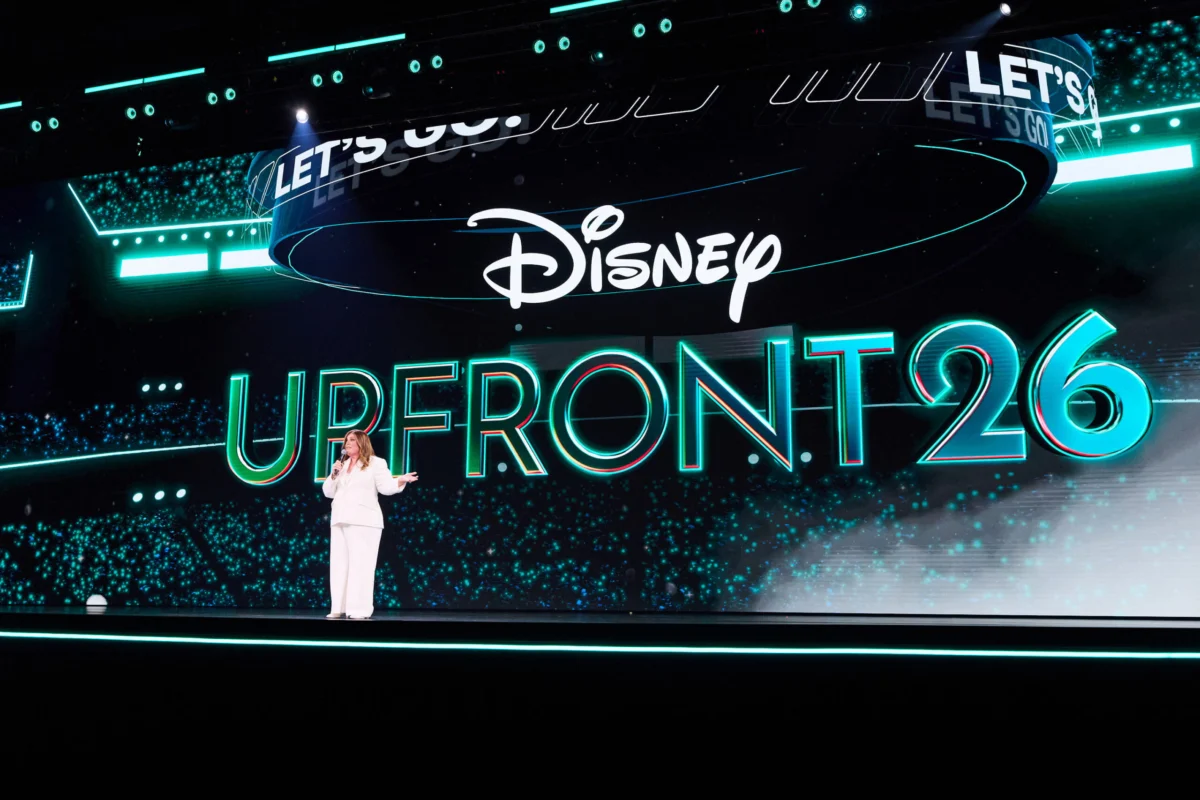
As Rita Ferro, Disney’s President of Global Advertising, stepped onto the stage at the company’s 2026 upfront presentation, the atmosphere reflected a significant shift in the media landscape. The event, a high-stakes pitch to the world’s largest brands and agencies, was introduced by actor Paul Anthony Kelly, who recently portrayed John F. Kennedy Jr. in the FX series Love Story. The endorsement from a rising star in the Disney ecosystem served as more than just a celebrity cameo; it was a calculated demonstration of what Ferro describes as the "Disney difference"—a trifecta of trust, innovation, and unrivaled fandom. This moment marked a pivotal point in Ferro’s 29-year career at The Walt Disney Company, positioning her at the helm of an advertising division that is increasingly becoming the financial backbone of the entertainment giant’s diversified portfolio.
Ferro’s rise within Disney is a testament to the company’s internal stability during a period of broader industry volatility. Having served in roles across ESPN International, Disney Media Network’s Kids and Family, and the now-defunct Disney Interactive, Ferro has navigated the transition from traditional linear television to the complex, data-driven world of streaming and digital engagement. In 2018, she was appointed President of Advertising in the U.S., and by 2023, her mandate expanded to oversee the business globally. Today, she leads advertising sales for an expansive empire that includes entertainment networks, news outlets, and sports properties across linear, digital, and streaming platforms.
The Strategic Vision of One Disney under Josh D’Amaro
The current era of Disney advertising is defined by the "One Disney" strategy, a corporate philosophy spearheaded by the newly installed CEO, Josh D’Amaro. D’Amaro, who took the reins in March 2026 following Bob Iger’s second tenure, has focused on breaking down silos between the company’s various divisions. For Ferro, this means advertising is no longer a localized function of media sales but an integrated component of the entire Disney experience. The strategy seeks to tie brand partnerships not only to television commercials but also to movie studio collaborations and theme park activations.
Under D’Amaro’s leadership, the company’s goal is to deliver a connected and personalized experience to consumers. This integration is essential for monetization. As CFO Hugh Johnston noted during a recent quarterly earnings call, the objective is to create and distribute stories in a way that increases the lifetime value of consumers. By leveraging the "One Disney" framework, Ferro can offer advertisers a "one-stop shop" that spans from the prestige of the Oscars and Grammys to the high-engagement environments of Disney+ and ESPN.
From Miami to Manhattan: The Making of an Ad Executive
Ferro’s professional journey began far from the corporate boardrooms of New York. The daughter of Cuban immigrants who arrived in the United States just before the Cuban Revolution, she was raised in Miami. After graduating from Florida International University, she moved to New York with aspirations of becoming a copywriter and art director. However, a quick realization that her talents lay in the business and fundraising side of production led her to a career in media sales.
Her first major breakthrough came at MTV Latin America during its nascent stages in 1993. At the time, cable television in the region was an unpolished industry with no established blueprint. Ferro thrived in this unsophisticated environment, helping to build a market from the ground up. This experience proved invaluable when she joined Disney, where her bilingual skills and deep understanding of international markets allowed her to ascend through the ranks of ESPN International.
Colleagues, including ESPN Chairman Jimmy Pitaro, highlight Ferro’s "in-the-field" leadership style. Despite her executive status, she remains deeply involved in client relations and frequently travels to major industry events such as the CES trade show in Las Vegas, the Winter Olympics, and various sporting events. Pitaro emphasizes that while Ferro manages a massive global team, she views her primary role as being an active participant in the marketplace, ensuring that Disney’s expensive sports rights are effectively monetized.
Technology as the Competitive Edge: The Ad Tech Stack
One of the most significant transformations under Ferro’s leadership has been the overhaul of Disney’s advertising technology. Recognizing early on that the company needed to control its own destiny rather than relying on third-party platforms, Ferro pushed for the development of an in-house ad tech stack. This move was designed to allow Disney to compete with digital giants like Google and Meta on a level playing field.
Central to this technological pivot is the Disney Audience Graph, a proprietary first-party data tool that provides deep insights into viewership behavior across all Disney platforms. By integrating measurement partnerships and unveiling an ad-supported monthly active user methodology in 2025, Disney has positioned itself as a leader in precision targeting. According to Kevin Krim, CEO of ad data firm EDO, Disney’s early and aggressive investment in tech-driven platforms set it apart from competitors who hesitated to commit to such infrastructure.
Josh Mattison, Executive Vice President of Digital Revenue at Disney, credits Ferro with the clarity of thought required to scale these tools globally. The goal is to meet the market’s expectations for transparency and effectiveness, ensuring that every dollar spent by an advertiser can be measured against specific consumer outcomes.
The Streaming Pivot and the Return of Advertising
For years, the primary metric of success in the media industry was streaming subscriber growth. However, as the market reached saturation, Wall Street’s focus shifted toward profitability. This transition has placed a renewed emphasis on advertising revenue. While Hulu was an early adopter of the ad-supported model—fully integrated into Disney by 2025—the company’s flagship service, Disney+, only added an ad tier in late 2022.
The results of this shift are now appearing in the company’s financial reports. In the most recent quarterly report, Disney’s entertainment segment saw streaming revenue offset declines in linear affiliate fees. Specifically, Disney+ reported double-digit advertising revenue growth compared to the previous year. This growth is critical as traditional cable TV continues to see a decline in subscribers and the theatrical industry recovers from post-pandemic shifts in consumer behavior.
Sports: The High-Stakes Anchor of Live Advertising
In the current media ecosystem, live sports remains the most reliable driver of large, aggregated audiences. This reality has led to astronomical media rights costs, including the NFL’s $111 billion deal and the NBA’s $77 billion agreement. For Disney, these investments must be justified through aggressive monetization.
Ferro’s role is central to this effort. With ESPN set to air the Super Bowl for the first time in 2026—returning the game to ABC after a two-decade hiatus—the stakes could not be higher. Reports suggest that 30-second commercial spots for the event are expected to command as much as $10 million. The launch of the ESPN direct-to-consumer app in August 2025 further expanded Ferro’s inventory, allowing her to sell sponsorships across both linear networks and exclusive streaming content. CFO Hugh Johnston has reiterated that live sports are "massively valuable" to advertisers who are hungry for the "big aggregated audiences" that only live events can provide.
The Next Frontier: International Growth and Global Consistency
As the U.S. market matures, Disney is looking toward international expansion as its next major growth engine. CEO Josh D’Amaro has identified scaling Disney+ outside the U.S. as a primary objective, supported by increased investments in local content. For Ferro, this means replicating the success of the U.S. ad-supported model in diverse global markets.
Ferro’s upcoming agenda includes a focus on European and Latin American markets, highlighted by her participation in VivaTech in Paris—an event she describes as "the CES of Europe." Her strategy involves understanding the nuances of local markets while maintaining a consistent global standard for Disney’s advertising products. She views the international landscape not just as a challenge of scale, but as an opportunity to make a tangible impact on the company’s bottom line through cultural relevance and technological adaptation.
Conclusion: Navigating a Shifting Industry
Rita Ferro’s tenure at Disney reflects the broader evolution of the media industry itself. From the "unsophisticated" early days of cable to the high-tech, data-saturated world of global streaming, she has remained a constant force within the company. As Disney navigates the complexities of the 2026 media environment—balancing the decline of linear TV with the rise of ad-supported streaming and the exorbitant costs of sports rights—Ferro’s ability to bridge the gap between creative storytelling and hard data will be the determining factor in the company’s commercial success. By focusing on the "Disney difference" of fandom and innovation, Ferro is not just selling commercial time; she is architecting the future of how brands interact with one of the world’s most powerful entertainment ecosystems.