Comcast Corporation has officially announced a sweeping plan to bifurcate its massive global operations, separating its high-growth broadband and wireless businesses from its iconic media and entertainment assets. This structural overhaul, announced on Monday, involves spinning off the media units of NBCUniversal and the European telecommunications giant Sky into a separate, publicly traded entity. While the move has immediately ignited a firestorm of speculation across Wall Street regarding potential mergers and acquisitions (M&A), Comcast’s top leadership has moved swiftly to dampen expectations of an imminent sale or further consolidation.
The proposed separation represents the second major structural realignment for the Philadelphia-based conglomerate in recent months. Earlier, the company initiated the spin-off of its cable television networks—including high-profile channels such as CNBC and MSNBC—into a new company tentatively titled Versant Media Group. The latest decision to carve out the remainder of NBCUniversal, including the Universal film and television studios, the Peacock streaming service, and the Universal theme parks, marks a definitive end to the "synergy" era that defined the company’s strategy for the past decade and a half.
A Legacy of Integration Faces a New Reality
The history of Comcast’s current form dates back to its landmark 2011 acquisition of a controlling stake in NBCUniversal from General Electric, a deal that was fully completed in 2013. At the time, the $30 billion transaction was hailed as a visionary move to integrate "pipes" (distribution) with "poetry" (content). By owning both the broadband infrastructure and the content flowing through it, Comcast sought to insulate itself from the volatility of the media market while leveraging its massive subscriber base to bolster its television and film properties.
However, the landscape of the media industry has shifted seismically since that era. The meteoric rise of Netflix and the subsequent "streaming wars" have eroded the profitability of traditional linear television. Meanwhile, the broadband market, once a reliable engine of "gangbusters" growth for Comcast, has reached a point of saturation. The company now faces intense competition from fixed-wireless 5G providers like T-Mobile and Verizon, as well as the continued expansion of fiber-optic networks.
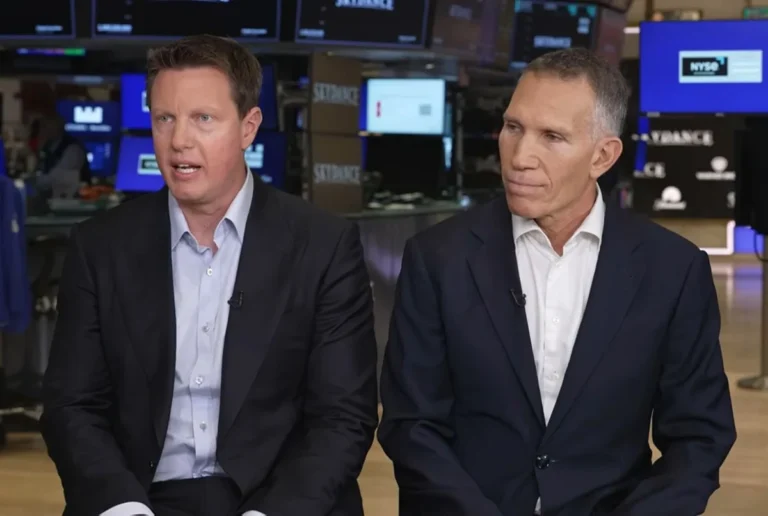
According to internal sources familiar with the discussions, the idea of a total separation of NBCUniversal was not seriously entertained during the initial planning stages of the Versant Media Group spin-off. However, as the competitive pressures in both the media and telecommunications sectors accelerated, the executive team, led by co-CEO Brian Roberts and Mike Cavanagh, determined that a more radical split was necessary to unlock shareholder value.
Executive Denials vs. Analyst Projections
Despite the clear signals that a split makes the individual components of Comcast easier to value and potentially easier to acquire, Comcast leadership has been adamant that this is not a precursor to a sale. During a conference call with investors on Monday, Brian Roberts—the son of founder Ralph Roberts and the controlling shareholder of the company—offered a blunt "absolutely not" when asked if the separation was a setup for future deals.
Roberts will not serve as CEO of either of the resulting companies but will maintain a significant leadership role and controlling interest in both. He emphasized that the move is designed to allow each entity to "aggressively pursue its own organic growth strategies." Mike Cavanagh, who is slated to lead the media-focused entity, echoed these sentiments, stating that the new NBCUniversal and Sky would focus on building and investing in their own right.
Wall Street analysts, however, remain skeptical of these denials. Industry observers point to recent history as a guide, specifically the trajectory of Warner Bros. Discovery (WBD). Before WBD entered into sale discussions and attracted interest from major players like Netflix and Paramount-Skydance, it underwent a similar structural separation from its former parent, AT&T. Mike Proulx, a research director at Forrester, noted that Comcast appears to be following a familiar "playbook" that maximizes the acquisition potential of its assets, particularly Peacock and the Universal film library.
The Regulatory Gauntlet and Market Obstacles
If Comcast or the newly formed NBCUniversal entity were to pursue a major merger, they would face a daunting array of regulatory hurdles. The media industry is already heavily consolidated, and the Department of Justice (DOJ) and the Federal Communications Commission (FCC) have historically viewed large-scale media tie-ups with scrutiny.
One of the most significant barriers involves the NBC broadcast network. Federal regulations generally prohibit a single company from owning more than one of the "Big Four" national networks (NBC, ABC, CBS, and Fox). This rule effectively eliminates the possibility of a merger between NBCUniversal and Disney (owner of ABC) or Paramount Global (owner of CBS).
Furthermore, even if a deal were to focus solely on studio assets and streaming, the sheer size of NBCUniversal makes it a difficult target for smaller competitors to "swallow." With a valuation expected to be in the tens of billions of dollars, only a handful of global giants—such as Netflix, Amazon, or Apple—would have the financial firepower to execute such an acquisition. Netflix has previously expressed interest in specific studio assets but has shown little appetite for the "linear baggage" of traditional cable networks and broadcast stations that still comprise a large portion of NBCUniversal’s revenue.
The Future of the "Cord Keepers": Broadband and Xfinity
The remaining half of the Comcast empire—comprising the Xfinity-branded broadband, mobile, and pay-TV services—faces its own set of strategic challenges. For years, Comcast and its primary rival, Charter Communications, dominated the American internet landscape. However, recent quarterly reports have shown a stagnation in broadband customer growth, with some periods even recording net losses as consumers migrate to cheaper or more flexible wireless alternatives.
The market’s reaction to Comcast’s announcement was telling: shares of Charter Communications surged 10% on Monday. This jump reflected investor optimism that a split Comcast might finally be able to merge with Charter, creating a singular American cable titan. There is historical precedent for such a move; in 2014, Comcast attempted to acquire Time Warner Cable, only to be blocked by regulatory opposition. Charter eventually acquired those assets.
However, analysts like Craig Moffett of MoffettNathanson warn that a Comcast-Charter merger is far from a certainty. Such a deal would require approval not just from federal regulators, but from individual state public service commissions. In states with strict consumer protection laws or those controlled by Democratic administrations—such as Massachusetts and Maryland—the opposition to a massive telecommunications monopoly would likely be "staunch."
Additionally, the financial burden of such a merger would be immense. Charter is currently finalizing a merger with Cox Communications, a deal that is expected to leave it with a debt load exceeding $100 billion. If a combined Comcast-Charter entity were to emerge, the resulting debt profile could be precarious, especially as the high-cost cable TV business continues to decline in relevance.
Strategic Optionality and the Long-Term Horizon
While an immediate transaction may not be on the horizon, industry veterans believe the split is fundamentally about "optionality." Jonathan Miller, CEO of Integrated Media, suggested that while a deal might not be imminent, the stage is being set for a more flexible M&A environment in three to five years.
Technical and tax-related factors also play a role in the timing of any future moves. Comcast has estimated that the split will take approximately one year to finalize. Under U.S. tax regulations, specifically those governing "Reverse Morris Trust" transactions or similar spin-off structures, acquiring companies often face a mandatory waiting period before they can merge with a recently spun-off target without triggering massive tax liabilities.
Conclusion: A New Era for a Media Dynasty
The decision to split Comcast marks the end of an era for one of America’s most storied corporate dynasties. Since Ralph Roberts founded the company as a small cable system in Mississippi in the 1960s, Comcast has been defined by its relentless pursuit of scale and vertical integration. By undoing the NBCUniversal acquisition, the company is acknowledging that the "bigger is better" philosophy of the 2010s may no longer be viable in a world of fragmented viewership and intense technological competition.
As the two new entities prepare for their independent futures, the industry will be watching closely to see if Brian Roberts and Mike Cavanagh can indeed drive organic growth, or if the "cold water" they poured on deal speculation was merely a strategic pause before the next great wave of media consolidation. For now, the "pipes" and the "poetry" are going their separate ways, leaving a transformed media landscape in their wake.