


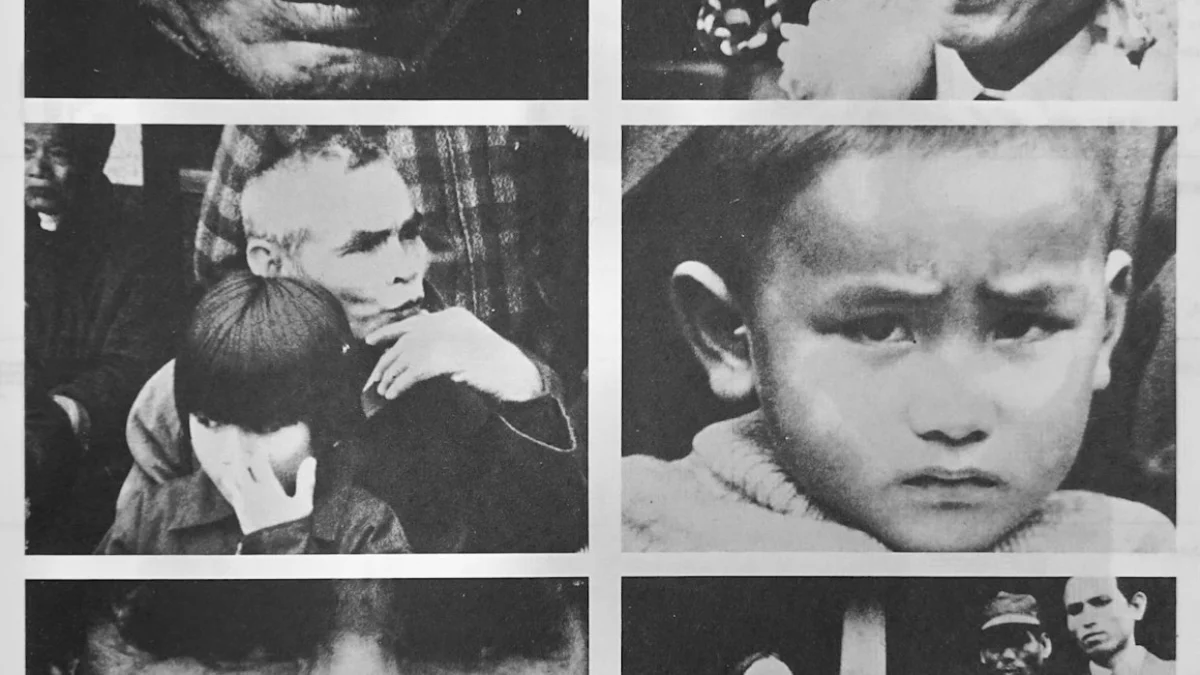
The 15th edition of the Taiwan International Documentary Festival (TIDF), held in May 2024, marked a significant milestone in the evolution of nonfiction cinema within the Asia-Pacific region. As one of the premier platforms for politically engaged documentary filmmaking, the festival showcased over 150 films that navigated the complex intersections of colonial history, national identity, and modern social resistance. Since its inception in 1998, a decade after the lifting of martial law in Taiwan, the TIDF has served as a critical venue for voices that were historically suppressed under the Kuomintang’s (KMT) authoritarian rule. This year’s program underscored the festival’s enduring commitment to "Asian Visions," presenting a curated selection that challenged dominant historical narratives through recently restored archival footage and contemporary experimental works.
Historical Evolution of the Taiwan International Documentary Festival
To understand the significance of the 2024 program, it is essential to trace the chronology of the TIDF. The festival was established during a period of intense democratic transition in Taiwan. Following the end of the "White Terror" era in 1987, the island nation experienced an explosion of independent media activism. Small-scale video collectives began documenting social movements, labor strikes, and environmental protests, creating a "Green Team" of activists who used camcorders as tools for political liberation.
In 1998, the first TIDF was launched to provide a formal structure for this burgeoning movement. At the time, the Yamagata International Documentary Film Festival in Japan (founded in 1989) was the only other major regional hub for Asian documentary cinema. The TIDF filled a vital gap, specifically fostering a "Taiwan Competition" and an "Asian Visions Competition" to promote regional solidarity. Over the past 26 years, the festival has transitioned from a biennial event to a major international fixture, now overseen by the Taiwan Film and Audiovisual Institute (TFAI). The 2024 edition reflects this institutional growth, benefiting from the TFAI’s extensive efforts in digital restoration and archival preservation.
The Resurrection of Archive: Li Guang-hui and the Myth of Return
One of the most profound entries in the 2024 program was the world premiere of Archive: Li Guang-hui (1979/2024). This 30-minute work was compiled from television newsreel outtakes by the legendary Taiwanese photographer and filmmaker Chang Chao-tang, who passed away in early 2024. The film documents the 1975 return of Suniuo, an Indigenous Amis man from Taiwan who had been conscripted into the Japanese Imperial Army during World War II.
Suniuo’s story is a harrowing testament to the "long 20th century" in East Asia. Dispatched to the Indonesian island of Morotai, he was discovered in the jungle 30 years after the war had ended, unaware of Japan’s surrender. Upon his return to Taiwan, he was renamed Li Guang-hui by the KMT government and utilized as a centerpiece for nationalist propaganda. The state narrative framed him as a "loyal soldier" of the Republic of China who had resisted Japanese imperialism, effectively erasing his Indigenous identity and the complexities of his forced conscription.
Chang Chao-tang’s film, restored from outtakes he filmed while working for the China Television Company (CTV), offers a deconstructive look at this myth-making. By chronologically assembling footage of press conferences and public ceremonies, Chang highlights the disconnect between the man and the spectacle. In one striking sequence, the renowned folk singer Chen Da performs a ballad for Suniuo in Mandarin—a language Suniuo did not speak. The camera lingers on Suniuo’s face, capturing a look of profound alienation. This archival discovery challenges the long-held academic assumption that Taiwanese documentary only began post-1987; it proves that even within state-controlled media apparatuses, filmmakers like Chang were finding ways to capture the "unspoken" trauma of the era.
Archival Programs and the Geopolitics of Identity
The 2024 festival featured two specialized archival strands: "Reel Taiwan," focusing on 1980s social movements, and "War Memories, Shifting Identities," which examined the experiences of conscripted Taiwanese soldiers. These programs utilized data and records from the colonial period to reconsider how Taiwanese identity was forged through successive waves of colonization—first by the Japanese (1895–1945) and subsequently by the KMT.
A standout in the "War Memories" strand was Asia Is One (1973), produced by the leftist Japanese collective NDU. The film provides a rare ethnographic look at the lives of Taiwanese fishermen in Okinawa and Tayal Indigenous villagers. It maps the "archipelagic" nature of the region, showing how laborers moved between Taiwan, Japan, and the Pacific islands, often caught between competing nationalisms.
Data presented during festival seminars indicated that over 200,000 Taiwanese men were conscripted into the Japanese military during WWII, with approximately 30,000 killed in action. The archival films presented at TIDF 2024 serve as a primary resource for scholars seeking to quantify and humanize these losses, which were largely ignored during the martial law period to avoid complicating Taiwan’s post-war relationship with Japan and the West.
Confronting Urban Displacement: Hu Sanshou’s Patient Observation
Moving from the historical to the contemporary, the festival highlighted the ongoing struggle against predatory urban development. Xiangzidian Village: The Stage (2026), directed by Hu Sanshou, offered a 150-minute meditation on the destruction of a rural Chinese village to make way for a highway.
Hu Sanshou’s approach differs significantly from the fast-paced cinéma vérité often seen in Western-distributed Chinese documentaries. Filmed over a period of six years, the work documents the physical transformation of the landscape from lush greenery to a flattened gray expanse. The filmmaker uses a "storyteller" voiceover, naming subjects by their familial relations—uncles, aunts, and cousins—thereby emphasizing the communal loss rather than just the architectural one.
Industry analysts at the festival noted that Hu’s work represents a shift in independent Chinese filmmaking. As the space for explicit political dissent narrows within mainland China, filmmakers are turning toward highly localized, patient observations of environmental and social change. The film’s emotional climax occurs during a funeral, where villagers watch Hu’s previous films, creating a meta-textual moment where the documentary serves as the only remaining record of a community that has been physically erased by the state.
The Impossibility of Individual Healing: Narrative and the Thai Context
The festival’s regional scope extended to Southeast Asia with Anocha Suwichakornpong’s Narrative (2026). The film addresses the 2010 Bangkok massacre, where pro-democracy "Red Shirt" protesters were killed by military forces. Rather than a traditional investigative documentary, Suwichakornpong stages a theatrical workshop with the victims’ families.
The film is structured into three acts, mimicking the legal and therapeutic frameworks often imposed on survivors of political violence. By comparing the way Thai law disaggregates collective tragedies into isolated criminal cases, Narrative argues that individual healing is impossible without collective institutional restitution. The film’s formal experimentation—such as overriding dialogue with a score by Eiko Ishibashi—highlights the "unutterable" nature of state-sponsored trauma. This work resonated deeply with the Taiwanese audience, who share a historical parallel in the 228 Incident and the subsequent decades of seeking justice for the victims of the White Terror.
Post-Pandemic Realism: Luo Li’s Air Base
The festival concluded its exploration of modern Asian life with Air Base (2025), directed by Luo Li. Set in post-pandemic Wuhan, the film functions as a "city symphony" of the absurd. It depicts a series of staged and unscripted interactions: a man directing traffic from an overpass, a woman collecting "sighs" from pedestrians, and a Sisyphean broom falling on an escalator.
The film captures a specific psychological state described by critics as "social exhaustion." In the wake of the rigorous "Zero-COVID" lockdowns in China, the public space in Air Base is portrayed as a stage where citizens perform empty gestures of compliance or apathy. The film’s lack of narrative propulsion serves as a metaphor for a society that is "waiting"—though for what remains unclear.
Broader Impact and Implications for the Documentary Circuit
The 15th TIDF has solidified Taiwan’s position as a sanctuary for archival and political cinema in Asia. At a time when film festivals in Hong Kong and mainland China face increasing censorship and regulatory hurdles, the TIDF provides a vital "safe harbor" for films that tackle sensitive subjects such as Indigenous rights, colonial trauma, and state violence.
The inclusion of the "Palestine and Its Archiveless Archive" program further demonstrated the festival’s commitment to global anti-imperial solidarity. By framing the struggle for Palestinian sovereignty alongside Taiwan’s own quest for international recognition and historical truth, the festival organizers positioned documentary filmmaking not merely as an art form, but as a prismatic tool for political survival.
As the TIDF moves toward its next edition, the success of the 2024 program suggests a growing appetite for "slow cinema" and archival research. The festival’s ability to bridge the gap between 1970s television outtakes and 2020s experimental digital works provides a roadmap for how national film institutes can use their archives to foster a more nuanced, inclusive, and defiant understanding of history. The 15th TIDF did not just showcase films; it curated a collective memory for a region still navigating the shadows of its colonial and authoritarian pasts.