

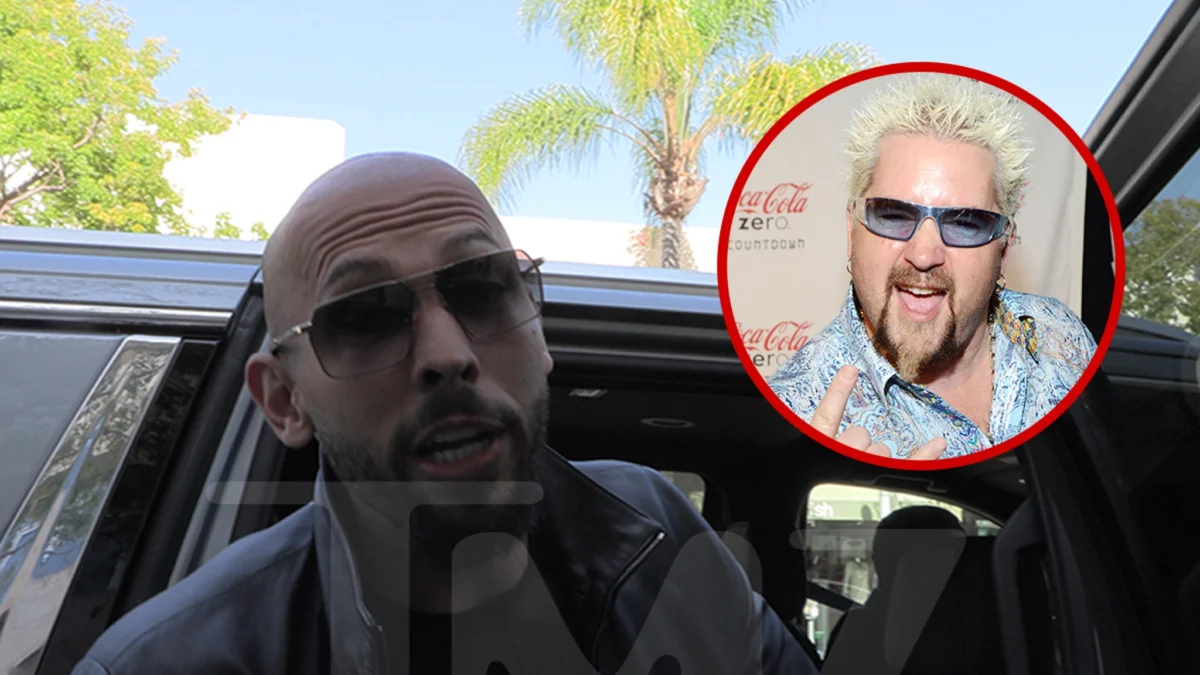
Controversial internet personality Andrew Tate has escalated his public feud with celebrity chef Guy Fieri, unleashing a torrent of vitriolic remarks, including a racial slur, after Fieri distanced himself from Tate following a widely publicized meetup at a recent UFC event. The verbal attack, captured during an impromptu interview in Beverly Hills, marks a significant and inflammatory turn in a narrative that began with an innocuous-seeming handshake and quickly spiraled into a social media firestorm. Tate’s comments underscore a deeper tension surrounding celebrity associations, public image management, and the accountability of influential figures in the digital age.
The Genesis of the Controversy: A UFC Encounter
The friction between Tate and Fieri traces back to an April 2026 UFC event, a high-profile gathering often attended by a diverse array of celebrities and public figures. During the event, Andrew Tate and his brother, Tristan Tate, were seen interacting briefly with Guy Fieri. Photographs and short video clips of the exchange quickly circulated across social media platforms, igniting immediate and intense backlash. For many online observers, Fieri’s association with Tate, a figure notorious for misogynistic views and facing serious criminal allegations, was perceived as a tacit endorsement or at least an alarming lack of awareness.
Guy Fieri, known globally as the effervescent "Mayor of Flavortown" and a cornerstone of the Food Network, has cultivated a public persona centered on approachability, culinary passion, and philanthropy. His brand is meticulously built around family-friendly entertainment and community engagement. The perceived dissonance between Fieri’s established image and Tate’s polarizing reputation triggered a swift and overwhelmingly negative reaction from fans and critics alike. Social media users expressed dismay, questioning Fieri’s judgment and threatening boycotts of his shows and restaurants.
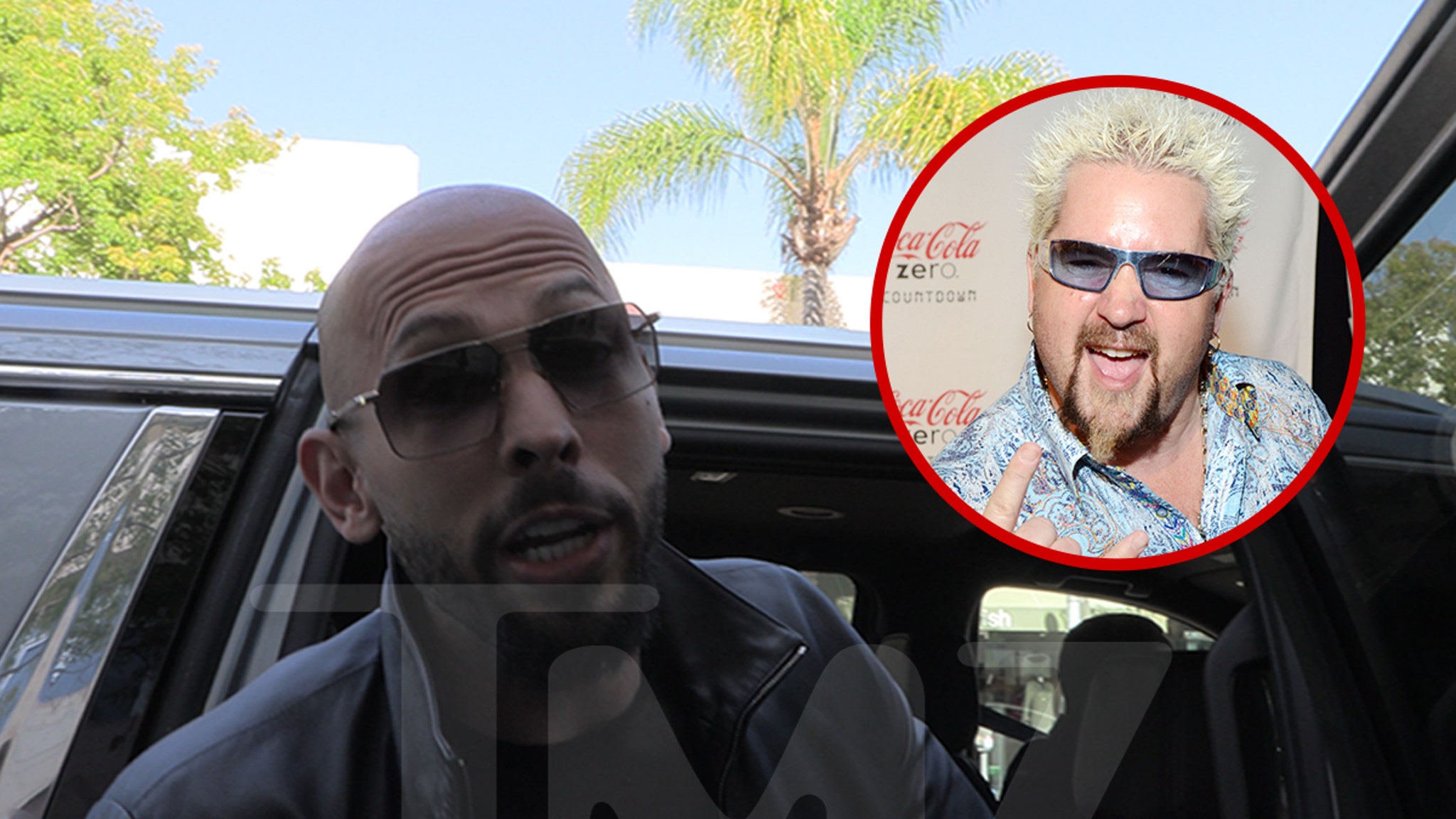
In the wake of this swift public outcry, representatives for Guy Fieri issued a statement clarifying his position. Fieri reportedly claimed he was unfamiliar with Andrew Tate and his brother prior to their brief interaction at the UFC event and unequivocally stated that he does not support their views or actions. This statement was widely interpreted as an attempt by Fieri and his team to mitigate the damage to his carefully constructed public image and to sever any perceived ties with the controversial influencer.
Tate’s Vehement Retaliation and the Use of a Racial Slur
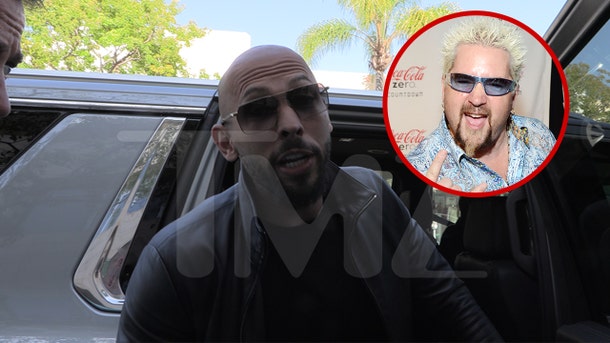
However, Fieri’s public disavowal did not quell the situation; instead, it provoked Andrew Tate’s ire. On Tuesday, April 28, 2026, while Tate was confronted by reporters in Beverly Hills, he launched into a scathing critique of Fieri’s explanation. Tate expressed clear resentment over what he perceived as a betrayal, accusing Fieri of hypocrisy and cowardice. He asserted that Fieri had been outwardly friendly during their in-person encounter but had subsequently "pussied out" when faced with online criticism.
It was during this heated exchange that Tate escalated his rhetoric significantly, employing a derogatory racial slur against Fieri. "He’s a bitch ass n*****," Tate reportedly declared, a statement that immediately drew condemnation and added another layer of controversy to the unfolding drama. Tate’s use of such offensive language not only intensifies the personal feud but also broadens the scope of the incident to include issues of hate speech and racial insensitivity. This statement directly contradicts Fieri’s public image and could be seen as an attempt to further tarnish his reputation by association, even as Fieri tried to distance himself.
Tate further dismissed the notion that his support base is confined to online echo chambers or exists only "behind the scenes." He told reporters that he receives widespread support "everywhere he goes all around the world," aiming to project an image of enduring influence despite the controversies that consistently surround him. This assertion, however, does little to deflect from the immediate outrage generated by his latest remarks. While Tate had previously shrugged off the pressures of life in Los Angeles as merely "being rich and stressed," the situation with Fieri clearly struck a deeper nerve, provoking an uncharacteristically raw and aggressive response.
Andrew Tate: A Profile in Controversy
To fully grasp the gravity of this incident, it is essential to understand the background of Andrew Tate. A former professional kickboxer, Tate rose to global notoriety primarily through his extensive presence on social media. He became a prominent figure in the "manosphere," a collection of online communities advocating for traditional masculinity, often characterized by misogynistic and anti-feminist ideologies. Tate’s content, which frequently promotes a lavish lifestyle, often includes inflammatory statements about women, wealth, and societal norms.
His rise to prominence has been marked by a continuous string of controversies. In 2016, he was removed from the reality show Big Brother UK over a video depicting him allegedly assaulting a woman, a claim he denied. More significantly, Tate is currently under ongoing investigation for grave allegations including rape and human trafficking in Romania and the United Kingdom. These investigations have led to his arrest and detention in Romania, followed by house arrest, before being released with judicial restrictions. He has consistently denied all allegations, maintaining his innocence and often claiming to be the target of a smear campaign.
Tate’s extreme views and the serious nature of the criminal allegations against him have led to his deplatforming from numerous major social media platforms, including Facebook, Instagram, YouTube, and TikTok, due to violations of their policies against hate speech and harmful content. Despite these bans, he has consistently found ways to circumvent restrictions or leverage alternative platforms, maintaining a significant online presence and a dedicated following, particularly among young men. His public appearances and statements are frequently scrutinized, and any association with him often draws immediate and critical attention.
Guy Fieri: The "Mayor of Flavortown" and Brand Risks
In stark contrast to Tate, Guy Fieri has built a media empire on an image of jovial accessibility and culinary adventure. Since winning Food Network Star in 2006, Fieri has become one of the most recognizable faces on television, hosting popular shows like Diners, Drive-Ins and Dives and Guy’s Grocery Games. His signature spiky blonde hair, flamboyant style, and catchphrases like "Flavortown" and "Knuckle Sandwich" are instantly identifiable. Beyond his television career, Fieri owns numerous restaurants and has published several cookbooks, establishing a powerful and lucrative brand.
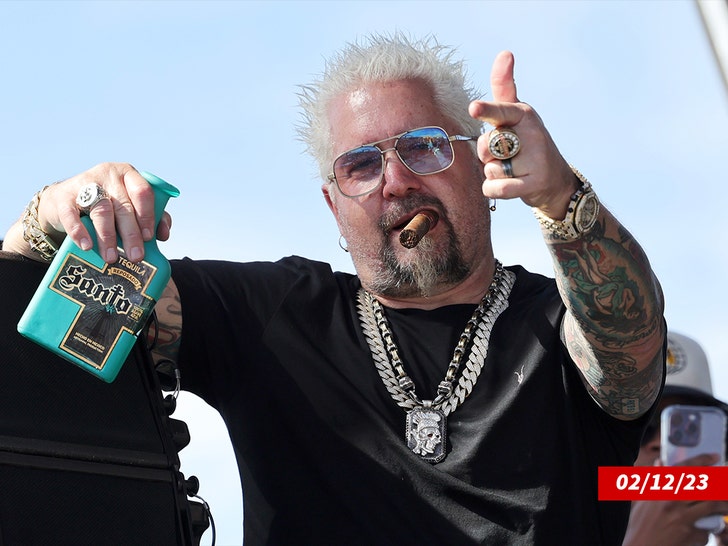
Fieri is also widely respected for his philanthropic efforts, particularly his work during natural disasters and his support for restaurant industry workers. During the COVID-19 pandemic, he raised millions of dollars for restaurant employees through the Restaurant Employee Relief Fund. This combination of culinary success, a charismatic personality, and charitable endeavors has cemented his status as a beloved public figure, making his brief interaction with Tate all the more jarring for his fanbase.
The incident highlights the inherent risks associated with celebrity interactions in the age of viral media. Public figures are increasingly held accountable not just for their own actions and statements, but also for the company they keep, even if those interactions are fleeting or unintentional. For a brand as carefully curated and family-friendly as Fieri’s, an association with a figure as controversial as Tate represents a significant public relations challenge and potential brand damage. Fieri’s quick response to distance himself was a textbook crisis management move, aimed at protecting his image and maintaining audience trust.
Broader Implications: Free Speech, Hate Speech, and Accountability
The exchange between Tate and Fieri, particularly Tate’s use of a racial slur, raises important questions about the boundaries of free speech, the definition of hate speech, and the accountability of public figures for their language. While free speech is a cornerstone of many democratic societies, it is not absolute and does not protect speech that incites violence, defamation, or constitutes hate speech. The use of a racial slur, especially one as historically charged and offensive as the "n-word," is widely condemned as hate speech and can have significant social and professional repercussions.
Tate’s willingness to employ such language in a public forum, especially when targeting another public figure, reinforces his reputation for provocative and offensive rhetoric. It also contributes to the ongoing debate about the role of online influencers and the impact of their language on broader societal discourse. For many, this incident is another example of Tate pushing the boundaries of acceptable public behavior, while for his supporters, it may be framed as a defiant act against perceived hypocrisy or "cancel culture."
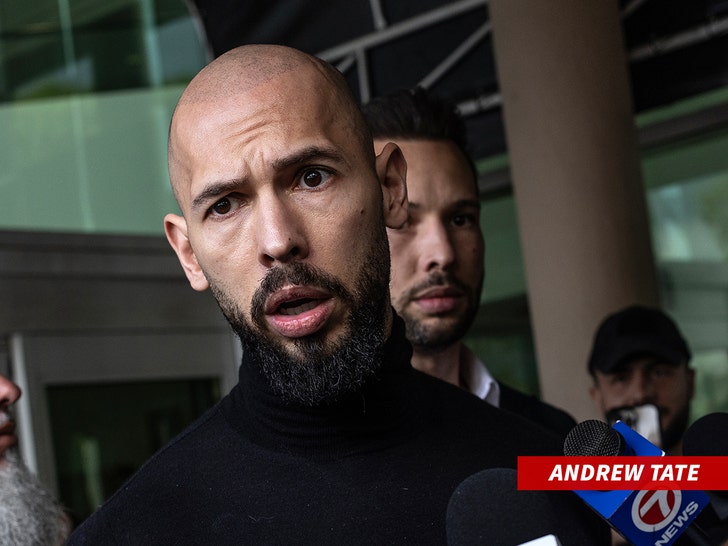
The ongoing nature of Tate’s legal battles in Romania and the UK adds another layer of complexity. His public outbursts and controversial statements often intertwine with his legal defense strategies, sometimes appearing to be calculated moves to maintain public attention or rally support. However, using a racial slur against a prominent figure like Fieri carries additional weight and could invite further scrutiny from anti-hate organizations and human rights groups.
A Continuing Saga of Celebrity Clash
As of late April 2026, the public spat between Andrew Tate and Guy Fieri remains a prominent topic in celebrity news cycles. Tate’s inflammatory remarks have not only kept the initial UFC encounter in the spotlight but have also intensified the controversy, ensuring that the two figures remain linked in public discourse, despite Fieri’s efforts to disassociate.
The incident serves as a stark reminder of the volatile nature of celebrity culture and the immense power of social media to shape narratives and demand accountability. For Guy Fieri, the challenge will be to reinforce his brand integrity and demonstrate a clear separation from Tate’s toxic rhetoric. For Andrew Tate, the episode further solidifies his image as an unapologetically provocative figure, unafraid to employ extreme language, even at the cost of wider public condemnation. The implications of this latest verbal volley will likely resonate for some time, influencing public perception and contributing to the ongoing dialogue about fame, responsibility, and the digital public square.