

The 15th edition of the Taiwan International Documentary Festival (TIDF), held in May 2024, served as a critical nexus for the re-examination of Asian political history through the lens of nonfiction cinema. Established in 1998, just over a decade after the cessation of 38 years of martial law in Taiwan, the festival has evolved from a local showcase into one of the most significant platforms for independent documentary in the Asia-Pacific region. This year’s programming highlighted a shift from the overt video activism of the late 20th century toward a more nuanced, archival, and reflective approach to storytelling, interrogating the layers of identity, colonial trauma, and urban displacement that define the contemporary Asian experience.
The Resurrection of the Archival Image: Archive: Li Guang-hui
At the heart of the 2024 festival was the revelatory screening of Archive: Li Guang-hui (1979/2024). This 30-minute work, compiled from television newsreel outtakes, represents a significant addition to the Taiwanese cinematic canon. It was produced by the late Chang Chao-tang, a foundational figure in Taiwanese photography and experimental film who passed away earlier this year. The footage, captured between 1975 and 1979 while Chang was a photojournalist for the China Television Company (CTV), sat in private archives for decades before being donated to the Taiwan Film and Audiovisual Institute (TFAI).
The film documents the return of Suniuo, an Indigenous Amis man also known by the Japanese name Teruo Nakamura and the Mandarin name Li Guang-hui. Suniuo’s story is a microcosm of Taiwan’s complex 20th-century history: a colonial subject drafted into the Japanese Imperial Army during World War II, he was stationed on the Indonesian island of Morotai. Unaware that the war had ended in 1945, Suniuo lived in isolation in the jungle for 30 years until his discovery in 1974.
Chang’s film deconstructs the state-sponsored narrative surrounding Suniuo’s return. Upon his arrival in Taiwan, the Kuomintang (KMT) government attempted to frame Suniuo as a nationalist hero of the Republic of China who had "resisted" the Japanese. However, Chang’s assembly of outtakes—specifically long, lingering close-ups of Suniuo’s face—reveals a man profoundly alienated from the spectacle surrounding him. In one notable sequence, the legendary folk singer Chen Da performs a ballad of Suniuo’s life in Mandarin, a language Suniuo did not speak or understand. The result is a haunting portrait of a man whose personal trauma was co-opted by a state narrative he could not participate in, challenging the traditional historical claim that Taiwanese documentary only began to flourish after the lifting of martial law in 1987.
Historical Context: TIDF and the Post-Martial Law Era
To understand the significance of the 15th TIDF, one must look at the chronology of Taiwanese media. From 1949 to 1987, Taiwan existed under a state of emergency that suppressed dissent and strictly controlled the production of images. The birth of the TIDF in 1998 was a direct response to the need for a space where "alternative" histories could be screened.
The festival has historically championed regional solidarity, following the lead of the Yamagata International Documentary Film Festival (founded in 1989). By including strands such as the "Asian Visions Competition" and the "Taiwan Competition," the TIDF has fostered a unique environment where filmmakers from Hong Kong, Thailand, Japan, and mainland China can engage in a cross-border dialogue about shared colonial and authoritarian pasts.
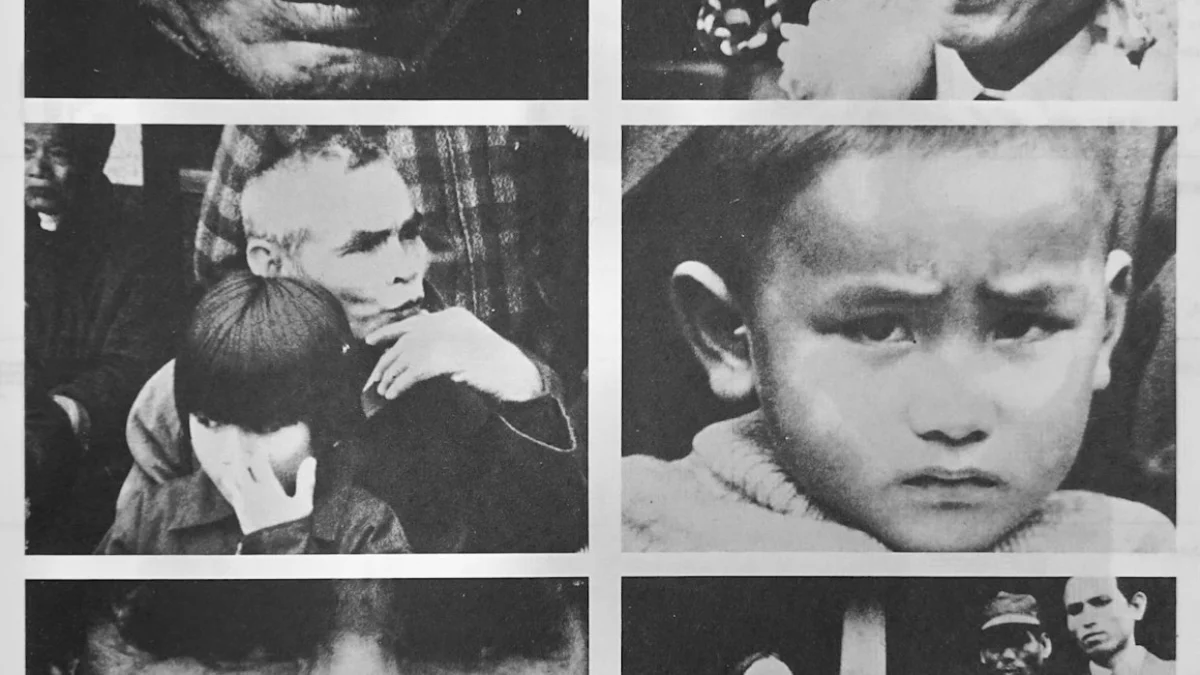
The 2024 program "War Memories, Shifting Identities" expanded this mission by focusing on the experiences of conscripted Taiwanese soldiers during the Japanese colonial period (1895–1945). By screening works like the NDU collective’s Asia Is One (1973), the festival highlighted the "archipelagic" nature of East Asian identity. This film, which weaves together the testimonies of Taiwanese fishermen in Okinawa and Indigenous Tayal villagers, illustrates how local histories are often caught between the competing nationalisms of the Pacific powers.
Urban Development and the Individual: Xiangzidian Village
Beyond historical archives, the festival addressed the immediate physical transformations of the Asian landscape. Hu Sanshou’s Xiangzidian Village: The Stage (2026) provided a 150-minute observation of rural China’s encounter with predatory urban development. Filmed over six years, the documentary eschews the traditional "talking head" interview format in favor of a distanced, observational style that emphasizes the scale of the environment.
The film documents the literal flattening of a village to make way for a highway. Hu, acting as a narrator, identifies subjects through their familial ties, emphasizing the communal bonds that are severed when the land is commodified. The "stage" mentioned in the title refers to the newly paved highway—a gray, sterile expanse where the rhythms of village life, including funerals and social gatherings, continue to play out in a surreal juxtaposition against the machinery of the state.
This work reflects a broader trend in independent Chinese documentary: a shift away from the "ravenous" cinema verité that often sought to expose the marginalized for international audiences, toward a more patient, elegiac mode of filmmaking that mourns the loss of local history in real-time.
The Mechanics of Trauma: Narrative and the Thai Political Struggle
The 15th TIDF also looked toward Southeast Asia, specifically through the work of Thai filmmaker Anocha Suwichakornpong. Her film Narrative (2026) interrogates the "industry of trauma" by staging a theatrical workshop with the families of pro-democracy activists killed during the 2010 Bangkok massacre.
The film is structured into three acts that mimic a therapeutic or legal process:
- Recollection: Participants describe memories without naming the associated emotion.
- Mediation: A discussion with a lawyer regarding the stalled legal pursuit of justice against the military state.
- Resolution: Participants attempt to articulate gratitude.
Suwichakornpong’s formal rigor exposes the limitations of the legal system, which treats state violence as a series of isolated "incidents" rather than a collective crime. By disrupting the final act with a loud musical score that drowns out the participants’ voices, the film suggests that some traumas cannot—and perhaps should not—be neatly resolved for the viewer’s comfort. This critique of the "narrative arc" of suffering is a significant development in political cinema, questioning how filmmakers use the pain of others to create "meaningful" content.
Post-Pandemic Exhaustion: Luo Li’s Air Base
Closing the thematic circle of the festival was Luo Li’s Air Base (2025), a "city symphony" set in Wuhan in the year 2023. As the site of the initial COVID-19 outbreak, Wuhan carries a unique weight in the global consciousness. However, Luo Li avoids the sensationalism of the pandemic, focusing instead on the "limp time" of the post-emergency city.
The film follows a series of seemingly purposeless actions: a man organizing fallen leaves, a woman collecting recordings of sighs, and people waiting for a broom to fall on an escalator. These Sisyphean gestures capture a sense of collective exhaustion and social apathy. The public’s refusal to "sigh" on command—viewed as ungrateful or pessimistic—speaks to the subtle ways in which state-enforced optimism stifles genuine emotional expression.
Broader Impact and Implications
The 15th Taiwan International Documentary Festival demonstrated that the "political" in documentary has shifted from the barricades to the archives and the psyche. By foregrounding works that refuse easy answers, the festival challenged the audience to consider the "archiveless" nature of certain histories—most notably through its "Palestine and Its Archiveless Archive" program, which drew parallels between the suppression of Palestinian history and Taiwan’s own struggle for recognition.
The data from the festival’s 15th edition suggests a growing appetite for long-form, patient storytelling. Attendance for archival screenings remained high, indicating that for many in Taiwan and the broader region, the documentary is no longer just a tool for news-gathering, but a vital instrument for "prismatic" history-making. As geopolitical tensions in the Taiwan Strait continue to influence the island’s self-governance, the TIDF’s commitment to preserving and interrogating the image remains a defiant act of cultural sovereignty.
In conclusion, the festival’s curation of both newly restored masterpieces like Archive: Li Guang-hui and contemporary explorations like Air Base provides a comprehensive map of the Asian documentary landscape. It is a landscape defined not by a single narrative, but by a "constellation" of voices—Indigenous, colonial, displaced, and resistant—that continue to imagine what follows the exhaustion of reality.