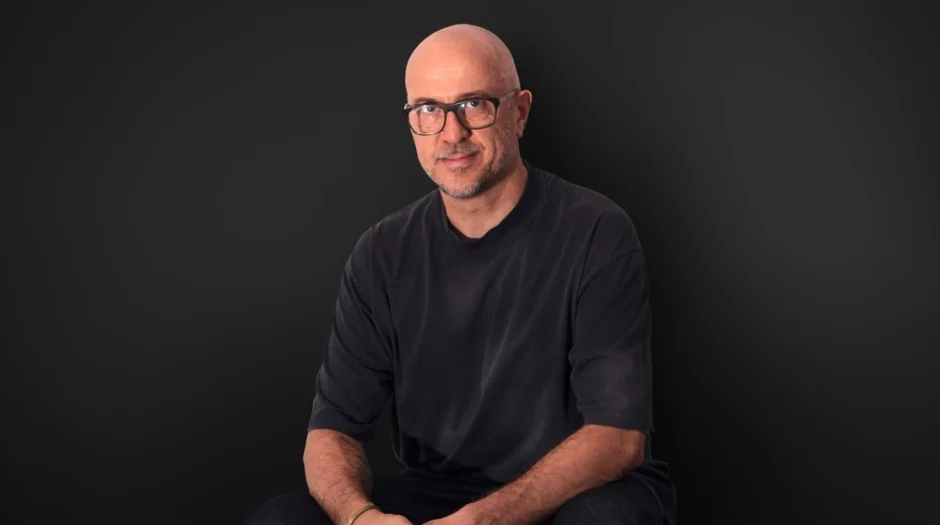
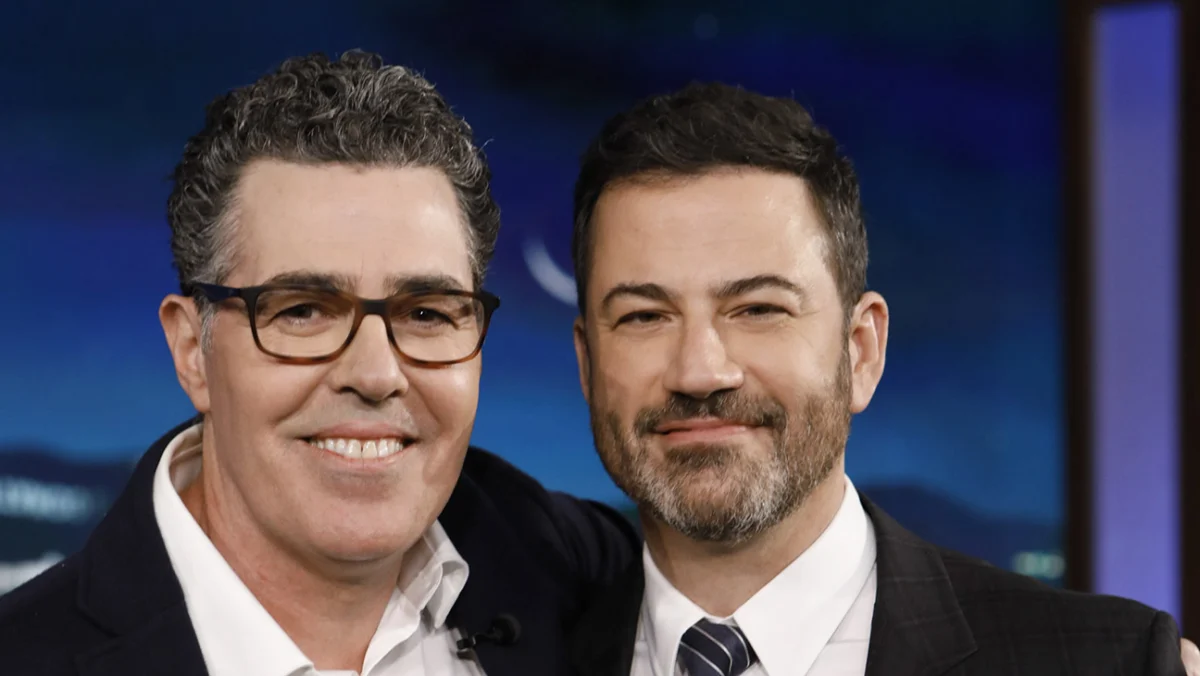
Comedian Adam Carolla has publicly come to the defense of his longtime friend and fellow late-night host, Jimmy Kimmel, who is currently embroiled in controversy over a joke made about former First Lady Melania Trump. The contentious remark, which described Mrs. Trump as having the "glow of an expectant widow," has ignited significant backlash, including calls for Kimmel’s termination from his program, Jimmy Kimmel Live!, from Donald and Melania Trump, and has even prompted an early review of Disney’s broadcast TV licenses by the Federal Communications Commission (FCC).
The heart of the dispute traces back to Thursday, [Insert Fictional Date, e.g., April 25, 20XX], when Kimmel, during a segment of his show, delivered a series of "faux remarks" for the upcoming White House Correspondents’ Dinner (WHCD). Known for his often sharp political commentary and satirical takes, Kimmel directed a specific quip at Melania Trump, stating, "Look at Melania, so beautiful. Mrs. Trump, you have a glow like an expectant widow." This joke, intended as a pre-dinner roast, quickly escalated into a national debate following an entirely separate and profoundly unsettling incident that occurred two days later.
The Genesis of the Controversy: A Roast Joke and an Unrelated Incident
The White House Correspondents’ Dinner, an annual gathering of journalists, politicians, and celebrities, is a long-standing tradition meant to celebrate the First Amendment and the role of the press. It often features a comedic performance, typically by a prominent comedian, who delivers a roast-style monologue targeting figures across the political spectrum, including the President and First Lady. This context is crucial to understanding the nature of Kimmel’s joke.
Adam Carolla, known for his right-leaning political views and candid commentary on The Adam Carolla Show, articulated this comedic framework in his defense of Kimmel. "That’s a pretty typical roast joke," Carolla asserted, explaining, "It is also a trope: Any younger, beautiful woman who’s married to an older guy, especially if the guy’s rumored to be sort of a douchey, you would make that joke at any roast." Carolla emphasized that the joke was a standard comedic device, a form of observational humor often employed in settings designed for playful jabs. He further posited that such a joke would likely have been made regardless of the individual’s political office, stating, "If Trump was at a roast on Thursday, you would do that joke. Well, if he’d never been president, you would do that joke."
However, the timing of the joke, though made before the subsequent event, became inextricably linked to it in the public and political discourse. On Saturday, [Insert Fictional Date, e.g., April 27, 20XX], just hours before the actual White House Correspondents’ Dinner was set to begin, a security incident unfolded. An individual, later identified as a 42-year-old male, attempted to gain entry to the Washington Hilton ballroom, the venue for the dinner, reportedly armed with a shotgun, a handgun, and several knives. The individual was apprehended by Secret Service agents and local law enforcement before reaching the main event space, averting a potentially catastrophic situation. Authorities later confirmed that the suspect’s motives were under investigation, but initial reports suggested a broader intent to disrupt the event rather than a specific targeting related to any political figure or statement.
The Trump Response and Calls for Termination
It was in the wake of this serious security breach that the "expectant widow" joke, initially met with little fanfare, gained explosive traction. On Monday, [Insert Fictional Date, e.g., April 29, 20XX], Donald Trump took to his Truth Social platform to vehemently condemn Kimmel. Trump explicitly linked the joke to the security incident, writing, "He then stated, ‘Our First Lady, Melania, is here. Look at Melania, so beautiful. Mrs. Trump, you have a glow like an expectant widow.’ A day later a lunatic tried entering the ballroom of the White House Correspondents’ Dinner, loaded up with a shotgun, handgun, and many knives. He was there for a very obvious and sinister reason. I appreciate that so many people are incensed by Kimmel’s despicable call to violence, and normally would not be responsive to anything that he said but, this is something far beyond the pale. Jimmy Kimmel should be immediately fired by Disney and ABC."
Melania Trump echoed her husband’s sentiment, releasing a statement that same day calling for Kimmel’s immediate dismissal. Her statement underscored the perceived insensitivity and dangerous implications of the joke, particularly when viewed through the lens of the security threat. The Trumps’ demands quickly galvanized a segment of their supporters, who flooded social media with similar calls for Kimmel’s cancellation and boycotts of ABC and Disney.
Carolla vehemently pushed back against this interpretation, highlighting the chronological disconnect. "When you make a joke and then nothing happens, like there was no shooting, no one made a thing about it before the shooting," Carolla explained on his show. He used an analogy to illustrate his point: "So then it’s kind of a thing where you go, like, ‘Oh, that Elisha Krauss, I hate that bitch, I hope she dies!’ And then two days later, you get in a car crash, and you die, then everyone looks at me and goes, ‘Now I’m angry at you,’ But I’m like, if she never got in a car crash, you never said anything." Carolla concluded, "Like, this thing happened, then the joke happened before. So, A) it’s unrelated. B) I mean, to be fair, now people do this one too, they go, ‘It’s not like he wrote that joke, but he said that joke, but he didn’t write that joke. Somebody wrote that joke and he said it.’" His argument centered on the idea that attributing the security incident to Kimmel’s joke was a retrospective and illogical conflation of unrelated events.
Kimmel’s Unapologetic Stance and Broader Implications for Political Humor
During the Monday episode of Jimmy Kimmel Live!, the host addressed the uproar without offering an apology. Instead, he met the demands for his firing with characteristic humor and defiance. "You know how sometimes you wake up in the morning and the first lady puts out a statement demanding you be fired from your job? We’ve all been there, right?" Kimmel quipped, dismissing the criticism as another chapter in the ongoing political skirmishes involving the Trump administration and late-night television. His response reinforced the perception among many that the call for his firing was less about genuine concern for public safety and more about political retaliation for perceived disrespect.
The incident underscores the increasingly fraught landscape of political humor in a highly polarized society. Late-night hosts, traditionally seen as jesters capable of speaking truth to power, now operate under intense scrutiny, with their jokes often dissected and weaponized by political factions. The line between satire, insult, and perceived incitement has become blurred, leading to frequent accusations of bias, irresponsibility, or even dangerous rhetoric. For comedians like Kimmel, whose careers are built on pushing boundaries, navigating these shifting sands presents a constant challenge.
Regulatory Scrutiny: The FCC’s Early Review of Disney’s Licenses
The controversy escalated beyond mere public outcry and political condemnation when the Federal Communications Commission (FCC) announced on Tuesday, [Insert Fictional Date, e.g., April 30, 20XX], that it had launched an early review of Disney’s broadcast TV licenses. The FCC, an independent U.S. government agency that regulates interstate and international communications by radio, television, wire, satellite, and cable, holds the power to grant and renew broadcast licenses. While the agency rarely intervenes in content disputes related to political speech, it does have mandates concerning public interest, indecency, and station qualifications.
An "early review" indicates that the FCC is examining Disney’s qualifications as a licensee in light of the complaints surrounding Kimmel’s remarks. This process typically involves assessing whether a broadcaster is operating in the public interest, which includes adherence to certain content standards and legal requirements. While Disney’s vast media empire includes numerous broadcast stations, the FCC’s review primarily targets its broadcast television licenses, particularly those under the ABC network.
A Disney spokesperson, in response to the FCC’s announcement, released a statement to The Hollywood Reporter, asserting confidence in their position: "We are confident that [our] record demonstrates our continued qualifications as licensees under the Communications Act and the First Amendment and are prepared to show that through the appropriate legal channels. Our focus remains, as always, on serving viewers in the local communities where our stations operate." This statement signals Disney’s intent to defend its broadcast licenses on both legal and constitutional grounds, emphasizing their commitment to journalistic standards and the First Amendment’s protection of free speech. The FCC review, while not immediately threatening license revocation, signals a serious official acknowledgment of the complaints and adds a layer of regulatory pressure to the ongoing public debate. It also highlights the potential for political pressure to influence regulatory bodies, particularly in highly charged media controversies.
A Pattern of Controversy: Kimmel’s Recent History of Benchings and Backlash
This is not the first time Jimmy Kimmel has faced significant backlash and even temporary removal from air in recent months. The current controversy follows a similar incident in September [Insert Fictional Year, e.g., 20XX-1], which also saw Adam Carolla stepping up to defend his colleague.
In September, Kimmel faced severe criticism for comments he made in the wake of a shooting incident involving conservative commentator Charlie Kirk. During his monologue, Kimmel stated, "We hit some new lows over the weekend with the MAGA gang desperately trying to characterize this kid who murdered Charlie Kirk as anything other than one of them and doing everything they can to score political points from it." The remarks were widely criticized for their perceived mischaracterization of the victim and for appearing to attribute the shooter’s actions to a political movement without clear evidence.
The fallout from the Charlie Kirk comments was swift and impactful. On September 17, Jimmy Kimmel Live! was temporarily pulled from the air by several affiliate stations. This decision was not made by ABC or Disney directly but was a result of threats from major broadcast groups, specifically Nexstar and Sinclair, who own and operate hundreds of local television stations across the United States. These groups reportedly threatened to keep the show from their stations if ABC did not address the perceived offense. The show eventually returned to the air a few days later, on September 23, after what was believed to be internal discussions and adjustments, though no official statement on the nature of these changes was publicly made.
Carolla similarly defended Kimmel in the wake of the September suspension, noting, "The right and the left are always sort of misinterpreting things. He was inaccurate about something. It wasn’t like he was necessarily attacking Charlie Kirk. He was trying to dump it on Trump and inaccurate about it." Carolla’s consistent defense highlights a recurring theme: his belief that Kimmel’s comedic intentions are often misinterpreted or exaggerated for political purposes by those on both sides of the political spectrum.
Broader Impact and Implications for Free Speech and Media
The repeated controversies surrounding Jimmy Kimmel underscore broader questions about the role of satire and free speech in contemporary media. In an era where political divisions are deeply entrenched and online discourse is highly polarized, the boundaries of acceptable humor are constantly being tested. For late-night hosts, who traditionally rely on topical humor and political commentary, navigating these boundaries has become increasingly perilous.
The calls for Kimmel’s firing, the FCC’s review, and the previous station-level suspensions collectively highlight the immense pressure faced by media companies like Disney/ABC. They are caught between upholding artistic freedom and protecting their talent on one hand, and responding to advertiser concerns, affiliate demands, and regulatory scrutiny on the other. The ability of political figures, particularly those with a large public platform, to directly influence public opinion and even pressure regulatory bodies, adds another layer of complexity to this dynamic.
Ultimately, the debate surrounding Jimmy Kimmel’s "expectant widow" joke is not merely about a single comedic remark. It is a microcosm of the ongoing struggle to define the limits of free speech, the responsibilities of public figures, and the role of humor in political discourse within an increasingly fragmented and contentious media landscape. As the FCC review proceeds and public debate continues, the outcomes of this incident could set precedents for how similar controversies are handled in the future, impacting late-night television and the broader media environment for years to come.