

New York City’s Prismatic Ground festival concluded its sixth annual edition this May, solidifying its reputation as a premier destination for contemporary avant-garde cinema and experimental non-fiction. Held from April 29 through May 3, the festival featured a diverse array of global voices, curated into four distinct "waves" by founder and programmer Inney Prakash. Since its inception, the festival has sought to challenge traditional cinematic structures, moving away from rote predictability toward a more fluid, generative approach to curation. Prakash, who describes the programming process as akin to conducting a musical composition or navigating a complex physical landscape, emphasizes a viewer-centric experience where thematic threads and connections are discovered organically rather than dictated by rigid categorization. This year’s lineup underscored the festival’s commitment to the democratizing power of the moving image, particularly in an era marked by geopolitical upheaval and the rapid evolution of digital media.
The Evolution of Prismatic Ground and the Wave Curation Model
Prismatic Ground emerged as a response to the need for a dedicated space for experimental media that bridges the gap between the gallery world and traditional cinema. In its sixth year, the festival has maintained a commitment to accessibility, often utilizing a hybrid model of physical screenings and online availability to reach a global audience. The 2024 edition centered its physical presence in New York City, drawing a concentrated audience of scholars, artists, and cinephiles.
The festival’s unique "wave" structure is a departure from standard festival sections like "International Competition" or "Shorts Programs." Instead, these waves function as thematic movements, allowing films of varying lengths and origins to interact. This methodology is designed to highlight the "slalom" of contemporary production, where filmmakers frequently jump between genres, formats, and aesthetic philosophies. By eschewing traditional boundaries, Prismatic Ground provides a platform for works that might otherwise be marginalized by the commercial film industry’s demand for clear-cut genre definitions.
Opening Highlights: Hong Kong’s New Wave and the Aesthetics of Intimacy
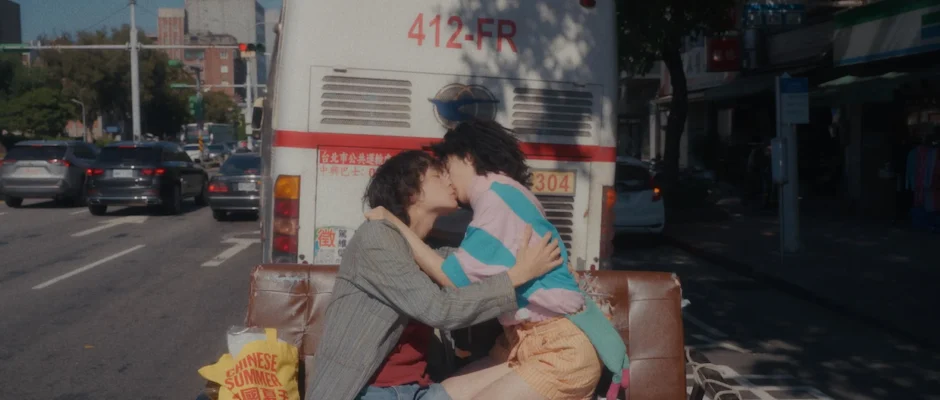
The festival opened with the feature debut of Hong Kong filmmaker Wong Ka Ki, titled I Heard That They Are Not Going to See Each Other Anymore. The film represents a significant evolution in Wong’s career, building upon the metatextual whimsy established in her earlier short works, such as A Shrimp’s Daily Rehearsal, which also received a screening during this year’s festival. I Heard That They Are Not Going to See Each Other Anymore utilizes a dual-narrative structure to explore the complexities of modern relationships and the mediation of intimacy through the lens of a camera.
The first narrative thread follows Tao, a filmmaker engaged in a volatile relationship with her boyfriend, Shin. Their interactions are presented through a massive archive of footage that blurs the line between authentic documentation and rehearsed recreation. This is contrasted with the story of Mehli, a Turkish vendor whose persistent melancholy leads him to a connection with a kindred spirit named Ping. Wong’s production methodology relied heavily on improvisation, resulting in a film that shifts between the generic signatures of neorealism, silent comedy, and the essay film.
While some critics noted that the film’s digressive nature occasionally felt like an affectation—specifically regarding the treatment of exilic identity in Taipei—the work was largely praised for its confidence. The film serves as a meditation on how the moving image transfigures pain into art, marking Wong as a filmmaker of significant promise in the burgeoning landscape of independent Hong Kong cinema.
Central Asian Perspectives and Feminist Historiography
Another notable feature debut in the festival’s lineup was Isabelle Kalandar’s Another Birth. Set in a rural village in Tajikistan, the film offers a rare glimpse into a region often underrepresented in Western experimental circuits. The narrative centers on Parastu, a young girl who believes her grandfather is dying of a broken heart due to the prolonged absence of his son. Parastu’s quest to "save" her grandfather eventually evolves into a search for her own father, the man who abandoned her mother (played by the director herself).
Another Birth is the second installment in a planned trilogy and is notable for its integration of the poetry of Forough Farrokhzad and the mythic figure of Pari. By weaving these elements into a contemporary narrative, Kalandar constructs a feminist historiography that addresses the emotional violence inflicted by absent men across generations. The film avoids the pitfalls of "miserablism" through its "earthy poeticism," a term used by critics to describe Kalandar’s ability to situate her characters within the physical landscape of Tajikistan. The film’s magical realist elements culminate in an ambiguous denouement that challenges traditional narrative resolutions, positioning the work as a significant contribution to Central Asian cinema.
Repertory Discoveries and the Counter-Hegemonic Gaze
A core component of Prismatic Ground’s mission is the excavation of forgotten or overlooked works that offer alternative perspectives on history. This year, the festival highlighted a trilogy of shorts by Iraqi-Lebanese-American filmmaker Parine Jaddo. Produced between the First Gulf War and the onset of the second, these films function as both historical time capsules and critiques of the Orientalist gaze.

The trilogy begins with Thirst (1995), which juxtaposes a reading of Mohammed Mrabet’s "The Big Mirror" with scenes of daily life in post-war Lebanon. This was followed by Surviving (1998), which shifts the setting to the United States and explores the fetishization of Middle Eastern women by American men through a pseudo-documentary lens. The final installment, Astray, produced in 2002 but receiving its premiere at Prismatic Ground, captures the claustrophobia and loss of belonging experienced by the diaspora following the September 11 attacks. Jaddo’s work is characterized by a fierce insistence on self-definition, summarized in the final film’s closing sentiment: "I may get lost in this world, but I refuse to lose myself there."
The Desktop Documentary and the Ethics of Digital Violence
The festival also addressed the circulation of violence in digital media through Kevin B. Lee’s Afterlives. Lee, a pioneer of the "desktop documentary" format, utilizes the computer screen as a cinematic space to investigate the destruction of cultural artifacts by ISIS. By recording his own navigation through interviews, archives, and social media feeds, Lee interrogates the cycles of sectarian violence and the role of the consumer in the digital age.
Afterlives is formally complex, employing multiple simultaneous onscreen images to represent the psychic weight of violent media. The film is notable for its "Herzogian clinicism," a detached yet deeply personal approach to brutal imagery. Lee avoids a simplistic binary of "reconstruction versus annihilation," instead questioning whether the cycle of exploitation inherent in these images can ever truly be broken. The film was received as a humane response to the atomization of society caused by digital creation, highlighting the ethical responsibilities of those who archive and view the horrors of the modern world.
Gangsterism and the Radical Possibilities of Cinema
Representing the more radical end of the festival’s spectrum was Isiah Medina’s Gangsterism. A Canadian-Filipino filmmaker known for his mathematically inflected editing style, Medina delivered a work that many attendees described as a "trial by fire." The film consists of fragmented conversations between a filmmaker and his crew regarding economics, colonialism, and the current state of film criticism.
Medina’s aesthetic, characterized by rapid-fire cuts and a dense layering of information, draws comparisons to the late-period works of Jean-Luc Godard and the structuralist experiments of Hollis Frampton. Gangsterism serves as a fierce defense of the medium’s relevance in a period of global decline. The film’s "Intermission" title card at its conclusion suggests a necessary pause for the audience to evaluate the role of cinema in "salvaging the best qualities of a dying empire." It was widely regarded as the most challenging and vivifying entry in the festival, pushing the boundaries of what the moving image can communicate in a high-speed information environment.
Chronology and Event Logistics
The five-day festival followed a rigorous schedule of screenings and panel discussions:
- April 29: Opening Night featured Wong Ka Ki’s feature debut and a selection of local experimental shorts.
- April 30 – May 1: Focus on international features and the "Second Wave" of programming, including Another Birth and the Parine Jaddo retrospective.
- May 2: Dedicated sessions for digital media and the desktop documentary format, highlighted by Kevin B. Lee’s work.
- May 3: Closing Night and the "Fourth Wave," featuring the premiere of Gangsterism and a closing dialogue on the future of avant-garde distribution.
Analysis of Implications for the Film Industry
The success of the sixth Prismatic Ground festival suggests a growing appetite for cinema that exists outside the traditional festival circuit. As major festivals like Cannes and Sundance become increasingly commercialized, smaller, curator-led festivals are becoming vital hubs for artistic innovation. The inclusion of films from Tajikistan and the Iraqi diaspora underscores a shift toward a more decentralized global film culture, where digital tools allow for the production and distribution of high-quality work regardless of geographic or financial constraints.
Furthermore, the festival’s emphasis on "desktop documentary" and rapid-cut experimentalism reflects a broader cultural shift in how media is consumed. By bringing these formats into a theatrical setting, Prismatic Ground validates the computer screen as a legitimate site of artistic inquiry. This has significant implications for film education and archiving, as the "moving image" continues to evolve beyond the 35mm frame.
Conclusion and Future Outlook
The sixth edition of Prismatic Ground demonstrated that the avant-garde remains a vital space for political and social critique. By providing a platform for filmmakers like Wong Ka Ki, Isabelle Kalandar, and Isiah Medina, the festival ensures that the "democratizing power" of cinema is not lost to the pressures of the market. As the festival looks toward its seventh year, the "slalom" of its curation continues to offer a roadmap for how independent media can survive and thrive in a tumultuous global landscape. The parting impression of the 2024 festival is one of resilience—a collective refusal to "lose oneself" in a world of overwhelming digital noise, opting instead to find meaning through the rigorous, thoughtful application of the cinematic lens.