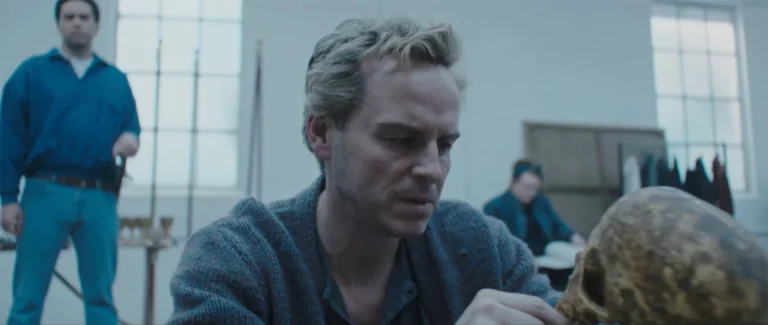


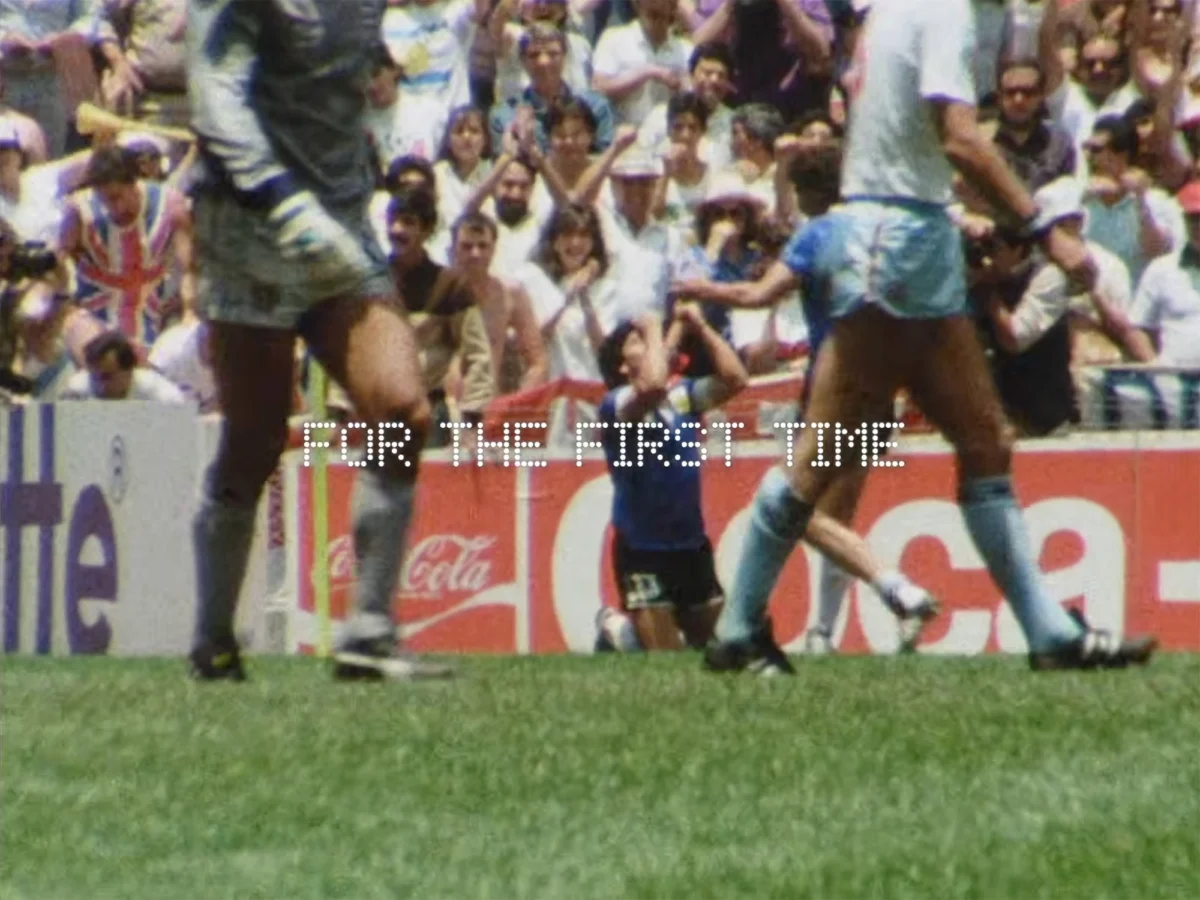
Disney has officially unveiled the trailer for The Match, a profoundly moving documentary that revisits the legendary 1986 FIFA World Cup quarter-final between Argentina and England. Premiering to critical acclaim at the prestigious 2026 Cannes Film Festival in the Cannes Premiere section, the film signals its significant cultural and historical weight, a rare honor for a documentary at such a high-profile cinematic event. Far from a mere sports recap, The Match delves into the profound geopolitical tensions that underscored the game, presenting it as a culmination of centuries of Anglo-Argentine conflict, intensified by the searing memory of the 1982 Falklands War.
Directed by the accomplished duo Juan Cabral and Santiago Franco, with narration by two figures intrinsically linked to the event – England’s Gary Lineker and Argentina’s Jorge Valdano – the documentary promises an unparalleled perspective. These narrators, both on the pitch during that fateful game, bring a deeply personal and authoritative voice to the historical narrative. The film aims to transcend the immediate sporting spectacle, utilizing rare archival footage, including the infamous "Hand of God" moment by Diego Maradona, to reconstruct the match not just as a sporting fixture but as a living memory embedded in the complex tapestry of two nations’ histories. Initial reviews praise the film as "an entertaining exercise in deluxe nostalgia… peppered with enough quirky folklore and offbeat background detail to keep even sports-allergic viewers […] engaged," suggesting its appeal extends far beyond the traditional football fan. Disney is slated to release The Match in theaters worldwide this summer, strategically timed shortly after this year’s World Cup, ensuring maximum resonance with a global audience immersed in football fever.
The Genesis of a Sporting Epic: History and Hostilities
The 1986 World Cup quarter-final between Argentina and England, held at the Estadio Azteca in Mexico City on June 22, 1986, was never just a football match. It was an event laden with political symbolism and raw national emotion, a mere four years after the Falklands War (known as the Guerra de las Malvinas in Argentina). The conflict, which lasted from April 2 to June 14, 1982, saw Argentina attempt to reclaim sovereignty over the Falkland Islands, South Georgia, and the South Sandwich Islands, territories that had been under British control since 1833. The war resulted in a decisive British victory, but at a significant human cost: 649 Argentine military personnel, 255 British military personnel, and three Falkland Islanders lost their lives. For Argentina, the defeat was a national trauma, exacerbating an already fragile political climate and contributing to the eventual collapse of the military junta. For Britain, it was a moment of renewed national pride under Prime Minister Margaret Thatcher.
The scars of the Falklands War ran deep, particularly in Argentina, where the loss was felt as a profound humiliation and injustice. This geopolitical backdrop transformed the football pitch into an unofficial arena for national catharsis and symbolic vengeance. The players themselves, though professional athletes, were acutely aware of the historical weight placed upon their shoulders. The match became a proxy battle, an opportunity for Argentina to reclaim a measure of pride against their former adversaries, and for England, an opportunity to assert their sporting dominance. This underlying tension, far from being a mere footnote, was the very fabric of the game, making every tackle, every pass, and every goal resonate with a significance far beyond the sport itself. The Match promises to meticulously unravel these layers, presenting the game not in isolation, but as an inextricable part of a broader historical dialogue.

The 1986 FIFA World Cup: A Stage for Greatness
The 1986 FIFA World Cup itself was a tournament of significant note, particularly for its host nation, Mexico, which stepped in after Colombia withdrew due to economic constraints. Played in challenging conditions of high altitude and intense heat, the tournament tested the endurance and skill of every team. Argentina, under the leadership of coach Carlos Bilardo and captained by the transcendent Diego Maradona, had navigated a challenging path to the quarter-finals. They had topped their group, defeating South Korea and Bulgaria, and drawing with Italy, before overcoming Uruguay in the Round of 16. Their team was a blend of robust defense and attacking flair, with Maradona at its pulsating heart.
England, managed by Bobby Robson, also showed strong form after a shaky start. They recovered from a draw against Morocco and a loss to Portugal to convincingly defeat Poland, securing their place in the knockout stages. They then dispatched Paraguay in the Round of 16, setting up the highly anticipated clash with Argentina. Both teams arrived at the quarter-final with momentum, but the narrative surrounding their encounter was unique. The world watched, not just for the footballing spectacle, but for the echoes of a recent and painful conflict. The Azteca Stadium, a monumental arena capable of holding over 100,000 spectators, became a crucible where sporting prowess and national identity would collide in an unforgettable display.
The Match Unfolds: Maradona’s Dual Masterpieces
The game itself unfolded in two acts of Maradona’s genius, forever etching his name into footballing folklore and simultaneously igniting one of the sport’s most enduring controversies. The first, in the 51st minute, was the infamous "Hand of God." As a looping clearance came into the box, Maradona challenged England’s goalkeeper Peter Shilton. With a swift, almost imperceptible movement, Maradona punched the ball into the net. Despite furious protests from the English players, Tunisian referee Ali Bin Nasser allowed the goal to stand, claiming he had not seen the handball. Maradona later famously remarked that the goal was scored "a little with the head of Maradona and a little with the hand of God," a statement that encapsulated both his cunning and his almost mythical status. For Argentina, it was a moment of cunning triumph; for England, a bitter injustice.
Just four minutes later, Maradona delivered a second goal that contrasted starkly with the first in its sheer brilliance. Receiving the ball in his own half, he embarked on an electrifying 60-yard dribble, weaving past four English outfield players – Peter Beardsley, Peter Reid, Terry Butcher (twice), and Terry Fenwick – before rounding Shilton and slotting the ball home. This goal, later voted the "Goal of the Century" by FIFA.com users, was a testament to his unparalleled skill, balance, and vision. It was a moment of pure footballing artistry, a dazzling display that left spectators and opponents alike in awe. Gary Lineker pulled one back for England in the 81st minute, but it was not enough. Argentina held on for a 2-1 victory, advancing to the semi-finals and eventually winning the World Cup, a triumph that resonated deeply across Argentina.
Voices from the Pitch: Narrators’ Insight
The decision to feature Gary Lineker and Jorge Valdano as narrators for The Match is a stroke of genius, offering unparalleled insight from two men who experienced the game firsthand, albeit from opposing sides. Their dual narration promises to provide a balanced yet deeply personal account, revealing the complex emotions and perspectives that defined the encounter.

Gary Lineker’s Perspective: As England’s goalscorer and a revered figure in English football, Lineker’s narration would undoubtedly carry the weight of English disappointment and the lingering sense of injustice over the "Hand of God." One could infer his statements would reflect on the sheer frustration of the moment, the feeling of being robbed, yet also acknowledge the undeniable genius of Maradona’s second goal. "It’s impossible to separate the sport from the politics when you’re on that pitch," Lineker might reflect, emphasizing the unique pressure they felt. "We knew what this game meant, not just to us, but to millions back home. The ‘Hand of God’ was a bitter pill, but even in that moment of anger, you couldn’t deny the magic of his second." His narrative would likely explore the difficulty of reconciling the controversial with the sublime, and how the match shaped his understanding of football’s broader cultural impact.
Jorge Valdano’s Perspective: As an Argentine player who shared the field with Maradona, Valdano’s narration would offer a starkly different, yet equally compelling, viewpoint. His insights would likely focus on the profound sense of national pride and vindication that the victory brought to Argentina. "For us, it was more than a game; it was a chance to answer the pain of the Malvinas," Valdano might articulate. "Maradona, in those four minutes, embodied the spirit of a nation – cunning when needed, brilliant when inspired. His goals were a balm for our collective wounds, a moment of joy that transcended sport and touched the very soul of Argentina." Valdano’s narrative would likely underscore the cathartic release experienced by his countrymen and the almost mythological status Maradona achieved through his performance in this pivotal game. His perspective would highlight how the victory was perceived as a symbolic reclaiming of pride, an act of defiance on a global stage.
Filmmakers’ Vision and Production Excellence
Directors Juan Cabral and Santiago Franco embark on an ambitious cinematic journey with The Match. Their collective vision, as inferred from the documentary’s premise, is to create a film that transcends the traditional sports documentary format. Cabral, known for works like Risa and the Wind Phone, brings a nuanced storytelling approach, while Franco’s collaboration marks their first joint directorial effort. Produced by Flora Fernandez-Marengo, the film’s production values are expected to be high, commensurate with its Cannes Premiere selection and Disney’s backing.
The filmmakers’ objective is clearly articulated in the synopsis: to trace "a historical journey that reframes what happened on the pitch," connecting the football match to "more than two hundred years of tension, encounters, and conflict between the two nations." This is a significant undertaking, requiring extensive research and a delicate touch to weave together disparate historical threads. "We wanted to explore how a single sporting event could encapsulate centuries of national identity, rivalry, and even trauma," Cabral might state in an interview. "It’s about the beauty of football, yes, but also about the lingering absurdity of war, and how these two seemingly disparate elements can collide and resonate through time." Franco might add, "Our challenge was to reconstruct the match not just as a factual event, but as a living memory, shaped by collective experience and historical baggage. The rare archival footage allowed us to do just that, bringing a fresh perspective to a moment many believe they already know." Their use of "rare archival footage" suggests a meticulous deep dive into historical archives, unearthing visual material that can offer new perspectives on familiar events.
Critical Reception and Broader Implications
The positive reception at the 2026 Cannes Film Festival for The Match is a testament to its compelling narrative and unique approach. Being selected for the Cannes Premiere section, a slot usually reserved for significant works by established filmmakers, underscores its artistic merit and potential for broad impact. The early critical assessment, highlighting its ability to engage "even sports-allergic viewers" with "quirky folklore and offbeat background detail," suggests that Cabral and Franco have succeeded in crafting a film with universal appeal. It’s not just about football; it’s about history, identity, and the human condition.

The documentary’s release will undoubtedly reignite discussions about the 1986 match, its controversies, and its enduring legacy. For Argentina, it remains a moment of profound national pride and symbolic redemption, cementing Maradona’s status as a flawed yet revered national hero. For England, it continues to be a source of frustration and debate, a reminder of a controversial defeat. The Match has the potential to foster a deeper understanding of these divergent national narratives, prompting viewers to consider how historical events, even seemingly distant ones, can continue to shape contemporary perceptions and rivalries.
Moreover, the film serves as a powerful reminder of the enduring power of sport as a cultural mirror. Sporting events, particularly those on a global stage like the World Cup, often reflect and amplify broader societal tensions and aspirations. By contextualizing the 1986 match within centuries of Anglo-Argentine relations and the immediate aftermath of the Falklands War, The Match elevates it from a mere game to a crucial historical document. It underscores how football, often dismissed as "just a game," can serve as a vital arena for national expression, collective memory, and even reconciliation, however symbolic. The documentary’s exploration of the "beauty of football" juxtaposed with the "lingering absurdity of war" offers a profound commentary on humanity’s capacity for both magnificent creation and devastating conflict.
Conclusion: A Summer Release Beckons
As Disney prepares to release The Match globally this summer, timed perfectly to capitalize on the enthusiasm surrounding the current World Cup, the documentary is poised to become a significant cultural event. It promises to be more than a nostalgic look back at a famous football game; it is an incisive historical analysis, a poignant character study of Diego Maradona, and a testament to the enduring, complex relationship between two nations. With its dual narration from figures who lived the moment, its meticulous use of archival material, and its ambitious thematic scope, The Match is set to offer audiences a unique opportunity to revisit a pivotal moment in sports and geopolitical history. It challenges viewers to look beyond the scoreboard and understand the deeper currents that make certain moments in time unforgettable, demonstrating how a single match can indeed encapsulate centuries of tension, encounter, and conflict, resonating powerfully into the present day.