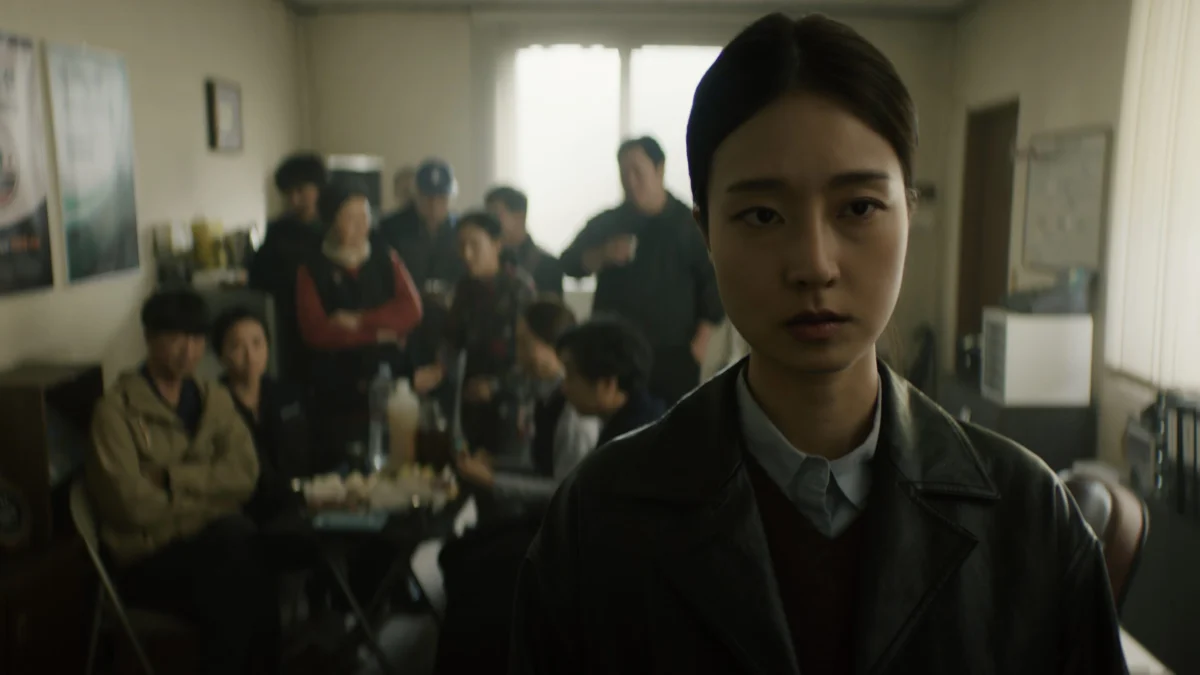
The Fertilizer Home, known in Korean as Oga, marks the ambitious directorial debut of Jeong Hyo-jung, a film meticulously crafted under the auspices of the Korean Academy of Film Arts and brought to fruition by producer Kim Han-ul. World sales for this distinctive cinematic offering are being managed by Finecut. Prior to its completion, Oga garnered significant attention as a featured project within the planning and development stages of the Independent Film Matching Project: Next Link, an initiative jointly organized by the Seoul Independent Film Festival and the Independent Art Film Distribution Support Center, underscoring its early recognition within the independent film community. The film’s narrative plunges viewers into the heart of a rural village, a community inextricably linked to a local factory engaged in the processing of dried surplus tobacco into compost. This operation is presided over by Mi-jo, the undisputed matriarch of the village, who has inherited the reins of the business from her father, now confined to a wheelchair. However, Mi-jo’s authority is increasingly precarious, assailed by internal strife within the factory, dissent from long-time workers, and mounting pressure from a neighboring community protesting the environmental impact of toxic fumes emanating from the facility.
A Village Under Siege: Environmental Decay and a Supernatural Affliction
The industrial operations at the heart of Oga’s setting are not merely a backdrop for interpersonal drama; they are a catalyst for widespread ecological concern. The factory, while providing a vital source of income for the local populace, simultaneously becomes a focal point for environmental degradation. The film’s exploration of this dichotomy—economic necessity clashing with ecological responsibility—resonates with ongoing global discussions surrounding sustainable development and the ethical implications of industrial expansion in rural areas. Statistics from the Korean Ministry of Environment have consistently highlighted the challenges of managing industrial waste and air pollution in agricultural regions, where the economic benefits of such facilities are often weighed against their potential environmental toll. Oga, through its fictionalized portrayal, taps into these real-world anxieties, presenting a scenario where the very source of livelihood becomes a harbinger of peril.
Simultaneously, a disquieting phenomenon begins to manifest within the village, a pervasive malady that compels individuals to commit acts of violence against those they hold most dear. As instances of murder and assault escalate, the bewildered villagers attribute these atrocities to a curse, a supernatural retribution for their transgressions. Amidst this rising tide of fear and superstition, Mi-jo endeavors to maintain order and address the escalating crisis, ostensibly in the name of the collective good. Yet, her leadership is subtly challenged by the growing influence of her twin sister, Eun-jo. Initially perceived as more passive and peripheral, Eun-jo gradually carves out a position of authority through her engagement with shamanic practices. This divergence in approach—Mi-jo’s pragmatic, albeit increasingly strained, governance versus Eun-jo’s spiritual interventions—sets the stage for a profound confrontation. Mi-jo finds herself compelled to confront the unsettling truths underpinning the village’s descent into violence, the deeply entrenched conflicts within her own family, and the unsettling realization of her own complicity, a nature stained by ancestral secrets.
Intertwining Narratives: Ecology, Society, and Familial Discord
Director Jeong Hyo-jung masterfully constructs a narrative tapestry that is as intricate as it is multifaceted, weaving together several distinct thematic threads. The most immediately apparent is the environmental concern. Jeong offers a pointed critique of industrial practices, even those undertaken by seemingly modest enterprises, underscoring the complex web of consequences that can arise when such factories are among the sole economic pillars of a community. This critique is not presented in a vacuum; it is intricately linked to the depiction of close-knit societies. The film captures the inherent duality of these communities, where gossip and interference coexist with a palpable sense of solidarity and mutual reliance. This nuanced portrayal of rural social dynamics adds significant depth to the film’s exploration of how external pressures—be they environmental or social—can impact the fabric of village life.
Beyond the environmental and societal dimensions, Oga delves deeply into the realm of family drama. The narrative centers on the escalating rivalry between two sisters vying for dominance, not only within the village hierarchy but also within their ancestral home, and crucially, for the favor of their ailing father. Their struggle for power is further complicated by their engagement with their own personal and social challenges, which, for the most part, are framed through their interactions with the male figures in their lives. The chilling premise of individuals succumbing to an affliction that compels them to harm their loved ones takes on a particularly poignant significance within this familial context. The film skillfully probes the question of who, precisely, these protagonists—fathers, daughters, and lovers alike—cherish the most, transforming this existential inquiry into a compelling focal point of the entire narrative.
Echoes of Power and Corruption: A Sociopolitical Subtext
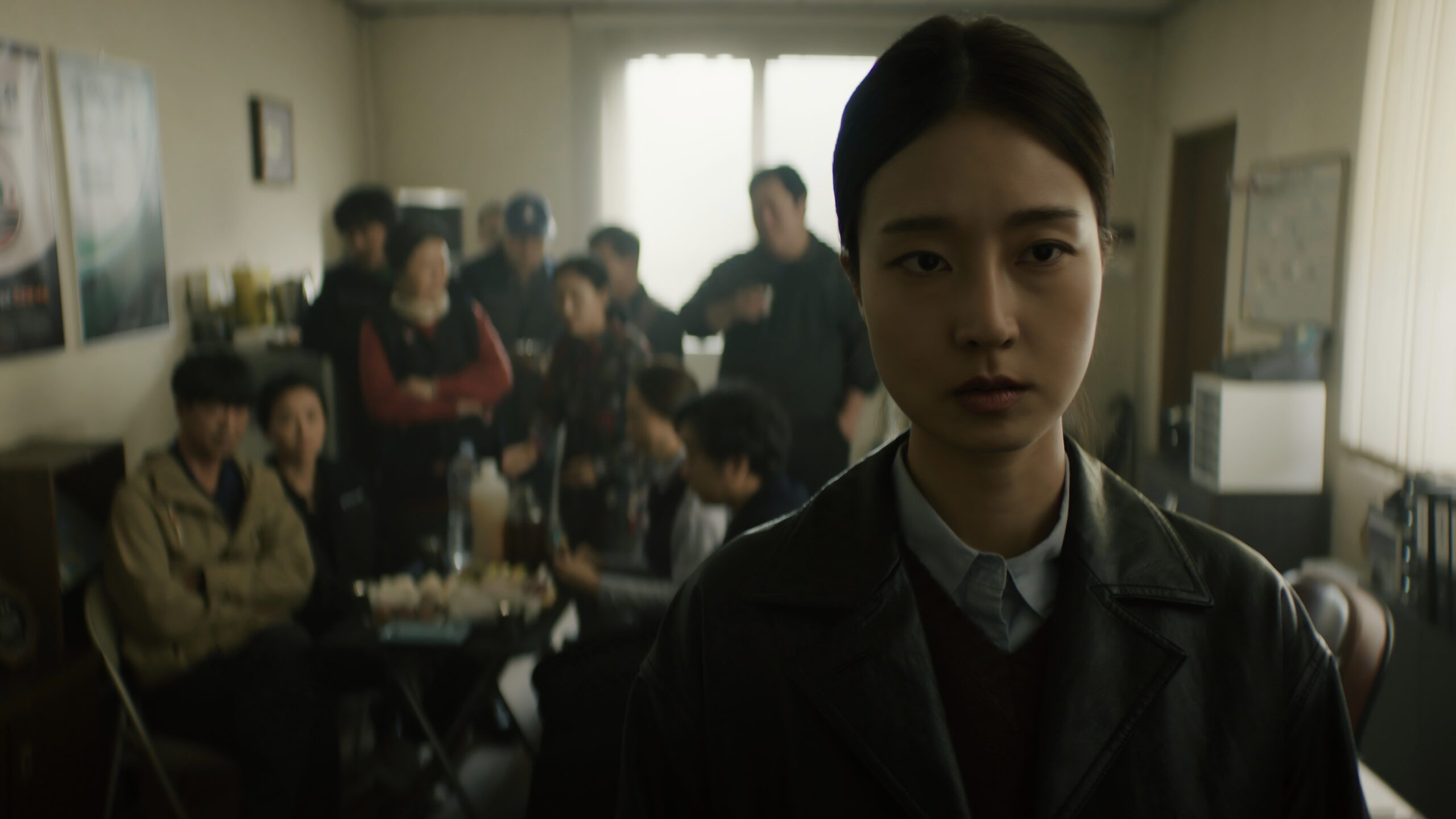
While Oga is not explicitly framed as a direct political allegory, its thematic convergence of female leadership, corporate malfeasance, familial trauma, and the pervasive influence of shamanism inevitably evokes parallels with one of modern Korea’s most significant and widely publicized political scandals: the downfall of former President Park Geun-hye and the associated Choi Soon-sil affair. In the film, Mi-jo’s ostensibly solid grip on the factory and the village is progressively undermined by the emergence of buried histories and the escalating spiritual authority wielded by Eun-jo. This dynamic creates a horror-tinged reflection of a society grappling with the unsettling possibility that overt power structures might be subtly manipulated, compromised, or even corrupted by clandestine forces operating from the shadows. The film’s exploration of hidden influences and the erosion of trust in established authority figures offers a potent commentary on the anxieties surrounding governance and accountability in contemporary South Korea. The intricate interplay of traditional power structures, emergent spiritual influence, and the lingering specter of past transgressions provides fertile ground for sociopolitical interpretation.
Atmospheric Immersion and Cinematic Craftsmanship
The film’s considerable impact is significantly amplified by its pervasive atmosphere. Director Jeong Hyo-jung cultivates a pervasive sense of unease, where constant unanswered questions, palpable danger, and a perpetually shifting balance of power coalesce to create an overwhelming feeling that something profoundly unsettling is unfolding. This sustained sense of mystery serves as a primary engine driving the narrative for much of its duration. The cinematography, helmed by Lee Do-hyun, further enhances this atmospheric immersion. The prevalent use of shadows and darkness imbues the film with a brooding quality, effectively underscoring the psychological and emotional turmoil plaguing the characters and the village. Juxtaposed against this oppressive darkness are the often-idyllic rural landscapes, creating a stark and unsettling contrast that amplifies the almost grotesque imagery associated with the factory’s inner workings, thereby deepening the film’s unsettling mood.
Jeong’s own contributions as editor are also noteworthy, resulting in a deliberately measured, mid-tempo pacing that effectively balances the unfolding narrative threads. The juxtaposition of these various narrative axes and the gradual revelation of events are skillfully managed. However, as the film progresses towards its conclusion and action sequences become more prominent, a slight faltering in pacing and narrative cohesion becomes apparent. Certain segments, characterized by a noticeable lag or seemingly tangential episodes, detract slightly from the overall narrative momentum, representing the most significant technical shortcomings of the film.
Stellar Performances and a Promising Debut
The acting in Oga is consistently of a high caliber, elevating the film beyond its thematic complexities. Kim Seung-hwa delivers a compelling performance as Mi-jo, skillfully navigating the character’s descent from authoritative figure to a woman grappling with her own dark heritage. Her dynamic with Park Ah-in, who portrays Eun-jo, is particularly impressive. The sisters’ performances are marked by a remarkable ability to embody both victimhood and perpetrator, rendering their characters with equal conviction. Kim Seung-hwa’s nuanced portrayal of Mi-jo’s gradual adoption of her father’s more severe disposition adds another layer of complexity to her performance. Jung Dong-hwan, as the patriarch, is equally commendable, embodying the stern and often unfair patriarch with a palpable gravitas. Young actress Ki So-yu, who plays a pivotal role as a young girl in the film, is also a standout, managing to convey both profound vulnerability and an unsettling, at times frightening, presence.
Despite occasional narrative stumbles, The Fertilizer Home stands as a competent and compelling cinematic achievement. The film’s strengths lie in its potent atmosphere, its rich, multilayered thematic content, its striking visual presentation, and its uniformly strong performances. It represents a more than hopeful and promising debut for director Jeong Hyo-jung, signaling a significant new voice in Korean cinema. The film’s ability to engage with complex social, environmental, and familial issues, all while maintaining a suspenseful and engaging narrative, marks it as a noteworthy contribution to the independent film landscape.