

With the 2026 release of Jackass: Best and Last, the long-running experiment in visceral slapstick and extreme physical performance appears to have reached its final destination. Since its inception at the turn of the millennium, the franchise has defied traditional entertainment trajectories, evolving from a controversial cable television program into a multi-billion-dollar cinematic phenomenon. Director Jeff Tremaine, who has served as the primary architect of the series’ aesthetic and structural framework since its 1990s origins at Big Brother magazine, recently reflected on the emotional weight of concluding a project that has spanned more than a quarter-century. For Tremaine and his collaborators, the finality of the latest installment has prompted a rare moment of introspection regarding the artistic and cultural impact of a series often dismissed as mere sophomoric humor.
The Genesis of a Cultural Phenomenon: From Print to Screen
The foundation of Jackass was not laid in a Hollywood boardroom but within the subversive pages of Big Brother, a skateboarding magazine known for its irreverent and often dangerous editorial content. Jeff Tremaine, then the publication’s editor, served as a curator of personalities rather than just athletic talent. By focusing on the most outrageous figures in the skateboarding subculture—including Johnny Knoxville, Chris Pontius, and Steve-O—Tremaine identified a unique form of engagement that transcended the sport itself.
The pivotal moment for the franchise occurred when Johnny Knoxville filmed himself testing self-defense equipment, including being shot while wearing a bulletproof vest. Tremaine recognized that Knoxville’s charisma and willingness to endure physical trauma for the sake of a "bit" possessed a universal, if primal, appeal. This led to the formation of the core creative trio of Tremaine, Knoxville, and filmmaker Spike Jonze. When Jackass premiered on MTV in 2000, it immediately became a lightning rod for controversy, drawing massive ratings while simultaneously being condemned by politicians and parent groups for its perceived negative influence on youth.
A Chronology of Escalation: 2000–2026
The trajectory of the Jackass franchise is marked by a steady increase in both production scale and critical acceptance. Following the conclusion of the television series in 2002, the crew transitioned to feature films, which allowed for higher budgets and fewer broadcast restrictions.
- 2002: Jackass: The Movie – Produced on a modest $5 million budget, the film grossed over $79 million worldwide, proving that the DIY aesthetic could thrive on the big screen.
- 2006: Jackass Number Two – This sequel saw the introduction of more elaborate, high-concept stunts and marked the beginning of Tremaine’s more sophisticated approach to capturing the chaos.
- 2010: Jackass 3D – A significant milestone, the film utilized high-speed cameras and 3D technology to elevate the "lowbrow" content. It premiered at the Museum of Modern Art (MoMA) in New York, signaling a shift in critical perception.
- 2022: Jackass Forever – Released after a long hiatus and the death of original cast member Ryan Dunn, the film focused on the aging bodies of the original crew and the introduction of a new generation. It was widely praised for its themes of enduring friendship.
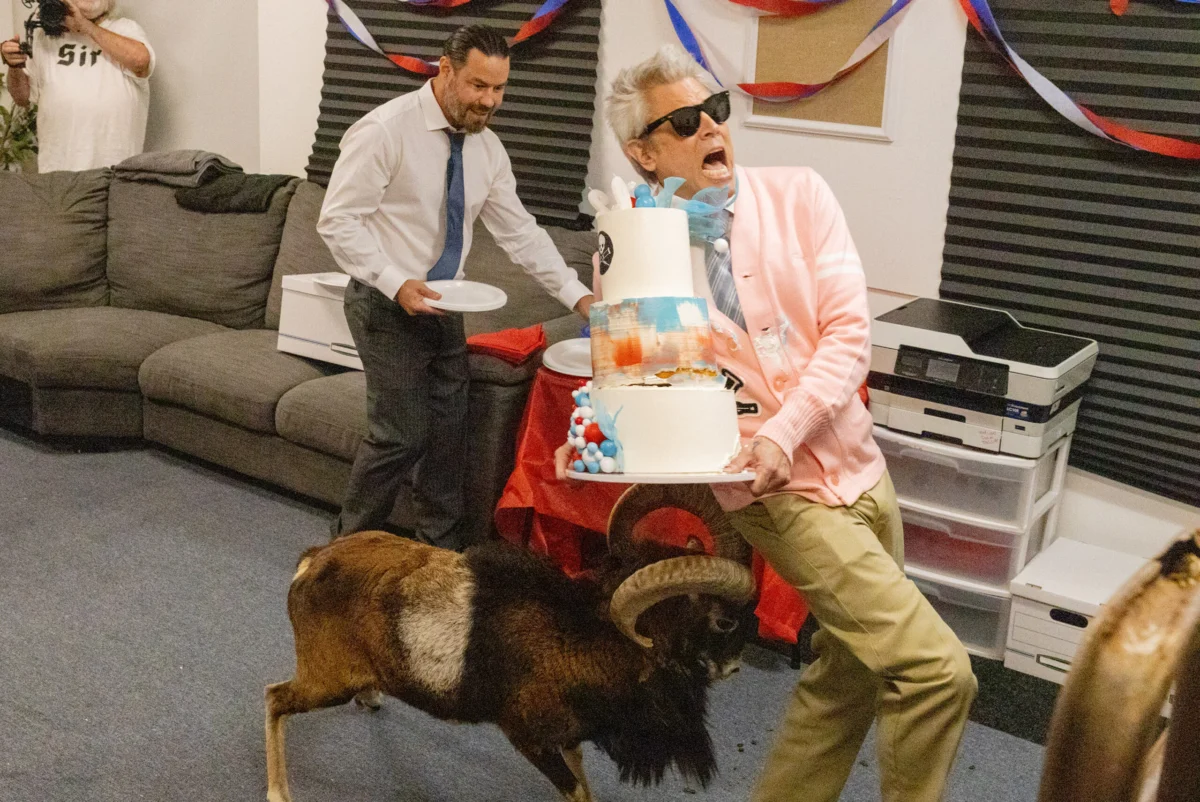
- 2026: Jackass: Best and Last – The purported final chapter, characterized by a retrospective tone and a celebration of the series’ longevity.
The Directorial Philosophy of Spontaneous Chaos
Despite his background in fine arts, including painting and design, Jeff Tremaine has historically been wary of intellectualizing his work. However, film scholars and critics have increasingly noted the sophisticated "eye" Tremaine brings to the franchise. His directorial style is predicated on a "360-degree" filming approach, where the reactions of the crew and the technical failures of a stunt are considered just as valuable as the stunt itself.
Tremaine’s role is primarily one of curation and psychological management. He describes his process as putting "exceptional dumb-dumbs" in situations where their natural personalities can shine. This requires a delicate balance between meticulous planning and the preservation of spontaneity. As the productions grew from a single van to a crew of over 120 people, Tremaine fought to maintain the guerrilla-style energy that defined the early years. He has often noted that "getting it right is getting it wrong," meaning that a stunt is only successful if it results in an unexpected, often painful, outcome.
Navigating Censorship and the MPAA
The history of Jackass is also a history of negotiation with the Motion Picture Association of America (MPAA). Tremaine has frequently detailed the absurdity of the ratings process, where the length of time a body part is on screen can determine an R or NC-17 rating. In one notable instance during the production of Jackass 3D, Tremaine was forced to utilize creative editing—including the use of black bars—to satisfy censors while still delivering the transgressive humor the audience expected. These restrictions, according to Tremaine, often forced the production to be more creative, turning bureaucratic hurdles into comedic opportunities.
Data and Economic Impact
The Jackass franchise stands as one of the most profitable in Paramount Pictures’ history relative to its production costs. The first four films alone grossed nearly $500 million globally against a combined production budget of less than $50 million. This high return on investment (ROI) allowed Tremaine and Knoxville significant creative autonomy, even as the content remained highly unconventional.
Beyond the box office, the series has had a profound impact on the "creator economy." The DIY, first-person perspective pioneered by Tremaine and his crew became the blueprint for much of the content found on platforms like YouTube and TikTok. However, few have managed to replicate the specific chemistry of the Jackass cast, which Tremaine attributes to the genuine, decades-long friendships between the performers.
Critical Re-evaluation: From Moral Panic to High Art
The 2010 MoMA gala for Jackass 3D represented a sea change in how the franchise was viewed by the cultural elite. Once dismissed as a "moral rot" by figures like Senator Joe Lieberman, the series began to be analyzed as a modern iteration of Commedia dell’arte or Vaudeville. Critics began to highlight the way the series celebrates healthy male friendships and subverts traditional masculine tropes through vulnerability and shared suffering.
Tremaine has expressed a complicated relationship with this critical acclaim. While he acknowledges the accuracy of some psychological analyses, he maintains that the primary goal has always been "magnifying stupid." He has admitted that receiving positive reviews for Jackass Forever felt "wrong" to his punk-rock sensibilities, suggesting that the franchise’s acceptance into the mainstream might be a sign that the world around it has changed more than the creators themselves.
Broader Implications and Artistic Legacy
Jeff Tremaine’s influence extends beyond the Jackass brand. His work on high-profile commercial projects, such as a safety PSA for American Airlines, demonstrates his ability to translate his stylish, movement-oriented direction into more conventional formats. He often compares his directing to his painting, noting that both activities draw from the same creative "tank."
As the franchise concludes with Jackass: Best and Last, the legacy of Tremaine’s work remains visible in the landscape of modern comedy and documentary filmmaking. The series proved that there is a profound, almost spiritual, resonance in the spectacle of the human body in distress, provided it is framed by genuine affection and a lack of pretension.
The emotional resonance of the final film, as noted by Tremaine during the editing process, stems from seeing the cast grow from "babies" to men in their fifties and sixties. The archival footage serves as a testament to a career spent in the pursuit of the "outrageous," a journey that took a small group of skateboarders from the pages of an underground magazine to the pinnacle of cinematic history. While Tremaine jokingly claims he is still "waiting to grow up," his body of work suggests he has already mastered a unique and enduring form of American folk art.