
The cinematic exploration of divergent realities and the poignant "what ifs" of life takes center stage in Drake Doremus’s latest directorial and writing endeavor, Next Life. Starring Emilia Clarke, Édgar Ramírez, and Jack Farthing, the 112-minute film delves into the universal human experience of contemplating alternative paths not taken, presenting a narrative that is both deeply personal and broadly resonant. At its core, the story follows Ivy, a woman whose chance encounter on a train opens the door to exploring two distinct potential futures, each offering the fulfillment of a different, deeply held desire. This meticulously crafted narrative, which premiered to critical attention, hinges on the premise that a single moment, a split-second decision, can reroute the entire trajectory of a life, leading to vastly different outcomes and emotional landscapes.
The Premise: A Fateful Morning on the Rails
The film opens with a relatable depiction of modern life’s hurried pace. Ivy, portrayed by Emilia Clarke, is introduced in a state of mild chaos, racing against time to attend her goddaughter’s christening. Her morning is further complicated by a near-miss with a train, a situation amplified by a classic cinematic trope: a chance encounter with a captivating stranger. In a scene laden with serendipity and a touch of physical comedy, Ivy collides with Diego, played by Édgar Ramírez, a Venezuelan jazz musician whose career has reached a significant, perhaps frustrating, plateau. This initial meeting, characterized by spilled coffee and an immediate spark, ignites not only a potential romance but also a forgotten passion within Ivy herself: her love for music and singing.
However, Next Life immediately subverts audience expectations. As the title card appears, the scene surprisingly resets. Ivy is once again rushing for the same train, her goddaughter’s christening looming. This time, the coffee remains contained, and the collision with Diego does not occur. Their paths still cross on the train, but the absence of the initial, charged interaction leads to a divergence. This seemingly minor alteration in events sets the stage for the film’s central mechanic: the exploration of two parallel timelines, meticulously constructed and presented with remarkable clarity.
Dual Narratives: The Road Not Taken and the Path Reclaimed
The narrative unfurls in a style reminiscent of the acclaimed 1998 film Sliding Doors, presenting two distinct yet intertwined realities for Ivy. In one timeline, the initial coffee-spilling encounter with Diego leads to a blossoming romance and a vibrant new life. This path sees Ivy reconnecting with her musical aspirations, finding inspiration and encouragement in Diego’s artistic world. The film effectively portrays this as a period of rediscovery and renewed passion, suggesting a life rich in creative expression and emotional connection.
Simultaneously, the film explores a second timeline where the initial encounter with Diego does not escalate into a romantic connection. In this reality, Ivy finds herself drawn back to her ex-boyfriend and former boss, Noah, portrayed by Jack Farthing. This reconnection occurs while Ivy is still navigating the emotional fallout of their previous breakup. This timeline presents a different kind of life, one that may offer comfort and familiarity but also carries the weight of unresolved feelings and a potential return to a past that may not fully satisfy her present needs. The film carefully contrasts these two lives, allowing the audience to weigh the merits and demerits of each choice alongside Ivy.
Direction and Cinematography: Visualizing Divergent Realities
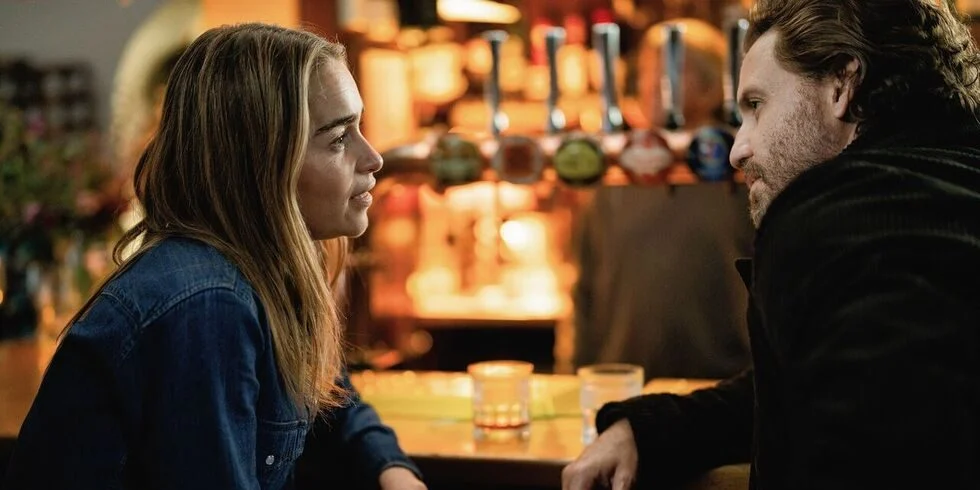
Director and writer Drake Doremus, known for his nuanced explorations of relationships and human emotion, masterfully orchestrates the dual-timeline structure. The film’s technical execution is a key element in its success. The transition between timelines is handled with a remarkable degree of seamlessness, ensuring that the audience remains engaged and can easily discern which reality they are witnessing. A subtle yet effective visual cue, such as a change in Ivy’s attire—from a coffee-stained pink dress to a denim shirt and jeans in one instance—instantly signals the shift.
Beyond wardrobe, the film employs sophisticated cinematic techniques to differentiate the two timelines. The lighting and color palettes become crucial narrative devices. The timeline shared with Diego is bathed in warmth, characterized by rich, autumnal tones. Cinematography captures a sense of intimacy and artistic vibrancy, with scenes often set in a spacious studio apartment adorned with art and music, illuminated by a golden hue. This visual warmth directly mirrors the blossoming of Ivy’s rediscovered passion and her burgeoning relationship.
In stark contrast, the timeline with Noah is depicted with a colder, more muted aesthetic, evoking the feeling of a New York winter. The settings are often sleek and polished—a penthouse apartment with a view of the Houses of Parliament in London, a sterile corporate office. This visual coldness reflects a life that, while outwardly comfortable and successful, may lack genuine emotional warmth and creative fulfillment. This deliberate use of visual language guides the audience’s perception, subtly highlighting the emotional resonance of each path before the narrative delves too deeply into the complexities of each choice.
The Power of Performance: Emilia Clarke’s Nuanced Portrayal
Emilia Clarke delivers a performance that is central to the film’s emotional impact. Tasked with embodying the same character across two diverging life paths, Clarke imbues Ivy with subtle yet significant differences that underscore the impact of her choices. Her ability to convey unspoken emotions through nuanced expressions, a slight shift in gaze, or a subtle inflection in her voice allows the audience to perceive two distinct individuals, even as they are aware of the shared core identity.
In the timeline with Diego, Clarke portrays a rediscovered joy and a luminous quality as Ivy re-engages with her singing. Her performances in various jazz clubs are depicted as moments of genuine artistic liberation. Conversely, in the timeline with Noah, while Ivy may articulate a sense of contentment, Clarke’s performance subtly reveals an underlying yearning. Her portrayal hints at the unfulfilled desires, particularly concerning motherhood, which may be present even in a seemingly stable and comfortable relationship. This depth of performance ensures that the audience connects with Ivy’s internal struggles and aspirations, making her journey through these alternate realities all the more compelling.
Musicality and Score: Enhancing the Emotional Tapestry
The film’s score, composed by the four-time Oscar nominee Dan Rom, plays a vital role in amplifying the emotional resonance of the narrative. The music leans into the romantic sensibilities of the 1930s, a stylistic choice that perfectly complements both the jazz-infused scenes in London and the overall contemplative mood of the film. The score acts as a sonic thread, weaving together the disparate elements of Ivy’s two lives, underscoring moments of both melancholic reflection and hopeful resurgence. The deliberate musical choices contribute significantly to the film’s ability to evoke a sense of nostalgia, romance, and introspective yearning.
Beyond the Binary: The Complexities of Fulfillment
Next Life distinguishes itself by resisting the temptation to present a simplistic dichotomy of "good" versus "bad" life paths. The film acknowledges that each reality, while offering different forms of fulfillment, also presents its own unique set of challenges and complexities. The life with Diego, while rich in passion and creativity, introduces the profound responsibilities and complications of pregnancy. Similarly, the life with Noah, while offering comfort and stability, is shadowed by a quiet, unresolved yearning for motherhood, a desire that may not be fully met within that context. This nuanced portrayal reflects the inherent imperfections of life, suggesting that no single path is entirely without its difficulties.
The film’s nearly two-hour runtime, while occasionally allowing for moments of narrative drag, ultimately serves the purpose of allowing the audience to fully immerse themselves in each of Ivy’s potential lives. The emotional payoff, earned through this patient exploration, is considerable. Next Life posits that regardless of how perfectly one might envision their ideal existence, the reality will invariably be shaped by unforeseen circumstances and inherent imperfections. The film’s central thesis—that the concept of a "next life" or an alternative reality offers an opportunity to try again, to learn, and to grow—is effectively communicated and leaves a lasting impression. The narrative concludes with a sense of thoughtful resolution, reinforcing the idea that while lives may diverge, the pursuit of happiness and fulfillment remains a constant human endeavor.
Context and Production: Drake Doremus’s Vision
Drake Doremus’s career has consistently explored the intricacies of human connection and the often-unforeseen turns that shape romantic relationships. Films like Like Crazy (2011) and Equals (2015) have established his reputation for crafting intimate and emotionally resonant narratives. With Next Life, Doremus takes this thematic exploration into a more speculative realm, utilizing the concept of alternate realities not as a mere plot device, but as a means to deeply examine character and the nature of desire. The film’s production, with its focus on nuanced performances and evocative cinematography, underscores Doremus’s commitment to creating a cinematic experience that is both intellectually stimulating and emotionally engaging. The collaboration with a talented cast, including the widely recognized Emilia Clarke, further amplifies the film’s potential to connect with a broad audience, offering a thought-provoking reflection on the choices that define our lives. The film’s runtime of 112 minutes allows for a thorough examination of its complex themes, a deliberate choice by Doremus to give the audience ample time to process the emotional weight of Ivy’s journey through these divergent realities.
Broader Implications: The Nature of Choice and Desire
Next Life invites audiences to contemplate the fundamental nature of choice and the often-elusive definition of true fulfillment. In an era where social media often presents curated, idealized versions of life, the film’s honest portrayal of imperfect realities and the inherent complexities of even the most desirable paths serves as a powerful reminder of what it means to be human. The film suggests that happiness is not necessarily found in achieving a singular, perfect outcome, but rather in the process of navigating life’s inherent uncertainties, learning from our experiences, and continuing to strive for personal growth. The exploration of parallel lives, while rooted in a speculative premise, ultimately serves to illuminate the richness and variety of lived experience, encouraging viewers to consider their own paths and the desires that shape them. The film’s success lies in its ability to transform a familiar philosophical inquiry into a deeply felt cinematic narrative, leaving a lasting impression on the viewer’s perception of choice, regret, and the enduring human quest for meaning.