


The 2026 Cannes Film Festival, a perennial beacon for global cinema, witnessed a profound and critically acclaimed debut within its prestigious Critics’ Week (Semaine de la Critique) sidebar: Chinese director Zou Jing’s film titled A Girl Unknown. This poignant cinematic work meticulously chronicles the arduous life of Wang Juan, portrayed with striking depth by Cao Ruofan, as she navigates a tumultuous journey from her rural childhood to the complexities of urban adulthood, shuttled through three distinct foster families. Zou Jing, in her masterful inaugural feature, fearlessly confronts the deeply ingrained and profoundly painful legacy of China’s historic demographic policies—a governmental initiative that cast long, intergenerational shadows over countless lives. The narrative unfolds against the backdrop of the 1980s and ’90s, a period that marked the apex of the notorious one-child policy, providing a stark historical canvas for Juan’s personal odyssey.
The Film’s Narrative and Artistic Vision
A Girl Unknown plunges viewers into a meticulously crafted world, beginning with the protagonist, initially known as Lin Juan, in a pastoral, almost idyllic rural setting. Director Zou Jing deliberately paints this utopian vision of a carefree tomboy, reveling in unbridled freedom and the unwavering affection of her father, to amplify the subsequent devastating blow that irrevocably alters both the character’s trajectory and the viewer’s emotional landscape. This deliberate contrast heightens the sense of loss and the profound disruption that follows.
A Deep Dive into Wang Juan’s Ordeal
Juan’s ordeal commences at the tender age of six, immediately following the untimely death of her loving father. Her mother, facing insurmountable pressures and seeking a better life, uproots her from their tranquil rural home and thrusts her into the sprawling, impersonal expanse of the big city. Here, Juan is left in the care of a grieving friend of her mother, a woman consumed by her own sorrow and desperately hoping the young girl might somehow fill the void left by her own deceased daughter. This initial placement sets the tone for a childhood defined not by nurturing love, but by an unsettling sense of displacement and unfulfilled expectations.
The spatial reality of the film dramatically contracts from the open, lush countryside to the claustrophobic confines of a cramped city bedroom. Rather than finding solace or a sense of belonging with this new family, Juan is made to feel entirely alien and fundamentally unwanted. She is compelled to mature in a chillingly loveless atmosphere, perpetually shadowed by anxiety. Within this household, a palpable sense of individual despair pervades; everyone is, in essence, trapped within their own personal hell. Juan endures an emotionally barren existence; her foster mother is crushed by the intractable reality that a new child cannot possibly mend the deep wound left by a lost one, while the foster father is paralyzed by guilt and grief over his own deceased daughter. Despite sharing a roof, these individuals are completely walled off from one another, each mourning in isolated silence, thereby deepening their collective agony and Juan’s profound sense of abandonment. As the narrative progresses, Juan is subsequently moved through two more foster families, each presenting its own set of challenges and reinforcing her transient, unrooted existence.
Zou Jing’s Directorial Approach
Director Zou Jing exhibits remarkable courage and conviction, subjecting both her lead character and the audience to a grueling two hours of relentless misfortune, a cascade of tragedy after tragedy. Yet, crucially, Zou masterfully sidesteps cheap emotional manipulation or gratuitous spectacle by anchoring the film strictly to Wang Juan’s internal psychological state. Significant story developments, often the most harrowing, occur entirely off-screen. Instead, the audience is left to witness only the profound emotional fallout, experiencing the unfolding narrative purely through the character’s nuanced reactions and internal processing of each new adversity. This directorial choice imbues the film with an intense intimacy, forcing viewers to deeply empathize with Juan’s internal world.
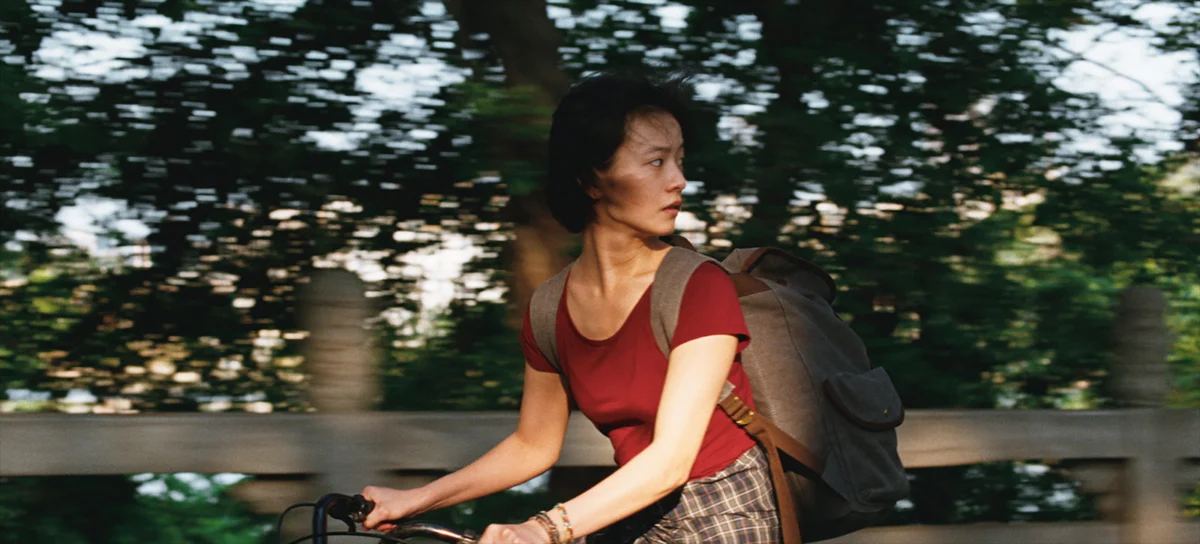
However, Zou Jing’s ambition extends beyond a mere intimate psychological study. She expertly frames this deeply personal trauma against the expansive canvas of a rapidly transforming China. The visual journey mirrors Juan’s personal one, transitioning from the lush, verdant rural landscapes of her early childhood to the moody, often romanticized glow of city nights. This wider societal scope lends the film a sweeping, sensual poetry, elevating the individual story to a broader commentary on a nation in flux.
Cinematic Poetry and Visual Storytelling
The sheer beauty and evocative power of the cinematography, meticulously crafted by Director of Photography Liang Zhongqiang, serve as a vital counterweight to the oppressive narrative and the pervasive sadness that permeates the film. The camera frequently lingers on moments of exquisite visual detail: the ethereal glow of streetlamps cutting through the night air, the vibrant expanse of green fields stretching to the horizon, the delicate dance of a warm breeze catching in hair, and the melancholic drape of twilight descending over the urban skyline.
It is as if the director and cinematographer are engaged in a silent dialogue with the audience, subtly conveying that the protagonist’s innate capacity for wonder, her essential humanity, remains remarkably intact despite her tragic circumstances. Her childhood spontaneity, adolescent curiosity, and the tender, formative milestones of first friendships and early love are not merely depicted but are vividly articulated and celebrated through this rich, sensory visual tapestry. This visual richness prevents the film from becoming solely a descent into despair, instead offering glimpses of resilience and the enduring human spirit.
Historical Context: The Shadow of China’s Demographic Policies
A Girl Unknown is deeply embedded in the historical and socio-cultural fabric of China, particularly the profound impact of its demographic policies and entrenched patriarchal norms. Understanding these contexts is crucial to fully appreciating the film’s resonance and its critical message.
The One-Child Policy: A Chronology
China’s one-child policy, officially implemented in 1979, was a drastic population control measure designed to curb the nation’s rapidly growing populace and alleviate pressure on finite resources, thereby facilitating economic growth and modernization. This policy, enforced with varying degrees of stringency across different regions and over several decades, fundamentally altered the social and demographic landscape of China.
The policy was characterized by a range of coercive measures. Women were frequently subjected to compulsory sterilizations, often without their full consent, and forced abortions, sometimes even in advanced stages of pregnancy. Families who dared to defy the strict regulations faced severe penalties, including crushing fines that could financially ruin them, termination of employment, and the stripping of essential social benefits, such as access to healthcare or education for their "unregistered" children. While some urban families might have been allowed a second child under specific circumstances (e.g., if the first child had a disability), and ethnic minorities were often exempt, the policy’s primary thrust was stringent limitation. The policy was eventually relaxed to a two-child policy in 2015, in response to an aging population and shrinking workforce, and further to a three-child policy in 2021, marking a significant shift in the nation’s demographic strategy.

Traditional Patriarchal Norms and Gender Imbalance
Compounding the state-sanctioned cruelty of the one-child policy was the deeply entrenched preference for male heirs, a cultural phenomenon particularly prevalent in rural areas of China. Rooted in millennia of tradition, boys were unequivocally viewed as the family’s future workforce, the inheritors of property, and, crucially, the ones who would carry on the ancestral bloodline and provide for their parents in old age. Daughters, by stark contrast, were frequently perceived as a temporary asset, destined to marry into another family, and were often denied both support and educational opportunities, expected to eventually fend entirely for themselves.
When these pervasive patriarchal norms collided with the draconian state laws of the one-child policy, the consequences were devastating and widespread. The combination led to a tragic surge in practices such as female infanticide and sex-selective abortions, enabled by the advent of ultrasound technology. Thousands of infant girls were simply abandoned—left on streets, in markets, or outside police stations—a silent testament to the societal pressures and the heartbreaking choices families were forced to make. The demographic fallout of these practices speaks volumes: by 2021, in a nation of 1.4 billion people, men significantly outnumbered women by nearly 35 million, creating a profound and enduring gender imbalance with significant societal implications, including a "marriage squeeze" for men and potential social instability. A Girl Unknown unflinchingly explores the personal toll of these intersecting policies and cultural biases on a single individual.
Cannes Critics’ Week and Global Recognition
A Girl Unknown made its debut at the Cannes Film Festival’s Critics’ Week, a section renowned for unearthing fresh talent and presenting groundbreaking first and second feature films. Its inclusion here immediately signaled its potential as a significant cinematic work.
Semaine de la Critique: A Launchpad for Talent
The Semaine de la Critique, or Critics’ Week, established in 1962, is the oldest parallel section of the Cannes Film Festival. Its primary mission is to discover and highlight emerging filmmakers, providing a crucial platform for their first or second feature films to gain international recognition. Over its distinguished history, Critics’ Week has launched the careers of numerous acclaimed directors, including Bernardo Bertolucci, Ken Loach, Wong Kar-wai, Guillermo del Toro, and Julia Ducournau, among others. Its reputation as a discerning curator of innovative and bold cinematic voices makes the selection of A Girl Unknown a significant endorsement of Zou Jing’s talent and the film’s artistic merit. Being chosen as one of the standout debuts implies a strong critical reception from the discerning panel of international critics who curate the section.
Reception at Cannes 2026
While specific official statements from the festival jury or other related parties are not yet available for a future event like Cannes 2026, the initial assessment within the article—labeling A Girl Unknown as a "heartbreaking, masterful debut" and a "standout debut"—strongly suggests a highly positive reception. Critics attending the festival would undoubtedly have been drawn to its challenging themes, sensitive direction, and compelling performances. The film is poised to generate considerable buzz, not only for its artistic achievements but also for its unflinching portrayal of a sensitive historical subject. Its presence at such a high-profile festival indicates that it resonated deeply with international critics and industry professionals, positioning Zou Jing as an exciting new voice in world cinema. The film’s challenging subject matter, combined with its artistic finesse, would likely spark discussions about its potential for awards consideration within its section or even for broader distribution deals.
Director Zou Jing’s Vision and Voice
The emergence of A Girl Unknown on the global stage, helmed by a Chinese female director, is particularly significant. Zou Jing’s decision to tackle such sensitive historical and social issues—the one-child policy and patriarchal structures—from the perspective of a female protagonist offers a crucial and often underrepresented voice. Her inferred motivation would likely stem from a desire to shed light on the often-silenced experiences of those impacted by these policies, particularly women and abandoned children, giving a human face to staggering statistics. By presenting this narrative at Cannes, Zou Jing contributes to a global dialogue about human rights, societal pressures, and the enduring strength of the human spirit, solidifying her as an important new voice in contemporary Chinese and world cinema.
Broader Cinematic and Societal Implications
A Girl Unknown is not merely an isolated film; it resonates within a broader wave of Chinese cinema that grapples with the profound human cost of the nation’s rapid modernization and specific historical policies.
Echoes in Chinese Cinema
The film’s profound sense of disillusionment and its examination of societal transformation find deep resonance within the landscape of contemporary Chinese cinema. It notably echoes the thematic concerns and stylistic approaches of acclaimed filmmaker Jia Zhangke, widely regarded as the preeminent chronicler of this transformative era. Jia’s oeuvre, including films like Still Life (2006), A Touch of Sin (2013), and Mountains May Depart (2015), consistently explores the dislocations, moral ambiguities, and individual struggles brought about by China’s relentless economic miracle and rapid urbanization. Like Jia, Zou Jing frames personal trauma against monumental societal shifts, depicting how individual lives are shaped and often shattered by forces beyond their control. Other filmmakers, such as Hu Bo with his poignant An Elephant Sitting Still (2018), have also explored themes of existential despair and the search for meaning in a rapidly changing, often alienating, Chinese society. A Girl Unknown thus contributes to a rich and evolving cinematic tradition that courageously reflects on the complex realities of modern China.
The Plight of Women in an Evolving Society
Another crucial and deeply felt theme throughout A Girl Unknown is the enduring plight of women living under an absolute patriarchy, exacerbated by the country’s economic transformations. The film powerfully illustrates how the female body is reduced to a mere instrument—commodified both by men for their own sexual gratification and by the relentless engine of economic progress that swept through the country in the 1990s. As the story progresses, sprawling factories begin to consume the surrounding natural landscape, symbolic of how industrialization devours whatever scraps of freedom, individuality, and traditional ways of life remain, effectively turning the populace into mere cogs in a colossal industrial machine. This narrative subtly highlights the intersection of gender inequality and unchecked industrialization, where women often bear the disproportionate burden of societal changes. The film contributes to a vital discourse, both within China and globally, about women’s rights, bodily autonomy, and their struggle for agency in societies undergoing rapid, often ruthless, development.
The Universal Search for Connection
In its cumulative emotional effect, A Girl Unknown shares a profound spiritual kinship with Hanya Yanagihara’s critically acclaimed novel A Little Life. Both works wash over the audience with an almost unbearable sense of extraordinary tragedy, depicting lives marked by relentless hardship and trauma. Yet, crucially, beneath that pervasive darkness lies a tender and ultimately hopeful narrative of gradual, painful recovery. We witness, through Juan’s carefully drawn journey, her tentative steps towards opening up, slowly learning to place her trust in others, and leaning on their support. Despite being forced to construct an impenetrable armor against the world’s endless cruelties since early childhood, she slowly, courageously, embraces her own fragility. The film’s ending message, delivered with elegant simplicity, is as devastating as it is universally resonant: regardless of sweeping economic shifts, state-mandated social experiments, or deeply rooted intergenerational scars, no human being can truly survive, let alone thrive, without the shelter of an embrace. Human connection, in its most fundamental and profound sense, is ultimately everything. It is the essential balm for wounds, the foundation for healing, and the ultimate source of resilience.
Conclusion
Zou Jing’s A Girl Unknown stands as a monumental achievement, a heartbreaking yet masterful debut that transcends its specific cultural and historical context to deliver a universally resonant message about human endurance, the search for identity, and the indispensable need for connection. Its profound exploration of China’s one-child policy and entrenched patriarchal norms offers a vital historical reflection, brought to life through Cao Ruofan’s compelling performance and Liang Zhongqiang’s exquisite cinematography. By earning its place as a standout at Cannes 2026 Critics’ Week, the film not only heralds the arrival of a significant new directorial voice but also enriches the global cinematic landscape with a powerful, poetic, and deeply human story that will undoubtedly provoke thought, empathy, and enduring discussion.