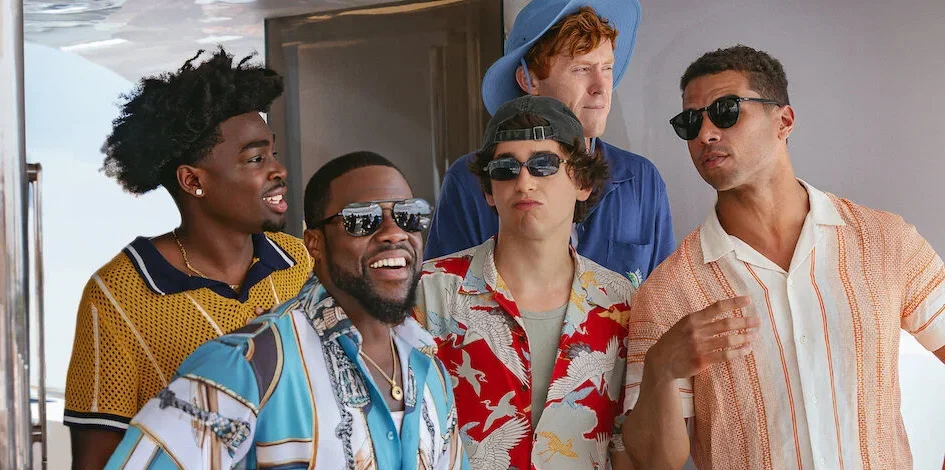
A seasoned advertising executive’s unexpected immersion into a boisterous three-day bachelor party alongside a group of twenty-somethings, triggered by an accidental inclusion in a digital chat group, forms the central premise of the recently released comedy, "72 Hours." The film, helmed by director Tim Story, attempts to tap into the enduring comedic trope of men navigating outrageous misadventures, a genre that has seen decades of variations from classics like "Animal House" to "The Hangover." However, critical reception suggests that "72 Hours" struggles to inject fresh life into this well-trodden territory, with its narrative arc and comedic beats largely perceived as derivative.
The Premise: An Unforeseen Digital Detour
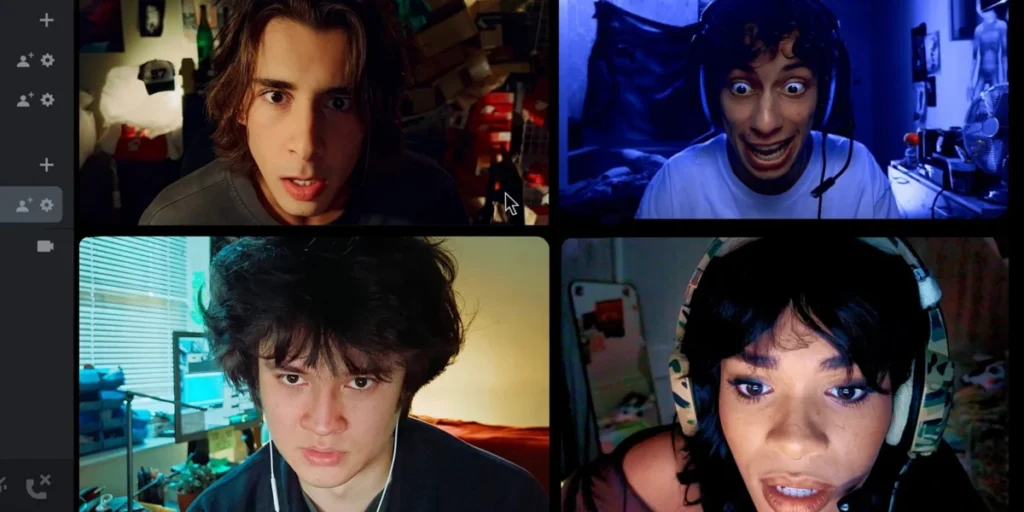
The core of "72 Hours" revolves around Joe Nixon, a 40-year-old advertising executive portrayed by Kevin Hart. Nixon finds himself inadvertently added to a group chat organizing a bachelor party. The participants are predominantly in their twenties, creating an immediate generational and experiential chasm. Driven by a perceived opportunity to revitalize his flagging career, Nixon makes the decision to join the festivities, a choice that sets in motion a chain of events that jeopardizes both his professional standing and his personal relationships. His live-in girlfriend and doctor, played by Teyana Taylor in a performance noted for its restraint, are left behind as Nixon embarks on this impulsive journey to Miami.
The narrative quickly escalates as Nixon’s presence among the younger revelers leads to encounters with local criminal elements. This entanglement inadvertently draws his new acquaintances into perilous situations, compounding the chaotic nature of the bachelor party. The film’s trajectory, therefore, involves a blend of fish-out-of-water humor, the inherent unpredictability of a celebratory event gone awry, and the high-stakes consequences of mistaken identity and unintended criminal involvement.
Behind the Production: A Familiar Creative Team
The film’s direction is undertaken by Tim Story, a filmmaker with a notable track record in the comedy genre. Story’s previous directorial effort, "The Pickup," a heist comedy released in the preceding year, garnered considerable critical attention, though not for positive reasons. "72 Hours" marks a return to a comedic framework, with Story reportedly utilizing Kevin Hart’s established comedic persona as a central pillar for the film’s humor and plot developments.
The screenplay is credited to a quartet of writers: Kevin Burrows, Matt Mider, Hayden Schlossberg, and Jon Hurwitz. This writing team has experience in crafting comedic narratives, often with a focus on ensemble casts and high-concept scenarios. The collaborative writing approach suggests an effort to weave together various comedic sensibilities, though the execution, according to early reviews, has not fully synthesized into a cohesive and original comedic vision.
The film’s cast is a mix of established comedians and emerging talents. Kevin Hart, a fixture in contemporary comedy, takes on the role of Joe Nixon. His co-stars include Marcello Hernandez, Kam Patterson, Ben Marshall, and Mason Gooding, who collectively portray the younger contingent of the bachelor party. Teyana Taylor and Zach Cherry round out the principal cast, contributing to the ensemble’s dynamic.
Runtime and Genre Context
"72 Hours" has a running time of 105 minutes, a standard duration for a feature-length comedy film. This runtime allows for the development of the central premise, the introduction of various comedic set pieces, and the progression of the plot’s escalating complications.
The genre of the "men in outrageous misadventures" comedy has a long and rich history in cinema. From the raucous anarchy of "Animal House" (1978) to the meticulously planned chaos of "The Hangover" (2009), audiences have consistently gravitated towards narratives that explore the comedic potential of excessive indulgence, poor decision-making, and the ensuing absurdities. These films often rely on a dynamic between a more grounded protagonist and a group of unpredictable companions, or on the collective descent of a group into increasingly outlandish circumstances.
However, the sheer volume of films within this subgenre has led to a degree of saturation. Critics and audiences alike have noted a trend towards formulaic storytelling, where new entries often feel like rehashes of established comedic beats and plot devices. The challenge for contemporary films in this space lies in finding novel ways to present familiar scenarios, inject genuine surprise, and capture the unique comedic zeitgeist that made earlier examples so impactful. "72 Hours," unfortunately, appears to fall into the trap of recycling these established formulas without significantly innovating or subverting audience expectations.
Critical Reception and Thematic Analysis
Early critical assessments of "72 Hours" point towards a recurring theme: a lack of originality and a reliance on predictable plot points. The film is described as hitting familiar beats, including tropes associated with generational differences, such as Gen Z’s emphasis on emotional check-ins juxtaposed with older generations’ perceived communication styles. The humor is noted to include common elements like “dick jokes” and scenarios involving drug smugglers, which are seen as catering to a younger demographic but lacking in sophisticated comedic execution.
The production value of certain sequences, particularly the party scenes and action-oriented set pieces, has been critiqued. Some comparisons have been drawn to the visual aesthetics of theme park attractions, suggesting a lack of cinematic polish or creative vision in their presentation. The portrayal of partying and the effects of substances is also mentioned as feeling somewhat inauthentic, as if the filmmakers are not drawing from lived experience or realistic observation.
Performance Highlights and Underutilization
Within the ensemble cast, Kevin Hart and Marcello Hernandez are frequently identified as the most capable comedic performers. Their performances are credited with elevating the material they are given, with Hart bringing his characteristic boundless energy and rapid-fire delivery. However, even his trademark style is noted to become somewhat tiresome due to the repetitive nature of the script.
Marcello Hernandez, in particular, is highlighted for his comedic talent, with critics suggesting that he was underserved by the script, which allegedly limited his opportunities for substantial comedic contributions. The potential for his character to deliver more impactful one-liners or "Weekend Update"-style bits is mentioned as a missed opportunity.
Other cast members, including SNL’s Ben Marshall and Kam Patterson, along with Mason Gooding, who plays the groom, are described as largely forgettable within the larger ensemble. Their roles are perceived as fulfilling standard archetypes without offering memorable performances.
Teyana Taylor, despite her limited screen time, is singled out for delivering a more grounded and nuanced performance. Her character is depicted as a voice of reason amidst the surrounding larger-than-life personalities, offering a stark contrast that, while effective, underscores the perceived lack of depth in the film’s broader comedic landscape. Her performance is seen as a testament to her acting capabilities, deserving of richer material.
The Impact of the Script
A significant point of contention in the reviews is the screenplay itself. The narrative is frequently described as unoriginal and overdone, failing to provide fresh comedic scenarios. The reliance on tired tropes and predictable set pieces appears to be a primary detractor from the film’s overall success. The script’s perceived weaknesses leave much of the comedic burden to the delivery of the actors, and while some rise to the occasion, they are ultimately constrained by the limitations of the writing.
The film’s ambition to blend elements of "The Hangover," "Indiana Jones," and "SNL" is noted, but ultimately deemed unsuccessful. The aspiration to combine different comedic styles and narrative complexities seems to have resulted in a muddled and unfocused final product.
Broader Implications and Conclusion
"72 Hours" appears to represent a missed opportunity within the comedy genre. While it features a cast with comedic talent, particularly Kevin Hart and Marcello Hernandez, the film’s derivative nature and uninspired script prevent it from achieving significant comedic impact. The underlying premise, while potentially fertile for humor, is executed in a manner that feels stale and predictable.
The film’s success, if any, is likely to be confined to a niche audience, such as die-hard fans of Kevin Hart or younger viewers who may find some of the humor more resonant. However, for a broader audience seeking fresh and engaging comedic storytelling, "72 Hours" is described as a film that arrives long after the comedic party has concluded, offering little in the way of novelty or lasting entertainment. The most positive takeaway, as humorously noted by some critics, might be the opportunity it provided for Marcello Hernandez to engage in a press tour, highlighting his talent even within a less-than-ideal cinematic vehicle. The film’s release adds to the ongoing discourse about the challenges of revitalizing established comedic formulas in a saturated market. The industry continues to seek fresh perspectives and innovative approaches to humor that can resonate with contemporary audiences while honoring the legacy of the genre.