

Main Street Sports, the operator formerly known as Diamond Sports Group and a central player in the regional sports network (RSN) landscape, has initiated legal action against the nation’s two largest cable providers, Comcast and Charter Communications. The lawsuits, filed in Delaware Superior Court on Monday, allege that the distributors breached their carriage contracts by underpaying licensing fees during the early months of 2026. These filings mark a final, litigious chapter for the entity as it undergoes a structured winddown of its operations, which once served as the primary television home for dozens of professional franchises across the NBA, NHL, and MLB.
The legal dispute centers on the critical transition period in early 2026. While Main Street Sports was actively broadcasting high-value live content—including professional basketball and hockey games—the company alleges that Comcast and Charter failed to remit the full contractual amounts owed for carriage rights. For a company already grappling with severe liquidity constraints and the existential threat of cord-cutting, these alleged shortfalls represent significant revenue losses that have exacerbated the firm’s inability to maintain its solvency.
A Legacy of Ownership and Financial Turbulence
To understand the current legal impasse, one must examine the complex corporate history of Main Street Sports. Originating as a collection of Fox Sports-branded regional networks, the company underwent a massive ownership shift in 2019 when Sinclair Broadcast Group acquired the RSN portfolio. The acquisition was heavily leveraged, saddling the networks with a substantial debt burden that proved unsustainable as the cable bundle began to erode.
The chronology of the company’s recent history highlights a pattern of financial distress:
- 2019: Sinclair acquires the regional networks, rebranding them as Bally Sports.
- March 2023: Faced with unsustainable interest payments and declining subscriber numbers, the entity files for Chapter 11 bankruptcy protection.
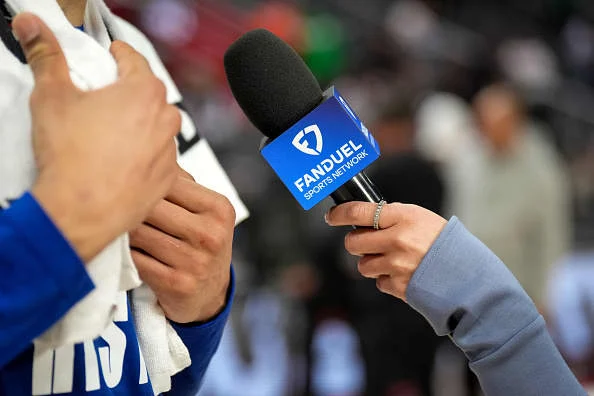
- Early 2025: The company emerges from bankruptcy under a reorganization plan, shedding significant debt and rebranding its channels as FanDuel Sports Network, aiming to integrate betting data and modernize the viewing experience.
- Late 2025: Despite efforts to stabilize, liquidity issues persist, forcing the company to cease broadcasting local MLB games.
- Early 2026: The company announces a full winddown of operations while attempting to fulfill its remaining commitments to the NBA and NHL.
Throughout these iterations, the core business model remained tethered to the traditional "pay TV" bundle—a system where cable providers pay per-subscriber carriage fees to networks, which in turn use that capital to pay rights fees to sports teams. As the "cord-cutting" phenomenon accelerated, the per-subscriber base shrunk, creating a revenue shortfall that the networks could not overcome.
The Anatomy of the Litigation
The lawsuits filed in Delaware allege that Comcast and Charter, in their capacity as distributors, engaged in accounting practices that resulted in the underpayment of fees. While the specifics of the contracts are protected by non-disclosure agreements, the core of the plaintiff’s argument is that the distributors adjusted their payments in a manner inconsistent with the agreed-upon rates during a time when the networks were still providing consistent, high-value live sports content.
Industry analysts suggest that this litigation serves as a mechanism for Main Street to recover assets for its remaining creditors. If the court finds that the cable giants breached their contracts, the resulting damages could be substantial, potentially impacting the final distribution of funds as the company liquidates its assets. Neither Comcast nor Charter has issued a formal statement regarding the filings, maintaining a silence that is typical for major distributors during active litigation. However, observers note that distributors have become increasingly aggressive in recent years regarding carriage fee negotiations, often demanding lower rates as they seek to protect their own margins in an era of declining cable penetration.
The Broader Impact on the Sports Media Ecosystem
The fallout from the collapse of the Main Street Sports network model extends far beyond the boardroom of a single media company. For professional sports leagues, the RSN model was once the "gold standard" of financial stability. Teams relied on these guaranteed, long-term contracts to build payrolls and fund operations. The dissolution of this model has left leagues in a state of flux.
In the case of Major League Baseball, the failure of the regional network model forced the league to step in directly, producing and distributing local games through its own digital and broadcast infrastructure for several affected teams. The NBA and NHL have similarly been forced to evaluate how they handle local distribution, with a growing emphasis on hybrid models that combine local broadcast television with direct-to-consumer (DTC) streaming options.
The volatility in the RSN space has fundamentally altered the economics of sports broadcasting. As seen in recent developments, such as the New York-based MSG and YES networks transitioning to a distribution deal with the streaming platform DAZN, traditional cable carriage is no longer the undisputed king of media distribution. This shift suggests that the future of regional sports is likely to be fragmented, with teams exploring local over-the-air (OTA) partnerships combined with standalone streaming apps.
Statistical Context: The Decline of the Bundle
The decline of Main Street Sports is a microcosm of a larger trend in the U.S. media landscape. According to industry data, the number of pay TV households in the United States has declined from a peak of over 100 million in 2014 to fewer than 65 million in 2026. This mass exodus of subscribers, combined with the rising cost of live sports rights, has created a "scissors effect" that is crushing the profitability of regional sports networks.
- Subscriber Erosion: Major cable providers have seen consistent annual churn rates of 5% to 8%, a trend that has accelerated as high-quality content moves to streaming-first platforms.
- Rights Inflation: Despite the falling subscriber base, the rights fees paid to teams have continued to rise due to contractual escalators, making the RSN business model mathematically unsustainable.
- Advertising Revenue: As viewers shift to non-linear platforms, the ability of regional networks to command high-tier advertising rates during live game broadcasts has diminished.
Future Implications and Market Outlook
The litigation in Delaware is expected to be a protracted process, serving as a cautionary tale for the sports media industry. For investors and stakeholders in sports franchises, the uncertainty surrounding local media rights is likely to persist for years. The transition away from the regional network model is not merely a corporate restructuring; it is a fundamental shift in how the average fan consumes their local teams’ content.
As Main Street Sports winds down, the teams that once relied on its distribution are now operating in a "new normal." This era is defined by experimentation—where leagues are testing the limits of fan willingness to pay for standalone streaming services while simultaneously attempting to maintain the reach and accessibility of traditional broadcast television.
The outcome of the current lawsuit will undoubtedly set a precedent for future negotiations between content creators and distributors. If the courts rule in favor of the plaintiff, it may encourage other struggling networks to pursue similar legal avenues to recover lost revenues. Conversely, a victory for Comcast and Charter could further empower distributors to renegotiate terms aggressively, potentially accelerating the exit of other mid-tier regional sports networks from the market.
Ultimately, the dissolution of Main Street Sports and the accompanying legal drama underscore a sobering reality: the era of the high-fee, guaranteed-carriage regional sports network is effectively over. The industry is currently in the midst of a difficult transition, characterized by the messy realities of bankruptcy, contract disputes, and a permanent change in how sports fans access the games they love. As the legal filings in Delaware move through the court system, the focus will remain on how the remaining value of these sports franchises is preserved and how local sports broadcasting will look in a post-RSN landscape.