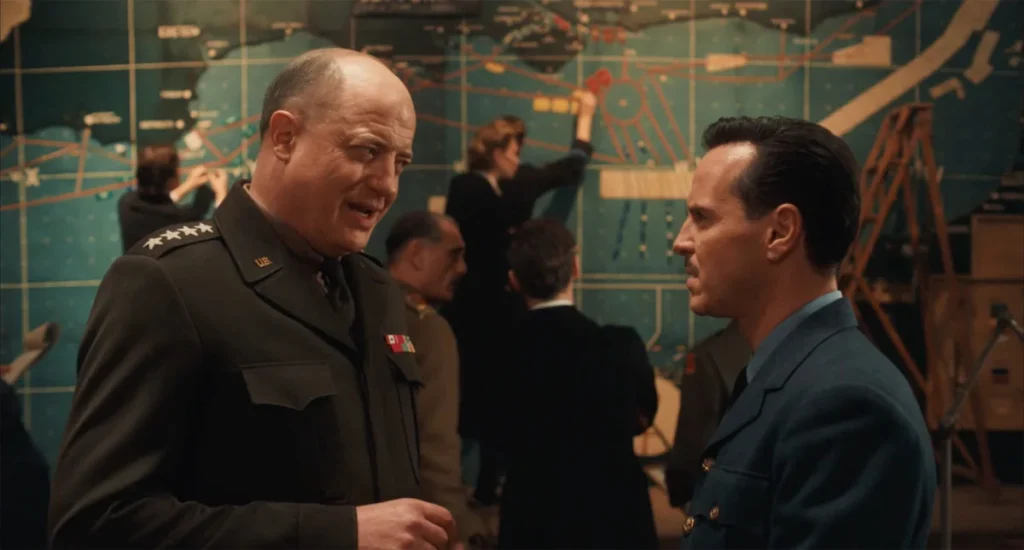

In November 1943, during the darkest days of the Nazi occupation of Belgium, a clandestine group of journalists and printers executed what is widely considered the world’s first successful large-scale media hack. By intercepting the production line of the German-controlled newspaper Le Soir, these resistance operatives managed to print and distribute thousands of copies of a satirical counterfeit edition, titled Le Faux Soir (The Fake Evening). This act of psychological warfare, which mocked the Nazi occupiers and their collaborators, has now been adapted into a feature film by Belgian director Michaël R. Roskam. The production, which held its world premiere at the Toronto International Film Festival, frames the historical event as a high-stakes heist, drawing parallels between the mechanical resistance of the 1940s and the modern battle against disinformation.
The Anatomy of an Occupation Heist
To understand the audacity of the 1943 stunt, one must understand the environment of Brussels under the Third Reich. Le Soir was the most influential French-language newspaper in Belgium at the time. After the German invasion, the paper was seized by the occupiers and transformed into a propaganda mouthpiece, colloquially known as "Le Soir volé" (The Stolen Evening).
The resistance operation was not merely a prank; it was a complex logistical undertaking. The conspirators, led by a circle of intellectuals and printers, infiltrated the newspaper’s distribution network and the printing facility itself. By leveraging their access, they replaced the genuine content with carefully crafted subversive text, mocking the Nazi regime’s rhetoric, their failing military efforts, and the absurdity of the "New Order." The counterfeit edition was so professionally executed—matching the typography, layout, and paper quality of the original—that it reached newsstands and unsuspecting readers before the occupation authorities realized they had been compromised.
A Chronology of Subversion
The project began as an internal debate within the Belgian resistance regarding the power of the written word. While the Maquis and other armed groups focused on sabotage of infrastructure, this specific cell targeted the infrastructure of the mind.

- September 1943: Planning phase commences. Resistance members identify vulnerabilities in the printing press schedule and the newspaper’s distribution logistics.
- November 9, 1943: The operation is launched. The group successfully swaps the plates at the printing plant under the cover of night.
- November 10, 1943: Distribution occurs. Thousands of copies of Le Faux Soir are sold across Brussels. The public reaction is one of immediate, shocked realization followed by clandestine amusement.
- November 11, 1943: The Nazi authorities initiate a brutal crackdown. Having realized the extent of the infiltration, the Gestapo begins a city-wide manhunt for the printers and journalists involved.
- 1944: Many of the individuals responsible for the stunt are captured, imprisoned, or executed as the occupation forces sought to suppress the embarrassment caused by the mockery.
Technical Precision and Historical Authenticity
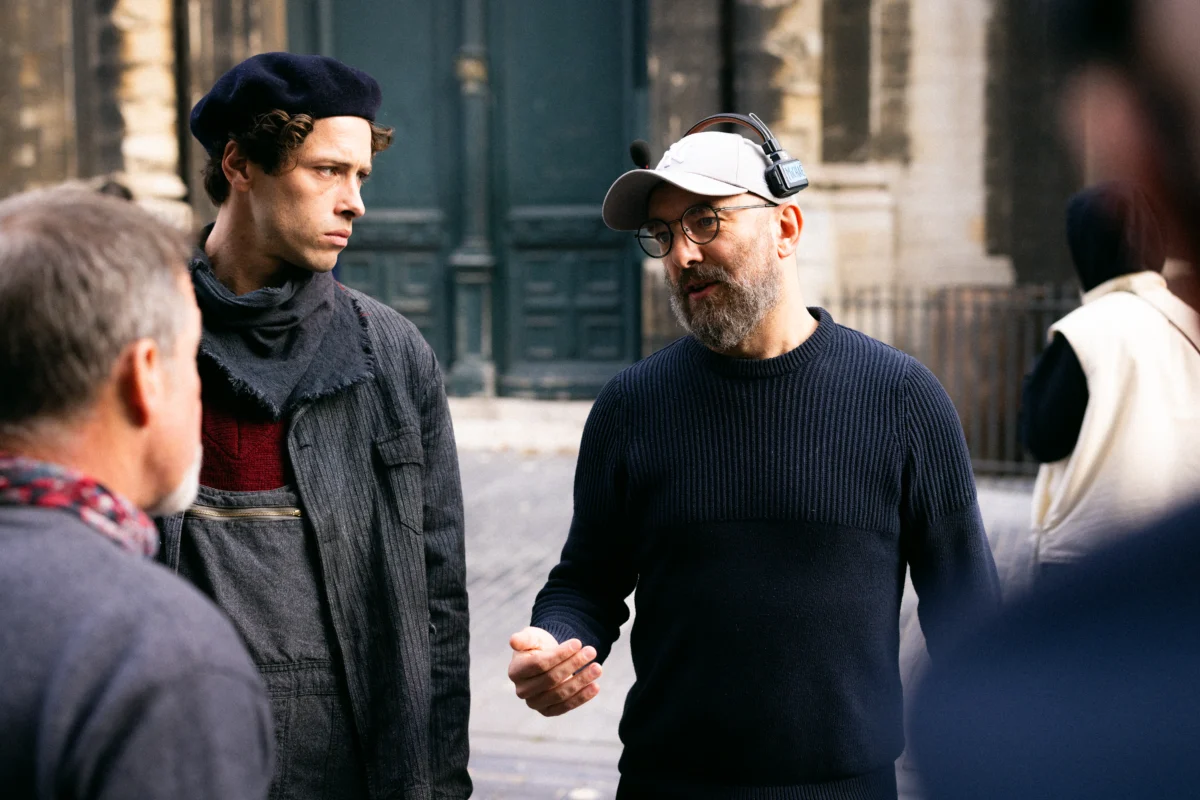
Director Michaël R. Roskam’s approach to the film highlights the physical nature of mid-century journalism. Central to this is the linotype machine, a piece of technology that revolutionized print media by allowing for the mass production of metal type. In the film, the linotype serves as a character in its own right, representing the tactile, analog reality of the resistance.
Roskam, known for his commitment to research in films like Bullhead and The Drop, spent significant time with historians and traditional printers to ensure the technical accuracy of the production. "Discovering the linotype was one of the most magical things I have ever encountered," Roskam noted. "It is a machine that automates typing, where letters are melted into a mold. It is a process that remains purely mechanical, entirely devoid of digital interference, yet it required immense skill to operate under the pressure of wartime surveillance."
Satire as a Strategic Weapon
The use of satire during the Second World War was a high-risk, high-reward strategy. While armed sabotage could cripple a rail line for days, mocking the state had the potential to erode the perceived infallibility of the occupier.
Historians have noted that totalitarian regimes are fundamentally allergic to ridicule. When a dictator is presented as a tragic, larger-than-life villain, they retain a sense of terrifying grandeur. When they are presented as a buffoon—as seen in Charlie Chaplin’s The Great Dictator—the fear factor is diminished. By stripping away the "emperor’s clothes," the resistance aimed to weaken the psychological grip of the Nazi administration over the Belgian populace.
However, the efficacy of this tactic remains a subject of academic debate. Critics of the resistance’s approach argued that such actions often invited disproportionate retribution. Following the release of Le Faux Soir, the retaliation against the printing staff was swift and lethal, highlighting the brutal reality that while words may be "weapons," they are rarely enough to stop a tank.

The Modern Echo: Fake News and Media Integrity
The relevance of the Le Faux Soir story in the 21st century is striking, particularly given the contemporary crisis of "fake news." Today, authoritarian regimes and non-state actors utilize the same tools of imitation to spread disinformation. Unlike the 1943 resistance, which sought to use satire to reveal the truth, modern state-sponsored disinformation campaigns use the appearance of established, credible news outlets to obscure it.
"If an alien were to look from space at the modern day, they might be confused by the inversion of the 1940s dynamic," Roskam observed. "We see actors today using the aesthetics of credible journalism to dismantle the very foundations of democratic discourse. It is a sobering irony."
The Legacy of the Resistance
The production of the film serves as a reminder of the fragility of truth in an era of total state control. By bringing the story of Le Faux Soir to a global audience via the Toronto International Film Festival, the filmmakers hope to bridge the generational gap. The story is not just one of historical curiosity; it is a case study in the risks of civic participation.
For the families of those involved in the 1943 operation, the film serves as a posthumous recognition of their sacrifice. While their names were largely forgotten in the immediate aftermath of the war, the "first media hack" remains a foundational myth in the history of Belgian resistance. It stands as a testament to the idea that even when the physical space for protest is closed, the intellectual space for dissent can be reclaimed, provided one has the ingenuity to bypass the gatekeepers of power.
As the film makes its way to global markets, the underlying message remains clear: the fight against authoritarianism is rarely limited to the battlefield. It is fought in the printing presses, the editorial rooms, and the public squares, where the act of laughing at an oppressor can be the first step toward reclaiming a nation’s sovereignty. Whether satire is enough to bring down a regime remains a question for history, but as Le Faux Soir proved, it is often the most effective way to start the conversation.