

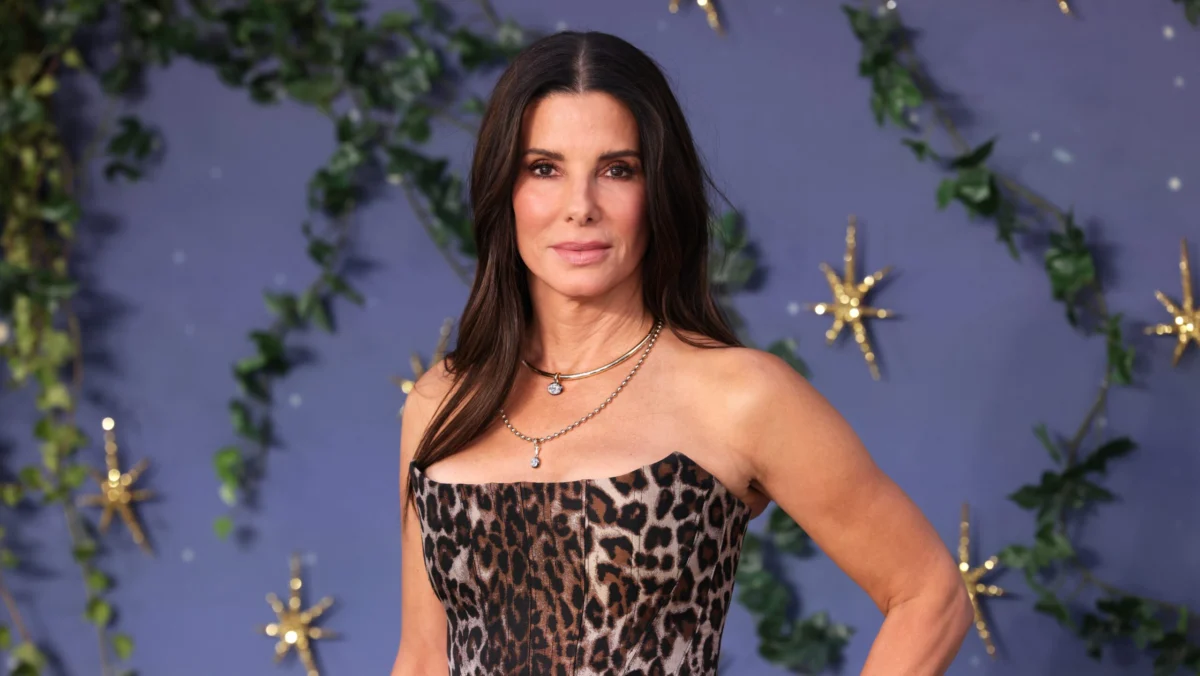
In a wide-ranging and deeply personal conversation featured on the cover of Interview magazine, Hollywood icon Sandra Bullock opened up about the early, precarious days of her career and the deliberate, often difficult choices that shaped her trajectory as one of the most recognizable stars in cinema history. The dialogue, conducted with her longtime friend and fellow A-lister Jennifer Aniston, offered a rare glimpse into the internal decision-making process of a performer who has navigated over three decades of intense public scrutiny, box office highs, and the evolving expectations placed upon women in the entertainment industry.
The conversation serves as a timely retrospective, coinciding with the high-profile release of Practical Magic 2, a sequel that reunites Bullock with Nicole Kidman and marks her return to the big screen after a four-year hiatus. As she reflects on her journey, Bullock revealed that her path to stardom was not merely a byproduct of talent or serendipity, but the result of a steadfast commitment to maintaining her professional integrity—even when doing so meant turning down work in an industry that was, at the time, far less protective of its aspiring talent.
From Waiting Tables to Standing Her Ground
For many actors in the late 1980s and early 1990s, the path to a breakthrough role was fraught with exploitative auditions and degrading requests. Bullock, who spent her formative years in New York City honing her craft while working as a waitress, recounted the harsh realities of those early auditions. She described an environment where young women were frequently subjected to inappropriate demands, including requests to perform physical acts that had no bearing on the artistic merit of a role.
"I was auditioning for every pervert that existed, asking me to drop my pants," Bullock told Aniston. "I was like, ‘Nope, not the role for me.’" This refusal to compromise, she noted, was a significant gamble. At the time, the prevailing wisdom among working actors was that any role was a necessary stepping stone toward legitimacy. The fear of being blacklisted or permanently sidelined for refusing a director’s advances was a potent force in the industry. By choosing to walk away from these opportunities, Bullock was effectively prioritizing her self-respect over the immediate, and often desperate, need for a paycheck.
This period of her life serves as a critical backdrop to her eventual rise. It highlights the systemic power imbalances that characterized Hollywood before the #MeToo movement catalyzed a broader cultural shift. Her ability to navigate these waters while maintaining her professional trajectory is viewed by industry analysts as a testament to her resilience and the strength of her character—qualities that would later define her leadership style on film sets.
The Strategic Pivot: Breaking the Rom-Com Mold
While Bullock’s early career was defined by survival, her mid-career trajectory was marked by tactical precision. During her conversation with Aniston, Bullock addressed the common misconception that her career path was purely evolutionary. She clarified that the only time she acted with complete, calculated intentionality was when she recognized she had become pigeonholed by the romantic comedy genre.
By the early 2000s, Bullock had become a household name, largely due to her immense success in commercial hits like While You Were Sleeping, Speed, and Miss Congeniality. While these films solidified her status as a bankable star, they also invited a specific type of critical dismissal. Bullock recalled receiving significant backlash for her reliance on the genre, which prompted a profound pivot in her artistic direction.
"I said, ‘I need to stop right now with the rom-coms,’ because I was getting so much shit for them," she explained. In a move that surprised many of her contemporaries, she sought out a gritty, ensemble-driven drama: Paul Haggis’s 2004 film, Crash. The decision was a high-stakes gamble; it required her to step away from the leading lady persona that had guaranteed her financial success and instead occupy a complex, flawed, and supporting role.
The gamble paid off in dividends. Crash went on to win the Academy Award for Best Picture in 2006, shifting the public and critical perception of Bullock’s range as an actress. This transition laid the groundwork for her performance in the 2009 film The Blind Side, which earned her the Academy Award for Best Actress. That win effectively cemented her status as a versatile performer capable of carrying both high-grossing blockbusters and critically acclaimed dramas.
The Return: Practical Magic 2 and Modern Box Office Realities
The release of Practical Magic 2 represents more than just a nostalgic reunion; it marks a strategic return to the spotlight for an actress who has been notably selective with her projects in recent years. Her last major feature, The Lost City (2022), alongside Channing Tatum, reminded audiences of her enduring chemistry and comedic timing. However, the four-year gap since has only increased the anticipation surrounding her latest venture.
Early box office returns for the film have been robust, signaling that audiences remain deeply invested in Bullock’s filmography. The movie grossed $13 million domestically on its opening day, a figure that includes significant returns from Thursday night preview screenings. Industry projections currently estimate an opening weekend haul of approximately $30 million. These numbers are significant in the post-pandemic era, where mid-budget films—especially those not tied to established superhero franchises—often struggle to find traction.
The film has also been framed by Bullock as a "love letter" to her children, signaling a shift in her motivation for choosing projects. As she navigates life in the public eye, her criteria for work have moved beyond career advancement toward legacy and personal resonance. The themes of motherhood, legacy, and intergenerational connection inherent in the Practical Magic franchise appear to mirror the actress’s current priorities.
Broader Implications and Industry Legacy
Bullock’s reflections serve as a broader commentary on the evolution of the female experience in Hollywood. The fact that a performer of her stature had to navigate such predatory conditions early in her career highlights the progress—and the remaining gaps—within the studio system. Analysts often point to Bullock’s longevity as a result of her refusal to be a passive participant in her own career.
From an industry perspective, Bullock’s ability to move between genres and maintain relevance over three decades is a case study in effective brand management. By controlling her narrative—moving from the "America’s Sweetheart" archetype to dramatic powerhouse and, eventually, to a producer-star with a reputation for being a "set-mom" and protective leader—she has navigated the industry’s tendency to discard aging female stars.
Moreover, her candidness regarding her early struggles provides a necessary historical context for younger actors. It reinforces the importance of setting boundaries in an industry that historically rewarded silence. As she continues to select projects that align with her personal values and artistic desires, Bullock remains a rare example of a star who has successfully reconciled the demands of commercial success with the preservation of her individual agency.
The conversation with Aniston is not merely a promotional exercise; it is an examination of what it means to be a working actor in a rapidly changing world. By looking back, Bullock is able to provide a roadmap for the next generation, proving that while talent is essential, the ability to say "no" is often the most important tool in an actor’s arsenal. As she steps back into the limelight with a project that clearly holds personal meaning, it is evident that her influence on the industry is far from waning. Instead, it is evolving, rooted in the same principles of integrity and strategic choice that guided her from those early, difficult auditions to the heights of the Academy stage.