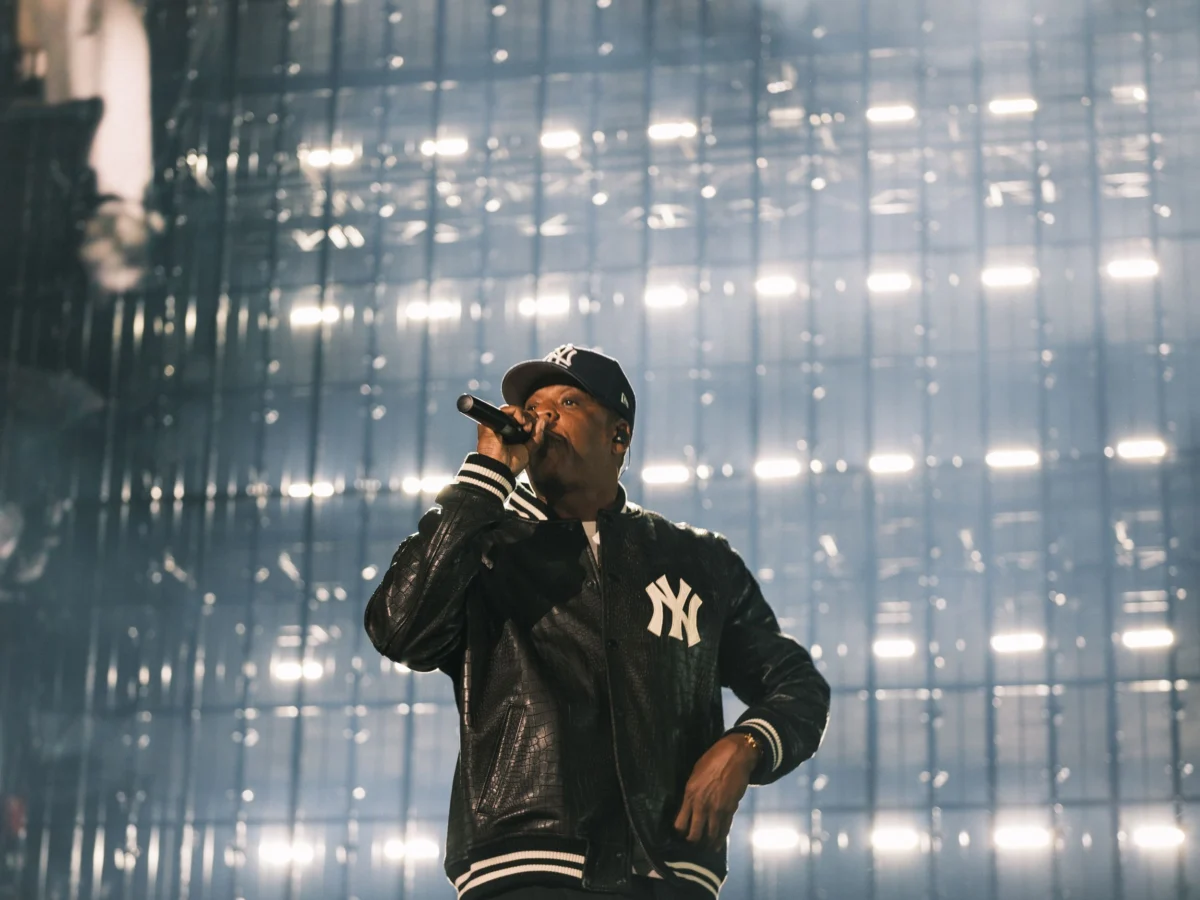
The intersection of hip-hop history and modern architectural stage design reached a new milestone this weekend as Shawn "Jay-Z" Carter concluded a historic three-night residency at Yankee Stadium. Celebrating the respective anniversaries of his seminal 1996 debut Reasonable Doubt and his 2001 magnum opus The Blueprint, the event served as a cultural homecoming for the Brooklyn-born artist. In a departure from the high-spectacle, pyrotechnic-heavy productions typical of modern stadium tours, Jay-Z and creative director Willo Perron opted for a minimalist aesthetic that prioritized narrative and presence over technical ostentation. The residency, which saw 45,000 fans attend each night, underscored Jay-Z’s enduring influence on both the music industry and the cultural fabric of New York City.
Minimalist Design and the Philosophy of Presence
The production of the anniversary shows was led by Willo Perron, a renowned designer who has previously worked with global icons such as Beyoncé and Rihanna. For the Yankee Stadium residency, Perron’s objective was to strip away the distractions of traditional stadium performances. "I think the statement piece in a Jay-Z show is Jay-Z," Perron noted during the production buildup. "This is more about storytelling than it is about stage design."

The centerpiece of the visual experience was a massive 2,952-square-foot screen spanning the outfield, which displayed a curated sequence of archival footage, images of 1990s New York, and live feeds of the performance. The stage itself remained largely bare, a deliberate choice intended to evoke the intimacy of the iconic New York clubs where Jay-Z began his career, such as The Tunnel. To bridge the gap between the performer and the massive stadium crowd, Perron incorporated bleacher seating on either side of the stage. This allowed a select group of fans to view the performance from a perspective that made them feel part of the onstage environment, a design choice inspired by vintage concert footage Jay-Z had shared with the design team.
A Chronology of the Anniversary Residency
The residency was structured as a chronological journey through Jay-Z’s career, with each night dedicated to a specific era of his discography. The high demand for tickets necessitated the addition of a third night, titled "Extra Innings," after the first two dates sold out within minutes of their release.
Friday: The Reasonable Doubt Era
The opening night focused on the 30th anniversary of Reasonable Doubt. Jay-Z performed the album in its entirety, accompanied by a 10-person band and an 18-piece string section. The setlist featured a rare live rendition of "Can’t Knock the Hustle," with Beyoncé performing the chorus originally recorded by Mary J. Blige. A pivotal moment occurred when Nas joined Jay-Z on stage for "Dead Presidents," a track that famously sampled Nas’s "The World Is Yours." The presence of Jaz-O, Jay-Z’s early mentor, further emphasized the evening’s focus on foundational history.

Saturday: The Blueprint Era
The second night transitioned to the 25th anniversary of The Blueprint. The production reflected the soul-heavy, sample-driven sound of the 2001 album, which was originally released on September 11, 2001. The performance highlighted the album’s role in redefining the sound of hip-hop at the turn of the millennium. The visual content on the outfield screen shifted to reflect the early 2000s, featuring imagery of the Roc-A-Fella Records era at its peak.
Sunday: Extra Innings
The final night, "Extra Innings," served as a career-spanning retrospective. It integrated hits from across his 13 solo studio albums. A highlight of the evening was a guest appearance by Alicia Keys for "Empire State of Mind." Keys introduced the anthem with a rendition of Billy Joel’s "New York State of Mind," creating a cross-generational tribute to the city. The evening also featured a surprise appearance by Blue Ivy Carter, who played keyboards during "Feelin’ It," and a four-minute freestyle that quickly became a viral focal point on social media platforms.
Logistics and the Preservation of "Sacred Ground"
Executing a three-night stadium residency during the 2026 Major League Baseball season presented significant logistical hurdles. Scott Krug, the Chief Financial Officer for the New York Yankees, emphasized that the team’s primary responsibility remained the maintenance of the playing field. The Yankees are scheduled to host the Los Angeles Dodgers just days after the residency concludes, making the protection of the Kentucky bluegrass a critical priority.

To protect the three-acre field, the production team utilized polypropylene panels. These panels are engineered with a flat underside to prevent them from digging into the turf, ensuring the "sacred ground" of the diamond remained undisturbed. Because no equipment or vehicles were permitted on the infield, Perron turned this restriction into a creative feature. The diamond was covered with a vinyl-mesh material that served as a secondary projection screen, allowing for immersive visual overlays that could be seen from the upper tiers of the stadium.
The logistics of the "load-in" process were equally complex. Unlike many modern stadiums, Yankee Stadium is nestled within a dense urban environment without massive auxiliary parking lots for equipment storage. Consequently, the arrival of delivery trucks had to be timed with precision; as one truck finished unloading its components of the stage, the next had to be ready to take its place to avoid gridlock on the surrounding city streets.
Contextualizing the "New York Summer" of 2026
The Jay-Z residency is the latest in a series of high-profile events defining a transformative summer for New York City. The city is currently preparing for its role as a host for the 2026 World Cup, an event that has already begun to influence local commerce and public policy. This cultural surge has been bolstered by the New York Knicks’ recent NBA Championship victory, an event that saw Jay-Z’s "Empire State of Mind" adopted as the unofficial victory anthem during the team’s ticker-tape parade.

The residency also follows other major celebrity-driven moments, such as the widely publicized wedding of Taylor Swift and Travis Kelce at Madison Square Garden. However, Jay-Z’s event carried a different weight, acting as a bridge between the city’s grassroots history and its current status as a global hub for the billionaire class. Isra Ali, a professor of media, culture, and communication at NYU Steinhardt, noted that Jay-Z occupies a unique space in this landscape. "There’s a very explicit component of this hype NYC summer that is about the people versus the billionaires," Ali observed. As both a Bed-Stuy native and a global mogul, Jay-Z’s performance at Yankee Stadium was seen as an attempt to harmonize these two identities.
Market Data and Economic Impact
The economic footprint of the residency extended beyond the stadium walls. In the weeks leading up to the shows, Jay-Z engaged in a multi-platform marketing campaign that integrated local institutions:
- Public Transit: A partnership with Spotify resulted in a full takeover of several New York City subway stations, featuring "JAŸ-Z30" branding and archival photography.
- Literacy and Community: The Brooklyn Public Library issued limited-edition "JAŸ-Z30" library cards, which saw a record-breaking surge in new registrations across the borough.
- Retail: A pop-up shop was established in a Dumbo warehouse—the same location featured in the "Dead Presidents" music video—selling exclusive anniversary merchandise.
According to Scott Krug, the velocity of ticket sales for the residency was unprecedented. "The tickets sold as quickly for this event as any that I’ve ever seen," Krug stated. While official revenue figures have not been released, industry analysts estimate the three-night run generated tens of millions of dollars in ticket sales and local economic activity, rivaling the per-night earnings of major global tours like Taylor Swift’s Eras Tour or Beyoncé’s Renaissance World Tour.

Analysis of Implications: The Future of Live Performance
The success of Jay-Z’s minimalist approach offers a counter-narrative to the increasing reliance on Artificial Intelligence and digital spectacle in the music industry. A recent survey by the Royal Philharmonic Orchestra found that 78 percent of respondents believe live performance is one area of the arts where "AI will not touch human creativity." Jay-Z’s residency reinforces this sentiment, prioritizing the "IRL" (in real life) experience and the raw talent of a live band over pre-recorded tracks and holographic effects.
Furthermore, the event highlights a growing trend among elite artists to reclaim intimacy in large-scale venues. By incorporating bleacher seating on stage and eschewing "ostentatious" props, Jay-Z signaled a shift toward authenticity—a quality that Professor Ali suggests is becoming increasingly valuable in a hyper-digital age. "The value of in-person contact goes up" when audiences feel a genuine connection to the performer’s history and the venue’s significance.
As the final notes of "Empire State of Mind" echoed through the Bronx on Sunday night, the residency cemented its place as more than just a concert series. It was a calculated statement on the longevity of hip-hop, the logistical capabilities of iconic sports venues, and the enduring power of a hometown hero who, despite his billionaire status, remains inextricably linked to the streets of New York. In his own words from the stage: "They say I sold out. Yeah, I did sell out. Three nights. I sold Yankee Stadium the hell out."