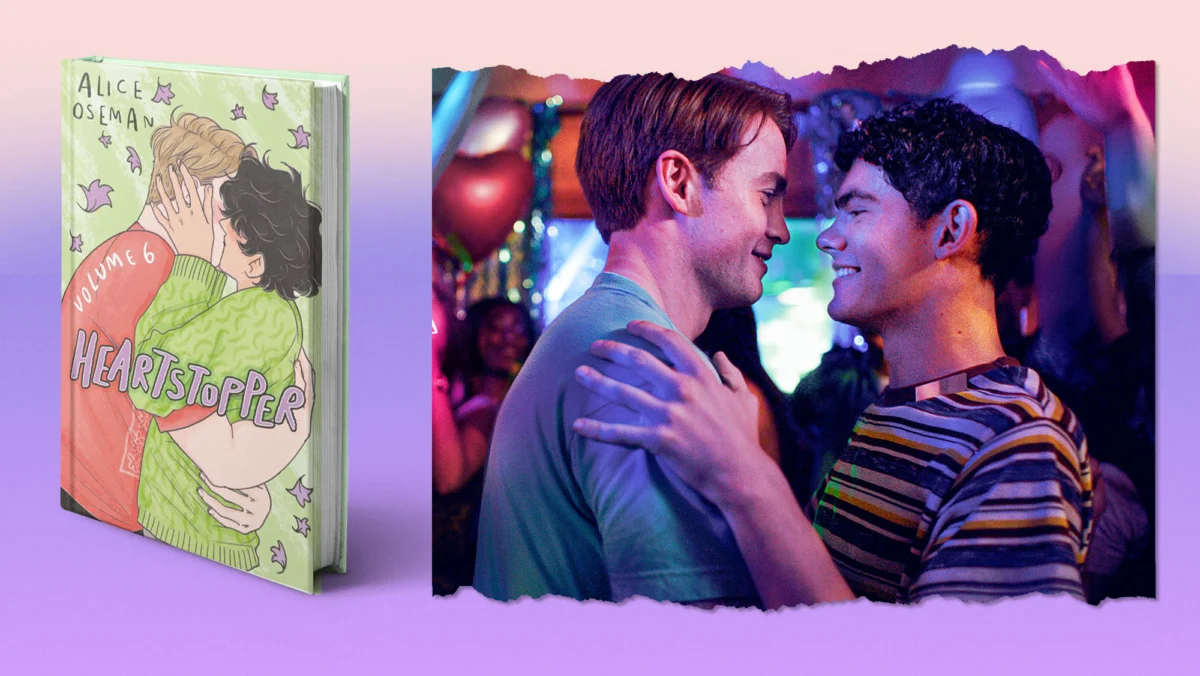
The highly anticipated film Heartstopper Forever has arrived on Netflix, marking a poignant and ambitious cinematic conclusion to Alice Oseman’s beloved coming-of-age narrative. Directed by Wash Westmoreland, this feature-length adaptation ventures beyond the established eight-episode season format to provide a comprehensive and mature send-off for its cherished characters, particularly focusing on the evolving relationship between Nick Nelson (Kit Connor) and Charlie Spring (Joe Locke). The film delves into the complexities of young adulthood, navigating university decisions, personal anxieties, and the enduring strength of queer love and community amidst societal pressures.
The Culmination of a Global Phenomenon
Heartstopper began as a humble webcomic on platforms like Tumblr and Tapas in 2016, quickly cultivating a passionate global fanbase drawn to its authentic, optimistic, and often poignant portrayal of queer teenage life. Creator Alice Oseman’s narrative, which eventually translated into a best-selling graphic novel series, resonated deeply by offering a much-needed narrative of joy, acceptance, and gentle exploration of identity, contrasting with often-gritty or tragic LGBTQ+ stories in media. Its subsequent adaptation into a Netflix series in 2022 propelled it to international stardom, garnering widespread critical acclaim for its sensitive storytelling, diverse casting, and vibrant visual style. The series became a cultural touchstone, celebrated for its positive impact on young LGBTQ+ audiences and their allies, paving the way for more inclusive narratives in mainstream entertainment. Heartstopper Forever represents the final chapter of this journey, consolidating the themes and character arcs developed over three successful seasons and six graphic novel volumes, along with elements from Oseman’s earlier novella, Nick and Charlie. The film not only serves as a narrative culmination but also as a powerful statement on the evolving landscape of young adult adaptations and LGBTQ+ representation in mainstream media.
From Webcomic to Cinematic Finale: An Unprecedented Adaptation
Transitioning from a serialized graphic novel and television series into a standalone film presented unique creative and logistical challenges for Oseman and the production team. Unlike previous seasons, where the source material was fully established, Heartstopper Forever required Oseman to simultaneously write the film script and complete Heartstopper Volume Six, the final graphic novel. "For the first time, the book isn’t complete before we’ve started filming," Oseman recalled during a July 2025 set visit. "I was writing the last volume of Heartstopper last year, but several times, we’ve had to film a scene that I hadn’t drawn yet, which was kind of scary. We had no references." This concurrent creation process underscores Oseman’s integral role in every stage of the adaptation, a rarity for many creators whose works are translated to screen.

This simultaneous creation process necessitated significant adaptation decisions, particularly condensing the extensive narrative of the final volume into a two-hour cinematic format. Oseman emphasized the need for precision: "Having less screen time to work with in a film was a big challenge, and it forced me to have to be really precise about what’s in the story and to get rid of anything that’s not necessary." This shift in format also allowed for a more focused narrative lens. Director Wash Westmoreland noted, "Alice wrote the script so that it focused predominantly on Nick and Charlie. It seemed right that this final chapter should take a deep dive into the complexities of this central relationship as the story moves to its conclusion." This decision reflects a common strategy in adaptations of popular serialized works: to distill the core emotional journey for the finale, ensuring a powerful, cohesive conclusion.
Westmoreland further highlighted the intentional cinematic maturation of the film’s aesthetic. "Right at the beginning, when Charlie plays with the dogs in the garden, surrounded by both practical falling autumn leaves and the animated leaves that have always been part of Heartstopper — for me, it quietly announces what the film is trying to do: honour the visual language of the series while taking it into a more grounded, realistic world," he shared with The Hollywood Reporter. This visual evolution mirrors the characters’ growth, as they approach adulthood and grapple with increasingly complex emotional landscapes, signaling a more mature tonal approach that aligns with the characters’ journey.
Navigating New Territory: Maturation of Nick and Charlie’s Relationship
A central pillar of Heartstopper Forever is the deepened portrayal of Nick and Charlie’s romantic and physical relationship. While the series has always been praised for its earnest and wholesome tone, the film consciously pushes into more mature territory, reflecting the characters’ progression into young adulthood. This involves depicting their physical intimacy with a sex-positive and realistic approach, moving beyond the more innocent explorations of earlier seasons. This deliberate choice challenges notions that wholesome queer narratives must shy away from the realities of young adult relationships.
Westmoreland elaborated on the deliberate nature of these scenes: "There are four main scenes of physical intimacy in the film, and each one reveals a different stage in Nick and Charlie’s relationship. We felt it was very important that none of them existed simply for their own sake. Each scene had to carry the story forward and reflect where the characters were emotionally at that particular moment." These sequences are carefully crafted to portray healthy, consensual experiences that challenge traditional stereotypes around roles in queer relationships, emphasizing emotional connection and mutual respect. Oseman was clear about the characters’ sexual versatility, a point the film sought to honor while maintaining an appropriate tone for its broad audience, including younger teens. "Our focus was always on the emotional truth of the scenes — so that the physical intimacy expressed what they couldn’t yet put into words," Westmoreland added, noting that for Nick, physical closeness sometimes served as a way to defer difficult conversations. The collaboration between the director, Oseman, and intimacy coordinator Robbie Taylor Hunt, along with actors Kit Connor and Joe Locke, ensured these moments were handled with professionalism and sensitivity, contributing to a nuanced depiction of teen sexuality that has often been absent in mainstream media. This commitment to portraying healthy sexual development aligns with broader trends in young adult media to offer more responsible and representative narratives of intimacy.

A Pivotal Relationship Hurdle: The Dramatic Role Reversal
Beyond physical intimacy, Heartstopper Forever introduces a significant emotional turning point for Nick and Charlie: a dramatic breakup. This storyline, a notable deviation from Volume Six, was instead adapted from Oseman’s 2015 novella, Nick and Charlie. Oseman explained the rationale for this creative choice: "I felt like when I was making Volume Six, that scenario just didn’t make sense for those characters, whereas with the film, we’re always looking to push the tension and angst just a little bit more, so it felt like an idea that could work really well for the film." This decision highlights the flexibility and creative freedom afforded to Oseman as the primary architect of the Heartstopper universe, allowing her to adapt existing material in new ways for the screen.
This narrative decision orchestrates a compelling role reversal for the central couple. Charlie, previously portrayed as an underdog grappling with bullying and mental health struggles, emerges as a more confident and resilient individual. Kit Connor observed, "He’s been through the wringer in a lot of ways. In this film, we see that Charlie is actually someone to look up to… who’s used it to triumph and take a step in the direction that he wants to be with his life." This transformation underscores the series’ commitment to showing character growth, particularly in overcoming past traumas. Conversely, Nick, often depicted as strong and emotionally intelligent, becomes increasingly withdrawn and struggles to articulate his anxieties about the future, particularly regarding university. This shift challenges the static portrayal of characters, demonstrating that even the most seemingly stable individuals face periods of vulnerability.
The breakup sequence itself is set against the backdrop of Harry Greene’s party, an environment intentionally designed to feel "emotionally quite hostile." Westmoreland described it as "a kind of teenage manosphere — a basement rave full of young men, pounding dubstep, vivid lighting and huge projections of Mako sharks." This setting amplifies the tension, providing a stark contrast to Nick and Charlie’s usual supportive dynamic. The scene, lauded by Westmoreland for the "extraordinary performances" from Connor and Locke, captures the heartbreak of two people who still love each other but are temporarily out of sync, their usual "superpower" of communication failing them. Oseman acknowledged changes from the novella, stating, "I did change a lot of what happens in that argument and break-up, but I think it really makes sense for Nick and Charlie on screen, where they’ve both got their own issues that they’ve been dealing with, and are feeling so anxious about the future." This conflict serves to remind audiences of the characters’ humanity and the realistic challenges inherent in any evolving relationship, even one as strong as Nick and Charlie’s, adding a layer of realism often appreciated in young adult narratives.
Championing LGBTQ+ Experiences: Authentic Representation in Focus
Heartstopper has consistently championed LGBTQ+ rights and experiences, and Heartstopper Forever continues this vital thread, particularly through the storyline of Charlie’s friend, Elle (Yasmin Finney). Following her journey navigating transphobia in season three, Elle takes a central role in a powerful Pride parade sequence, surrounded by members and allies of the trans community. This celebratory moment is underscored by Elle’s poignant speech in Charlie’s bedroom, where she articulates the profound challenges and fears faced by trans youth today. This storyline is particularly resonant given the increasing public discourse and legislative challenges faced by transgender individuals globally, making Elle’s voice a crucial and timely addition.

"Alice and I talked about expanding Elle’s storyline to reflect some of the realities facing trans young people today," Westmoreland shared. This collaborative approach extended to the script, with Oseman and Finney co-writing Elle’s impactful monologue to ensure its authenticity. Oseman emphasized, "I wanted Elle to have that moment where she lets it all out in one go." This scene serves as a crucial reminder that for many LGBTQ+ teens, personal heartbreaks are often overshadowed by larger societal struggles for acceptance and safety, grounding the film in contemporary social realities and offering solidarity to viewers facing similar challenges.
The Pride parade itself was a monumental undertaking, requiring the closure of Burnham High Street and the recruitment of approximately 600 supporting artists. Oseman’s Instagram call for volunteers garnered over 5,000 applications within an hour, underscoring the fervent dedication of the Heartstopper fanbase and their desire to be part of this inclusive narrative. Westmoreland described the filming as a "genuine sense of celebration," fueled by the shared emotion of the cast, crew, and hundreds of fans, culminating in a scene that was "genuinely queer, genuinely wonderful, and genuinely something AI cannot replicate." This organic outpouring of support highlights the profound community that Heartstopper has fostered, blurring the lines between fiction and real-world activism.
Beyond Elle’s narrative, the film continues to affirm the diversity of LGBTQ+ identities. Tori Spring (Jenny Walser), Charlie’s sister, engages in a conversation about her asexuality, a moment that provides vital visibility for an often-underrepresented identity within the queer spectrum. Similarly, characters like Isaac (Tobie Donovan) and Imogen (Rhea Norwood) illustrate the varied journeys of self-discovery and acceptance within the queer community, reinforcing the message that identity is complex and not always confined to specific labels. Oseman stated, "We have other characters who are just queer and they don’t need to explain, and we don’t even need to know the specifics," advocating for a broad and inclusive understanding of queerness that moves beyond reductive categorizations.
The Nuanced Conclusion: Open Endings and Lasting Bonds
Crafting a satisfying conclusion for a diverse ensemble cast in a limited film format posed a significant challenge. Oseman admitted, "giving all the characters a satisfying conclusion to all of their stories was a challenge as there’s just not enough room to do big sweeping storylines for every single one of the characters." The film addresses this by featuring a montage that depicts various characters connecting or reconnecting in the near future, emphasizing ongoing journeys rather than definitive endpoints. This approach acknowledges that life continues beyond the narrative frame, a more realistic portrayal of coming-of-age stories.

Westmoreland described the montage as "one continuous emotional journey," highlighting how it "connects the whole Heartstopper gang as they step out into the world. They’re all moving forward individually with a stronger sense of who they are, but, at the same time, it shows the bonds between them are unbreakable." This sequence reinforces the core theme of community and mutual support that has always underpinned Heartstopper.
For Tara (Corinna Brown) and Darcy (Kizzy Edgell), their ending sees them opting for a gap year to travel instead of immediately pursuing college. Brown explained, "Tara has always lived her life as a people pleaser, but now she’s found herself and really steps into that. She doesn’t need any grade to define her." This choice signifies personal growth and a commitment to their relationship, leaving their future open-ended and full of possibilities, a testament to embracing individual paths.
Tao and Elle’s relationship reaches a crossroads, with the duo deciding against a long-distance relationship during university. However, their final scene together is intentionally ambiguous. Oseman shared, "Does this mean they’re actually getting back together, or are they just friends? We don’t really know, and I don’t even really know for sure what I want the answer to be." This ambiguity reinforces the idea that life and relationships continue to evolve beyond the confines of school, reflecting Oseman’s belief that "your story doesn’t end when you leave school. There’s the whole rest of your life to live, and that story can continue into adulthood." The poignant image of Elle painting Tao in her art, even after their split, symbolizes the enduring presence of their connection and shared history, a quiet affirmation that love can persist in many forms.
Regarding Nick and Charlie, their ending, despite the temporary breakup, reaffirms their profound bond. Joe Locke confirmed, "we always knew that they were going to end up together. It was always going to be a happy ending. And I think we were always aware that they were going to break up for a bit at some point. I’m really glad that the film almost doesn’t sugarcoat any of that." Kit Connor echoed this sentiment, appreciating the nuanced conclusion: "One of the beauties of this ending is the fact that it doesn’t necessarily say that they’re going to be together forever… The beauty is that they may end up together, and they may not, but they’ve had this amazing formative time together." Westmoreland concluded that the ending conveys a "deeper commitment to each other," signaling their choice to face the future together, a powerful message of enduring love and partnership.

Heartstopper‘s Enduring Legacy and Future Horizons
Heartstopper Forever culminates a narrative that has profoundly impacted youth culture and media representation. Its success underscores a growing demand for diverse, authentic, and joy-filled LGBTQ+ stories. The film not only provides closure for existing fans but also solidifies Alice Oseman’s reputation as a groundbreaking storyteller capable of navigating complex themes with sensitivity and nuance. The willingness to explore mature intimacy and relationship challenges, while maintaining the series’ core earnestness, demonstrates a commitment to evolving alongside its audience and pushing the boundaries of what queer narratives can achieve in mainstream media. The series has become a benchmark for positive LGBTQ+ representation, influencing subsequent productions and encouraging more nuanced storytelling.
The Heartstopper universe, however, may not be entirely closed. Both Joe Locke and Kit Connor expressed openness to revisiting their roles under the right circumstances. Locke stated he wouldn’t return "for the sake of it, so if there was a good story and Alice wanted to, then never say never." Connor added, "If we were just EPing and if it was a good story, yeah, I’d be interested." These sentiments leave a tantalizing possibility for future stories, perhaps exploring Nick and Charlie’s lives in adulthood, or expanding the narrative to other characters within Oseman’s rich literary world. The open-ended nature of the film’s conclusion for many characters also invites speculation and hope for spin-offs or future installments that could explore their adult lives. For now, Heartstopper Forever stands as a powerful testament to love, resilience, and the invaluable experience of finding one’s authentic self, cementing its place as a pivotal cultural phenomenon and a significant contribution to the landscape of young adult storytelling.