


The global entertainment industry is currently navigating a period of profound structural transformation, caught between the fiscal necessity of cost reduction and the existential anxiety surrounding the integration of artificial intelligence. In this volatile climate, Innovative Dreams, a pioneering hybrid production services studio, has launched with the mission of integrating advanced generative AI tools directly into the traditional cinematic workflow. Backed by strategic partnerships with Amazon Web Services (AWS) and the generative AI startup Luma, the studio seeks to redefine the boundaries of virtual production, offering a blueprint for how Hollywood might maintain high-quality output while drastically shortening production cycles and lowering overhead.
The emergence of Innovative Dreams represents a strategic pivot for the industry. Unlike traditional studios that may view AI as a replacement for human talent, this new entity positions the technology as an augmentative tool designed to enhance the capabilities of directors, actors, and cinematographers. By combining physical soundstages, giant LED walls, and motion capture technology with a suite of AI-driven software, the studio aims to preserve the nuance of human performance while leveraging the efficiency of digital asset generation.
The Technological Architecture of Hybrid Production
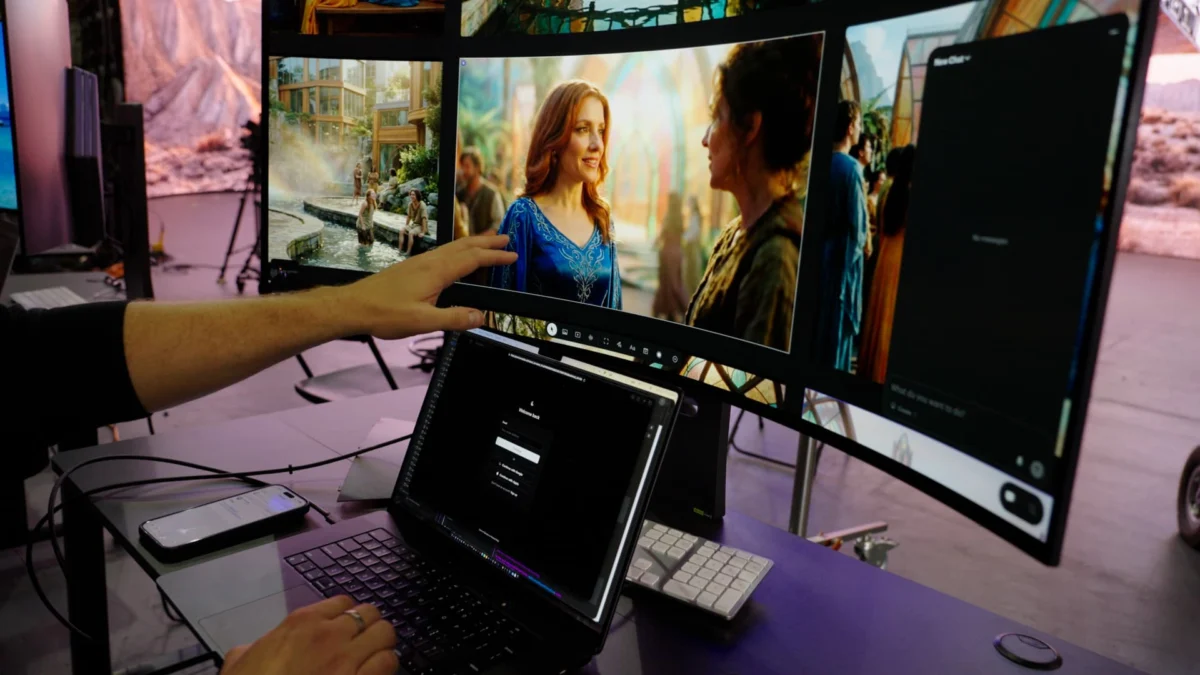
At the core of the Innovative Dreams model is a synthesis of several cutting-edge technologies that have, until now, largely operated in silos. The studio utilizes a "hybrid" approach that begins in pre-production and extends through post-production. The workflow involves the use of high-resolution cameras and physical actors on a soundstage equipped with massive LED volumes—a technique popularized by series like The Mandalorian. However, Innovative Dreams takes this further by integrating generative AI tools such as Luma, Google’s Nano Banana, and Bytedance’s SeeDream to manipulate and refine these environments in real time.
CEO Jon Erwin, a veteran filmmaker and the founder of the production house Wonder Project, describes the process as a fusion of performance capture and digital artistry. Rather than generating a film entirely from text prompts—a method that often lacks the emotional depth and consistency required for professional storytelling—Innovative Dreams uses AI to map digital assets onto real human performances. This allows filmmakers to maintain control over lens choice, lighting, and actor expressions while utilizing AI to generate complex backgrounds, intricate wardrobe details, and historical environments that would otherwise be prohibitively expensive to build or visit.
The partnership with AWS is critical to this infrastructure. Generative AI and real-time virtual production require immense computational power and low-latency data processing. AWS provides the cloud infrastructure necessary to handle these massive datasets, allowing for real-time collaboration and rendering. Samira Bakhtiar, General Manager of Media, Entertainment, Games, and Sports at AWS, emphasized that the goal is to provide tools that allow filmmakers to produce content faster and cheaper, accelerating production cycles at a scale previously thought impossible.
Chronology: From House of David to the Moses Project
The conceptual framework for Innovative Dreams was born out of necessity during the production of House of David, a large-scale historical drama produced for Amazon Prime Video. During production, Erwin and his team experimented with AI to recreate historical settings and far-flung locales that were logistically or financially unreachable. The success of these experiments served as a proof of concept, revealing a gap in the market for a dedicated facility that could standardize this workflow.
Following the completion of House of David, Erwin recognized that while the technology existed, it was not being utilized in a cohesive, professional environment in Southern California. This led to the formal establishment of Innovative Dreams. The studio’s first major test case is the upcoming three-part series, The Old Stories: Moses, starring Academy Award winner Ben Kingsley.
The production metrics for The Old Stories: Moses provide a stark contrast to traditional filmmaking. The series, which features 40 distinct global locations, was shot in its entirety in just one week on the virtual soundstage. According to Erwin, a traditional production of this scale would typically require five to six weeks of principal photography, plus the immense cost of travel and location scouting. By utilizing footage from around the world and integrating it into the LED screens via AI-driven processing, the production achieved a level of visual scale that would have been impossible under a standard television budget.
Supporting Data: The Economic Crisis in Hollywood
The push for AI-driven efficiency comes at a time of significant economic distress for the Los Angeles entertainment sector. The industry is still reeling from the dual shocks of the COVID-19 pandemic and the 2023 labor strikes initiated by the Writers Guild of America (WGA) and the Screen Actors Guild-American Federation of Television and Radio Artists (SAG-AFTRA).

According to recent labor statistics, Los Angeles County has lost more than 40,000 entertainment industry jobs since 2022. Production activity in the region has plummeted to its lowest levels since 1995, as studios look to cut costs by moving productions to tax-friendly international hubs or domestic competitors like Georgia and New Mexico. The 2023 strikes were fueled in large part by the fear that AI would be used to replicate actor likenesses and replace writers, leading to contractual protections regarding "digital replicas."
However, the "contraction" of Hollywood—characterized by a 25% to 35% decrease in overall production spending compared to pre-pandemic levels—has created an environment where traditional production methods are increasingly seen as unsustainable. Entertainment attorney Jonathan Handel notes that the industry has been "battered by one shock after another," including corporate consolidation and the bursting of the "streaming bubble." In this context, Innovative Dreams argues that AI is not the cause of the industry’s decline, but rather a necessary tool for its survival.
Labor Implications: Displacement vs. Augmentation
The most contentious aspect of the Innovative Dreams model is its impact on the workforce. By digitally creating sets, wardrobe, and makeup, the studio effectively reduces the need for large on-set crews in these departments. This raises significant questions about the future of entry-level roles and the long-term viability of traditional crafts such as set design and costume manufacturing.
Critics and labor advocates worry that as AI tools become more sophisticated, the "on-ramp" for new talent in the industry will shrink. If a three-part series can be shot in one week with a minimal physical footprint, the total number of man-hours required for production naturally decreases. Jonathan Handel points out that the balance between "job displacement" and "job augmentation" is still being negotiated, and the uncertainty is a primary driver of the current anxiety within the guilds.
Conversely, Erwin maintains that the hybrid model is the only way to bring production back to Southern California. He argues that by making it affordable to film in Los Angeles again, the technology will ultimately save jobs that would otherwise be lost to overseas markets. He suggests that the highest-tier talent in the industry will adapt, using AI to expand their creative horizons rather than being replaced by it. For example, a costume designer might transition from physical sewing to digital textile generation, maintaining their role as a creative lead while changing their methodology.
Strategic Partnerships and Future Outlook
The involvement of Luma AI, valued at over $4 billion, underscores the high stakes of this technological shift. Luma has introduced a new "agent" tool designed to foster collaboration between multiple AI generation services within a single workspace. By allowing filmmakers to provide direct feedback to AI developers, Innovative Dreams is helping to shape the development of these tools to ensure they meet the rigorous standards of professional cinematography.
As The Old Stories: Moses prepares for its debut this spring, the industry will be watching closely to see if the visual quality matches the efficiency of the production. If successful, the Innovative Dreams model could lead to a proliferation of similar hybrid studios, fundamentally changing the "green-lighting" process for new shows.
The long-term implications for Hollywood remain complex. While AI offers a path to financial sustainability for a struggling industry, it also demands a radical reimagining of what it means to be a filmmaker. The shift toward hybrid production suggests a future where the distinction between "live-action" and "digital" becomes increasingly blurred, and where the value of a production is measured not just by its star power, but by the sophistication of its technological integration.
In the final analysis, Innovative Dreams represents a calculated gamble: that the only way to save the traditional film industry is to fundamentally change how it operates. As Erwin suggests, the current model has become unsustainable, and the "new method" being invented on his soundstages may be the only way to ensure that Hollywood remains the global epicenter of storytelling in the age of artificial intelligence.