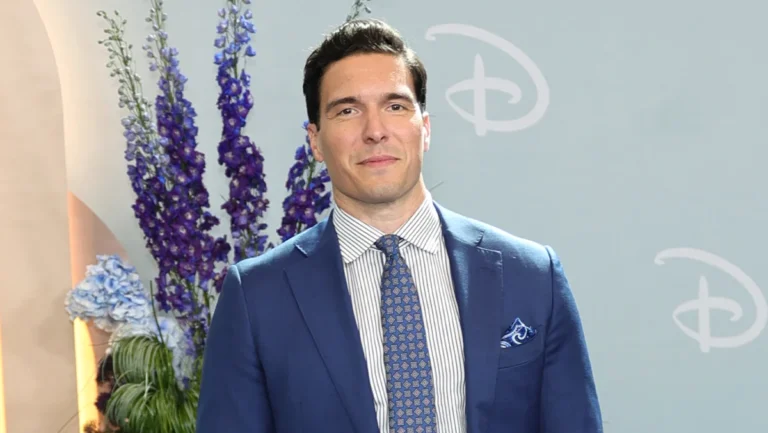



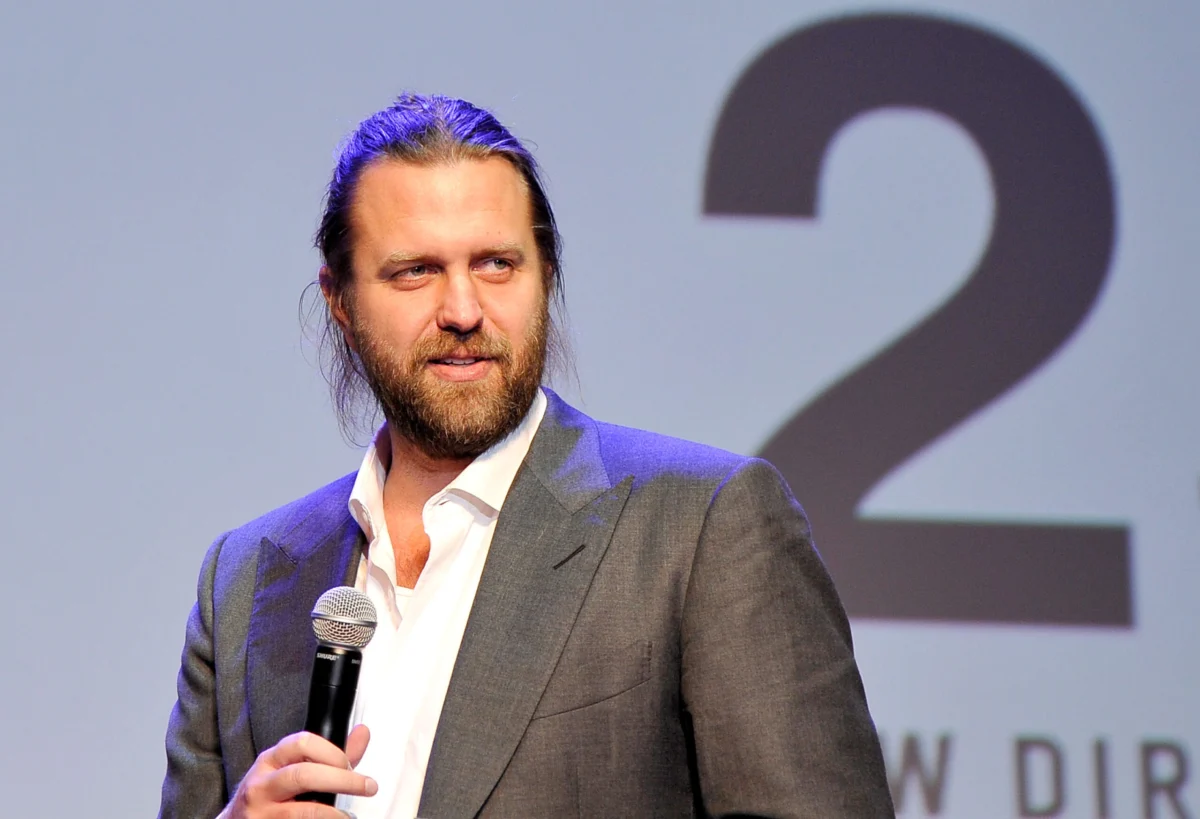
Filmmaker Carl Erik Rinsch, known for directing the 2013 Keanu Reeves-starring fantasy epic 47 Ronin, has been sentenced to 30 months in federal prison for orchestrating an elaborate scheme that defrauded Netflix out of $11 million. The funds were originally allocated for the production of a high-concept science fiction series titled White Horse, which Rinsch ultimately failed to deliver. A Manhattan jury last year found Rinsch guilty of wire fraud, money laundering, and multiple counts related to engaging in illegal monetary transactions. The sentencing, handed down on Monday by U.S. District Judge Jed Rakoff, also includes three years of supervised release and an order to pay Netflix $11 million in restitution, marking a significant legal outcome in a case that highlights the complex intersection of creative ambition, financial mismanagement, and mental health challenges within the entertainment industry.
The Genesis of the White Horse Project and Allegations of Fraud
The legal saga stems from a multi-million dollar deal struck between Rinsch and streaming giant Netflix, which had committed substantial resources to fund White Horse. Netflix, known for its aggressive investment in original content to attract and retain subscribers, entered into the agreement with Rinsch, presumably banking on his vision and past association with a major studio production, despite 47 Ronin‘s well-documented production troubles and box office disappointment. The White Horse series was envisioned as an ambitious sci-fi endeavor, one of many high-budget projects Netflix has greenlit in recent years.
However, federal prosecutors presented compelling evidence that Rinsch diverted the funds provided by Netflix away from the series’ production. Instead of allocating the $11 million to pre-production, visual effects development, or script refinement, Rinsch allegedly channeled a significant portion into risky, speculative securities trades. This deviation from standard production finance practices immediately raised red flags. According to court documents and testimony, Rinsch leveraged any profits from these investments not to restart or complete the series, but to further his personal financial interests and, strikingly, to fund a subsequent lawsuit against Netflix. He also used some of the illicitly gained capital to acquire luxury goods, a detail that underscored the personal benefit derived from the fraudulent activity.
Chronology of Deception and Legal Proceedings
The timeline of Rinsch’s actions and the subsequent legal fallout paints a picture of escalating misdirection and judicial response:
- Circa 2018-2019: Netflix enters into an agreement with Carl Erik Rinsch to develop and produce the science fiction series White Horse, allocating significant funding, eventually totaling $11 million. This period likely saw initial creative discussions, script development, and the first tranches of funding being disbursed.
- Beginning in 2019: Family members, friends, and colleagues of Rinsch began observing "significant changes in his thinking, communication and behavior," as later detailed in letters to the court. This marks the onset of what was later described as a decline in his mental state.
- Late 2019: Rinsch’s communications, particularly emails, become "strange and troubling," suggesting a departure from clear reasoning. This period coincides with, or immediately precedes, the alleged diversion of Netflix funds into high-risk investments.
- 2020: Rinsch’s behavior becomes more erratic, with screenwriter Mike Seid recalling social media posts where Rinsch claimed to have "solved aspects of the pandemic" and conversations where he asserted communication with "divine forces." These public and private declarations further indicate a growing detachment from reality. It is during this time that the fraudulent activities related to the diverted Netflix funds are believed to have intensified.
- Post-2020: Rinsch, having failed to deliver White Horse and having allegedly misused production funds, initiates a lawsuit against Netflix. In an audacious move, he sought over $14 million in additional funds from the company, claiming contractual entitlement to complete the series, despite his prior financial improprieties. This move was characterized by prosecutors as an attempt to further defraud Netflix and legitimize his prior actions.
- 22 March 2023: Rinsch is indicted by a grand jury on charges of wire fraud, money laundering, and engaging in illegal monetary transactions. This formal accusation sets the stage for a criminal trial.
- Late 2023: A Manhattan jury finds Carl Erik Rinsch guilty of all charges. The verdict confirms the prosecution’s claims that Rinsch intentionally defrauded Netflix.
- Early 2024: An arbitrator rules against Rinsch in his civil suit against Netflix, denying his claim for additional funds and effectively validating Netflix’s position that he had breached their agreement.
- June 2024 (Monday): U.S. District Judge Jed Rakoff issues the sentencing, handing down a 30-month prison term, three years of supervised release, and an order for $11 million in restitution to Netflix.
The Role of Mental Health in Sentencing
During the sentencing hearing, the issue of Rinsch’s mental health played a crucial role in Judge Rakoff’s decision, leading to a sentence significantly lower than the 60 months recommended by federal prosecutors, and far below the maximum possible term of 90 years. Evidence of an untreated mental health condition was publicly introduced to the court after Rinsch’s conviction, providing a complex layer to the narrative of financial crime.
Judge Rakoff acknowledged this factor, stating, "The perhaps improper medication Mr. Rinsch received may have played a role." This suggests that Rinsch’s mental state, potentially exacerbated by medication issues, might have contributed to his decision-making process. However, the judge also underscored Rinsch’s deliberate intent to deceive, adding, "But he was determined to lie to get substantial moneys from Netflix, cover it up through money laundering and lies. That was brought home to the court by his testimony. So, prison is required." This statement highlights the court’s balancing act between understanding mitigating circumstances and upholding the principle of accountability for criminal actions.
Letters submitted to the court from individuals close to Rinsch provided detailed accounts of his deteriorating mental state. Daniel Rinsch, the director’s brother, wrote, "Beginning in 2019, family members, friends, and colleagues observed significant changes in his thinking, communication and behavior." He further elaborated, "By late 2019, the toll on Carl’s psyche was clear. His emails had become strange and troubling, suggesting that he was no longer reasoning clearly." These observations coincided directly with the period when the alleged fraudulent activities began, suggesting a potential link between his declining mental health and his increasingly irrational financial decisions.
Mike Seid, a longtime friend and screenwriter, corroborated these concerns, referencing Rinsch’s social media posts in 2020 where he made outlandish claims about solving the pandemic and his assertions of communicating with "divine forces." Jesse Warfield, Rinsch’s former assistant, provided a stark observation: "What I was witnessing was not eccentricity or stress. It seemed like a break from reality, and I believe that break was at the root of everything that followed." These testimonials collectively painted a picture of a man experiencing a profound psychological breakdown, rather than merely a calculating criminal.
Keanu Reeves’ Plea for Leniency and Rinsch’s Self-Sabotage
Adding a notable voice to the discussion of Rinsch’s character and potential for rehabilitation was actor Keanu Reeves, who had worked closely with Rinsch on 47 Ronin. Reeves submitted a letter to the court urging leniency, offering a nuanced perspective on Rinsch’s creative and professional tendencies. "I am, of course, not a therapist or psychologist. I write instead as an artistic peer of Carl’s, and as a friend," Reeves’ letter began. He continued, "In my opinion, Carl can self-sabotage by amplifying the scale, scope and landscape of what had been negotiated, accordingly placing himself and his counterparties at odds."
Reeves’ statement, while not excusing Rinsch’s actions, offered insight into a pattern of behavior that, in a less extreme form, might be seen as artistic ambition, but in this context, spiraled into financial and legal peril. His observation of Rinsch’s tendency to "amplify the scale" resonates with the grandiosity often associated with certain mental health conditions and provides a contextual understanding of how a director might push boundaries to a destructive degree. Reeves’ appeal for leniency, coming from a respected figure in Hollywood, underscored the belief that Rinsch’s underlying issues, rather than pure malice, contributed significantly to the debacle.
Official Responses and Legal Repercussions
U.S. Attorney Jay Claton issued a firm statement following the sentencing, emphasizing the broader message the court’s decision intends to send. "Today’s sentence sends a deterrent message: fraud will not be tolerated," Claton declared. This statement reinforces the Department of Justice’s commitment to prosecuting financial crimes, particularly those involving significant sums and targeting major corporations. The prosecution’s recommendation of a 60-month sentence, while not fully adopted by the judge, reflected the severity with which they viewed Rinsch’s conduct, classifying it as a deliberate act of fraud rather than a mere misunderstanding or creative dispute.
Beyond the prison term, the financial penalties for Rinsch are substantial. The order to pay Netflix $11 million in restitution directly addresses the funds Rinsch defrauded the company of. This restitution order ensures that Netflix will, in theory, recover the principal amount lost due to Rinsch’s actions. Furthermore, Netflix is actively seeking to recover more than $4.4 million in legal fees incurred across the various litigations, including the arbitration proceedings where Rinsch’s civil claims were dismissed. The total financial burden on Rinsch, therefore, extends beyond the initial $11 million, reflecting the significant resources Netflix had to expend to pursue justice and recover its losses.
Broader Implications for the Entertainment Industry
The Carl Erik Rinsch case carries several significant implications for the entertainment industry, particularly for streaming services and independent film financing.
Firstly, for platforms like Netflix, which heavily invest in a vast array of original content, this case serves as a stark reminder of the importance of robust financial oversight and due diligence. While creative freedom is paramount, safeguarding production budgets against misuse requires stringent contractual clauses, rigorous auditing, and perhaps more proactive monitoring of fund allocation, especially with projects helmed by less established or independently operating filmmakers. The sheer volume of content produced by Netflix means that even a small percentage of such fraudulent activities could lead to substantial losses.
Secondly, the case highlights the inherent risks in film financing, where large sums are often entrusted to individuals with significant creative autonomy. While most filmmakers operate with integrity, the Rinsch case underscores the potential for abuse and the need for clear accountability mechanisms. It might lead to stricter vetting processes for directors and producers, particularly those seeking substantial funds for projects that lack established studio backing.
Thirdly, the role of mental health in this criminal case opens a broader discussion about how the justice system, and by extension, the entertainment industry, addresses individuals struggling with severe psychological issues. While Rinsch’s actions were unequivocally criminal, the acknowledgment of his deteriorating mental state by the court prompted a more lenient sentence. This could encourage greater awareness and support systems within the industry for creative professionals who might be under immense pressure, potentially preventing similar destructive spirals. However, it also poses a challenge: how to differentiate between genuine mental illness impacting judgment and a calculated criminal intent, especially when large sums of money are involved.
Finally, the outcome sends a clear deterrent message, as articulated by U.S. Attorney Claton. It signals that even in the often-unconventional world of Hollywood, financial fraud will be met with serious legal consequences. This could serve as a cautionary tale for any individuals contemplating similar schemes, reinforcing the boundaries of acceptable financial conduct within the creative sector.
Carl Erik Rinsch’s sentencing closes a chapter on a complex and cautionary tale of artistic ambition derailed by alleged fraud and personal struggles. While the 30-month prison term offers a measure of justice for Netflix, the case leaves behind a legacy of reflection on accountability, mental health, and the intricate financial landscape of modern film production.