

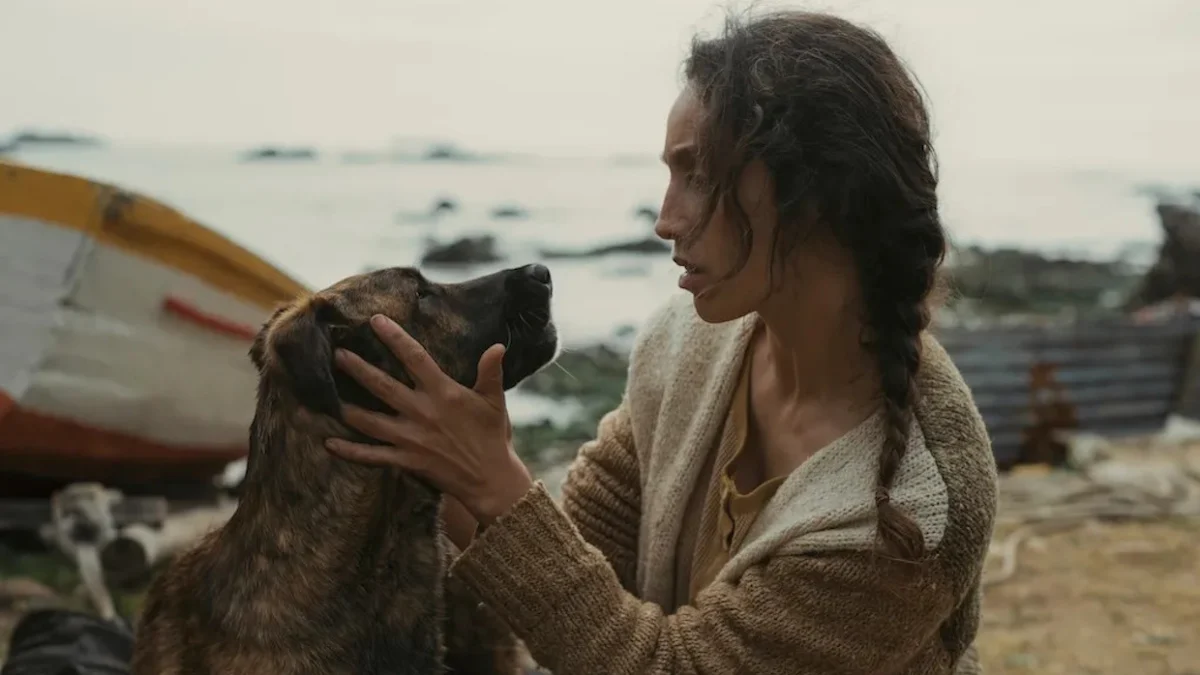
The premiere of Dominga Sotomayor’s latest feature film, La Perra, at the Cannes Film Festival marks a significant pivot in the career of one of Chile’s most celebrated contemporary directors. Known for her meticulous exploration of domestic tension and the psychological weight of physical environments, Sotomayor has built a filmography defined by what critics often describe as a "cinema of confined spaces." Following the international acclaim of her 2018 breakout Too Late to Die Young, which earned her the Leopard for Best Direction at the Locarno Film Festival—making her the first woman to receive the honor—La Perra represents both a continuation of her aesthetic rigor and a departure from the autobiographical foundations of her earlier work.
Adapted from the 2017 novel by Colombian author Pilar Quintana, La Perra shifts the book’s original setting from the humid jungles of the Colombian Pacific to the rugged, windswept coastline of southern Chile. The narrative centers on Silvia, portrayed by Manuela Oyarzún, a woman in her 40s living a solitary life on a remote island. Eking out a living through the harvest of seaweed, Silvia’s routine is disrupted when she adopts a stray puppy she names Yuri. The film meticulously tracks the evolving relationship between the woman and the animal, eschewing traditional sentimental tropes in favor of a raw exploration of domestication, power, and the inherent wildness of the natural world.
The Evolution of Dominga Sotomayor’s Cinematic Language
To understand the significance of La Perra, one must examine the trajectory of Sotomayor’s career, which has consistently focused on the intersection of personal memory and national history. Her 2012 debut, Thursday till Sunday, utilized the interior of a family car as a pressure cooker for marital dissolution, seen through the eyes of a child. Her follow-up, Too Late to Die Young (2018), expanded this scope to a rural commune during Chile’s transition to democracy in 1990.
In a departure from these memory-based narratives, La Perra is Sotomayor’s first project that does not draw directly from her own childhood. Co-written with Inés Bortagaray, the screenplay maintains Sotomayor’s interest in "dispersed cinema"—a style characterized by meandering structures and a refusal to adhere to rigid narrative arcs. However, the film introduces a more obscure, visceral tone. Sotomayor has stated that moving away from her own private history allowed for a "beautiful contradiction," where the distance from the subject matter facilitated a deeper level of emotional intimacy and creative freedom.
Narrative Structure and the Rejection of Metaphor
A defining characteristic of La Perra is its treatment of the titular animal. In many cinematic traditions, animals serve as metaphors for human longing or as catalysts for character growth. Sotomayor and cinematographer Simone D’Arcangelo deliberately subvert this expectation. Early in the film, the camera perspective shifts from Silvia to Yuri, the dog, allowing the animal to exist as a protagonist with its own agency.
The film explores the concept of domestication—not just of animals, but of humans within their environments. As Silvia attempts to integrate Yuri into her life, the boundaries between the "familiar" and the "foreign" begin to blur. The relationship, initially one of affection, gradually transitions into a more threatening and exhausting dynamic. This thematic thread aligns with Sotomayor’s previous explorations of small, isolated communities where the initial promise of a "warm retreat" eventually reveals itself to be a source of confinement.
Technical Execution: Cinematography and Soundscapes
The visual language of La Perra was developed through a collaboration between Sotomayor and Simone D’Arcangelo, whose previous work includes the visually striking The Settlers (2023) and The Tale of King Crab (2021). Eschewing traditional storyboards, the duo utilized a "collage of pictures" taken on the island of Santa María to establish the film’s atmosphere. The visual style draws heavily from 19th-century landscape paintings characterized by dramatic skies and barren terrains, as well as the psychological portraiture of artists like Lucian Freud and Francis Bacon.
The film’s atemporality is another intentional stylistic choice. By mixing contemporary elements like smartphones and modern vehicles with vintage television sets and props from previous decades, Sotomayor creates a "temporal limbo." This sense of being out of time is reinforced by the film’s first use of a flashback sequence, which avoids conventional markers like color shifts or period-specific costumes. Instead, the past and present are woven together to capture a diffused "feeling" of memory rather than a clear chronological explanation for the protagonist’s current state.

The auditory landscape of the film is equally layered. The score, composed by Clint Mansell—famed for his work on Requiem for a Dream and Black Swan—is punctuated by the hits of the 1980s Mexican pop star Yuri. This choice provides a rhythmic and cultural anchor to the film, contrasting the stark, naturalistic sounds of the Chilean coast with the stylized production of late-20th-century Latin pop.
Production Context and the Chilean Film Industry
The production of La Perra highlights the diverse financial and creative structures currently supporting Latin American cinema. Sotomayor’s previous project, Swim to Me (2025), was a Netflix-produced commission that required a more straightforward narrative approach to cater to a global streaming audience. In contrast, La Perra was developed as a "free" film for the cinema, produced by Rodrigo Teixeira’s RT Features, a company known for supporting auteur-driven projects like Call Me by Your Name and The Witch.
The filming process involved significant logistical challenges, particularly regarding the animal performers. The production cast two mutts from animal shelters around Santiago to play the younger and older versions of Yuri. Unlike trained Hollywood animals, these dogs possessed a "wild energy" that required the lead actress, Manuela Oyarzún, to adapt her performance to their unpredictable movements. Sotomayor has noted that these difficulties eventually dictated the film’s language, resulting in a work that feels spontaneous and unrefined.
Environmental and Cultural Geography
While La Perra is a work of fiction, it incorporates documentary-like elements regarding the lifestyles of the inhabitants of Santa María island. However, Sotomayor intentionally "invented" portions of the territory to serve the narrative. For instance, the film’s depiction of the seaweed industry—specifically the use of tractors to ferry mounds of algae to the port—was a stylized reimagining of real-world practices in southern Chile.
The seaweed industry (primarily the harvesting of pelillo and luga) is a vital economic driver in coastal Chile, often involving grueling manual labor and a deep connection to the tidal cycles. By centering Silvia’s livelihood on this industry, Sotomayor anchors the character in a specific socio-economic reality while using the "imaginary geography" of the film to elevate the story into a more universal exploration of isolation.
Chronology of Dominga Sotomayor’s Key Works
| Year | Title | Notable Recognition | Theme/Setting |
|---|---|---|---|
| 2012 | Thursday till Sunday | Tiger Award, Rotterdam | Family car journey; end of childhood innocence. |
| 2014 | Mar | Berlinale Forum | Improvised drama set in an Argentine seaside resort. |
| 2018 | Too Late to Die Young | Best Direction, Locarno | Rural commune; post-Pinochet transition. |
| 2025 | Swim to Me | Netflix Production | Performance-heavy; affluent Santiago villa. |
| 2026 | La Perra | Cannes Premiere | Adaptation; isolation and domestication on an island. |
Broader Impact and Critical Implications
The release of La Perra is expected to further solidify Sotomayor’s reputation as a leading voice in the "New Chilean Cinema" movement, alongside directors like Pablo Larraín and Sebastián Lelio. Her ability to navigate between large-scale streaming commissions and uncompromising independent cinema provides a model for contemporary filmmakers in the region.
Analysts suggest that La Perra’s success lies in its refusal to offer easy answers. By focusing on the "permeable border between the human and the non-human," the film invites viewers to engage with the enigmas of identity and belonging. The transition from the jungle of Quintana’s novel to the cold, oceanic landscape of Chile serves to highlight the universal nature of the book’s themes: the struggle for autonomy and the complicated, often painful bonds we form with those we attempt to claim as our own.
As the film moves from its festival run to international distribution, it stands as a testament to the power of adaptation when handled with a distinct directorial vision. By "shrinking the world" down to a single island, a woman, and a dog, Dominga Sotomayor has managed to expand the boundaries of her own cinematic language, delivering a work that is as haunting as it is liberating.