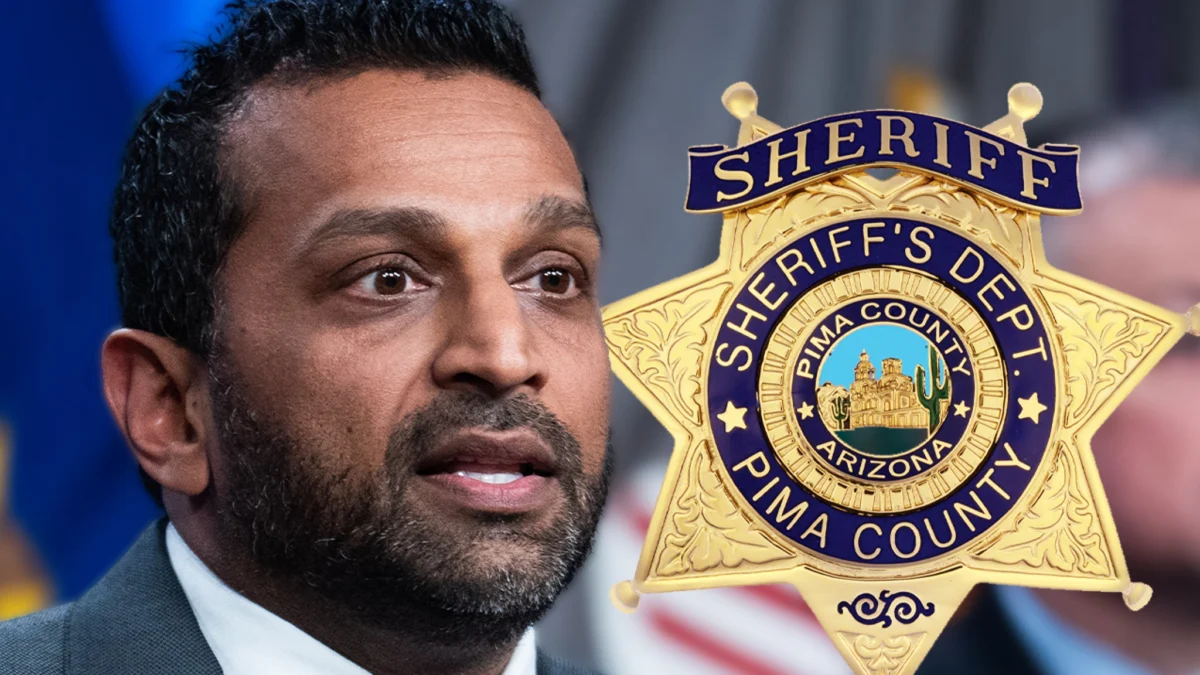
The Pima County Sheriff’s Office (PCSO) has issued a robust defense of its handling of the high-profile Nancy Guthrie abduction case, directly refuting criticisms leveled by FBI Director Kash Patel. The exchange underscores the complex dynamics of inter-agency cooperation in major criminal investigations, particularly when public scrutiny and a lack of progress intensify pressure on law enforcement. The PCSO’s detailed rebuttal, provided exclusively to TMZ, came in response to Patel’s claims on the "Hang Out with Sean Hannity" podcast, where he accused the local agency of sidelining federal involvement and making questionable decisions regarding crucial evidence.
FBI Director Patel’s Assertions on "Hang Out with Sean Hannity"
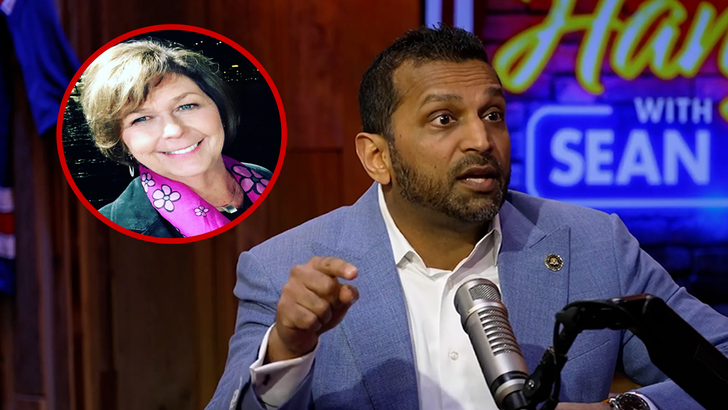
During his appearance on the widely listened-to "Hang Out with Sean Hannity" podcast, FBI Director Kash Patel voiced significant concerns regarding the Pima County Sheriff’s Office’s management of the Nancy Guthrie abduction investigation. Patel, known for his assertive stance on law enforcement matters and national security, specifically alleged that Pima County Sheriff Chris Nanos had effectively "benched" the Federal Bureau of Investigation for the initial four critical days of the probe. This period, often considered paramount in abduction cases, is when leads are freshest, and the chances of a swift resolution are highest.
Patel’s critique did not stop at the alleged delay in federal involvement. He also took issue with Sheriff Nanos’s decision to dispatch critical forensic evidence to a laboratory in Florida, rather than utilizing the FBI’s own state-of-the-art facility in Quantico, Virginia. The Quantico lab is renowned for its advanced capabilities in forensic analysis, including DNA, ballistics, and trace evidence, and is typically the preferred choice for federal investigations due to its extensive resources and expertise. Patel implied that bypassing Quantico could have potentially hampered the efficiency or thoroughness of the evidence processing, thereby impacting the overall investigation’s trajectory. These public statements from the head of a federal law enforcement agency represented an unusual public rebuke of a local department, highlighting the deep frustrations possibly simmering beneath the surface regarding the case’s lack of resolution.
Pima County Sheriff’s Office Responds: A Point-by-Point Rebuttal
In an immediate and comprehensive response, the Pima County Sheriff’s Office unequivocally challenged Director Patel’s narrative, emphasizing a consistent and collaborative approach from the outset of the Nancy Guthrie investigation. The PCSO’s statement, released through official channels, aimed to correct what it perceived as misrepresentations and to reaffirm its commitment to a thorough, coordinated, and fact-based inquiry.
Sheriff Nanos himself, according to the PCSO, was present at the scene on the very night of the incident, providing immediate local leadership and direct oversight. This detail directly counters any implication of a slow or disengaged local response. Furthermore, the PCSO highlighted that a member of the FBI Task Force was not only notified but was also "present at that scene, working alongside our personnel" from the initial stages. This critical piece of information suggests that federal involvement, at least at the task force level, commenced concurrently with local efforts, contradicting Patel’s assertion of the FBI being "benched" for four days. The PCSO clarified that the FBI was "promptly notified by both our department and the Guthrie family," indicating multiple avenues through which federal authorities were alerted to the situation without delay. The statement acknowledged that "While the FBI Director was not on scene, coordination with the Bureau began without delay," implicitly distinguishing between the presence of federal personnel on the ground and the personal involvement of the Director himself.
Regarding the contentious issue of evidence processing, the Pima County Sheriff’s Office provided a pragmatic explanation. "Decisions regarding evidence processing were made on scene based on operational needs," the PCSO stated, suggesting that the choice of laboratory was not an arbitrary one but a strategic decision influenced by immediate logistical considerations and the exigencies of the unfolding investigation. The PCSO further clarified that the laboratory it utilized and the FBI Laboratory in Quantico have been working "in close partnership from the outset and continue to collaborate in the analysis of evidence." This indicates that even if evidence was initially sent to a different facility, there has been ongoing communication and data sharing between the labs, ensuring that the collective expertise of both federal and local forensic scientists is brought to bear on the case. This collaborative framework implies that the choice of an initial processing lab was perhaps less about excluding the FBI and more about optimizing resource allocation and potentially expediting initial analyses based on availability and specialized capabilities.
The PCSO’s detailed response underscores a concerted effort to maintain professional integrity and public trust amidst the high-stakes environment of a prolonged, unresolved abduction case. It paints a picture of inter-agency cooperation that began swiftly and has continued robustly, despite the public criticisms leveled by the FBI Director.
The Nancy Guthrie Case: A Tragic Background and Stalled Investigation
The disappearance of Nancy Guthrie on February 1, 2026, sent shockwaves through the community and garnered significant national attention, partly due to her familial connection to prominent media figures. Her abduction quickly evolved into a high-profile case, drawing widespread media coverage and intense public interest. Despite the extensive resources deployed by both local and federal agencies, and a concerted effort involving countless hours of investigation, interviews, and forensic analysis, the case has been plagued by a disheartening lack of progress. Months after her disappearance, there have been "dozens of dead ends," leaving investigators without concrete answers and the public clamoring for breakthroughs.
The absence of significant developments has naturally led to mounting pressure on all law enforcement agencies involved. In abduction cases, particularly those without immediate demands or clear motives, the initial hours and days are crucial for establishing a perimeter, gathering eyewitness accounts, securing potential crime scenes, and identifying any forensic clues. As time progresses, leads can grow cold, memories fade, and the trail becomes increasingly difficult to follow. The Nancy Guthrie case has unfortunately fallen into this challenging category, where despite the best efforts, the path to resolution remains elusive. This stagnation has undoubtedly contributed to the frustration expressed by FBI Director Patel and has amplified the need for transparency and accountability from the investigating bodies. The public’s desire for answers, combined with the emotional toll on the Guthrie family, places immense strain on law enforcement to demonstrate unwavering commitment and effective collaboration.
Inter-Agency Dynamics and Jurisdictional Nuances in High-Profile Cases
The public disagreement between the Pima County Sheriff’s Office and FBI Director Kash Patel highlights the often-complex and sometimes strained relationship between local and federal law enforcement agencies, especially in high-profile cases with overlapping jurisdictions. While local agencies, like the PCSO, bear primary responsibility for crimes committed within their geographic boundaries, federal agencies, such as the FBI, possess unique resources, investigative capabilities, and jurisdictional reach for certain types of crimes, including kidnapping and interstate criminal activity.
In cases of abduction, particularly those that may cross state lines or involve federal statutes, the FBI’s involvement is often critical. The Bureau brings extensive experience, specialized units (like the Child Abduction Rapid Deployment team, although not explicitly mentioned for this adult abduction, the principle applies), and the forensic capabilities of its Quantico laboratory. However, the initial jurisdiction always lies with the local authorities. The decision of when and how to integrate federal assistance can sometimes become a point of contention, even if underlying cooperation is robust. Local agencies may, at times, prefer to maintain control over an investigation, leveraging their intimate knowledge of the community and local resources, while federal partners might push for earlier and more comprehensive integration to apply their broader scope and technical expertise.
The legal framework typically grants local law enforcement the authority to "call the shots" within their jurisdiction, as acknowledged by Patel himself. However, effective collaboration requires a delicate balance of respect for jurisdictional boundaries, open communication, and a shared commitment to the ultimate goal of solving the crime. Public disputes, such as this one, can unfortunately undermine public confidence in law enforcement’s ability to work cohesively, potentially fostering an environment of distrust that could inadvertently impact ongoing investigative efforts or future cooperation. The ideal scenario involves seamless integration from the outset, where each agency contributes its strengths without territorial disputes, a standard that both the PCSO and the FBI would undoubtedly strive for in principle.
The Evidence Processing Debate: Operational Needs vs. Federal Resources
The controversy surrounding the choice of forensic laboratories for processing critical evidence in the Nancy Guthrie case brings to light a crucial aspect of modern criminal investigations: the balance between operational efficiency and access to specialized federal resources. FBI Director Patel’s criticism centered on Sheriff Nanos sending evidence to a lab in Florida instead of the FBI’s facility in Quantico, implying a potential compromise in the investigation’s quality or speed.
The FBI Laboratory in Quantico is indeed a world-class forensic institution, equipped with cutting-edge technology and staffed by highly specialized experts across various disciplines, including DNA analysis, toxicology, firearms, and trace evidence. Its reputation is well-deserved, and it is a vital asset for complex federal cases. However, local law enforcement agencies also maintain strong relationships with regional and state forensic laboratories, which often provide quicker turnaround times for certain analyses, especially when the FBI lab may have a backlog or when specific regional expertise is required.
The Pima County Sheriff’s Office’s explanation—that decisions were made "based on operational needs"—suggests a strategic rationale. This could mean several things:
- Faster Turnaround: A regional lab might have been able to process specific evidence more quickly than Quantico, particularly in the initial, time-sensitive phase of an abduction case.
- Specialized Local Expertise: The chosen Florida lab might possess unique capabilities or a particular specialization relevant to the specific type of evidence found, or it might have been better positioned geographically or logistically for immediate transport and analysis.
- Resource Availability: At the moment the evidence was collected, the Pima County Sheriff’s Department might have determined that the local or regional lab had immediate capacity, while Quantico might have had a longer queue for specific tests.
- Established Partnerships: The PCSO likely has established working relationships and service agreements with specific labs that they trust and regularly utilize for their investigations.
The PCSO’s assurance that the utilized laboratory and the FBI Laboratory in Quantico have been "working in close partnership from the outset and continue to collaborate in the analysis of evidence" is a critical mitigating factor. This indicates that even if initial processing occurred elsewhere, the results and raw data would have been shared with Quantico, allowing for federal oversight, secondary analysis, or the application of additional specialized techniques. This cooperative model, where data and expertise are exchanged, demonstrates an intent to leverage the best available resources without necessarily centralizing all physical evidence at Quantico from day one. This practice is not uncommon in complex multi-jurisdictional investigations, where different labs might handle different types of evidence concurrently to expedite the overall analytical process.
Public Scrutiny and Professional Implications
The public disagreement between FBI Director Kash Patel and the Pima County Sheriff’s Office carries significant professional and public relations implications. In the context of a high-profile, unresolved abduction case like that of Nancy Guthrie, public trust in law enforcement’s ability to effectively investigate and solve crimes is paramount. When senior officials from different agencies publicly criticize each other’s handling of a case, it can inadvertently erode that trust, creating an impression of disunity or incompetence.
For the Pima County Sheriff’s Office, the public rebuke from the FBI Director places immense pressure on its leadership and personnel. It challenges their professional judgment and competence, potentially impacting morale within the department and raising questions among the local populace they serve. Defending their actions, as they have done, becomes crucial for maintaining their credibility and demonstrating their unwavering commitment to the investigation.
Conversely, for FBI Director Patel, making such public statements carries the weight of his office. While his intent may be to ensure accountability and push for progress in a stalled case, public criticism of a local partner can complicate future cooperative efforts. Inter-agency relationships thrive on mutual respect and open communication, and public spats can strain these vital connections, potentially creating friction that could hinder future joint operations. Furthermore, revealing details about investigative decisions, such as where evidence was sent, even if intended to highlight concerns, can sometimes be seen as premature or as providing too much insight into investigative strategy, though in this case, the information was already out.
The broader implication for the public is a potential loss of confidence. When agencies appear to be at odds, the public might question whether all available resources are being optimally utilized or if bureaucratic turf wars are impeding justice. This perception can be particularly damaging in cases involving missing persons, where families and communities are desperately seeking answers and rely heavily on the unified efforts of law enforcement. Both agencies are ultimately serving the same goal: to find Nancy Guthrie and bring her abductors to justice. Public disagreements, while sometimes unavoidable in the heat of a complex investigation, ideally should be managed internally to present a united front to the public and to the perpetrators.
Moving Forward: Commitment to Collaboration Amidst Challenges
Despite the public friction, both the Pima County Sheriff’s Office and FBI Director Kash Patel, through his comments, have reiterated their fundamental commitment to resolving the Nancy Guthrie case. Patel, while critical, emphasized that the case remained within Sheriff Nanos’s jurisdiction and acknowledged the local agency’s right to lead. His expressed hope was that "local law enforcement won’t ice out the feds in other cases," suggesting a desire for more seamless integration moving forward, rather than a permanent rupture in relations.
The Pima County Sheriff’s Office, in its concluding statement, reinforced this sentiment: "We remain committed to a thorough, coordinated, and fact-based investigation and will continue working closely with our federal partners as the process moves forward." This statement is crucial, as it signals a continued dedication to collaboration despite the public exchange of criticisms. In complex, long-term investigations, sustained cooperation between local and federal agencies is not merely beneficial but often indispensable. It allows for the pooling of diverse resources, expertise, and jurisdictional powers that no single agency possesses entirely on its own.
The path forward for the Nancy Guthrie investigation will undoubtedly require sustained communication, mutual respect, and a renewed focus on shared objectives. The pressure on both the Pima County Sheriff’s Office and the FBI to make progress in this stalled case will only intensify with time. While public disagreements can be unsettling, the ultimate measure of success will be the ability of these agencies to put aside perceived differences, learn from past challenges, and redouble their unified efforts to bring resolution to the tragic disappearance of Nancy Guthrie. The public and the Guthrie family deserve nothing less than a fully coordinated and transparent investigation, free from the distractions of inter-agency disputes. The coming months will reveal how effectively these critical law enforcement partners can translate their stated commitment to collaboration into tangible progress in one of the most perplexing cases currently facing the nation.