


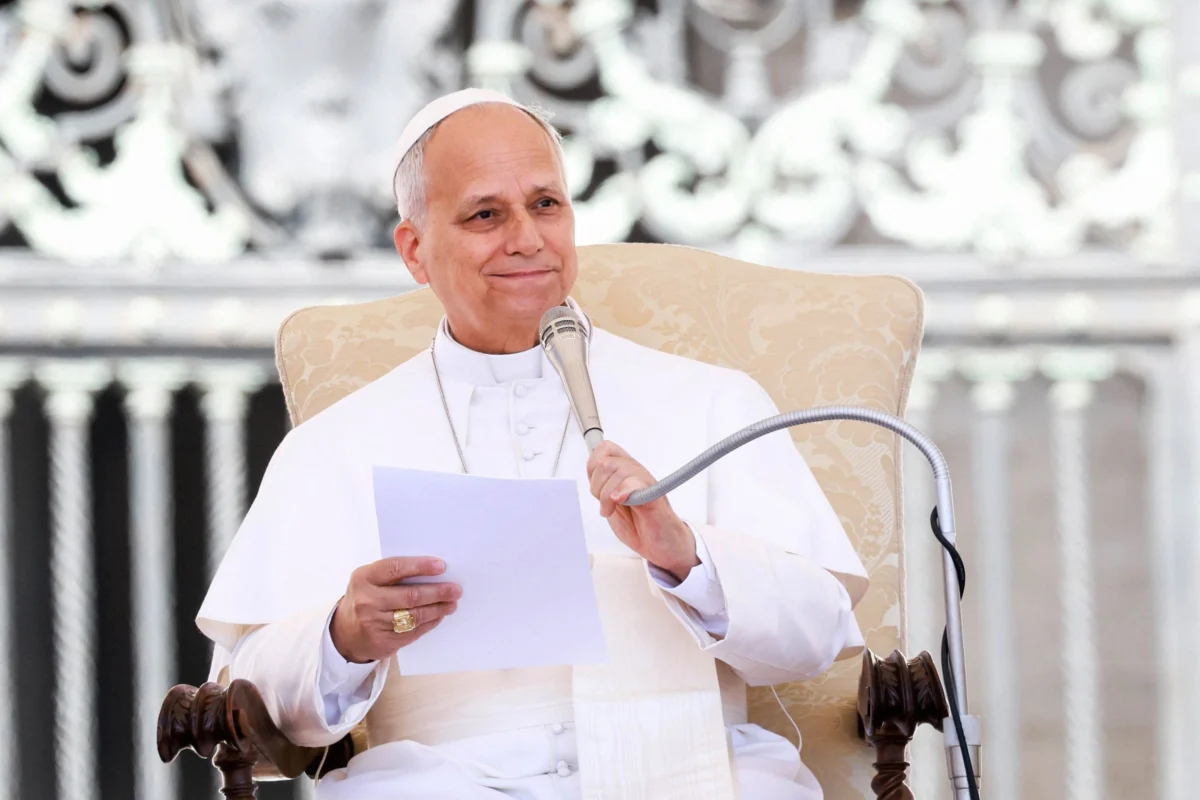
On Monday, the Holy See released the inaugural encyclical of Pope Leo XIV, titled Magnifica humanitas (Magnificent Humanity), a document that marks a significant shift in the Catholic Church’s engagement with the digital age. While the 100-page papal letter follows the traditional theological framework of citing saints and previous pontiffs, it has sparked widespread debate for its direct engagement with contemporary technological culture, most notably through the citation of J.R.R. Tolkien. The encyclical positions the Church as a primary critic of the "technocratic paradigm," a term popularized by the Pope’s predecessor, Pope Francis, and warns against the reduction of the human person to a data point within an increasingly automated global economy.
By quoting Tolkien’s famous wizard Gandalf, Leo XIV has entered a cultural fray involving some of the world’s most powerful technology billionaires. The move is seen by many Vatican observers as a strategic reclamation of the Catholic author’s legacy, which has recently been co-opted by figures such as Elon Musk and Peter Thiel to justify surveillance-based business models and isolationist political ideologies. The release of Magnifica humanitas signals that the Vatican intends to be a central voice in the ethical governance of artificial intelligence (AI) and the protection of labor rights in the 21st century.
A Framework of AI Skepticism and Human Dignity
The core of Leo XIV’s argument rests on the "safeguarding of the human person" in an era defined by the rapid proliferation of artificial general intelligence (AGI). The Pope expresses deep skepticism regarding the motives of the "tech oligarchs" currently leading the AI race. He questions whether the pursuit of these technologies is truly aimed at solving global crises, such as climate change or terminal illness, or if it is primarily an engine for "limitless profit and cultural dominance."
Drawing a historical parallel, Leo XIV references his namesake, Pope Leo XIII, whose 1891 encyclical Rerum Novarum addressed the plight of the working class during the Industrial Revolution. Just as Leo XIII stood against the exploitation of workers by burgeoning capitalist empires in the 19th century, Leo XIV asserts that the Church must now defend the "dignity of the soul" against a digital revolution that threatens to turn human beings into "mere cogs in a system driven toward ever greater efficiency." The document argues that the current AI trajectory risks creating a permanent underclass while concentrating unprecedented power in the hands of a few unaccountable developers.
The Reclaiming of Middle-earth: Leo XIV vs. Silicon Valley
The most discussed aspect of the encyclical is the Pope’s decision to quote J.R.R. Tolkien. In a passage addressing personal responsibility in the face of systemic evil, the Pope writes: "It is not our part to master all the tides of the world, but to do what is in us for the succour of those years wherein we are set, uprooting the evil in the fields that we know, so that those who live after may have clean earth to till."
This choice of text appears to be a direct rebuttal to the way Tolkien’s mythology has been utilized by figures like Peter Thiel and Elon Musk. Thiel, the co-founder of Palantir Technologies, named his data-mining firm after the "palantíri"—seeing-stones used by the corrupted wizard Saruman and the dark lord Sauron for surveillance and psychological manipulation. Furthermore, Thiel has reportedly referred to his venture capital firm, the Founders Fund, as "the precious," a term associated with the corrupting influence of the One Ring and the character Gollum.
Elon Musk has also frequently invoked Tolkien, though often through a lens that critics describe as a misreading of the text. In recent social media posts, Musk suggested that The Lord of the Rings serves as a parable for anti-immigration sentiments, comparing the "hard men of Gondor" to those who protect Western civilization from outside threats.
In Magnifica humanitas, Leo XIV provides a counter-interpretation. He suggests that Tolkien’s work—deeply rooted in the author’s experience of the horrors of mechanized warfare in World War I—is actually a critique of the very forces Musk and Thiel represent: industrial devastation, the lust for totalizing power, and the dehumanization of the "other." The Vatican’s use of Gandalf emphasizes stewardship and humility rather than the "technocratic mastery" sought by the leaders of the AI industry.
Chronology of the Vatican’s Stance on Technology
The release of Magnifica humanitas is the culmination of a decade-long evolution in the Church’s approach to digital ethics.
- 2015: Pope Francis releases Laudato si’, introducing the concept of the "technocratic paradigm" and criticizing the blind pursuit of technological progress at the expense of the environment and the poor.
- 2020: The Vatican hosts the "Rome Call for AI Ethics," a collaborative effort with companies like Microsoft and IBM to sign a pledge ensuring AI is developed with human-centric principles.
- 2023: Pope Francis issues a message for the World Day of Peace focused entirely on AI, calling for an international treaty to regulate its development.
- 2025: Following the election of Pope Leo XIV, the new pontiff indicates that AI skepticism will be a cornerstone of his papacy.
- May 2026: The release of Magnifica humanitas provides a definitive theological and philosophical critique of the current AI landscape.
Supporting Data: The Human and Environmental Cost of the AI Boom
To bolster the Pope’s theological claims, the encyclical alludes to the tangible impacts of the AI industry. Independent data from environmental and labor organizations provide a stark backdrop to the Vatican’s concerns:
- Environmental Impact: Training a single large language model (LLM) can consume as much electricity as 100 average U.S. households over a year. Furthermore, the water required to cool the data centers for these models is estimated in the billions of gallons annually, often in regions already facing water scarcity.
- Labor Exploitation: While AI is marketed as a tool of high-level intelligence, it relies on a massive, invisible workforce of "data labelers" in the Global South, who are often paid less than $2 an hour to filter traumatic content and train algorithms.
- Wealth Concentration: As of 2026, the "Magnificent Seven" tech companies hold a combined market capitalization that exceeds the GDP of most G20 nations, creating what Leo XIV describes as a "new feudalism" where data is the new land and algorithms are the new law.
Political Implications and Official Responses
The encyclical has arrived during a period of intense political friction. The document specifically critiques the integration of AI into military and border enforcement frameworks. Analysts note that this is a pointed reference to the current U.S. administration’s use of AI for "racist propaganda" and military planning, including the use of algorithms to determine strike targets in international conflicts.
Furthermore, the Pope’s letter addresses the dismantling of international aid structures. The encyclical laments the "bulldozing" of humanitarian agencies, a reference to the recent restructuring of the U.S. Agency for International Development (USAID) under pressure from tech-aligned political interests. Public health experts from Harvard and The Lancet have estimated that these cuts have led to hundreds of thousands of preventable deaths globally due to the withdrawal of aid for malaria, maternal health, and clean water projects.
Requests for comment from Peter Thiel and Elon Musk regarding the encyclical went unanswered as of Tuesday morning. However, sources close to the tech industry suggest that the document is being viewed as an "unnecessary intervention" into private enterprise. Conversely, the Catholic Workers Movement and several international labor unions have praised the Pope for "returning the Church to the side of the exploited."
Broader Impact: A Call for Global Regulation
Magnifica humanitas is more than a spiritual guide; it is a call to action for global regulators. Leo XIV concludes the encyclical by urging the international community to adopt a "binding legal framework" that treats AI as a public utility rather than a private weapon. He argues that without such oversight, the "fields we know"—a nod back to Tolkien—will be irrevocably poisoned by greed and automation.
The Vatican’s strategic use of cultural touchstones like The Lord of the Rings suggests a new era of "soft power" diplomacy. By engaging with the myths that Silicon Valley uses to define itself, Leo XIV is attempting to strip the "tech-bro" elite of their moral cover. The message of the encyclical is clear: the future of humanity cannot be left to those who view the world through the lens of a "palantír," but must instead be stewarded by those willing to do the quiet, difficult work of "uprooting the evil in the fields that we know."
As the world grapples with the implications of AGI, Magnifica humanitas stands as a formidable challenge to the prevailing belief that technological progress is inherently good. It asserts that in the race to build artificial minds, we must not lose the human heart.