

The Walt Disney Company has formally escalated its legal and regulatory confrontation with the Federal Communications Commission (FCC), filing a series of broadcast license renewal applications "under protest." This move follows an unprecedented order by the federal agency to subject eight of Disney’s primary television stations to an early review process, moving the deadlines forward by several years. In a set of rigorous filings submitted on Thursday, Disney characterized the FCC’s actions as "unlawful, arbitrary, and unconstitutional," signaling a high-stakes battle over the limits of federal oversight and the First Amendment rights of major media conglomerates.
The conflict centers on the FCC’s decision to investigate Disney’s internal Diversity, Equity, and Inclusion (DEI) initiatives. While broadcast licenses for the affected stations—which include major network affiliates in cities such as New York, Los Angeles, and Chicago—were originally slated for renewal between 2028 and 2031, the Commission moved to accelerate this timeline in late April. The agency cited concerns regarding whether the company’s DEI practices violate the Communications Act of 1934 or FCC rules prohibiting unlawful discrimination.
The Scope of the FCC Mandate
The FCC’s order targets eight Disney-owned ABC stations that serve as the backbone of the company’s terrestrial broadcasting reach. These stations include WABC-TV in New York, KABC-TV in Los Angeles, WLS-TV in Chicago, WPVI-TV in Philadelphia, KGO-TV in San Francisco, KTRK-TV in Houston, WTVD in Raleigh-Durham, and KFSN-TV in Fresno. Under standard regulatory procedures, these licenses are typically granted for eight-year terms, with renewals serving as a routine administrative check to ensure the stations continue to serve the "public interest, convenience, and necessity."
However, the current proceedings are anything but routine. Disney’s filings emphasize that the FCC has not utilized its authority to call for such an early renewal in more than 50 years. By forcing the company to defend its licenses years ahead of schedule, Disney argues the FCC is deviating from established administrative norms without a legitimate regulatory basis.
"The order has no legitimate purpose," Disney stated in its filing. "There is no information that the application will reveal that the Commission could not obtain through other means. The order is inconsistent with a legitimate exercise of investigative authority and is plainly incompatible with the First Amendment."
Chronology of the Dispute
The tension between the FCC and Disney has been building for over a year, rooted in a broader federal investigation into the media industry’s hiring and content practices.
- March 2024: The FCC officially launched an investigation into the DEI efforts of Disney and several other major media entities. The agency stated it was looking for potential violations of the Communications Act of 1934, specifically focusing on whether corporate DEI mandates resulted in "invidious discrimination" that would disqualify a licensee from holding a broadcast permit.
- Late 2024 – Early 2025: The FCC reportedly issued several requests for information (RFIs) to Disney. According to FCC officials, the responses provided by the company were deemed "nonresponsive" and "disingenuous."
- April 2026 (per the regulatory timeline): The FCC formally issued the order for early license renewals, citing a need for "further action" based on the findings—or lack thereof—from the initial investigation.
- May 2026: Disney filed its renewal applications under protest, setting the stage for a public comment period and potential legal challenges in federal court.
The FCC’s Justification: "Invidious Discrimination"
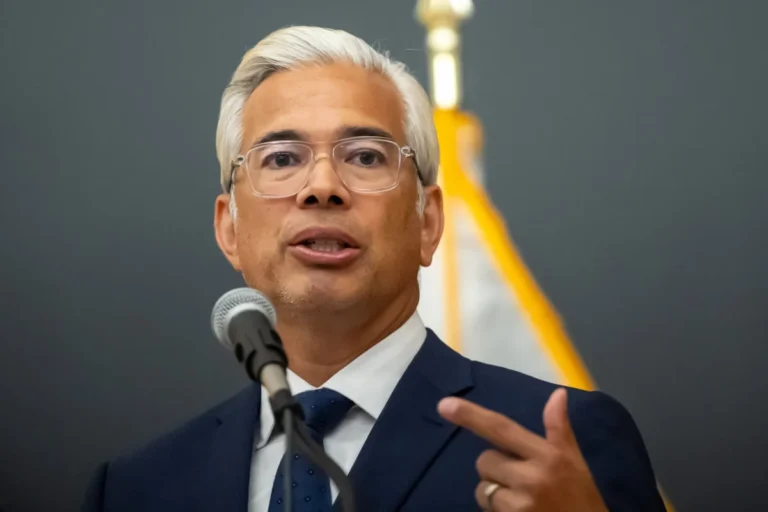
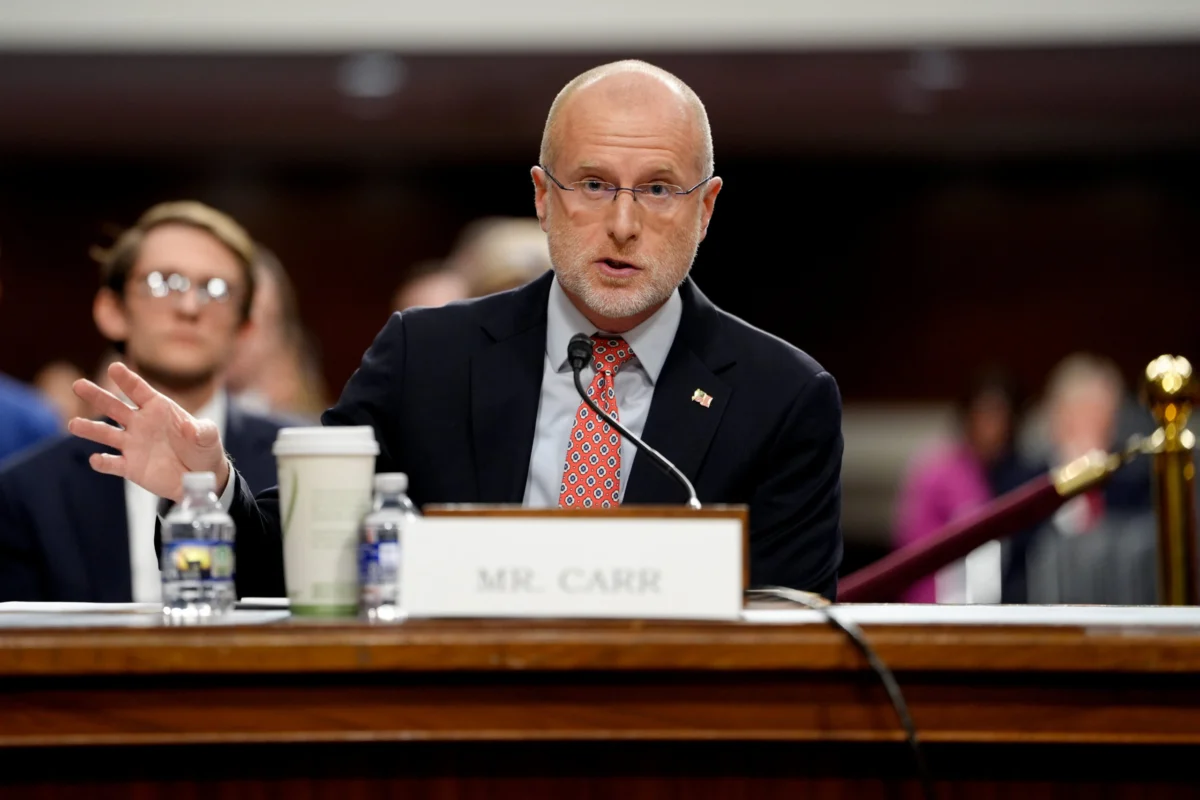
FCC Chair Brendan Carr has emerged as the primary architect of the agency’s current trajectory regarding Disney. In an interview with CNBC’s "Squawk on the Street," Carr dismissed Disney’s claims that the investigation is a violation of the First Amendment or a politically motivated attack. Instead, he framed the issue as one of strict regulatory compliance and civil rights.
"I understand Disney wants to make this about a lot of other things, and their PR machine has been in high gear, but we’ve been very clear about what this is: concerns about invidious forms of DEI discrimination," Carr said. He argued that the FCC has a statutory obligation to ensure that broadcast licensees—who are granted the privilege of using public airwaves—do not engage in discriminatory practices.
Carr further explained that the decision to accelerate the license renewal process was a direct consequence of Disney’s alleged lack of cooperation. "We have been signaling for a long time that we want Disney to take seriously our investigation," Carr noted. "It was only after we felt like… their responses were disingenuous, that they were incomplete, that they were frankly nonresponsive to a number of questions, that we thought it was important to take this next step."
Political Undercurrents and the Jimmy Kimmel Factor
While the FCC maintains that its focus is strictly on DEI practices and administrative transparency, critics of the move point to a more volatile political backdrop. The timing of the early review coincided with increased friction between the Trump administration and Disney-owned ABC. Specifically, President Donald Trump has frequently criticized ABC’s late-night programming, most notably Jimmy Kimmel Live!, for its sharp satirical critiques of his administration.
This has led to accusations from some quarters—including a sitting FCC commissioner—that the agency is being "weaponized" to punish a media outlet for its editorial content. Commissioner Anna Gomez, in a social media post, suggested that the scrutiny appeared to be politically motivated. Disney’s own filings lean into this narrative, suggesting that the FCC’s actions lack a "legitimate purpose" and are "plainly incompatible" with the constitutional protections afforded to the press.
The debate touches on a sensitive area of communications law: the "Scarcity Doctrine." Unlike cable or internet platforms, broadcast television uses the public electromagnetic spectrum. Because this spectrum is a finite resource, the Supreme Court has historically allowed the FCC more leeway to regulate broadcasters than it does for print or digital media. However, Disney argues that using this power to investigate internal corporate diversity policies exceeds the agency’s mandate and treads into protected speech and corporate governance.
Potential Implications for the Media Landscape
The outcome of this standoff could have far-reaching consequences for the entire telecommunications industry. If the FCC successfully uses the license renewal process as a lever to audit and potentially penalize companies for their DEI programs, it would set a new precedent for how federal agencies interact with private corporations.
- The "Death Penalty" for Broadcasters: While rare, the FCC does have the power to deny license renewals, effectively forcing a station off the air or requiring its sale to a different owner. When asked if the FCC might actually pull ABC’s licenses, Carr stated that the agency would "follow the facts and the law wherever they go." The loss of licenses in markets like New York and Los Angeles would be a catastrophic financial blow to Disney’s linear television segment.
- Corporate DEI Programs Under Fire: This case is part of a larger national trend where DEI initiatives are facing legal challenges. Following the Supreme Court’s 2023 ruling against affirmative action in higher education, many legal experts have predicted that corporate diversity programs would be the next frontier for litigation. The FCC’s focus on "invidious discrimination" suggests the agency is looking for evidence that DEI policies have led to the exclusion of qualified candidates based on race or gender in a way that violates federal law.
- Administrative Procedure Act (APA) Challenges: Disney’s description of the FCC’s order as "arbitrary and capricious" is a specific legal reference to the Administrative Procedure Act. If Disney takes the case to a federal appeals court, it will likely argue that the FCC failed to provide a "reasoned explanation" for its departure from decades of precedent, which would make the order legally invalid.
The Path Forward
The next phase of the process begins immediately. Following Disney’s filing, the FCC is expected to issue a public notice, which opens a window for third parties to file "petitions to deny" the license renewals. This allows advocacy groups, competitors, or members of the public to submit formal objections to Disney’s fitness as a licensee. Disney will then have the opportunity to file oppositions to those petitions.
This cycle is likely to be highly contentious, as the public comment period will serve as a forum for the broader cultural and political debates surrounding DEI and media bias.
For Disney, the stakes are not merely regulatory but existential for its broadcast division. The company’s "Linear Networks" segment, while facing headwinds from the rise of streaming, remains a significant source of cash flow and a vital platform for live sports and news. By filing "under protest," Disney is preserving its right to challenge any adverse ruling in the D.C. Circuit Court of Appeals, a venue that frequently adjudicates disputes between federal regulators and the industries they oversee.
As the FCC continues its investigation, the media industry will be watching closely to see if this is an isolated incident involving a single company or the beginning of a new era of aggressive federal oversight into the internal operations of American media giants. For now, the battle between the "House of Mouse" and the federal government remains in a state of high-tension litigation, with both sides digging in for what could be a multi-year legal odyssey.