
The landscape of American television has reached a pivotal juncture where the satirical narratives of its most acclaimed comedies are increasingly indistinguishable from the existential challenges facing the industry at large. With the return of HBO’s The Comeback for its third and final season and the conclusion of Max’s Hacks in its fifth season, the medium is witnessing a rare synchronization of fiction and reality. Both series, led by veteran performers Lisa Kudrow and Jean Smart, have pivoted their final arcs to address the encroachment of artificial intelligence (AI) and the shifting economic foundations of Hollywood. This thematic convergence comes at a time of significant corporate contraction and follows the historical labor unrest of the 2023 Writers Guild of America (WGA) and SAG-AFTRA strikes, which centered largely on protections against generative technology.
The Chronological Evolution of The Comeback and Industry Crisis
The Comeback, created by Michael Patrick King and Lisa Kudrow, has historically functioned as a barometer for television’s periodic transformations. When the series debuted in 2005, it targeted the burgeoning reality television phenomenon. At that time, the rise of unscripted programming was viewed by industry traditionalists as a threat to scripted content, driven by lower production costs and a reliance on "tabloid-style" drama. The character of Valerie Cherish, a former sitcom star seeking a "comeback" via a reality lens, embodied the desperation of an era where celebrity was becoming increasingly commodified and stripped of professional craft.
The series’ first revival in 2014 coincided with the dawn of the "Peak TV" era. As streaming services began to dominate the market, the industry saw an explosion of "prestige" content. The second season of The Comeback satirized the self-seriousness of this movement, portraying Valerie’s attempt to garner critical acclaim through a gritty HBO dramedy. However, the current 2026 return finds the industry in a much more precarious state. Following the "Streaming Wars" and the subsequent market correction, the television landscape has been defined by a pandemic-induced production halt, two major labor strikes, and massive corporate mergers.
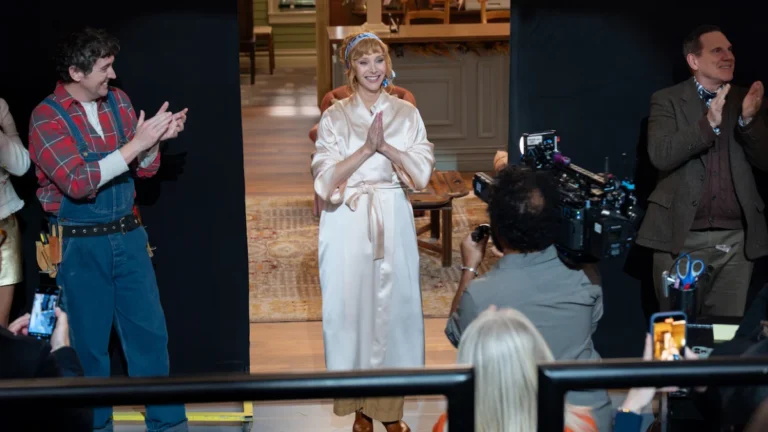
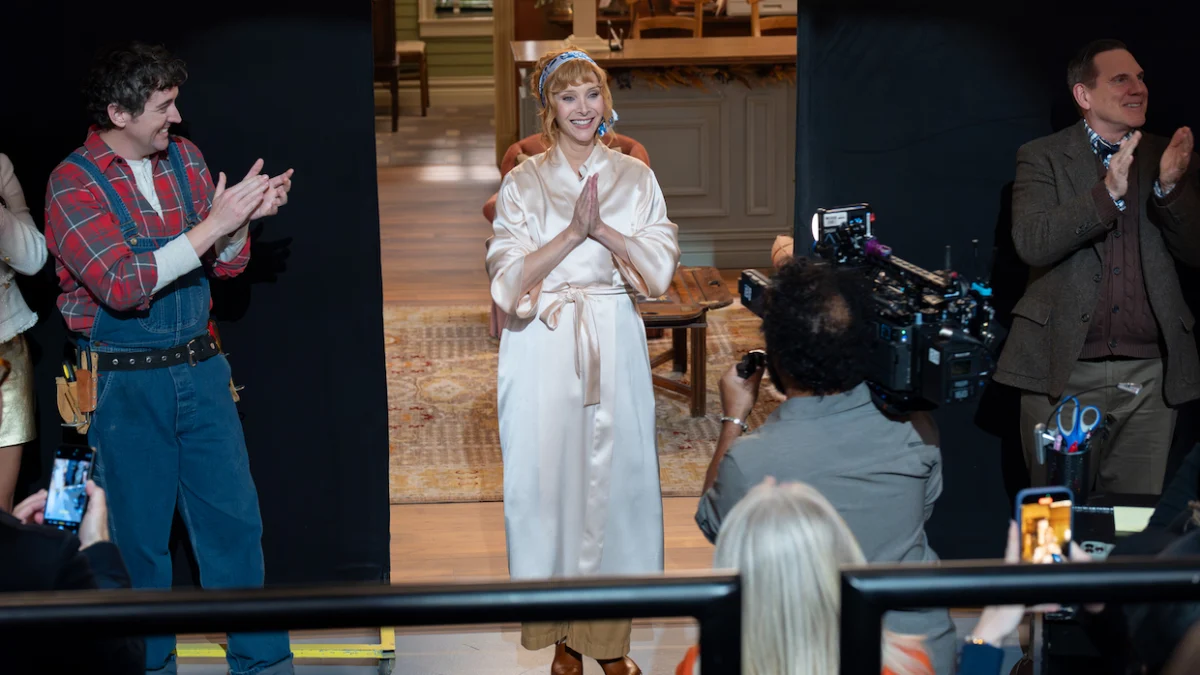
In this third installment, Valerie Cherish is cast in the lead role of a multi-camera sitcom titled How’s That?!, which holds the distinction of being the first production written entirely by an AI system named Allassist. This plotline serves as a direct commentary on the current anxieties regarding automated creativity. As Valerie navigates her role as an executive producer, she is forced to confront the reality that the machine-generated scripts are largely comprised of plagiarized material from her own past work, highlighting the ethical concerns regarding data scraping and intellectual property rights that were central to recent labor negotiations.
Hacks and the Late-Night Entertainment Shift
Simultaneously, the Max original series Hacks, created by Lucia Aniello, Paul W. Downs, and Jen Statsky, has concluded its five-season run by mirroring the collapse of traditional late-night formats. The series follows the professional and platonic relationship between Deborah Vance, a legendary stand-up comic, and Ava Daniels, a Gen-Z writer. After seasons of striving to break the gender barrier in late-night hosting, Deborah Vance’s victory in the fourth season was short-lived. The fifth season explores the aftermath of her departure from the network following a dispute over creative control and the retention of her writing staff.
The timing of the Hacks finale coincides with a broader real-world trend of late-night volatility. The narrative arc, which sees Deborah Vance silenced by a one-year non-compete clause, reflects the rigid contractual environments that have historically restricted high-level talent. The storyline became particularly relevant following the fictionalized—yet timely—cancellation of established late-night staples in the real-world broadcast schedule, illustrating a shift toward cheaper, digital-first content.
The Role of Artificial Intelligence as a Narrative Antagonist
Both series have identified AI as the ultimate "bogeyman" for the creative class, though they approach the threat through different satirical lenses. In Hacks, AI is presented as a tool of venture capital. Deborah Vance is approached by tech investors seeking to license her likeness and comedic voice for a large language model (LLM) called QuikScribbl. This subplot allows the show to address the "inevitability narrative" often promoted by tech firms. Through the character of Ava Daniels, the show argues that AI-generated humor is a derivative product that lacks the human experience necessary for genuine comedy.
In The Comeback, AI is portrayed not as a sophisticated threat, but as a "pathetic joke" that produces stale, predictable content. The AI system, Allassist, generates an overwhelming volume of "alt-lines" (alternative jokes) for the actors, yet most fail to elicit a response from the live studio audience. The series utilizes veteran director James Burrows, playing himself, to deliver the show’s thesis: that comedy requires a "huddle of writers" working through human friction to find something surprising. This distinction—efficiency versus humanity—is the central conflict of Valerie Cherish’s final act.
Supporting Industry Data and Labor Context
The thematic focus of these shows is supported by the data emerging from the 2023 labor strikes. According to the WGA, one of the primary demands during the 148-day strike was the regulation of AI in the writers’ room, specifically prohibiting the use of AI to write or rewrite literary material. Similarly, SAG-AFTRA’s 118-day strike focused on "digital replicas" and the requirement for informed consent and fair compensation when an actor’s likeness is used by AI.
Industry reports from 2024 and 2025 indicate a 15% to 20% reduction in the total volume of scripted original series produced in the United States, a phenomenon often referred to as "Peak TV contraction." This environment of scarcity makes the storylines in The Comeback and Hacks particularly resonant. When Valerie Cherish accepts a role in an AI-written show, it is framed as an act of economic survival for the entire cast and crew, who find themselves with few other options as production budgets are slashed across Hollywood.
Official Responses and Creative Statements
While HBO and Max have maintained a standard promotional stance, the creators of these series have been vocal about the underlying messages. Michael Patrick King has noted in various industry panels that The Comeback has always been about Valerie’s "need to exist" in a world that is constantly trying to delete her. King suggests that AI is the final iteration of that deletion.
The creators of Hacks have echoed similar sentiments, stating that the show is a love letter to the "humanity of the joke." In a recent roundtable, Lucia Aniello emphasized that while technology can mimic the structure of a joke, it cannot replicate the "POV of a woman who has lived seventy years." This sentiment is reflected in the final season’s resolution, which prioritizes the human connection between Deborah and Ava over the financial allure of tech-driven stardom.
Broader Impact and Critical Implications
The conclusion of these two series marks the end of an era for female-led industry satires. Both Valerie Cherish and Deborah Vance represent an "endangered species" of television icons—women who have survived decades of ageism and sexism only to face a new technological threat that views their experience as data points rather than artistry.
The critical reception of these final seasons suggests a shift in how audiences view showbiz satire. While earlier seasons of The Comeback were often viewed as "cringe comedy," the final season is being characterized as a "tragedy-tinged victory" for the human element. Hacks, a consistent Emmy powerhouse with 12 wins, is expected to dominate the upcoming awards cycle, potentially pitting Jean Smart and Lisa Kudrow against one another in the Best Actress in a Comedy Series category.
The broader implication for the television industry is a renewed focus on the value of "human-centric" production. As streamers and networks grapple with the costs of content creation, the success of shows like The Comeback and Hacks serves as a reminder that audience engagement is driven by character and voice—elements that, for now, remain difficult for algorithmic systems to replicate. The "comedy-fueled resistance" depicted in these shows offers a blueprint for how the creative community might navigate an increasingly automated future, suggesting that the most effective weapon against industry collapse is the refusal to be replaced.