


Netflix has officially integrated the award-winning tabletop phenomenon Codenames into its cloud gaming beta, marking a significant milestone in the platform’s ongoing strategy to transition from a pure video streaming service to a comprehensive interactive entertainment hub. The arrival of Codenames Party, developed in partnership with Czech Games Edition, introduces a digital-first experience that leverages Netflix’s cloud infrastructure to transform living room televisions into interactive social gaming consoles. This release represents more than a simple port; it incorporates an exclusive "Party Mode" that redefines the mechanics of the classic word-association title for a digital audience.
The Evolution of Codenames: From Tabletop to Digital
Originally released in 2015 by designer Vlaada Chvátil, Codenames quickly ascended to become one of the most recognizable titles in the modern tabletop hobby. The game’s premise is deceptively simple: two rival spymasters provide one-word clues that point to multiple words on a grid, while their teammates attempt to identify the correct cards while avoiding the "assassin."
For nearly a decade, the game’s success relied on physical components—card decks, grids, and the distinct presence of a spymaster overseeing the board. The transition to the Netflix platform required a technical adaptation that maintains the social tension of the original while utilizing the convenience of the cloud. By shifting to a browser-based and Smart TV-integrated format, Netflix eliminates the need for physical setup, allowing users to initiate a game session with minimal latency.
Chronology of the Netflix Gaming Initiative
The launch of Codenames Party is the latest chapter in a broader, multi-year rollout of Netflix’s gaming ambitions. Since the company first pivoted toward interactive media in late 2021, the progression has been steady and deliberate:
- November 2021: Netflix launches its initial library of mobile-exclusive games, available only via the Android and iOS apps.
- August 2023: The company begins a limited rollout of its cloud gaming beta, testing the ability to play games directly on TVs and web browsers without the need for high-end hardware.
- Late 2025: Netflix begins a strategic shift to include more social, multiplayer, and party-oriented titles to encourage living-room engagement.
- September 2026: The official launch of Codenames Party, introducing the novel "One-Against-All" mechanic.
This trajectory reflects a shift from single-player mobile experiences to high-concurrency, social-focused games that align with Netflix’s primary mission of providing communal home entertainment.
Mechanics of the New Digital Experience
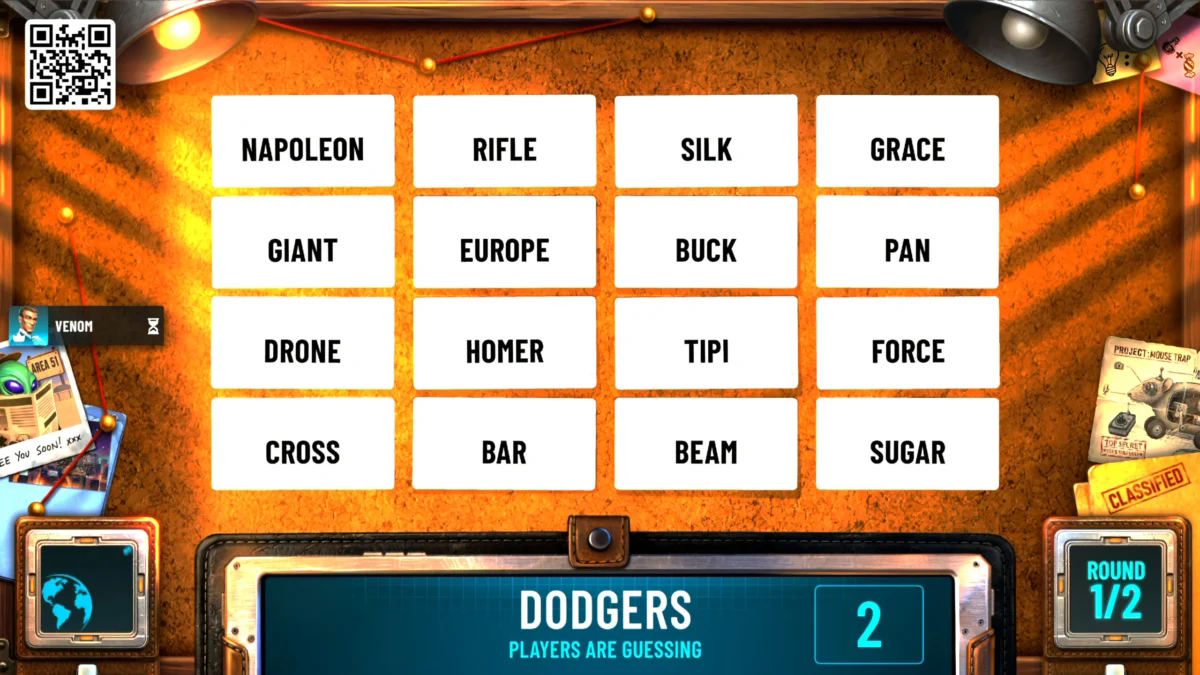
The Netflix iteration of Codenames offers three distinct modes, each designed to cater to different group dynamics. The marquee feature is the new "Party Mode," which moves away from the traditional two-team setup. In this mode, players navigate a 16-word grid where every participant functions as both a spymaster and a guesser simultaneously. This design choice addresses a common criticism of digital party games: the "downtime" experienced by passive players. By forcing every participant to engage with the grid at all times, the game maintains a faster, more energetic pace suitable for modern digital audiences.
Beyond the new mode, the game includes:
- Classic Team Mode: The traditional competitive format, scaled for digital play.
- Case Studies Mode: A cooperative puzzle-solving mode that utilizes pre-set word combinations and clue sequences, ideal for players looking for a more structured, low-pressure experience.
A unique feature of this implementation is the "smartphone-as-controller" system. By scanning a QR code displayed on the television screen, players sync their personal mobile devices to the cloud session. This architecture mimics the success of platforms like Jackbox Games, which have long dominated the living room party space by removing the barrier of complex input controllers. The current iteration allows for up to 10 players, a capacity limit that puts it on par with other high-traffic social titles currently available on the service, such as Pictionary.
Strategic Implications and Market Context
The integration of Codenames into the Netflix ecosystem provides a window into the company’s broader strategy. By securing intellectual property (IP) from established board game developers, Netflix is effectively bypassing the long-term struggle of building new gaming franchises from scratch. Instead, it is leveraging the existing brand recognition of titles like Codenames to attract a demographic that may be hesitant to invest in dedicated gaming consoles like a PlayStation or Xbox.
Industry analysts observe that Netflix’s cloud gaming strategy is not intended to compete directly with high-fidelity "AAA" gaming consoles. Rather, it is designed to increase "stickiness" within the Netflix app. If a user concludes a movie or series and remains within the ecosystem to play a round of Codenames, the platform successfully captures more of the user’s leisure time.
Furthermore, the data collected from these sessions is invaluable. Understanding how users interact with social games informs future content development, potentially influencing the types of interactive stories or "choose-your-own-adventure" features the company might produce for its video library.
Global Accessibility and Technical Requirements
While the launch of Codenames Party is a global initiative, it remains subject to the limitations of the current cloud gaming beta. The feature is not yet available in every territory where Netflix operates. As of the current release, access is restricted to 20 countries: Australia, Austria, Belgium, Brazil, Canada, Finland, France, Germany, Ireland, Italy, Mexico, the Netherlands, New Zealand, Poland, South Africa, Spain, Sweden, Switzerland, the United Kingdom, and the United States.
This geographic gating is a standard industry practice for cloud-based services, as it allows companies to manage server loads and latency issues before a full global rollout. The technical requirement for users is relatively modest—a stable high-speed internet connection and a compatible device (such as a supported Smart TV, streaming stick, or web browser).
Future Outlook: The Intersection of Horror and Play
The addition of Codenames Party is only the beginning of a busy quarter for Netflix’s gaming division. The company has already confirmed that it intends to diversify its genre offerings, with the upcoming release of a cloud-based game adaptation of The Conjuring scheduled for late October. This move signals a push to align gaming releases with seasonal cultural moments—in this case, the Halloween season.
By alternating between accessible, lighthearted party games like Codenames and more thematic, genre-specific titles like The Conjuring, Netflix is constructing a diverse portfolio that mirrors its film and television strategy. For the gaming industry, this represents a significant shift in how interactive media is distributed. As Netflix continues to refine its cloud technology, the line between passive viewing and active participation continues to blur.
While questions remain regarding the long-term profitability of cloud gaming compared to traditional subscription-based media, the integration of established, high-quality board games suggests a path forward that emphasizes social utility and low-friction access. For now, the millions of existing Netflix subscribers have gained a new, interactive layer to their entertainment experience, one that turns the familiar act of gathering around a screen into a competitive, collaborative, and entirely digital affair. As the beta matures, the industry will be watching closely to see if this hybrid model can scale effectively to meet the demands of a global audience.