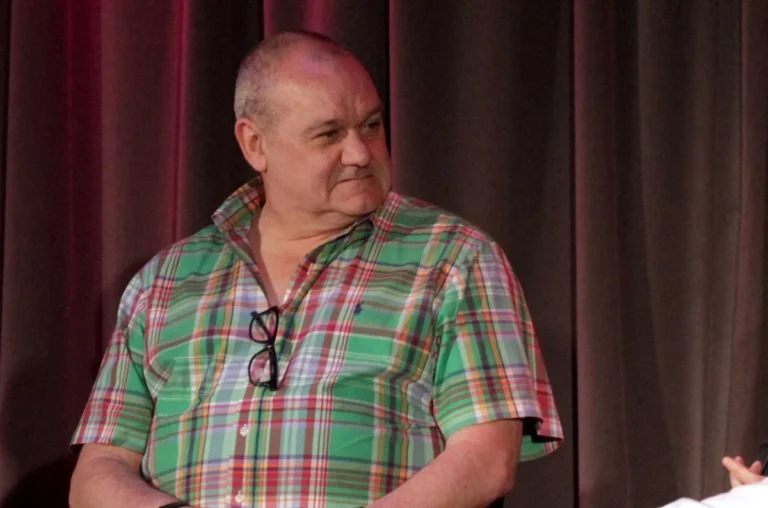




The contemporary music industry is undergoing a structural transformation as power dynamics pivot away from traditional gatekeepers and toward direct-to-consumer engagement, independence, and technological innovation. Speaking at the Amsterdam Dance Event (ADE) 2026, Cliff Fluet, co-head of media and entertainment at U.K. law firm Lewis Silkin LLP, delivered a keynote presentation that reframed decades of digital disruption. Fluet utilized the 19th anniversary of Radiohead’s landmark release of In Rainbows to illustrate that the fundamental evolution of the music business has never been about pricing models or the commodification of sound itself, but rather about who controls the direct relationship with the consumer.
Addressing a packed auditorium of industry professionals during the ADE Pro track on Friday, October 23, Fluet’s presentation—aptly titled “The State Of Things With Cliff Fluet”—navigated a complex matrix of emerging technologies, artificial intelligence, catalog acquisitions, and corporate mega-deals. The session stood as a centerpiece of ADE Pro’s expansive 2026 programming, which encompassed 148 panels, 25 mixers, and a total of 188 professional development sessions, drawing global executives, artists, legal experts, and entrepreneurs to the Dutch capital.
Main Facts and Historical Context
To understand the trajectory of the modern music business, Fluet argued that industry stakeholders must reevaluate historical turning points. Nineteen years prior, in October 2007, British alternative rock band Radiohead launched its seventh studio album, In Rainbows, allowing fans to download the record online for any price they chose, including zero.
At the time, the recorded music sector was in a state of freefall. Rampant digital piracy fueled by peer-to-peer file-sharing networks like Napster and Limewire had devastated physical compact disc sales. Major record labels were struggling to adapt to a digital marketplace, and many analysts interpreted Radiohead’s "pay-what-you-want" strategy as a capitulation—an admission that recorded music had lost its intrinsic economic value. The prevailing narrative suggested that artists would increasingly be forced to give away their intellectual property for free simply to remain viable in a digitized landscape.
However, Fluet challenged this long-standing interpretation during his ADE address. "The question was never really about price or value," Fluet stated to the audience. "It was about who owns the relationship with the fan."
According to Fluet, Radiohead’s strategic maneuver was not an experiment in philanthropy or a commentary on the worth of art, but rather an early masterclass in audience engagement, disintermediation, and artistic independence. By bypassing traditional distribution channels and connecting directly with their fanbase, the band retained control over their data, their community, and their economic destiny. Nearly two decades later, this principle of going direct has evolved from an avant-garde experiment into the foundational strategy governing the most successful segments of the global music economy.
Chronology of Digital Disruption and Industry Evolution
The nearly twenty-year gap between the release of In Rainbows and the 2026 Amsterdam Dance Event has been marked by seismic shifts in how music is consumed, monetized, and regulated. Tracing this chronology reveals how the locus of power has systematically shifted across different players in the ecosystem:
- The Late 1990s to Mid-2000s (The Piracy Crisis): Unregulated file-sharing decimate physical revenues. Major labels hemorrhage cash while struggling to build functional digital storefronts. Artists remain heavily dependent on traditional record deals.
- The Late 2000s (The Rise of Direct-to-Consumer): Landmark releases like In Rainbows and the proliferation of early social media platforms (MySpace, Facebook) enable artists to experiment with direct outreach. Simultaneously, the launch of legal streaming platforms begins to establish a new economic baseline.
- The 2010s (The Streaming Boom): Subscription-based streaming services—led by Spotify, Apple Music, and others—standardize access over ownership. Recorded music revenues return to growth, but power concentrates heavily among major streaming platforms and the "Big Three" major record labels (Universal Music Group, Sony Music Entertainment, and Warner Music Group), who control massive master recording catalogs.
- The Early 2020s (The Catalog Acquisition Gold Rush): Investors pour billions of dollars into buying publishing and master rights, treating music catalogs as uncorrelated, high-yielding asset classes. Independent artists increasingly utilize digital service providers (DSPs) and distribution platforms (such as TuneCore, DistroKid, and Believe) to maintain ownership of their rights while leveraging algorithmic discovery.
- The Mid-2020s (AI Integration and Decentralized Power): As artificial intelligence reshapes content creation, copyright law, and royalty distribution, power dynamics shift once more. Artists, independent labels, and tech-savvy creators focus intently on proprietary fan data, Web3 utilities, direct-to-fan platforms, and experiential economies like live touring and immersive electronic music festivals.
Supporting Data and Market Dynamics
The discussions at ADE 2026 unfolded against a backdrop of complex global market data. According to recent reports from the International Federation of the Phonographic Industry (IFPI) and independent market analysts, global recorded music revenues have experienced nearly a decade of continuous growth, driven almost exclusively by paid streaming subscriptions. Streaming now accounts for the vast majority of recorded music revenue worldwide, with hundreds of millions of paying subscribers globally.

However, beneath the headline revenue growth figures lies a persistent structural tension regarding margin distribution and market access. While streaming services provide global reach, the average payout per stream remains a subject of intense economic debate among independent artists and creators. This economic reality has fueled the exact phenomenon Fluet highlighted: an aggressive push by artists and independent management teams to capture alternative revenue streams—such as merchandise, direct-to-consumer ticketing, exclusive digital communities, and brand partnerships—that do not rely entirely on DSP royalty splits.
Furthermore, the live music sector—crucial to the demographic attending the Amsterdam Dance Event—has rebounded forcefully from historical disruptions, frequently outpacing pre-pandemic revenue peaks. Festivals, club nights, and live electronic music events have become primary engines of cultural capital and fan monetization, reinforcing the idea that physical presence and immersive community engagement are assets that cannot be easily replicated or pirated.
Official Responses and Industry Perspectives
Legal analysts, artist managers, and technology executives attending ADE Pro weighed in on Fluet’s assertions, pointing to the broader legal and commercial implications of the modern music business.
Industry observers noted that as artificial intelligence tools become more sophisticated, the legal frameworks governing copyright, likeness, and data ownership are facing unprecedented stress tests. Law firms like Lewis Silkin have found themselves at the forefront of drafting new contractual standards to protect artists from unauthorized voice cloning and generative AI training models that ingest copyrighted audio without authorization or compensation.
"Cliff’s analysis hits the nail on the head regarding data sovereignty," noted one prominent U.K.-based artist manager who attended the ADE Pro session. "For a long time, the digital transition meant we traded physical middlemen for digital middlemen. The platforms owned the data, the algorithms dictated who heard what, and the artist was kept at arm’s length from the ultimate consumer. The next frontier—whether through direct ticketing, community platforms, or Web3 integrations—is entirely about reclaiming that direct line of communication."
Major label representatives and streaming executives have similarly argued that while direct-to-consumer independence is viable for legacy acts and top-tier superstars, the infrastructure provided by major labels and global distributors remains essential for artist development, international marketing, and complex playlist pitching. Nevertheless, even traditional players have rapidly scaled up their direct-to-fan marketing divisions, acknowledging that brand loyalty is increasingly driven by community interaction rather than passive passive listening.
Broader Impact and Future Implications
The long-term implications of Cliff Fluet’s insights at ADE 2026 extend far beyond the electronic music community. As the industry looks toward the remainder of the decade, several key imperatives are emerging for stakeholders across the board:
- Data Ownership as Currency: Artists and independent labels are realizing that owning the direct contact information and behavioral data of their audience is infinitely more valuable than relying on third-party algorithmic feeds. Direct-to-fan databases allow creators to weather platform policy changes and shifts in recommendation algorithms.
- Navigating the AI Landscape: As artificial intelligence continues to disrupt composition, production, and distribution, regulatory clarity and robust intellectual property protection will dictate whether technology empowers creators or exploits them. Legal experts emphasize the urgent need for transparent licensing frameworks that compensate human artists fairly.
- The Convergence of Live and Digital: Electronic music culture has historically thrived on physical spaces—clubs, warehouses, and festivals. The future belongs to those who can seamlessly bridge live experiential moments with robust digital communities, ensuring that fan engagement persists long after the festival gates close.
- Redefining Value Chains: The ongoing evolution of catalog acquisitions, publishing rights, and independent distribution models demonstrates that power will continuously flow to those who control scarcity and authentic connection. As consumers are inundated with infinite choices via streaming algorithms, genuine community and direct artist-fan intimacy represent the ultimate competitive advantages.
Ultimately, Fluet’s retrospective on Radiohead’s 2007 experiment served as a timely reminder to the global music community gathered in Amsterdam: technology will continue to change, distribution models will inevitably fracture and reform, and legal frameworks will strain under the weight of innovation. Yet, the foundational currency of the music business remains unchanged. Power does not belong to the format, the algorithm, or the intermediary—it belongs to whoever holds the relationship with the fan.