


Night Nurse (2026), the provocative psychological drama directed by Georgia Bernstein, is scheduled to expand to a nationwide theatrical release on July 10 via IFC Films, following its breakout debut in the NEXT competition section at the Sundance Film Festival. Distinguished from the more conventional offerings typical of major festival circuits, the film has drawn attention for its cerebral psychosexuality, unsettling power dynamics, and atmospheric subversion. The production represents a significant milestone for Bernstein, transitioning from her background as a producer on indie features in Chicago to a distinct directorial voice on the national stage.
Narrative Premise and Character Dynamics
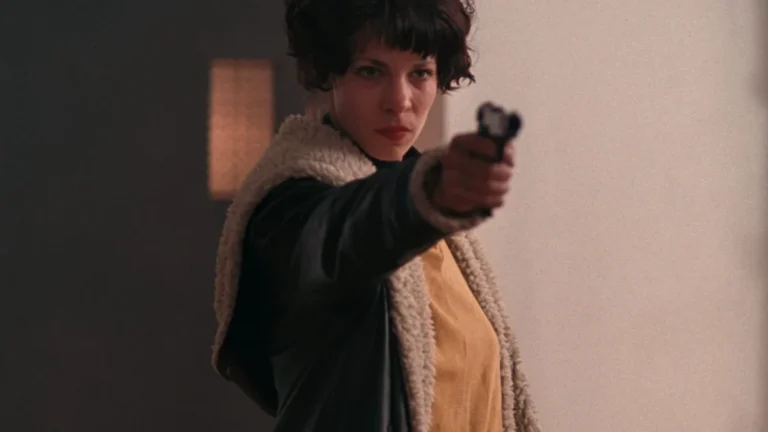
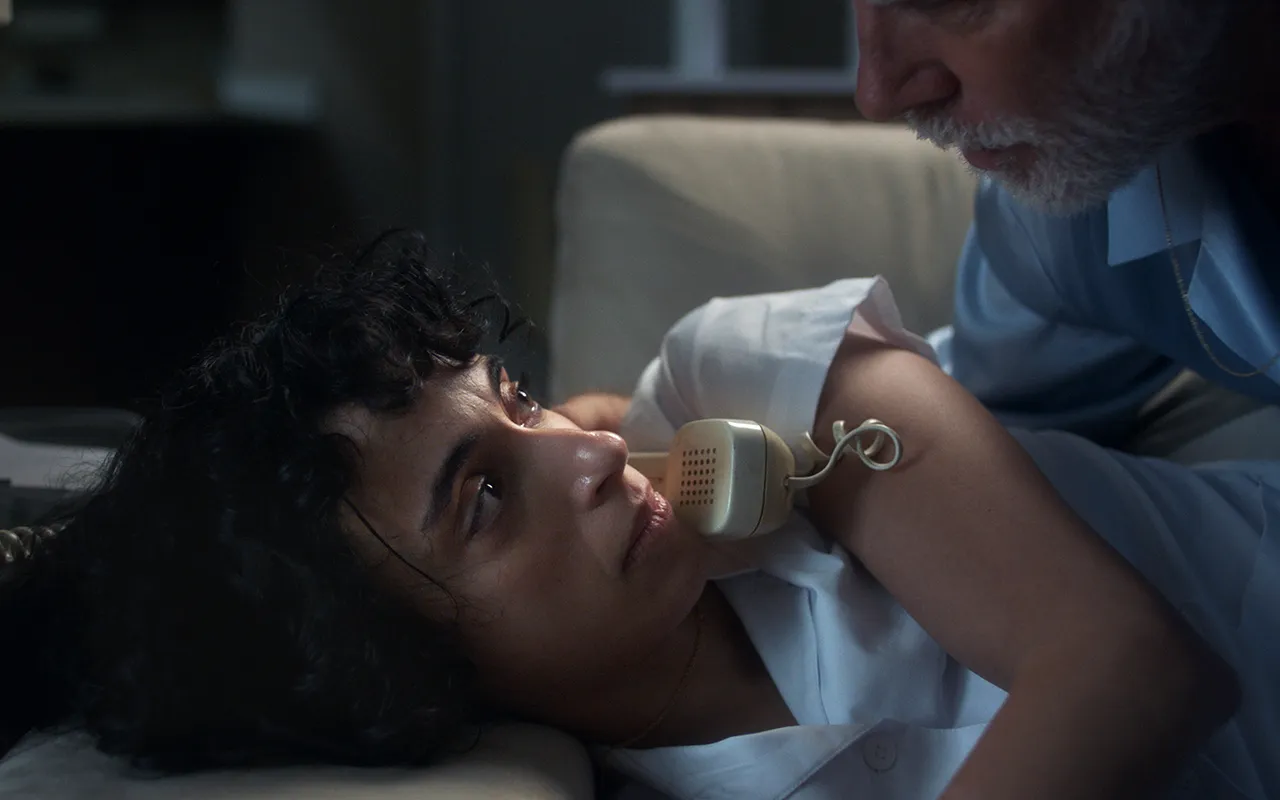
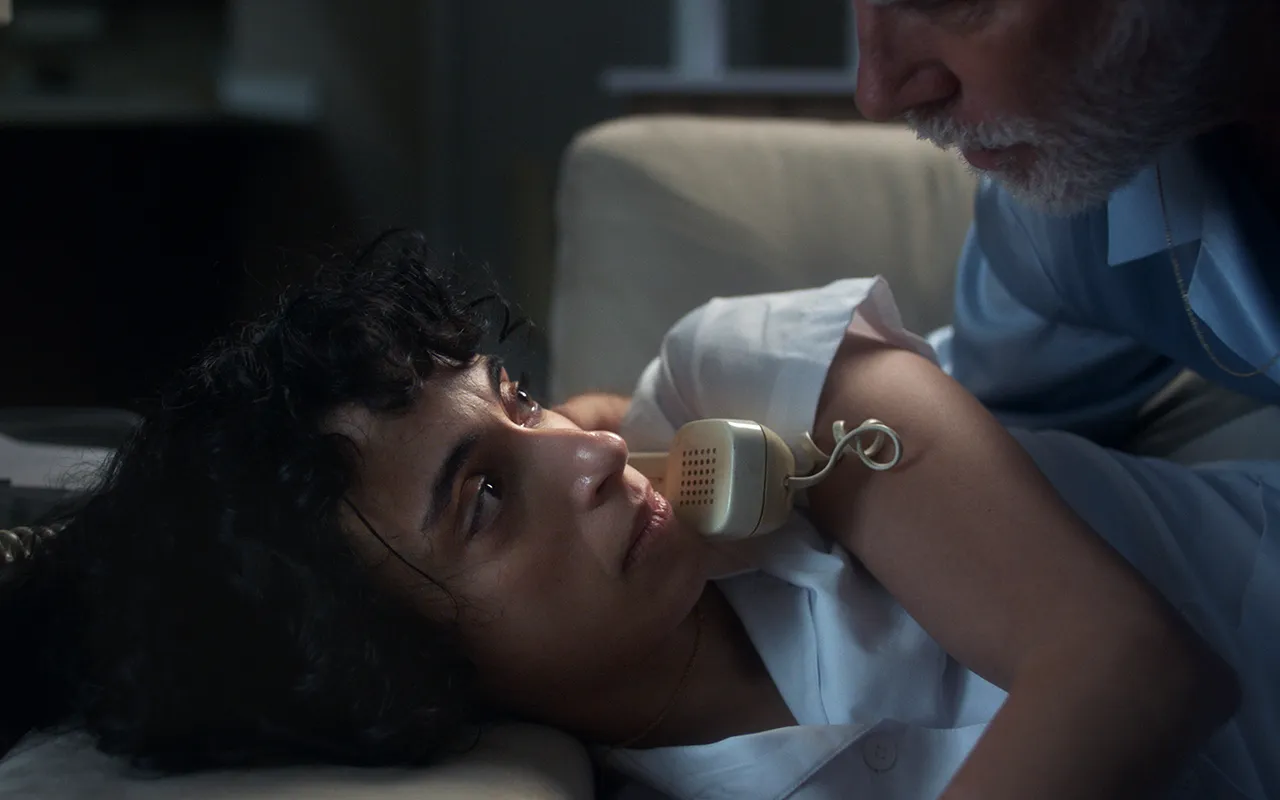
The narrative follows Eleni, played by Cemre Paksoy, a newly hired night-shift nurse working within the memory-care unit of a stagnant retirement community. During her nocturnal rounds, Eleni becomes acquainted with Douglas, a resident evaluated for early-onset Alzheimer’s disease, portrayed by Bruce McKenzie. Rather than maintaining professional boundaries, Eleni is drawn into Douglas’s orbit, eventually becoming his accomplice in an elaborate confidence game.
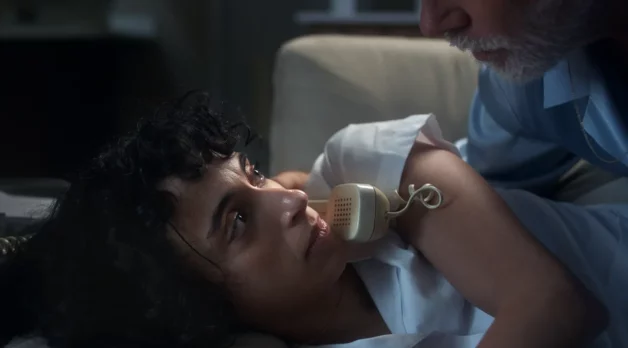
The two individuals execute phone scams targeting other elderly victims, posing as distressed grandchildren in urgent need of immediate financial assistance. Beyond the monetary acquisition, the illicit enterprise generates a distinct psychological and physical thrill for both perpetrators. Bernstein’s camera lingers on these transactions, utilizing prolonged takes that deliberately obscure Eleni’s immediate facial expressions, forcing the audience to process the shifting power balance within the room.
Central to the film’s thematic exploration is the fundamental human impulse for validation and utility. Dialogue within the screenplay highlights the intoxicating nature of being relied upon, even when channeled toward destructive ends. Characters rationalize their predatory behavior through the lens of providing purpose and revitalization to individuals who otherwise exist in a state of cognitive and emotional numbness. This moral ambiguity forms the backbone of the narrative, resisting easy categorization or conventional cinematic resolutions.
Production Chronology and Collaborative Genesis
The realization of Night Nurse followed a deliberate, community-driven production timeline rooted in the Chicago independent film ecosystem. Bernstein previously established her reputation as a producer, collaborating with director Alex Phillips on features such as All Jacked Up and Full of Worms (2022) and Anything That Moves (2025). Following the completion of the latter project, Bernstein formalized a unique incubator framework for her directorial debut.
In collaboration with Chicago-based producers Eddie Linker, Liane Cunje, and Veronica Barbosa, Bernstein utilized the screenplay for Night Nurse as the foundational syllabus for a practical production class taught at Northwestern University. This academic-industrial hybrid model served as the preproduction phase for the film. Over the course of a quarter, students were instructed in the mechanics of independent filmmaking, including the establishment of limited liability corporations, budget formulation, and the procurement of state film tax credits. By the conclusion of the academic term, the essential administrative and logistical groundwork for the feature had been successfully established.
Principal photography was executed with a high degree of resourcefulness, relying heavily on localized environments and practical spatial design. Bernstein elected to shoot the vast majority of the feature inside her grandmother’s residential home. The screenplay was meticulously tailored to the architectural layout of the house, capitalizing on its distinct mid-century aesthetic, including period-specific wallpaper and vintage interior markers. This creative constraint imbued the film with a disorienting, out-of-time quality, deliberately omitting modern technology like smartphones in favor of rotary landlines and outdated currency to amplify the sense of temporal suspension.
Cinematic Influences and Technical Execution
Aesthetic choices on set reflected a rigorous commitment to specific art-house lineages. Bernstein and cinematographer Lidia Nikonova drew inspiration from the clinical, gray-toned urban alienation found in David Cronenberg’s Crash (1996) and Atom Egoyan’s Exotica (1994) and The Adjuster (1991), while integrating the humid, atmospheric fluidity characteristic of Lucrecia Martel’s filmmaking.
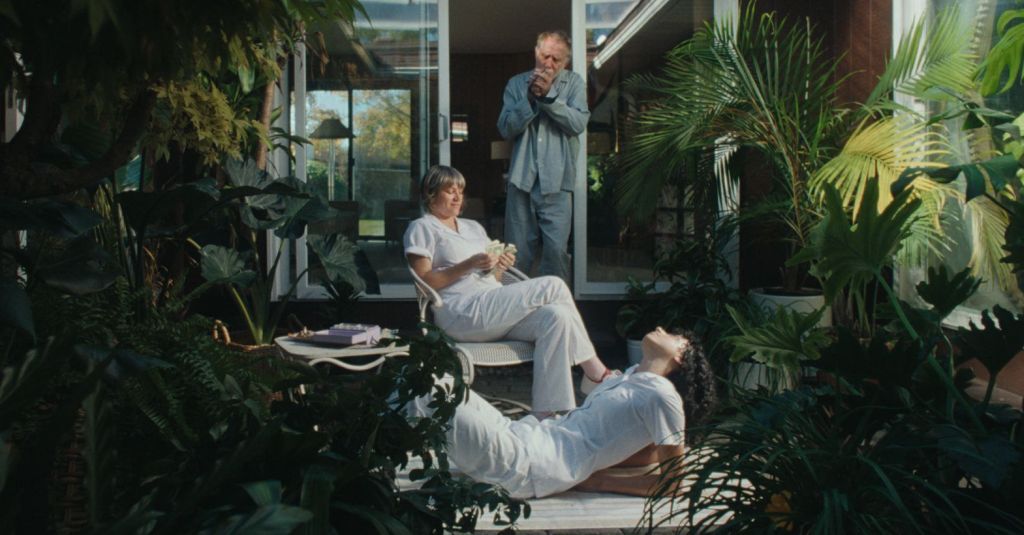
Rather than employing a handheld camera or a stabilizing Steadicam rig—which were deemed too light for the desired visual weight—the production relied primarily on traditional dolly tracks. The deliberate, mechanical pacing of the camera moving slowly through confined residential hallways established a deliberate rhythm that mirrored the lethargic, repetitive routine of the retirement community residents. This pacing extended directly into the physical performances, with actors executing choreography designed to evoke a dreamlike, sluggish momentum.
Casting decisions further solidified the film’s distinct texture. While every supporting role—including performances by Éléonore Hendricks and Colleen Rose Trundy—was written specifically with known collaborators and local performance artists in mind, the role of Douglas underwent a traditional casting process. Bernstein initially envisioned the character through the archetype of mid-century cinematic icons like Humphrey Bogart. Bruce McKenzie ultimately secured the part, bringing an unexpected interpretive weight that reshaped the dynamic between the two leads.
Musical Score and Auditory Design
The auditory landscape of Night Nurse was constructed by composers Steven B. Jackson and Samm Clapp, continuing a creative partnership forged on Bernstein’s earlier producing ventures. The score was developed through an artisanal, collaborative methodology reminiscent of traditional filmmaking practices. Jackson and Clapp assembled an ensemble of musicians—incorporating atypical instrumentation such as flutes and violins alongside piano—who frequently performed the score live-to-picture.
Drawing direct inspiration from David Shire’s score for Francis Ford Coppola’s The Conversation (1974), the musical arrangement relies on a central, recurring theme. This leitmotif was designed to sonic-ally reinforce the narrative motif of characters cycling endlessly through stagnant routines, preventing the audience from finding narrative or emotional release. Portions of the score were improvised in response to established melodies, creating a dynamic interplay between the fixed visual tracking shots and the flowing musical accompaniment.
Industry Implications and Distribution Strategy
The acquisition of Night Nurse by IFC Films for a wide theatrical release on July 10 marks a notable distribution milestone for independent psychological dramas emerging from regional production hubs. Industry analysts note that films operating outside major studio infrastructure increasingly rely on distinct aesthetic identities and robust festival positioning to capture audience interest in a crowded marketplace.
By grounding a transgressive narrative within the pragmatic constraints of a family home and leveraging localized academic-production partnerships, the creative team behind Night Nurse successfully executed a feature-length production without the backing of traditional major financing models. As the film transitions to commercial exhibition, its reception will likely serve as a case study for alternative financing, institutional preproduction incubation, and the viability of uncompromising, morally complex auteur cinema within the contemporary distribution landscape.