


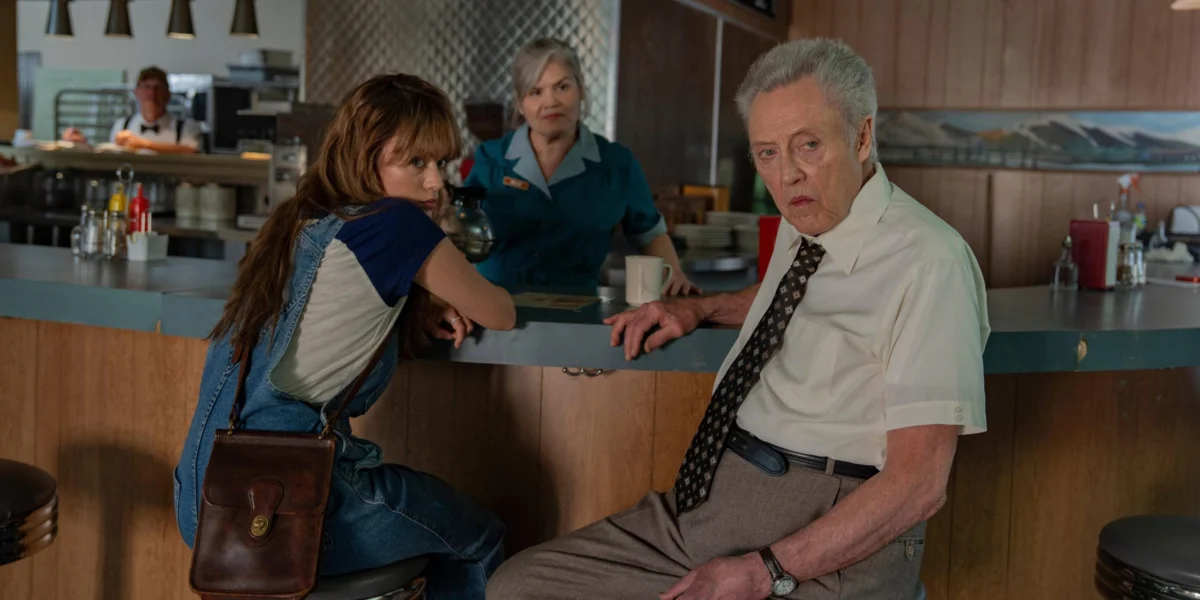
The intersection of morbid necessity and economic insolvency serves as the thematic bedrock for the feature film Back in Black, directed by Ron Murphy and co-written with Nick Torokvei. The 92-minute Canadian production explores the unsettling trajectory of a struggling funeral home patriarch and his granddaughter as they navigate a community where improved safety standards and health-conscious living have led to a precipitous decline in local mortality rates. Set against the backdrop of a generic, small-town landscape, the narrative functions as both a black comedy and a sociological critique of the funeral services sector in the modern era.
The Premise: Economic Stagnation in the Death Care Industry
At the center of the narrative is Clyde Mortimer, portrayed by Christopher Walken, a mortician whose livelihood is inextricably linked to the demographic reality of his town. The film establishes that in a wellness-oriented society, the traditional funeral home model faces a crisis of supply. With the advent of modern seatbelt legislation, advanced medical technology, and pervasive health awareness, the naturally occurring death rate has dropped to levels that render Mortimer’s business model unsustainable.
This fictional scenario mirrors real-world economic pressures faced by small-scale, independent funeral homes. According to data from the National Funeral Directors Association (NFDA), the industry has undergone significant consolidation over the past two decades. As consumer preferences shift toward cremation—which is generally less expensive and more portable than traditional casket interments—the profit margins for traditional mortuaries have faced sustained downward pressure. In the film, Clyde Mortimer represents the aging proprietor who finds himself unable to pivot to these new market realities, leading to the brink of bankruptcy.
Chronology of the Narrative Arc
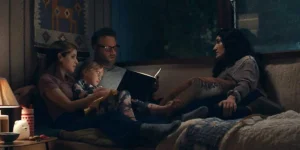
The film unfolds through a series of escalating moral compromises. The narrative begins with the establishment of the Mortimer funeral home’s precarious financial status. Clyde’s complaints, overheard by his granddaughter Sam (Ella Ballentine), provide the catalyst for the story’s primary action.
- Phase I: The Realization of Insolvency. Clyde and his wife (Jane Curtin) discuss the mounting debts. The audience is introduced to a town where the citizenry is described as "tight-pursed," highlighting a lack of community investment in traditional funeral services.
- Phase II: The Intervention. Sam, observing the distress of her elders, initiates a clandestine plan to generate business. Her first target is an abrasive local shop manager. The act of sabotage is framed as a pragmatic, albeit macabre, solution to an economic problem.
- Phase III: Escalation. The initial "solution" fails to yield the expected financial windfall, as the townspeople remain unwilling to spend on elaborate services. This realization drives Sam to expand her operations, shifting from sporadic interference to a more systematic approach to increasing the local mortality rate.
- Phase IV: The Climax. The film culminates in a heightened state of mayhem, as the moral threshold of the protagonists is tested against the consequences of their actions.
Character Dynamics and Performance Analysis
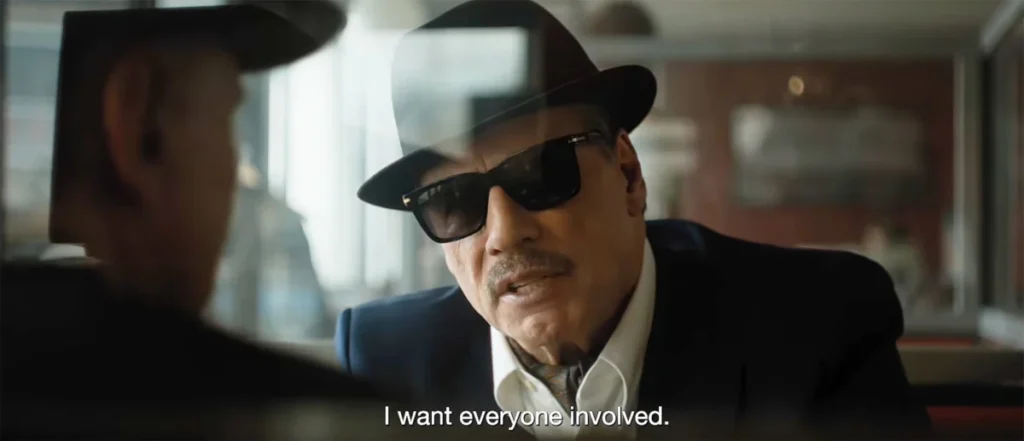
The production features a cast that includes Ella Ballentine, Jane Curtin, Cooper Levy, Deborah Grover, Tony Nappo, Stuart Hughes, Watson Rose, and Josh Richards. Christopher Walken’s portrayal of Clyde Mortimer serves as the film’s primary anchor. His performance is noted for its sardonic delivery and physical presence, which provide the necessary gravity to keep the film’s increasingly absurd premise grounded in a semblance of reality.
Ballentine, as Sam, assumes a role that contrasts with the outward volatility of the town’s circumstances. Her performance is characterized by an observant, quiet intensity. While the screenplay utilizes her character to drive the plot’s more chilling developments, the characterization remains internal, often relying on non-verbal cues to convey the weight of her moral descent. The interaction between the aging patriarch and the youthful, disillusioned granddaughter provides a commentary on generational shifts in ethical standards, even if the film does not fully explore the psychological foundations of Sam’s sociopathic tendencies.
Production Context: The Canadian Independent Film Landscape
Back in Black is a product of the Canadian independent film scene, with production centered in the Niagara Falls region. The choice of location contributes to the film’s "episodic" and somewhat sterile aesthetic. The reliance on generic storefronts and motels reinforces the thematic isolation of the characters.
Director Ron Murphy, known for his work on the long-running television series Trailer Park Boys, brings a specific directorial style to this project. His background in satirical television is evident in the pacing and the deliberate choice to frame morbid events through a comedic lens. The film’s development involved balancing the dark, often visceral subject matter with the requirements of a mainstream satirical tone, a task that required precise tonal management by the screenwriting team.
Economic and Sociological Implications
While the film operates within the realm of satire, it touches upon genuine anxieties regarding the funeral industry. The "death care" sector is a multi-billion dollar industry that has been historically resistant to economic downturns; however, it is not immune to shifts in cultural attitudes toward death and dying.
The film’s central conceit—that murder could be a "service" to the funeral industry—serves as an extreme, hyperbolic critique of the profit motive. It forces the audience to consider the ethics of an industry that relies on loss for its existence. By positioning the mortician as a man who is actively wishing for the demise of his neighbors, Murphy and Torokvei utilize irony to comment on the inherent conflict between human empathy and corporate survival.
Critical Reception and Comparative Analysis
In the context of the international film festival circuit, Back in Black occupies a space alongside other satirical works that explore the "dark comedy of errors" subgenre. When placed in contrast with global counterparts, some critics have noted that the film’s reach occasionally exceeds its grasp. The transition into a heightened, more chaotic third act has been a point of contention, with some suggesting that the film struggles to justify its descent into total mayhem.
However, the film succeeds in its ability to maintain a consistent level of schadenfreude. By depicting the townspeople as caricatures of indifference and frugality, the filmmakers justify the characters’ turn toward crime within the internal logic of the narrative. The film does not aim for profound philosophical depth; rather, it seeks to entertain through the juxtaposition of the mundane and the monstrous.
Broader Impact and Industry Perspectives
The film serves as a case study for the challenges of independent dark comedy production. Without the budget for large-scale set pieces or complex world-building, the film relies on the charisma of its lead actor and the strength of its premise. This "small-town" focus is both a limitation and an asset; it forces the audience to focus on the interpersonal relationships and the claustrophobic nature of the community, which in turn amplifies the impact of the central crime.
From a production standpoint, the collaboration between Murphy and Torokvei highlights the importance of script consistency in satirical filmmaking. The ability to "skate the line" between the preposterous and the believable is the primary hurdle for any film in this genre. While the film may not reach the heights of global satirical masterpieces, it provides a functional exploration of a niche premise.
Conclusion
Back in Black remains a notable entry in the catalogue of Canadian dark comedies. Its strength lies in its committed performances, particularly by Christopher Walken, and its willingness to confront the uncomfortable realities of a service industry built upon the inevitable end of life. While the film may exhibit an episodic structure and a certain lack of depth in its peripheral characters, it succeeds in providing a cohesive, albeit cynical, look at the extremes of human desperation.
For audiences interested in the intersection of dark humor and social satire, the film offers a perspective that is both entertaining and, at times, provocatively unsettling. Its legacy within the broader cinematic landscape will likely be defined by its ability to elicit laughter from the darkest of subjects, serving as a reminder that even in the business of death, the pursuit of financial stability remains a powerful, if often dangerous, motivator. As the industry continues to evolve, the themes explored in this 92-minute feature—the tension between economic survival and moral integrity—remain as relevant as ever.