
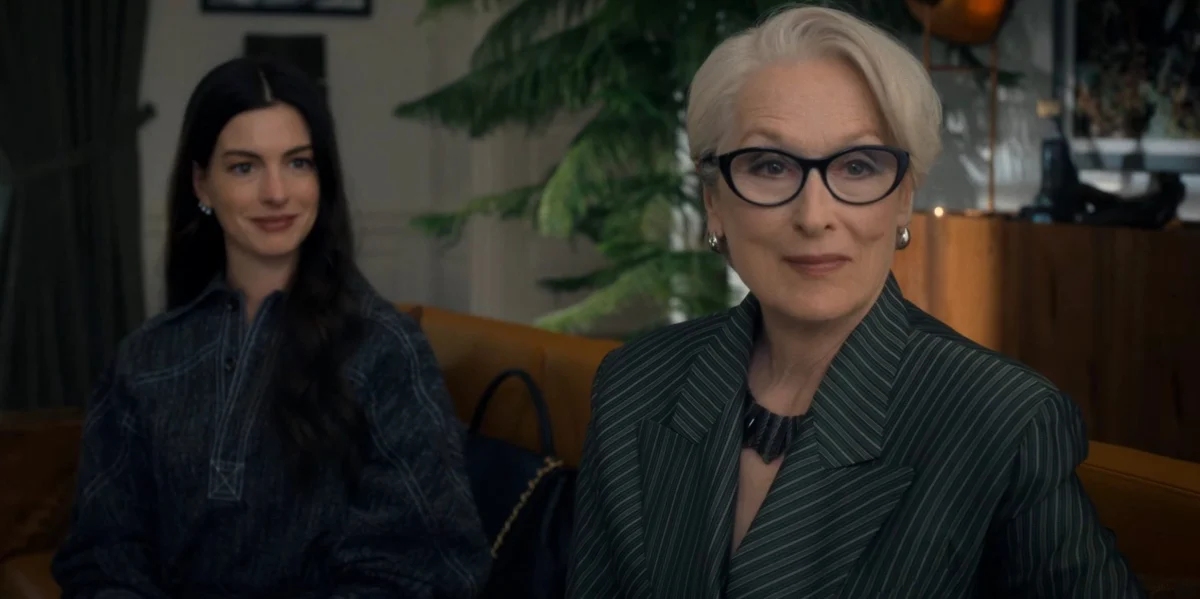
Twenty years after its initial release, the cinematic phenomenon "The Devil Wears Prada" continues to resonate, not only as a commercial triumph of mid-2000s storytelling but as a cultural touchstone that redefined perceptions of the fashion industry and cemented Meryl Streep’s iconic portrayal of Miranda Priestly. Based on Lauren Weisberger’s thinly veiled account of her experiences at Vogue under Anna Wintour, the 2006 film garnered critical acclaim, multiple Oscar nominations, and a revitalized career for Streep. Aline Brosh McKenna’s sharp screenplay, brimming with quotable dialogue that has since entered the cultural lexicon, provided audiences with an unprecedented glimpse into the high-stakes world of fashion publishing.
Now, in what many have deemed an inevitable evolution, the team behind the original, director David Frankel and writer Aline Brosh McKenna, have reunited for "The Devil Wears Prada 2." This sequel, boasting an expanded scope and an even more formidable array of fashion world cameos, both human and sartorial, aims to capture the magic of its predecessor while navigating the dramatically altered media landscape of the 2020s. While it may not possess the pristine construction or the lean efficiency of the original, this legacy sequel justifies its existence by extending its narrative beyond the confines of a single fashion magazine to encompass the broader challenges facing print journalism, delving into more mature emotional themes that reflect the passage of time and the evolution of its characters.
A New Era for Runway Magazine
The film opens with a deliberate echo of the original, depicting Andrea Sachs (Anne Hathaway) in a moment of personal routine – brushing her teeth before the day begins. However, the absence of KT Tunstall’s "Suddenly I See" signifies a profound shift. The Andy Sachs of this sequel is no longer the aspiring journalist in need of an anthem of becoming; she has ascended to the ranks of an established, award-winning journalist with a prominent New York newspaper. Her journey, however, takes an unexpected turn when, immediately prior to accepting an industry award, she and her entire table of colleagues are unceremoniously fired via text message. This abrupt dismissal becomes a catalyst, prompting Andy to take a public stand during her acceptance speech. This bold act of defiance captures the attention of Elias-Clarke CEO Irv Ravitz (Tibor Feldman).
The media conglomerate finds itself in a precarious position. Runway Magazine, a flagship publication, has come under intense scrutiny following a positive feature on a fast-fashion company that was subsequently exposed for egregious labor practices in its supply chain. In an effort to salvage the magazine’s reputation and address the fallout, Ravitz appoints Andy as the new Features Editor, tasking her with damage control and the monumental objective of restoring Runway’s credibility. Though initially hesitant, Andy accepts the challenge, only to find herself once again grappling with the formidable Miranda Priestly (Meryl Streep).
The contemporary publishing world presents a stark contrast to the era of the original film. Runway, like many legacy publications, has been forced to pivot to a digital-first strategy. This transition has brought about a reliance on clickbait headlines and a significant reduction in operational budgets. Neither Miranda, the indomitable editor-in-chief, nor her ever-loyal second-in-command, Nigel (Stanley Tucci), have fully mastered the art of translating the magazine’s inherent elegance and gravitas to the digital realm. The stakes are further amplified by the threat posed by Ravitz’s tech-bro son (BJ Novak), who is poised to implement drastic cuts if Andy cannot successfully steer Runway back into the good graces of its advertisers, including Andy’s former colleague, Emily Charlton (Emily Blunt).
Navigating the Digital Deluge: Print Journalism in the 2020s
The sequel’s focus on the struggles of print journalism in the 2020s represents a logical and surprisingly welcome extension of the original narrative. While the first film touched upon broader societal issues concerning the treatment and expectations of women in the professional sphere, its core remained a coming-of-age story for Andy, charting her arduous journey of self-discovery amidst the crucible of Runway. "The Devil Wears Prada 2," however, delves into the existential quandaries of a dying industry, probing the relevance and place of journalism, particularly its print iteration, in the current media ecosystem. The film, commendably, does not pretend to possess all the answers, offering a more expansive and thought-provoking exploration than typically seen in big-budget Hollywood sequels.
However, this ambitious scope occasionally leads to moments that can feel jarring. The conspicuous display of ostentatious wealth within a narrative centered on individuals desperately fighting to retain their livelihoods in a challenging economic climate can strike an off-key note. Fortunately, Frankel’s adept direction maintains a brisk pace, preventing prolonged dwelling on such real-world economic disparities. Ultimately, "The Devil Wears Prada 2," much like its predecessor, functions as finely tuned escapist entertainment, offering a glossy, if sometimes superficial, reflection of its themes.
A Familiar Path, New Challenges
A significant criticism leveled against the sequel is its adherence to the original film’s structural blueprint. This near-replication of major plot points, often occurring at remarkably similar junctures within the film’s runtime (a slightly extended 119 minutes compared to the original’s 109), diminishes the sense of narrative freshness. While McKenna skillfully updates the challenges faced by the characters to align with their matured perspectives, the film can still feel like a retread. This sentiment is exacerbated by the fact that much of the dialogue lacks the biting wit that characterized the original’s unique blend of sweetness and acidity.
A contributing factor to this perceived decline in sharpness is the absence of the "Wintour factor." The original novel and film’s immense popularity were partly fueled by their tabloid-esque nature, offering audiences a vicarious thrill of witnessing Miranda Priestly’s perceived real-life counterpart, Anna Wintour, behaving badly. The sequel, by contrast, presents an entirely original narrative, lacking the grounding authenticity derived from Weisberger’s firsthand experiences. Furthermore, the cultural landscape has evolved considerably since 2006, making it challenging to replicate the same level of audacious, disdainful devilishness in Miranda’s character. While the film attempts to keep Miranda in check with contemporary sensitivities, the venom that once defined her has been significantly diluted. The insults, which once stung with precision, now merely prod, eliciting giggles rather than the indelible catchphrases that defined the original. Lines like "That’s all," "Move at a glacial pace," and the entire cerulean monologue have become ingrained in popular culture; it remains to be seen if the sequel’s dialogue will achieve similar longevity.
Returning to Form: The Enduring Appeal of the Cast
Despite the narrative’s reliance on familiar beats and somewhat softened dialogue, the returning cast members seamlessly slip back into their iconic roles, recapturing the effortless spark that made them so compelling. Anne Hathaway, a master of broad gestures, expertly navigates the nuances of Andy’s character arc. She skillfully portrays the underlying vulnerability beneath Andy’s professional veneer, the desire to fit in beneath the guise of the holier-than-thou journalist. Hathaway imbues Andy with an everywoman quality, making her a character whom audiences can continue to root for, even through her professional missteps.
Meryl Streep, while hampered by the defanged dialogue, delivers a masterful performance, elevating Miranda Priestly’s character arc. Though the sequel lacks a moment as surprisingly revealing as Miranda’s makeup-free scene in the original, Streep’s seasoned talent shines through. She imbues Miranda with a poignant grace, subtly depicting the dawning realization of a once-unstoppable force facing the inevitable decline of her influence. Stanley Tucci, though perhaps underutilized for much of the film, brings a much-needed warmth to Nigel, brightening every scene he occupies. His emotional arc in the final act, though arguably exploited, is nevertheless impactful.
Emily Blunt, however, appears to be having the most unadulterated fun amongst the cast, continuing her streak of scene-stealing brilliance. Her delivery remains impeccably precise, wringing every ounce of humor from her lines, and her signature side-eye remains a potent weapon. Blunt is a "vicious delight," and her dynamic with Justin Theroux, who portrays Emily’s formerly plus-sized tech-billionaire beau with loose-limbed hilarity, is a highlight. Yet, Blunt’s most compelling interactions are arguably with Hathaway, allowing Emily’s latent sweetness to emerge from beneath her flinty exterior.
A Legacy Sequel’s Enduring Message
While "The Devil Wears Prada 2" avoids becoming overly saccharine, it could have benefited from more of the sharp, acidic edge that defined its predecessor. The callbacks to the original are generally well-balanced, but outside of these moments, the film occasionally feels like Miranda grappling with new HR guidelines – attempting to be biting but ultimately falling short. A particular point of contention is the film’s abrupt halt for an Italian fashion show, presented as a music video sequence. While visually engaging, this detour significantly disrupts the narrative momentum precisely when the plot is building towards its climax.
David Frankel’s commercial instincts, coupled with Theodore Shapiro’s updated score, keep the film entertaining, yet for a premise with such inherent potential, it feels somewhat weightless. This lack of gravity can be advantageous when the narrative focuses on characters solving professional dilemmas. The film is enjoyable and fleet-footed, offering moments of contemplation. However, when the themes addressed are as substantial as the importance of print journalism and the potential erosion of human creativity by unchecked technological advancement, the film’s tendency to skim the surface leaves the audience wishing for a deeper exploration. The sharp edges of the original "Devil Wears Prada" have been significantly sanded down in the sequel, resulting in a film that, while pleasant, lacks the definitive bite to etch itself permanently into the cultural memory.
Supporting Data and Industry Context
The narrative of "The Devil Wears Prada 2" is deeply rooted in the tangible challenges faced by the print media industry in the early 2020s. According to a 2023 report by Statista, global advertising revenue for newspapers has seen a steady decline over the past decade, shifting significantly towards digital platforms. In 2022, digital advertising revenue for newspapers worldwide was projected to reach approximately $50 billion, a stark contrast to the estimated $25 billion in print advertising revenue. This economic reality underscores the precarious position of legacy publications like Runway Magazine.
Furthermore, the film touches upon the ethical quandaries of media conglomerates and their responsibilities. The incident involving the fast-fashion company and sweatshop labor highlights the increasing public demand for corporate social responsibility and transparency. A 2021 survey by Nielsen indicated that over 70% of consumers globally consider sustainability and ethical practices when making purchasing decisions, influencing brand perception and, consequently, advertising partnerships for media outlets.
The sequel’s depiction of the digital transition – the reliance on clickbait and the struggle to maintain editorial integrity in the face of budget constraints – reflects ongoing industry debates. News organizations are constantly seeking to balance engagement metrics with substantive journalism, a tension that is a central theme in the film’s portrayal of Runway’s fight for survival.
Timeline of Key Events (Fictional)
- 2006: "The Devil Wears Prada" is released, becoming a critical and commercial success. Andrea Sachs begins her transformative journey at Runway Magazine.
- Circa 2010s: Andrea Sachs establishes a successful career as an award-winning journalist in New York, diverging from the fashion industry.
- Early 2020s: Elias-Clarke, a major media conglomerate, faces public backlash due to Runway Magazine’s association with a fast-fashion company engaged in unethical labor practices.
- Present Day (Film’s Setting): Andrea Sachs is abruptly fired from her newspaper. She is subsequently hired by Elias-Clarke CEO Irv Ravitz to revitalize Runway Magazine as its new Features Editor.
- Mid-Film: Andy confronts the challenges of transitioning Runway to a digital-first model, navigating budget cuts and Miranda Priestly’s formidable expectations. She reconnects with former colleague Emily Charlton to secure vital advertising funding.
- Climax: Runway faces imminent closure unless Andy can successfully implement a sustainable digital strategy and win back advertisers.
- Resolution: The film concludes with Runway’s future secured, albeit with ongoing challenges in the evolving media landscape, and a nuanced understanding of its characters’ growth.
Inferred Reactions and Broader Impact
While direct statements from the real-world figures who inspired the characters are not available, the film’s premise and narrative arc can be seen as a commentary on the resilience of traditional media in the face of digital disruption. The implied pressure on figures like Miranda Priestly to adapt to new technologies and audience engagement strategies mirrors the real-world experiences of many established editors and publishers. The film’s focus on the importance of journalism, even in its most high-fashion guise, can be interpreted as a subtle defense of the industry’s enduring value.
The broader impact of "The Devil Wears Prada 2" lies in its ability to spark conversations about the future of media. By grounding its fictional narrative in contemporary industry realities, the film encourages audiences to consider the complex challenges faced by publications striving to maintain relevance and financial viability. It serves as a reminder that even in an era dominated by rapid technological change, the human element of storytelling and the pursuit of credible information remain paramount. The film’s success in engaging audiences with these themes, despite its narrative shortcomings, underscores the continued cultural fascination with the world of fashion and media, and the enduring power of its iconic characters.