


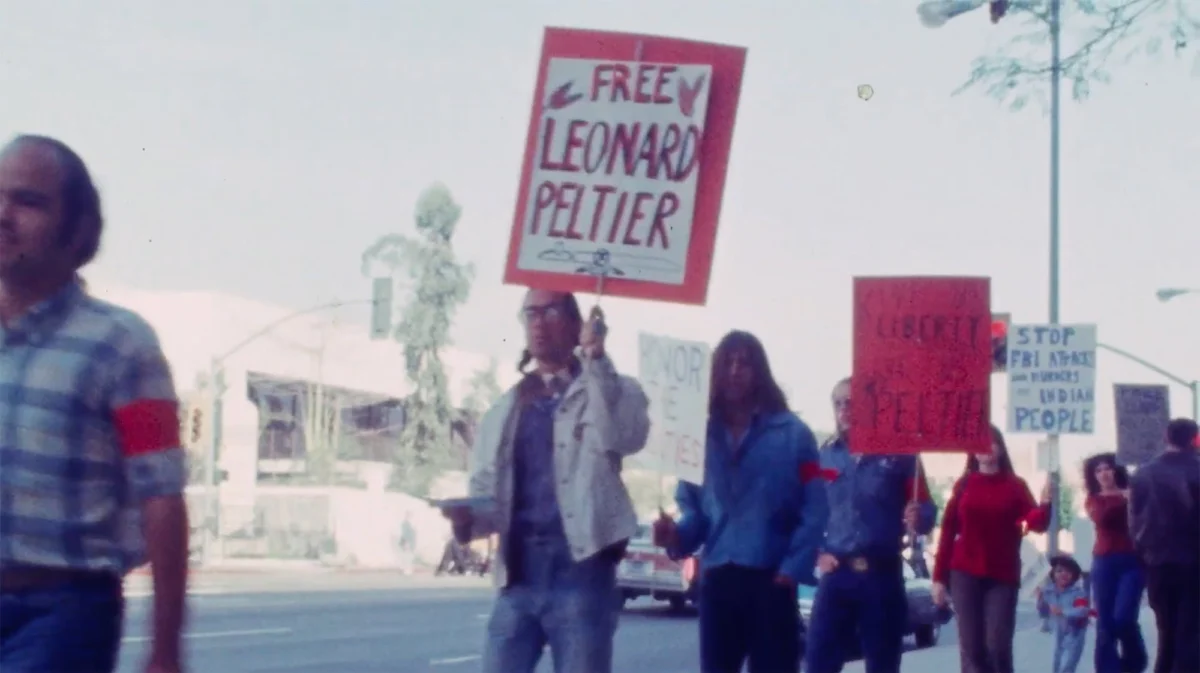
The official trailer has been released for Free Leonard Peltier, a compelling, feature-length documentary directed by acclaimed filmmakers David France and Jesse Short Bull. Scheduled for a global streaming release on Netflix next month, the film takes an unflinching look at one of the most controversial and legally contentious criminal cases in modern American history. The documentary revisits the nearly five-decade imprisonment of American Indian Movement (AIM) activist Leonard Peltier, who was convicted for the 1975 murders of two Federal Bureau of Investigation (FBI) agents on the Pine Ridge Indian Reservation in South Dakota. Having made its world premiere at the 2025 Sundance Film Festival to critical acclaim, the film traces the deep-seated historical grievances between Indigenous communities and the federal government, the rise of the American Indian Movement, and the enduring power of grassroots activism.
Main Facts and Production Overview
Free Leonard Peltier is a collaborative directorial debut for Jesse Short Bull—known for his acclaimed work on Lakota Nation vs. United States—and veteran investigative documentary filmmaker David France, whose previous credits include Academy Award-nominated works such as How to Survive a Plague and Welcome to Chechnya. Produced by a formidable team including David France, Paul McGuire, Jhane Myers, and N. Bird Runningwater, the documentary weaves together rare archival footage, contemporary interviews with key figures, and advanced digital recreations to establish context for the 1975 shootout.
The central narrative follows Peltier, a former mechanic who joined the American Indian Movement to advocate for the rights and sovereignty of his people, only to find himself thrust into a violent federal crackdown. The film explores the systemic injustices that defined the era, highlighting how land disputes, political radicalization, and state-sponsored surveillance collided on the Pine Ridge Reservation. Although Peltier’s federal prison sentence was commuted to home confinement in January 2025 after nearly fifty years behind bars, his conviction was never legally vacated, leaving a complex legal and moral cloud hanging over the case. Netflix has slated the film for a worldwide release on October 12, 2026.

Chronology of Events: The Peltier Case and the American Indian Movement
To understand the weight of the documentary, it is essential to examine the historical timeline that led to the events of 1975 and the subsequent legal battles.
- 1968: The American Indian Movement (AIM) is founded in Minneapolis, Minnesota, by activists including Dennis Banks, Russell Means, and Clyde Bellecourt, aiming to address systemic poverty, police brutality, and treaty violations affecting Native Americans.
- 1973: The 71-day Wounded Knee Occupation takes place on the Pine Ridge Indian Reservation in South Dakota, as AIM members and local Oglala Lakota residents protest tribal leadership and federal policy, resulting in armed standoffs with federal law enforcement.
- June 26, 1975: A firefight erupts on the Pine Ridge Reservation between two FBI agents, Ronald Colerick and Jack Williams, and several AIM members. Both FBI agents and an Indigenous man, Joe Stuntz, are killed during the shootout.
- 1976–1977: Peltier, who had fled to Canada following the shootout, is extradited to the United States. He is tried separately in Fargo, North Dakota, convicted of first-degree murder, and sentenced to two consecutive life terms in federal prison.
- 1979–2000s: Throughout his decades in prison, numerous legal appeals are filed, citing withheld ballistics evidence, coerced witness testimony, and governmental misconduct. International human rights organizations, former prosecutors, and political figures repeatedly call for his clemency.
- January 2025: Following intense, decades-long lobbying by civil rights groups, tribal leaders, and human rights advocates, Peltier’s sentence is commuted to home confinement. However, his legal team’s attempts to fully exonerate him through a vacated conviction remain unsuccessful.
- 2025–2026: Free Leonard Peltier premieres at the Sundance Film Festival, garnering critical praise on the festival circuit before securing a global distribution deal with Netflix for an October 2026 release.
Supporting Data and Legal Controversies
The case against Leonard Peltier has long been criticized by legal scholars, human rights organizations, and even some members of the judicial and prosecutorial system involved in his original proceedings. Central to the controversy are questions regarding the integrity of the evidence presented during the 1977 trial.
Ballistics evidence played a critical role in securing Peltier’s conviction. During the trial, the prosecution argued that a specific AR-15 rifle linked to Peltier was the weapon used to execute the wounded FBI agents at close range. However, documents later obtained under the Freedom of Information Act revealed that an initial FBI ballistic lab report indicated the bullets could not be conclusively matched to Peltier’s rifle. This crucial discrepancy was never presented to the jury.
Furthermore, a key witness for the prosecution, Myrtle Poor Bear, signed multiple conflicting affidavits claiming she witnessed Peltier commit the murders, only to later recant her statements, stating she had been coerced and threatened by FBI agents. Despite these admissions and widespread acknowledgments of prosecutorial overreach from international bodies like Amnesty International, successive U.S. administrations routinely denied requests for clemency or parole until the sentence commutation in January 2025. The documentary meticulously analyzes these forensic and procedural failures, offering viewers a comprehensive breakdown of why the conviction is widely regarded by legal advocates as one of the most disputed in modern American jurisprudence.

Official Responses and Perspectives
The upcoming release of Free Leonard Peltier has reignited public discourse among legal advocacy groups, government agencies, and representatives of law enforcement.
Representatives for the Federal Bureau of Investigation have historically maintained that the conviction of Leonard Peltier was secured through legitimate judicial processes and that the deaths of agents Colerick and Williams represent a tragic sacrifice in the line of duty. Law enforcement associations have consistently opposed clemency and parole for Peltier, arguing that the passage of time does not diminish the gravity of the crimes committed against federal officers.
Conversely, Indigenous rights organizations, civil rights attorneys, and Peltier’s defense team view the documentary as an essential platform for exposing systemic flaws in the criminal justice system. In statements accompanying the film’s festival run, co-directors David France and Jesse Short Bull emphasized that the project is not merely a retrospective on a single trial, but a broader commentary on state power, institutional accountability, and the ongoing struggle for Indigenous sovereignty. Tribal leaders across the United States have similarly praised the filmmakers for bringing renewed national and international attention to a history of government-sponsored marginalization.
Broader Impact and Implications
The global release of Free Leonard Peltier on Netflix arrives at a time of heightened public interest in systemic reform, historical reckoning, and the representation of marginalized communities in media. By utilizing contemporary documentary techniques, including digital recreations and deep archival exploration, France and Short Bull aim to bridge the generational gap, ensuring that younger audiences understand the historical roots of contemporary Native American activism.

From a socio-political standpoint, the film underscores the enduring friction between tribal sovereignty and federal jurisdiction. The narrative highlights how the events of the 1970s continue to resonate within Indigenous communities, where the fight for land rights, cultural preservation, and civil liberties remains as urgent today as it was half a century ago. As the documentary reaches millions of households worldwide next month, it promises to spark renewed conversations about justice, accountability, and the long road toward reconciliation between the United States government and its Indigenous populations.