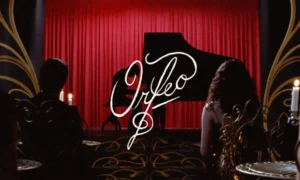

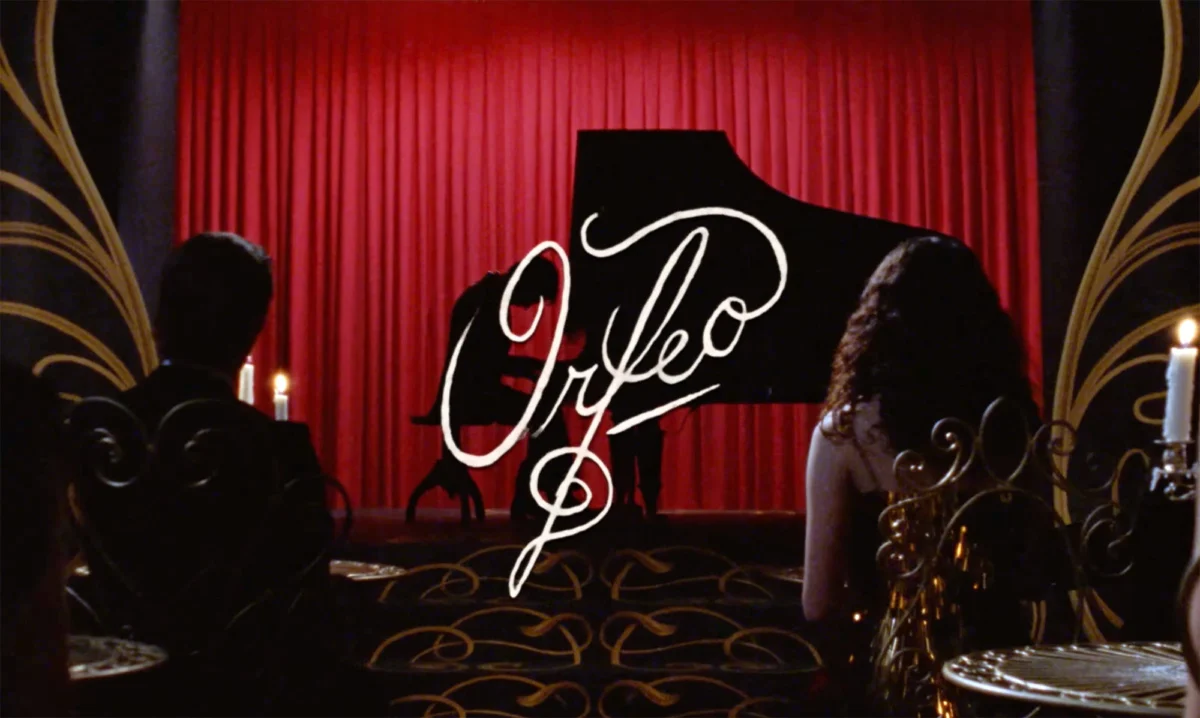
Oscilloscope Labs has officially released the primary United States trailer and promotional key art for Orfeo, an ambitious, highly stylized experimental feature film directed by Italian filmmaker Virgilio Villoresi. The movie serves as a distinct cinematic reimagining of Claudio Monteverdi’s foundational 1607 opera L’Orfeo and the enduring ancient Greek mythological tragedy of Orpheus and Eurydice. However, Villoresi’s modern interpretation diverges significantly from traditional theatrical stagings by anchoring its narrative and visual identity in Dino Buzzati’s landmark 1969 graphic novel, Poema a fumetti.
Following its world premiere circuit at the prestigious Venice Film Festival in 2025, Orfeo has steadily cultivated a reputation among international cinephiles and independent film circles as a visually arresting, avant-garde odyssey. Oscilloscope Labs has confirmed that the picture will receive a theatrical rollout across select markets in the United States this fall, though an exact release date remains forthcoming.
The Genesis and Mythological Foundations of Orfeo
At its core, Orfeo engages with one of the most resonant archetypes in Western cultural history: the myth of Orpheus, the legendary musician whose poetic and lyrical talents held the power to charm all living things and even stones. In the classic Greek tradition, tragedy strikes on the wedding day of Orpheus and Eurydice when the bride is fatally bitten by a viper. Consumed by grief, Orpheus journeys down into the subterranean realms of the Underworld, using the mesmerizing power of his music to soften the hearts of Hades and Persephone, ultimately winning the chance to lead his beloved back to the land of the living—provided he adheres to the strict condition that he must not look back at her until they have both reached the upper world.
While this timeless narrative has inspired countless operas, paintings, theatrical plays, and cinematic adaptations over the centuries, Villoresi’s adaptation approaches the material through an entirely distinct stylistic lens. Rather than staging a direct period piece or a traditional filmed opera, the director turns to the pages of Dino Buzzati’s Poema a fumetti. Published in Milan by Arnoldo Mondadori Editore in 1969, Buzzati’s work holds profound historical significance within European comics culture, widely acknowledged by literary historians and critics as Italy’s very first official graphic novel. Buzzati, a celebrated novelist, journalist, and painter, famously transposed the Orpheus myth into a contemporary Milanese setting, blending elements of high art, pop culture, noir detective fiction, and surrealist fantasy.

Villoresi’s feature-length cinematic adaptation inherits this rich multimedia lineage. The plot tracks a contemporary pianist who falls deeply in love with a mysterious, enigmatic woman. Without warning, she vanishes into a hidden supernatural realm. Compelled by devotion and an overwhelming sense of loss, the protagonist follows her through a mysterious doorway, stepping out of reality and into a dreamlike, labyrinthine afterlife. Guided solely by fragments of memory and the haunting strains of music, he must navigate a series of surreal encounters with fantastical beings, testing the limits of his sanity and his grief.
Production Background and Collaborative Creative Forces
Orfeo marks a major career milestone for Virgilio Villoresi, who transitions into feature-length filmmaking after establishing a robust and critically praised career as a director of short films, commercial spots, and artisanal animation projects. Known for his meticulous practical effects, tactile approach to visual media, and deep appreciation for early cinematic trick photography, Villoresi brings an artisan’s touch to his feature debut.
The screenplay was co-written by Virgilio Villoresi, Alberto Fornari, and acclaimed Italian novelist and screenwriter Marco Missiroli, ensuring that the narrative depth of Buzzati’s original text and the emotional stakes of the classical myth are thoughtfully balanced with contemporary thematic resonances. The production was a collaborative effort among a dedicated team of producers, including Virgilio Villoresi, Enrico Maria Vernaglione, Greta Rossi, Giulio Sangiorgio, and Alessandra Breviario, who worked collectively to bring the visually demanding project to the screen.
The film features an accomplished principal cast featuring Luca Vergoni, Giulia Maenza, Aomi Muyock, and Vinicio Marchioni. Each performer contributes to the ethereal, detached atmosphere of the film, operating less as traditional dramatic characters and more as evocative figures within a shifting, kaleidoscopic canvas.
Visual Aesthetics and Artistic Themes

From a technical and artistic standpoint, Orfeo has been heavily praised by festival critics for its defiance of conventional cinematic realism. The newly unveiled US trailer showcases an aesthetic vocabulary that is thoroughly untethered from standard narrative conventions, drawing heavily on expressionist art, vintage animation techniques, and theatrical mise-en-scène.
Cinematographically and art-direction-wise, the film functions as a kaleidoscopic journey across shifting dimensions of time and place. The visual language utilizes rich textures, optical illusions, handcrafted sets, and layered compositions that echo the sequential art panels of Buzzati’s graphic novel while paying homage to the handmade magic of early cinema pioneers like Georges Méliès and surrealist avant-garde movements.
Rather than relying purely on dialogue to drive the narrative forward, the film operates on sensory immersion, prioritizing mood, atmosphere, and rhythmic editing. The thematic architecture of Orfeo explores a complex triad of human experience: the intersections of art, love, mystery, eroticism, melancholy, life, and death. By refracting these profound philosophical concepts through the lens of a supernatural romance, the filmmakers have constructed an experience that resists passive viewing, demanding active engagement from its audience.
Festival Circuit Reception and Industry Context
The journey of Orfeo began on the international stage with its world premiere at the 2025 Venice Film Festival. Premiering within the upper echelons of the festival circuit immediately positioned the film as a darling of high-brow cinema programmers and arthouse critics. Venice, known for embracing bold directorial visions and boundary-pushing cinematic art, provided an ideal launching pad for a project as unconventional as Villoresi’s debut.
International reviewers at the festival highlighted the film’s striking visual originality, noting that its commitment to handcrafted, tactile aesthetics sets it apart in an industry increasingly dominated by digital standardization and computer-generated imagery. The ability of the film to merge classical operatic tragedy with the pop-art sensibilities of 1960s Italian graphic novels resonated strongly with audiences seeking fresh narrative forms.

Following its festival run, industry watchers anticipated which North American distributor would champion the film for domestic audiences. Oscilloscope Labs, a prominent independent film distribution company renowned for championing distinct, provocative, and artist-driven cinema, stepped forward to acquire the rights. The acquisition aligns with Oscilloscope’s established catalog of curation, which frequently favors works that challenge conventional genre boundaries and elevate singular directorial voices.
Implications and Broader Cultural Impact within Independent Cinema
The impending release of Orfeo by Oscilloscope Labs signals a continued appetite within the North American specialty film market for bold, non-traditional foreign language cinema. In an era where box office revenues are increasingly concentrated around major intellectual properties and high-budget franchise sequels, specialty distributors play a critical role in maintaining the health and diversity of the theatrical ecosystem.
By bringing an Italian experimental feature rooted in classical mythology and mid-century graphic novel literature to US screens, Oscilloscope Labs offers cinephiles an alternative to mainstream fare. The film’s focus on practical artistry and avant-garde storytelling serves as a reminder of the vast expressive potential inherent in the medium of film. Furthermore, the adaptation of Dino Buzzati’s Poema a fumetti brings renewed global attention to Italian comics history, potentially inspiring new generations of readers to explore the rich literary heritage that preceded the contemporary graphic novel boom.
As the fall theatrical release window approaches, anticipation continues to build within independent film communities. While the precise release dates and theater counts will be rolled out gradually by Oscilloscope Labs, the launch of the official US trailer and theatrical poster has solidified the film’s status as one of the most intriguing arthouse releases of the season. Audiences interested in tracking the theatrical rollout, accessing screening locations, or reviewing further promotional materials can visit the official distribution website managed by Oscilloscope Labs.