

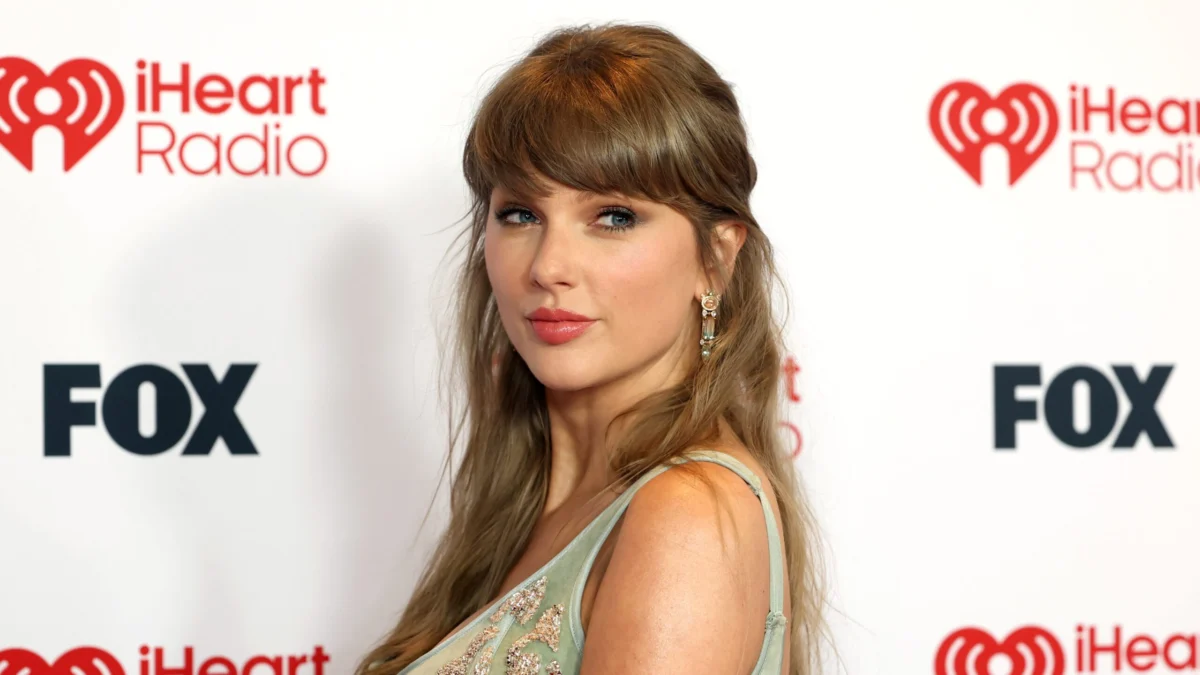
In a revealing interview with the New York Times, pop music icon Taylor Swift candidly discussed the intricate and often intense relationship she shares with her fanbase, particularly concerning their efforts to decode the subjects and inspirations behind her prolific songwriting. While acknowledging her own penchant for embedding "Easter eggs" within her work, Swift admitted that the extreme lengths to which some fans go in their interpretive efforts can become "weird" for her, drawing a firm line at what she likens to a "paternity test" for her songs.
Swift’s remarks came as part of her feature on the New York Times‘ prestigious "30 Greatest Living American Songwriters list," released Tuesday, April 28, 2026. The inclusion on such a distinguished roster, alongside legends like Stevie Wonder, Jay-Z, Dolly Parton, and Diane Warren, underscores her profound impact on contemporary music and her recognized prowess as a lyricist. However, this very mastery, combined with her deliberate use of clues, has cultivated a fan culture that sometimes transcends traditional appreciation, venturing into fervent analytical detective work.
The Intersection of Art and Obsession: Swift’s Candid Revelation
"There’s corners of my fanbase who are gonna take things to a really extreme place," Swift told the New York Times. "There’s nothing I can do about that. There’s people who are gonna try to, like, do detective work, figure out the details — who is that about? What is this?" Her comments reflect a nuanced understanding of her audience’s dedication, yet they also articulate a clear boundary. The artist, known for weaving autobiographical narratives into her music, expressed discomfort when this interpretive zeal leads to definitive, often speculative, conclusions about the real-life individuals who might have inspired her lyrics.
"When it gets a little bit weird for me is when people act like it’s a paternity test," she elaborated. "Like, ‘This song’s about that person.’ Because I’m like, ‘That dude didn’t write the song, I did.’ But that’s part of it," she added, highlighting the fundamental issue of authorship and creative ownership. This statement goes to the heart of an artist’s relationship with their work, asserting that while inspiration may come from external sources, the creation and interpretation ultimately belong to the artist. The New York Times feature, which also delved into her songwriting process and the origins of iconic singles like "Love Story," provided a significant platform for Swift to articulate this perspective, offering a rare glimpse into her personal feelings about the intense scrutiny her creative output attracts.
A Legacy of Clues: The Evolution of Swift’s Easter Eggs
Taylor Swift’s engagement with her fanbase through hidden messages, cryptic clues, and deliberate "Easter eggs" is a well-documented and celebrated aspect of her career. This practice began subtly in the early stages of her discography, with coded messages in album liner notes, and has evolved into an elaborate, multi-platform rollout strategy that often precedes new music releases. Fans, affectionately known as "Swifties," eagerly anticipate these clues, which can range from specific capitalized letters in lyrics that spell out secret messages to numerical patterns, color schemes, and even seemingly innocuous social media posts.
For instance, in her Speak Now album liner notes, Swift famously included the "Tay" Easter egg for her song "Back to December," widely interpreted as a direct reference to her ex-boyfriend Taylor Lautner. This rare, almost explicit, acknowledgment served as a benchmark for fans, encouraging further exploration of her lyrics for similar breadcrumbs. Throughout her career, from the intricate narratives of Red and 1989 to the reflective introspection of Folklore and Evermore, and the complex rollout of Midnights and The Tortured Poets Department, Swift has consistently provided a rich tapestry for fan engagement, fostering a sense of community and shared discovery among her millions of followers worldwide.
The Digital Age and Fan Engagement
The proliferation of social media platforms has undeniably amplified this fan decoding culture. Platforms like Twitter, Reddit, TikTok, and various fan forums have become virtual headquarters for "Swiftie detectives," where theories are meticulously constructed, debated, and disseminated at lightning speed. Fans meticulously analyze every word, every gesture, every outfit choice, seeking to unlock the deeper meanings and personal connections within Swift’s art. This collective effort, fueled by a shared passion and a desire to feel closer to the artist, often results in highly sophisticated and intricate interpretations, sometimes converging on a near-consensus regarding a song’s subject or narrative.
This hyper-engagement, while a testament to Swift’s immense popularity and the depth of her connection with her audience, also contributes to the "extreme place" she describes. The line between playful speculation and intense, sometimes intrusive, investigation can blur. The digital landscape allows for instantaneous, global collaboration on these "detective" projects, creating a phenomenon where the collective interpretive power of millions of fans can overshadow the artist’s original intent or comfort.
Navigating the Narrative: A Chronology of Speculation
Swift’s discography is rife with examples of songs that have become inextricably linked in the public imagination to specific individuals, often former romantic partners. This ongoing narrative of love, heartbreak, and resilience is a cornerstone of her songwriting, making the fan’s quest to identify the muse almost inevitable.
Early Encounters: From "Dear John" to "All Too Well"
One of the earliest and most prominent examples of intense fan speculation centered around the song "Dear John" from her 2010 album Speak Now. The lyrics, widely believed to be a critique of an older man who exploited a younger woman, were immediately linked by fans and media to musician John Mayer, with whom Swift had a brief relationship. Mayer himself later expressed discomfort with the song and its public association, illustrating the real-world impact of such interpretations.
Perhaps the most iconic instance of this phenomenon is "All Too Well." Initially a deep cut from her 2012 album Red, its raw emotional intensity led fans to strongly associate it with actor Jake Gyllenhaal, following their rumored relationship. The song gained legendary status, especially with the release of the "10-minute version" in 2021 as part of Red (Taylor’s Version). This extended rendition, accompanied by a short film, reignited public interest and solidified its connection to Gyllenhaal in popular culture, despite Swift never explicitly confirming the subject. The song became a cultural touchstone, demonstrating the power of fan consensus to shape a song’s public narrative. Similarly, the entire 1989 album era was largely framed by fan theories linking many of its tracks to her relationship with One Direction frontman Harry Styles, with songs like "Style" and "Out of the Woods" becoming synonymous with their rumored romance.
The Tortured Poets Department: A Recent Case Study
The release of Swift’s latest album, The Tortured Poets Department, in April 2024, provided a fresh and immediate example of this intense fan decoding in action. In the weeks leading up to its highly anticipated debut, speculation ran rampant. Given the album’s title, fans initially theorized that much of its content would address her breakup with long-term partner, actor Joe Alwyn. This theory gained significant traction due to the album title’s striking similarity to "Tortured Man Club," a WhatsApp group chat Alwyn had mentioned being a part of with fellow actors Andrew Scott and Paul Mescal. Tracks like "So Long, London" further fueled this speculation, with its geographical reference seeming to hint at her relationship with the British actor.
However, upon the album’s release, fan focus rapidly shifted. A significant portion of the lyrical content, particularly tracks such as "The Smallest Man Who Ever Lived" and "Guilty as Sin?," quickly led fans to believe the album was predominantly about her brief, yet widely reported, relationship with The 1975 frontman Matty Healy. This rapid pivot in collective fan interpretation from Alwyn to Healy, based on specific lyrical analysis and perceived biographical parallels, vividly illustrates the dynamic and evolving nature of the "detective work" Swift described. It underscores how quickly fan consensus can form and shift, often dictating the public narrative surrounding an artist’s new work.
The "Paternity Test" Conundrum: Artistic Intent vs. Public Interpretation
Swift’s "paternity test" analogy is particularly poignant because it encapsulates the struggle many artists face in maintaining control over their narrative. When a song’s meaning becomes fixed in the public consciousness to a specific individual, it risks reducing the art to mere gossip or a biographical puzzle rather than a standalone creative expression. This can strip the artist of their agency, as the audience’s interpretation, rather than the artist’s intention, becomes the dominant narrative.
The essence of the "paternity test" analogy lies in the challenge of ownership. Swift asserts, "That dude didn’t write the song, I did." This simple statement is a powerful reclaiming of her artistic voice. It suggests that while her experiences may inspire her, the resulting art is a product of her creative process, filtered through her unique perspective, and imbued with meanings that extend beyond mere biographical accounting. It highlights a broader implication for artists: the battle for the integrity of their work against the pervasive tendency of the public to conflate the art with the life.
The Double-Edged Sword of Superstardom
The intense fan engagement that Swift describes is, in many ways, a double-edged sword, emblematic of modern celebrity in the digital age.
Benefits of Hyper-Engagement
On one hand, this hyper-engagement is a significant factor in Swift’s unparalleled commercial success and cultural omnipresence. The detective work fosters a deep sense of community among "Swifties," creating a loyal and active fanbase that eagerly anticipates new releases, drives album sales and streaming numbers, and fills stadiums for tours like the record-breaking Eras Tour. This constant buzz keeps Swift at the forefront of pop culture discourse, generating invaluable organic marketing and maintaining her sustained relevance in an ever-changing industry. The intellectual puzzle aspect of decoding can deepen a fan’s appreciation for her lyrical prowess and storytelling ability, leading to a more profound connection with her art.
The Drawbacks: Privacy and Pressure
On the other hand, the pressure to constantly be a muse, and the subsequent public dissection of her personal life, undoubtedly comes with significant drawbacks. Swift, a private individual despite her public persona, has frequently spoken about the challenges of navigating relationships under intense media and fan scrutiny. The "paternity test" scenario extends beyond mere speculation; it can lead to real-world consequences, including harassment of rumored subjects or the misrepresentation of Swift’s own experiences. It places an immense burden on the artist to constantly manage perceptions, often at the expense of her privacy and mental well-being. The expectation that every lyric must directly correspond to a real-life event can also limit an artist’s creative freedom, potentially discouraging them from exploring purely fictional narratives or metaphorical expressions for fear of misinterpretation.
Swift’s Enduring Artistic Philosophy
Despite the intense analysis her work receives, Swift articulated a clear and resilient artistic philosophy in her New York Times interview. She emphasized the importance of abiding by her own "perception" when writing a song. "You have to hold tight to your perception of your art and your relationship with it," she stated, "and then you kind of have to [mimes blowing it out] there it goes. Hope you like it. And if you don’t now, hope you do in five years, and if you never do, then I was doing it for me anyway."
This declaration speaks volumes about her artistic integrity and self-preservation. It underscores the idea that while art is created to be shared and interpreted, its fundamental purpose and initial spark must come from an internal place, independent of external validation. This perspective aligns with her broader career trajectory, where she has increasingly taken control of her narrative, from publicly addressing past controversies to embarking on the ambitious re-recording project of her first six albums to regain ownership of her master recordings. Her songwriting, often described as diary-like, remains a deeply personal process, even as it becomes a global phenomenon.
Beyond the Lyrics: The Broader Cultural Landscape
Taylor Swift’s position on the New York Times‘ "30 Greatest Living American Songwriters list" is not merely a recognition of her commercial success, but a testament to her profound lyrical ability and her unparalleled influence on contemporary music and culture. Her songs resonate with millions because they capture universal human experiences through highly specific, vivid storytelling. The ongoing dialogue between Swift and her highly engaged fanbase, including the intricate dance of Easter eggs and extreme decoding, reflects a unique phenomenon in modern celebrity. It highlights the evolving nature of the artist-audience relationship in an era where digital connectivity offers unprecedented avenues for connection, but also for scrutiny and misinterpretation.
As Swift continues to craft her narratives, her candid comments serve as a crucial reminder of the human element behind the global superstar. While she invites fans into her world through her art, she also delineates a necessary boundary, asserting her fundamental right to artistic ownership and interpretation. Her journey underscores a vital truth: even for the most beloved and dissected artists, the essence of creation ultimately remains a deeply personal act.