



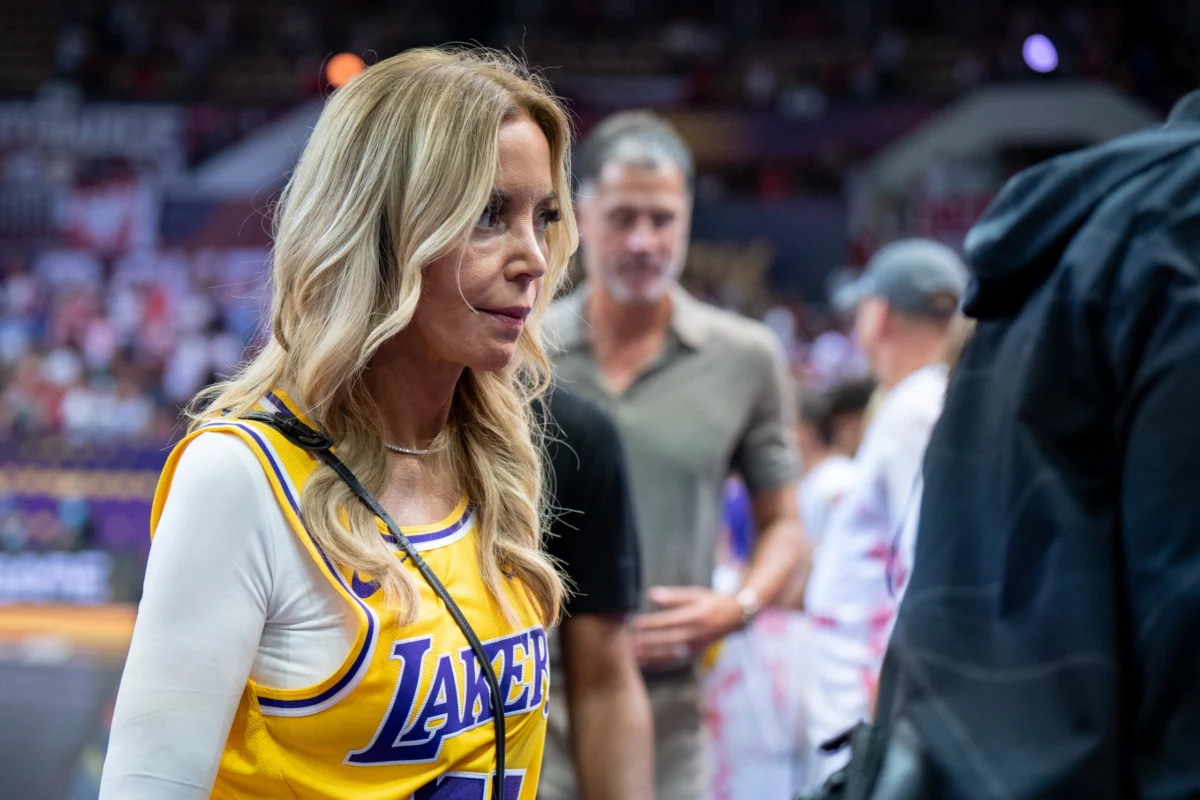
The governance of the Los Angeles Lakers has been plunged into uncertainty following a sharp public disagreement between Jeanie Buss, the franchise’s controlling owner, and her five siblings regarding the potential sale of the family’s remaining interest in the team. While the siblings—Jim, Johnny, Janie, Joey, and Jesse Buss—have publicly declared their intent to divest their shares to a group led by former Disney CEO Bob Iger and investor Joshua Kushner, Jeanie Buss has moved to block the transaction, asserting that any such sale is legally untenable under current trust agreements and court-mandated ownership structures.
The conflict centers on the JAB Trust, the entity through which the Buss family holds its 17.8% ownership interest in the Lakers. In a formal letter addressed to the legal representatives of her siblings, attorney Adam Streisand, acting on behalf of Jeanie Buss, declared that any attempt to finalize a sale without her explicit consent as a co-trustee would be considered null and void. The dispute threatens to derail a significant shift in the NBA’s ownership landscape, occurring just as the league experiences unprecedented growth in franchise valuations.
A Chronology of the Ownership Dispute
The current impasse is the latest chapter in a long-running narrative concerning the control of the Lakers, a franchise famously built by the late Jerry Buss. Following the patriarch’s passing in 2013, the team was placed into a family trust, with control distributed among his children.
The seeds of the current conflict were sown in 2017, when a significant internal power struggle led to a court-sanctioned agreement. That order solidified Jeanie Buss’s position as the controlling owner and set strict parameters for how the family’s shares must be managed to ensure stability in the franchise’s governance.
The tension escalated earlier this month when reports surfaced that Mark Walter, the Dodgers owner who holds a significant stake in the Lakers, had reached an agreement to sell his portion of the team to the Iger-Kushner consortium. Valued at approximately $12.5 billion, that deal set the stage for a potential consolidation of ownership. Reports suggested the Buss siblings were eager to join this transition, signaling their intent to exit their remaining 17.8% stake. However, Jeanie Buss’s intervention this week highlights a fundamental divide within the family regarding the strategic future of the team.
Legal Foundations and Fiduciary Constraints
At the heart of the legal battle is the specific language governing the JAB Trust. Streisand’s letter to the siblings’ legal team emphasizes that the trust requires unanimous approval from the co-trustees—Jeanie, Janie, and Joey—to authorize the sale of the family’s assets. More importantly, the 2017 court order mandates that the shares be voted in a manner that preserves a minimum 15% ownership interest to keep Jeanie Buss as the controlling owner.
"Any attempt by the co-trustees to do otherwise, and any attempt to aid or abet the co-trustees as such, would constitute a breach of trust, breach of fiduciary duty and be in contempt of court," Streisand stated in the correspondence. This legal positioning serves as a firm warning that the siblings may be overstepping their authority, not just as shareholders, but as fiduciaries bound by specific legal obligations to maintain the status quo of the team’s leadership.
Legal experts familiar with high-value estate disputes suggest that the burden of proof will rest on the siblings to demonstrate that a sale is permissible under the current trust structure. Conversely, Jeanie Buss must continue to defend the 2017 order as the primary document governing the team’s ownership, a document that has effectively prevented internal coups for nearly a decade.
The Buss Siblings’ Perspective
In a joint statement released on Tuesday, the five siblings maintained their resolve, asserting that their decision to sell was made after careful consideration of what they believe is best for the future of the Lakers organization.
"The Los Angeles Lakers have never been just a basketball team. They have been one of the greatest privileges of our lives," the siblings stated. "Our focus has always been on what we believe is best for the Lakers, the fans who have supported this franchise for generations and the greater Los Angeles community. We intend to move forward thoughtfully, respectfully and through the appropriate process."

The siblings’ statement suggests a philosophical divergence from Jeanie Buss. While she has expressed a desire to hold onto the family stake for long-term strategic and legacy reasons, her siblings appear motivated by the opportunity to capitalize on the massive valuation growth the Lakers have seen under the current sports-media economic boom.
Financial Implications and Market Context
The proposed valuation of $12.5 billion for the Lakers reflects a broader trend in professional sports where franchises have become "trophy assets" for high-net-worth individuals and private equity firms. When the reported deal between Mark Walter and the Iger-Kushner group was first announced, it underscored a massive premium being paid for access to the Lakers’ brand, which remains one of the most recognizable and commercially viable entities in professional sports.
If the Buss family were to successfully sell their 17.8% stake, the Iger-Kushner group would gain control of approximately 83% of the franchise. This would represent a near-total transition of power away from the family that has guided the franchise for over four decades. Analysts note that such a consolidation would fundamentally alter the team’s operational dynamics, potentially shifting decision-making from a family-run model to one dictated by institutional investors.
For Jeanie Buss, retaining the stake is not merely a matter of wealth, but one of governance. As the team’s governor, she oversees the basketball operations and the strategic vision of the franchise. Maintaining the family’s stake is intrinsically linked to her ability to act as the final authority on decisions ranging from coaching hires to major corporate partnerships.
Broader Impact on the NBA
The Lakers dispute is being closely watched by the NBA league office and other team owners. The league has historically preferred stable ownership structures and has often intervened when internal disputes threaten to disrupt a franchise’s operations.
The potential involvement of Bob Iger and Joshua Kushner—individuals with significant ties to media and venture capital—also points toward a new era of sports ownership, where deep-pocketed outsiders seek to leverage the content-creation potential of teams. The NBA, which has benefited immensely from its media rights deals, is in a transition period where the value of teams is increasingly tied to global entertainment reach rather than simple ticket sales or local broadcast revenue.
If this case proceeds to litigation, it could establish a precedent for how family trusts interact with professional sports team ownership. The result will likely determine whether the "Buss family" name remains synonymous with the Lakers for the next generation, or if the organization is destined for a transition to outside corporate ownership.
Future Outlook and Next Steps
As of now, the situation remains a stalemate. Jeanie Buss has signaled that she will not be moved, while her siblings have expressed a unified intent to proceed with their exit strategy. For the fans and the city of Los Angeles, the uncertainty brings anxiety regarding the stability of the franchise’s front office.
Legal analysts expect that if no private settlement is reached, the matter will likely return to the courts that oversaw the 2017 agreement. The court’s interpretation of the JAB Trust’s language—specifically the balance between the siblings’ rights to dispose of assets and the mandate to protect Jeanie Buss’s controlling interest—will be the deciding factor.
For the immediate future, the Lakers organization will continue to operate under its current management. However, the shadow cast by this legal dispute will undoubtedly color the upcoming season. As the franchise prepares for its future, the question of who owns the Lakers—and who has the right to decide that future—remains the most significant issue facing the organization since the death of Jerry Buss. The coming weeks will likely see an escalation of legal filings, as all parties involved weigh the costs of a public, protracted battle against the benefits of reaching a potentially compromise-based resolution.