


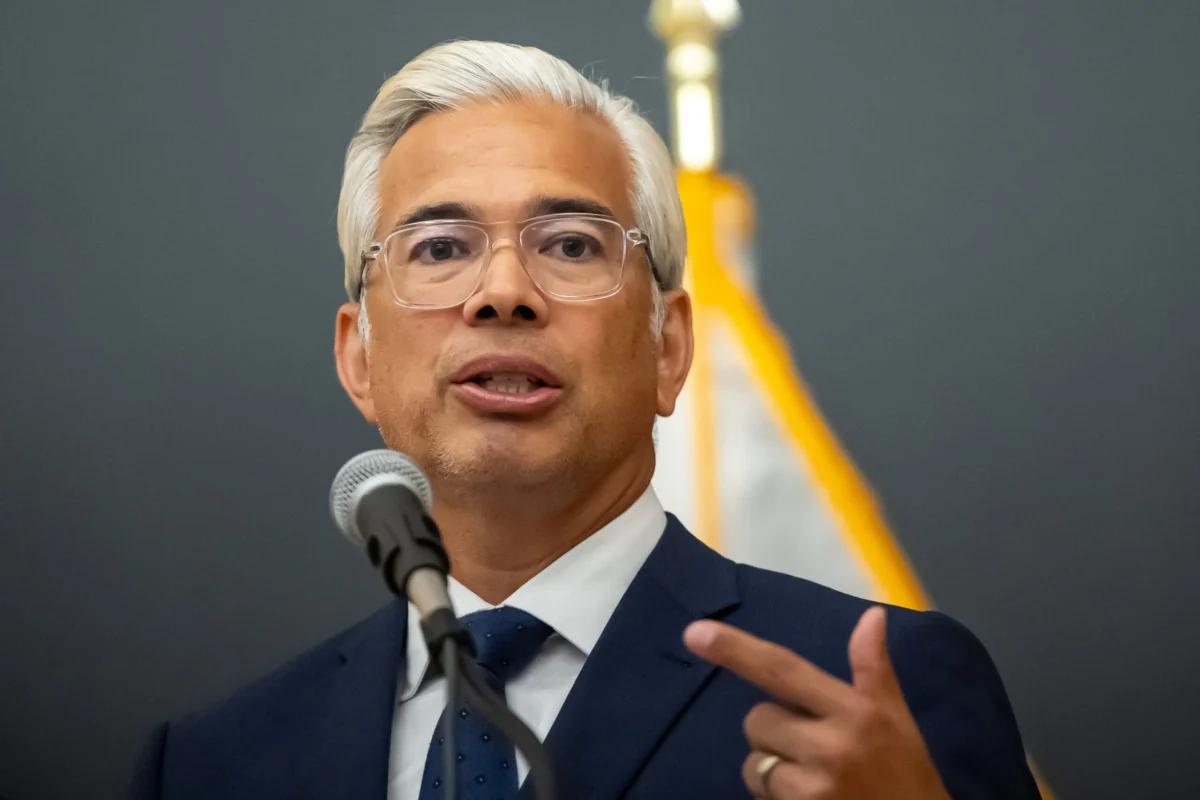
California Attorney General Rob Bonta has signaled a firm stance regarding the high-stakes antitrust litigation surrounding the proposed merger of Paramount Skydance and Warner Bros. Discovery, asserting that any path to a settlement must include "robust structural remedies." In a recent interview with CNBC’s David Faber, Bonta articulated that while the door to negotiations remains open, the coalition of 12 states opposing the deal will not be swayed by arguments tangential to the specific legal allegations outlined in their complaint.
The litigation, which seeks to block the mega-merger, rests on the assertion that the combination of these two entertainment titans would result in a "presumptively illegal market concentration." As the trial date approaches in March, the friction between the regulatory authorities and the companies highlights a pivotal moment in the evolution of the American media landscape, testing the application of century-old antitrust statutes against the rapidly shifting realities of the digital streaming era.
The Legal Framework and the Scope of the Dispute
At the heart of the states’ complaint is Section 7 of the Clayton Antitrust Act, a cornerstone of American competition law that prohibits mergers and acquisitions where the effect "may be substantially to lessen competition, or to tend to create a monopoly." Bonta characterized the case as a "meat-and-potatoes" antitrust matter, dismissing claims by Paramount that the regulatory challenge ignores the competitive dynamics of the modern entertainment industry.
The attorneys general involved in the lawsuit—representing California, Arizona, Colorado, Connecticut, Massachusetts, Minnesota, Nevada, New Jersey, New Mexico, New York, Oregon, and Washington—argue that the merger would consolidate too much power within specific segments of the market. According to the filing, the combined entity would control approximately one-third of all film production and roughly one-third of the total basic cable television programming in the United States.
Bonta was pointed in his critique of Paramount’s defense strategy. He noted that the company has repeatedly attempted to steer the discourse toward market segments not cited in the complaint, such as the streaming ecosystem, the operations of CNN, and the perspectives of foreign regulators. "They want to talk about the streaming market, which we don’t allege in our complaint," Bonta stated. "We want to talk about the three markets that we set forth in our complaint, where we think there’s antitrust violation."
A Chronology of the Merger and Legal Intervention
The path to this legal confrontation began with the announcement of the acquisition, an ambitious move intended to combine the storied legacy of Warner Bros. and Paramount. The following timeline outlines the progression of the deal and the subsequent regulatory pushback:
- Initial Deal Announcement: Paramount and Warner Bros. Discovery unveiled plans for a merger, aiming to create a media juggernaut capable of competing with the largest players in the streaming and content production space.
- July 2026: A coalition of 12 state attorneys general, led by California’s Rob Bonta, filed a formal lawsuit seeking to enjoin the transaction, citing concerns over market dominance.
- Late July 2026: Facing mounting regulatory pressure and the prospect of a lengthy legal battle, Paramount agreed to postpone the closing of the acquisition, pushing the target date as far as June 2027.
- August 2026: During a quarterly earnings call, Paramount Skydance CEO David Ellison reaffirmed his commitment to the merger, expressing confidence that the deal would eventually secure approval.
- March 2027: The scheduled commencement of the antitrust trial, which will serve as the primary venue for the legal arguments of both the states and the corporate entities.
Structural Remedies vs. Behavioral Assurances
In antitrust law, the distinction between "structural" and "behavioral" remedies is profound. Structural remedies involve the divestiture of assets—essentially forcing the merging companies to sell off business units, networks, or studio arms to preserve competition. Behavioral remedies, by contrast, involve promises by the companies to conduct business in specific ways, such as maintaining certain pricing tiers or agreeing to non-discriminatory distribution practices.
Bonta’s insistence on "robust structural remedies" indicates that the states are unlikely to accept behavioral promises. For a company like the proposed Paramount-WBD entity, structural divestiture could be devastating to the merger’s economic logic. The goal of the merger is to achieve economies of scale and cross-pollinate content across platforms like Paramount+, HBO Max, and traditional broadcast networks like CBS. If the state regulators force the sale of key assets—such as certain cable channels or film library segments—the value proposition of the entire deal could be significantly diminished.
The Industry Perspective and Paramount’s Defense
Paramount has maintained a posture of defiance throughout the regulatory review process. The company has described the states’ lawsuit as a "misrepresentation of competition" and has signaled that it is prepared to take the matter to the Supreme Court if necessary. Jeffrey Kessler, the lead trial counsel for Paramount, has been instrumental in framing the company’s defense, arguing that the merger is a necessary response to the competitive realities of the modern media marketplace.
The company’s leadership maintains that the traditional metrics used by the attorneys general fail to account for the current strength of digital-first competitors. By focusing on the shrinking subscriber base of traditional pay TV, Paramount contends that the market is already fragmented and that the merger would allow the company to better serve consumers in an era defined by content fragmentation.
However, Bonta remains undeterred by these industry-wide arguments. "Whether the market is shrinking or growing is really irrelevant," he stated, emphasizing that the focus must remain on the specific market concentration that the Clayton Act was designed to prevent.
Broader Economic and Legal Implications
The outcome of this case will likely have far-reaching implications for media consolidation in the United States. If the states successfully block the deal or force significant divestitures, it will signal a return to a more aggressive antitrust posture, particularly in the telecommunications and entertainment sectors.
For investors and industry analysts, the uncertainty surrounding the trial in March is creating a volatile environment. The potential for the deal to collapse, or to be restructured into something unrecognizable from its original intent, remains high. Furthermore, the case serves as a test case for how legacy media companies, burdened by the transition to streaming, can attempt to consolidate for survival without triggering the scrutiny of federal and state regulators.
As both sides prepare for the courtroom, the prospect of a settlement remains the only alternative to a definitive, and potentially precedent-setting, judicial ruling. While Bonta expressed a preference for resolving the case in the "boardroom instead of the courtroom," he emphasized that the burden of initiating a good-faith negotiation lies with the corporate leadership.
For now, the legal apparatus remains in motion. The states are digging in, citing the enduring relevance of the Clayton Act, while the companies are preparing to defend their vision of a consolidated media future. With the March trial date approaching, the entertainment industry is braced for a verdict that could redefine the boundaries of corporate growth and market competition for years to come.