

The 79th edition of the Cannes Film Festival concluded with a familiar critical refrain, as many pundits characterized the 2026 slate as a "ho-hum" affair lacking the immediate, visceral masterpieces of previous years. However, this superficial assessment overlooked a quiet revolution permeating the selection, defined by a shift toward "accumulative" storytelling—films that eschew the white-knuckle tension of previous winners like Sirat or It Was Just an Accident in favor of emotional resonance built through deliberate, incremental progression. This year’s lineup, headlined by Ryusuke Hamaguchi, Cristian Mungiu, and Valeska Grisebach, prioritized a "bodily impact" on the viewer, instilling a sense of dramatic muscle memory that rewarded patience over spectacle.
The Palme d’Or and the Debate over State Control
The festival’s highest honor, the Palme d’Or, was awarded to Cristian Mungiu for his multilingual drama Fjord. The film presents a sprawling, case-study-style exposé of the Norwegian child protective services, depicting what Mungiu frames as the "clear and present danger" of the Scandinavian nanny state. While the win marks Mungiu’s second Palme d’Or—following his 2007 triumph with 4 Months, 3 Weeks and 2 Days—the decision was met with significant debate. Critics noted that while Fjord shares the "ride-or-die" character bonds of his earlier work, it leans into a reactionary outlook that contrasts sharply with the more compassionate, humanistic entries in the competition.
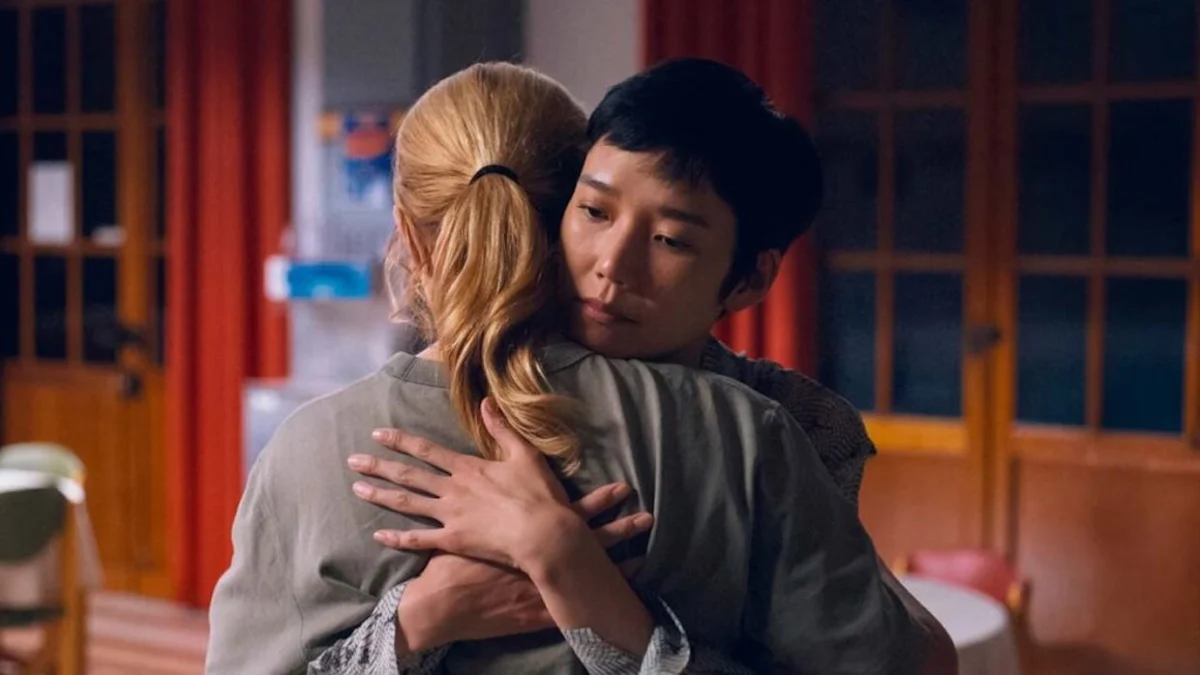
The primary counterpoint to Mungiu’s "stacked deck" narrative was Ryusuke Hamaguchi’s All of a Sudden. Hamaguchi, continuing the momentum of his internationally acclaimed Drive My Car, delivered a stirring exploration of reflection and connection. The film centers on an extended dialogue between Mari, a Japanese playwright, and Marie-Lou, a French eldercare manager. Their relationship, which evolves from a chance meeting into a fortifying friendship, addresses themes of global decline and terminal illness with a sensitivity that many felt was more deserving of the top prize.
Despite missing the Palme d’Or, All of a Sudden did not leave empty-handed. The jury awarded a joint Best Actress prize to Virginie Efira and Tao Okamoto, whose performances were lauded for capturing the "thrill of fast friendship." The film’s scenario was notably inspired by the real-life correspondence between Japanese anthropologist Maho Isono and philosopher Makiko Miyano, adding a layer of intellectual and emotional authenticity to the production.
The Mid-Festival Shift: Grisebach and the Gradualist Canvas
As the festival entered its second week, the "gradualist" trend was further solidified by Valeska Grisebach’s The Dreamed Adventure. Despite being scheduled in the challenging slot of the final afternoon of premieres, the three-hour-plus film quickly secured U.S. distribution, signaling strong industry confidence. Set in the Eastern European borderlands, the film follows Veska, a middle-aged archaeologist portrayed by non-professional actor Yana Radeva, as she navigates a landscape dominated by post-Soviet "chest-bumping" and outdated mafia dynamics.
Grisebach, known for her meticulous research and lived-in realism (as seen in her 2017 film Western), spent years preparing for this project. The film simultaneously evokes and subverts the Western genre, focusing on internal strength rather than outward violence. In post-screening interviews, Grisebach emphasized her interest in dismantling traditional power dynamics, asking blunt questions about who truly holds strength in a society obsessed with masculine posturing.
Historical Reimagining and Postwar Reflections
The 2026 competition also featured a strong contingent of period dramas that utilized the past to mirror contemporary anxieties. Pawel Pawlikowski’s Fatherland emerged as a standout, utilizing a road-movie structure to follow Thomas Mann (Hanns Zischler) and his daughter Erika (Sandra Hüller) on a 1949 speaking tour across a divided Germany. Pawlikowski’s signature "fleet touch" and elegant cinematography distilled a pivotal moment in postwar thought, contrasting the high-minded principles of Kant and Goethe with the physical and moral ruins of the era.
In a similar vein, Emmanuel Marre’s A Man of His Time tracked the moral decay of a municipal bureaucrat in Vichy France, played by Swann Arlaud. The film’s use of hard-lit 16mm cinematography created a "you-are-there" atmosphere, tracing the protagonist’s mundane "paper-pushing shuffle" toward complicity in genocide. The narrative was deeply personal for Marre, as the character was based on his own great-grandfather, incorporating actual letters written during the period.

The Rise of New Voices and Sidebar Successes
While the main competition drew the most scrutiny, the sidebar sections provided some of the festival’s most celebrated discoveries. In the Critics’ Week section, Marine Atlan’s debut feature La Gradiva received near-universal acclaim. Filmed on location in Naples, the movie follows a group of French students on a school trip to Pompeii. Atlan, who also co-wrote and co-photographed the film, was praised for her "whisker-sensitive" portrayal of adolescent autonomy and angst. The film secured distribution through 1-2 Special, proving that the Cannes hierarchy of attention can be successfully challenged by debut filmmakers.
The Camera d’Or for best debut feature went to Clarissa, a Nigerian adaptation of Virginia Woolf’s Mrs. Dalloway. Directed by Arie and Chuko Esiri, the film incorporated a sharpened colonialist critique, referencing the works of Chinua Achebe. This win highlighted the increasing global diversity of the festival’s award winners and the strength of the Nigerian film industry on the world stage.
Market Trends and the Influence of NEON
The 2026 festival also served as a significant marketplace for North American distributors, with NEON emerging as a dominant force. The company arrived with a diverse slate of acquisitions, including:
- Hope: A high-octane South Korean monster movie directed by Na Hong-jin, featuring a "galloping hominid alien" design inspired by Goya.
- Paper Tiger: James Gray’s Queens-set family tragedy, which, despite a lukewarm reception from the Cannes jury, was hailed by critics as a masterclass in classical filmmaking.
- Teenage Sex and Death at Camp Miasma: Jane Schoenbrun’s latest exploration of parasocial desire, which opened the Un Certain Regard sidebar.
In the Un Certain Regard section, the top prize was awarded to Sandra Wollner’s Everytime. The film, shot by Aftersun cinematographer Gregory Oke, was described as a "shattering study" of grief and recovery, utilizing immersive sound design and intimate camerawork to explore divergent pathways of healing.
Genre Defiance and the "Cannes Experience"
Perhaps the most divisive and haunting film of the edition was Arthur Harari’s The Unknown. Starring Léa Seydoux, the film was frequently mislabeled by critics as a "body-swap" movie. However, Harari sidestepped genre tropes to create an uncompromising exploration of trauma and bodily displacement. The film used its premise as a floating signifier for estrangement from the self, a theme also explored by Seydoux in Marie Kreutzer’s Gentle Monster, where she played a woman blindsided by her husband’s criminal arrest.
These films underscored the specific value of the Cannes Film Festival as a platform for "go-it-alone" cinema—works that refuse to cater to mainstream expectations or easy categorization.
Closing Gestures and Geopolitical Impact
The festival concluded with a series of potent political statements. Russian filmmaker in exile Andrei Zvyagintsev, who won the Grand Prix for Minotaur, used his platform to address the Russian leadership directly. His film, a Latvian-produced adaptation of Claude Chabrol’s The Unfaithful Wife, served as a scathing critique of the Russian "corruption industrial complex." Zvyagintsev’s call for an end to the war in Ukraine resonated through the closing ceremony, reminding attendees of the real-world stakes surrounding the international film community.
Other notable anti-authoritarian gestures included Radu Jude’s update of Diary of a Chambermaid, which focused on the economic "double binds" of Romanian guest workers, and Ira Sachs’s The Man I Love, which centered on identity loss during the 1980s AIDS crisis.
Ultimately, while Cannes 2026 may have lacked the immediate "masterpiece" consensus of previous years, its legacy lies in its commitment to films that demand a slower, more profound engagement. The 79th edition proved that the festival remains a vital barometer for both the evolution of cinematic form and the shifting geopolitical landscape, leaving audiences with a wealth of challenging material to process long after the final curtains fell at the Lumière Theater.