The intersection of technology and creative expression has reached a significant milestone with the official opening of Dataland, a permanent museum space in downtown Los Angeles dedicated exclusively to artificial intelligence as a medium. Founded by the internationally acclaimed media artist Refik Anadol and his studio partner Efsun Erkılıç, Dataland represents a shift in the cultural landscape, positioning AI not merely as a generative tool for automation, but as a sophisticated vehicle for immersive, sensory-driven storytelling. Anadol, whose previous works have graced the facades of the Walt Disney Concert Hall and the halls of the Museum of Modern Art (MoMA) in New York, describes the current era as a "renaissance" for the arts, suggesting that while the movement lacks a formal academic name, its impact on human-machine interaction is transformative.
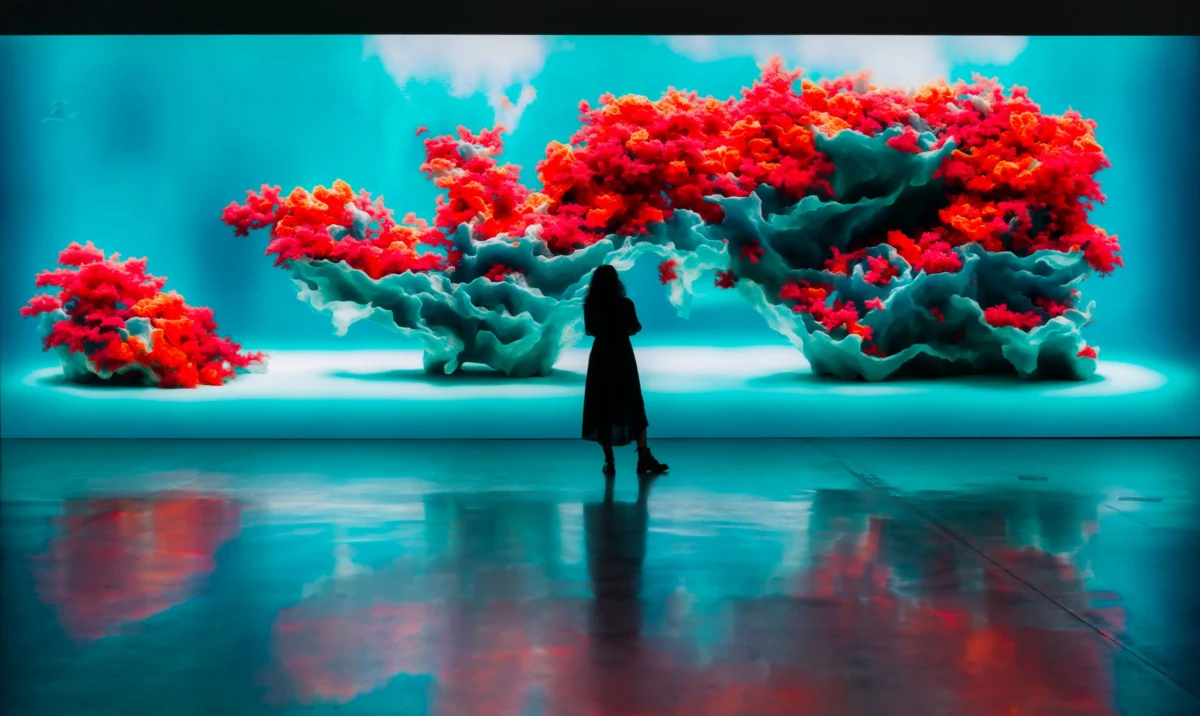
Since its public debut on June 20, Dataland has seen an unprecedented surge in attendance, welcoming over 10,000 visitors within its first 14 days of operation. The museum’s inaugural exhibition, titled Machine Dreams: Rainforest, serves as a proof of concept for Anadol’s "Large Nature Model" (LNM), an open-source AI model designed specifically to simulate the complexities of the natural world. This launch comes at a time of heightened scrutiny regarding the ethical use of data in AI training, a challenge that Dataland seeks to address through transparency and institutional collaboration.

The Evolution of AI Art: From Algorithms to Environments
The establishment of Dataland is the culmination of nearly a decade of experimentation by Refik Anadol Studio. The studio’s trajectory began in earnest in 2016 when Anadol was named the first artist-in-residence for Google’s "Artists and Machine Intelligence" program. This early access to high-level computational resources allowed Anadol to move beyond static digital imagery into the realm of "fluid" data sculptures—installations that use algorithms to process massive datasets into moving, architectural-scale visuals.
The development of the current exhibition, Machine Dreams: Rainforest, required a three-year intensive research and data collection phase. Unlike many commercial generative AI models that rely on "scraping" the public internet—often without the consent of the original creators—Anadol’s team focused on ethical data sourcing. The studio partnered with esteemed scientific organizations, including the Smithsonian and the Encyclopedia of Life, to access verified natural history archives. Furthermore, the team conducted field expeditions to the Amazon and other global rainforest regions to capture raw audio, visual, and environmental data.
This process resulted in a proprietary dataset totaling 5 petabytes. To put this in perspective, one petabyte is equivalent to approximately 500 billion pages of standard printed text or 13.3 years of high-definition video. By training their own models on this curated, high-fidelity data, Anadol and his team have created a "machine hallucination" of nature that is grounded in scientific reality yet interpreted through a digital lens.

Technical Infrastructure and Environmental Sustainability
A primary criticism of large-scale AI development is its significant carbon footprint, driven by the massive energy requirements of data centers and high-performance computing. Dataland has positioned environmental responsibility as a core pillar of its operational model. Through a continued partnership with Google DeepMind, the museum utilizes "experimental low-energy" computational resources.
The installations run on Google Cloud’s sustainable compute infrastructure, which aims to minimize the ecological impact of the real-time rendering required for the exhibits. This technical framework allows the museum to process biometric data and environmental simulations without the traditional energy overhead associated with large-scale digital installations. Anadol has stated that this commitment to "sustainable compute" is essential for the future of the medium, ensuring that the celebration of nature through AI does not come at the expense of the environment it depicts.
The Visitor Experience: Biometrics and Sensory Immersion
The museum experience at Dataland is designed to be highly personalized, moving away from the passive observation characteristic of traditional galleries. Upon entry, visitors undergo a calibration process that includes a legal waiver and the synchronization of a specialized mobile application. Guests are equipped with medical-grade wearable devices, including a smartwatch and a U-shaped shoulder harness.

These devices serve two primary functions: tracking the visitor’s movement through the space and monitoring biometric signals such as heart rate and skin temperature. This data is fed back into the AI model in real-time, allowing the environment to respond to the collective presence of the audience.
The exhibition is divided into several distinct zones:
- The Main Pavilion: A large, open architectural space where the walls and floors serve as a canvas for the Large Nature Model. The visuals alternate between hyper-vivid nature scenes and abstract textures reminiscent of computer circuitry. In one sequence, a simulated rainforest storm tracks the movement of visitors, creating aqueous "ripples" around their feet and altering the trajectory of digital rain based on their gestures.
- The Infinity Room: A specialized space that utilizes mirrors and high-definition projections to create a sense of boundless space. Visitors follow a digital hummingbird through a neon-lit, AI-generated forest, experiencing a perspective that mimics flight.
- The Latent Gallery: This area serves an educational purpose, designed to "demystify" the AI process. At interactive consoles, visitors can browse the raw training data—such as thousands of categorized photos of amphibians or flora—to understand the building blocks of the machine’s "dreams."
- The Sanctuary: The final stage of the exhibit, where the biometric data collected throughout the tour is synthesized. The room generates a unique, abstract 3D visualization representing the "collective energy" of the group currently in the space. Once the group leaves, this specific visualization is deleted, reinforcing the museum’s stance on data privacy and the ephemeral nature of the experience.
Addressing the Ethics of Data and Privacy
In an era of pervasive surveillance and data mining, Dataland has implemented a "forgetting" protocol for visitor data. While the museum uses biometrics to fuel the interactivity of the art, Anadol emphasizes that this information is not stored or sold. Upon exiting, visitors receive a "personal token"—a digital memory of their journey—but the museum’s servers purge the individual biometric logs.

This approach is a deliberate counter-narrative to the extractive data practices common in Silicon Valley. By sourcing data with consent from researchers and protecting the privacy of its visitors, Dataland attempts to establish a new ethical standard for AI-driven public spaces. Anadol describes data as a "form of memory" and argues that it should be treated with the same respect as physical artifacts in a traditional museum.
Analysis of Cultural and Industry Impact
The opening of Dataland marks a pivotal moment for Los Angeles as a hub for the "experience economy." The city, already home to a burgeoning tech scene and a historic arts district, provides the ideal demographic for a museum that blends high-tech innovation with traditional aesthetic values. The success of the opening weeks suggests a strong public appetite for "AI art" when it is presented with high production value and a clear conceptual framework.
Furthermore, Dataland provides a significant rebuttal to critics of generative AI who label the medium as "slop" or low-effort content. By showcasing the three-year labor of data collection, model training, and architectural integration, Anadol is attempting to distance his work from the "prompt engineering" culture of consumer-grade AI tools.

From an industry perspective, the collaboration between Refik Anadol Studio, the Smithsonian, and Google DeepMind serves as a template for future institutional partnerships. It demonstrates how cultural heritage organizations can leverage AI to make their archives accessible in new, engaging formats, potentially revitalizing public interest in natural sciences and history.
Conclusion: The Human Element in Artificial Intelligence
Ultimately, the mission of Dataland extends beyond the display of technological prowess. As Refik Anadol notes, the focus of the museum remains on the human experience. The use of scents—such as the smell of trees or a summer storm—and the monitoring of physiological responses like "goosebumps" are intended to ground the digital experience in the physical body.
As AI continues to integrate into various sectors of society, Dataland stands as a laboratory for exploring how these tools can be used to enhance, rather than replace, human creativity. By creating a space where the "artwork can feel the visitor back," Anadol and Erkılıç are inviting the public to reconsider their relationship with machines, moving toward a future where technology serves as a bridge to a deeper understanding of the natural world and ourselves. The museum’s ongoing challenge will be to maintain this balance of innovation and ethics as the underlying technology evolves at an exponential pace.