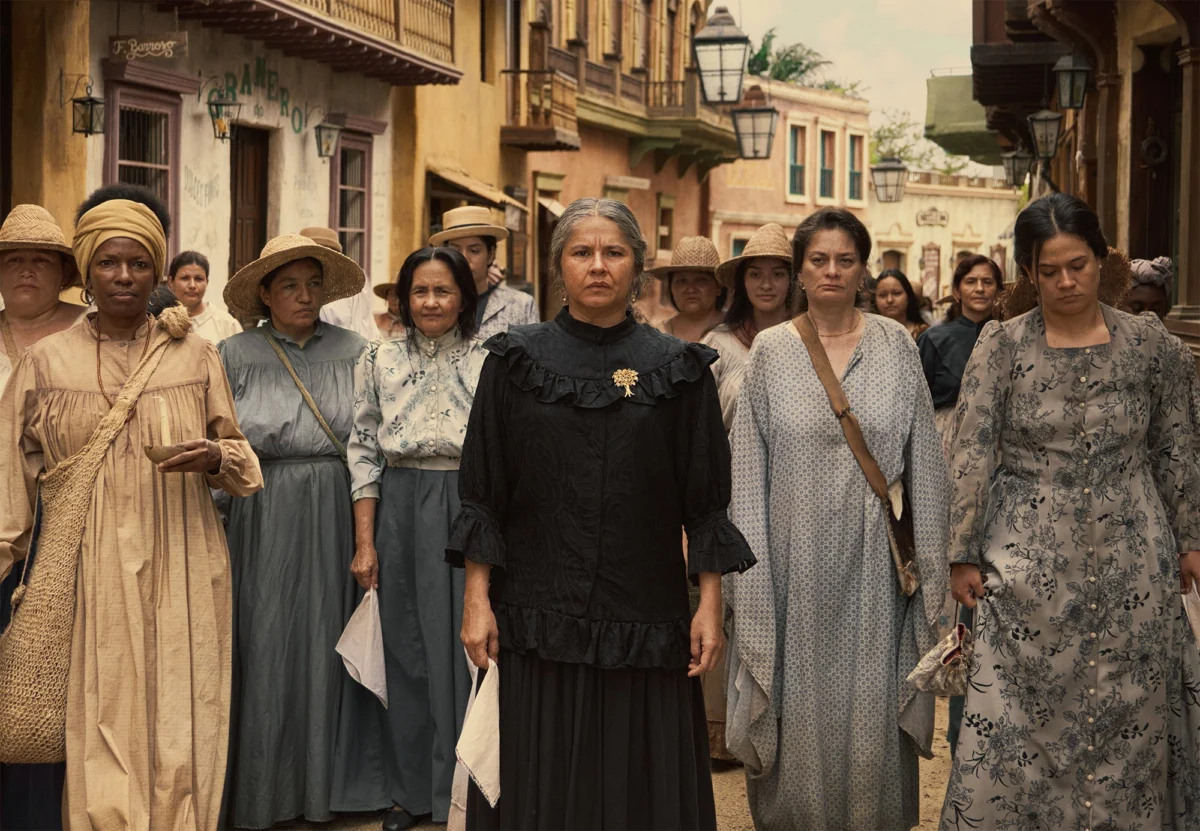
Netflix has officially released the main trailer for One Hundred Years of Solitude: Part Two, signaling the imminent grand conclusion of its ambitious adaptation of Gabriel García Márquez’s seminal novel. This second half of the epic saga, which first captivated audiences with its initial release in 2024, promises to bring the sprawling narrative of the Buendía family and the timeless town of Macondo to its destined close. Scheduled for a staggered release beginning August 5th, 2026, with the grand finale episode debuting on August 26th, this installment is poised to be a landmark event in global streaming, concluding a two-year journey that has spanned 16 episodes in its first part and an additional 7 episodes in this final chapter.
The newly unveiled preview offers a compelling glimpse into the critical moments that will shape the outcome of the Buendías’ multi-generational saga. Viewers are teased with the inexorable passage of time over Macondo, a central theme of García Márquez’s work, and the profound impact of progress on this isolated community. The trailer highlights the arrival of a banana farm and the railroad, symbols of modernization that inevitably usher in both development and unforeseen consequences for the town. Tensions among the younger generations of the Buendía family are palpable, underscoring the enduring struggles with love, oblivion, and their intertwined fate. Macondo’s transformation from its initial splendor to an inevitable decline is visually articulated, setting the stage for the fulfillment of the ancestral curse that has plagued the family from its very origins, condemning them to a century of solitude.
A Literary Colossus Brought to Life: The Journey from Page to Screen
Gabriel García Márquez’s One Hundred Years of Solitude, originally published in 1967 as Cien Años de Soledad, is not merely a novel but a cultural phenomenon. Awarded the Nobel Prize in Literature in 1982, García Márquez cemented his legacy as a master of magical realism, a literary genre that weaves fantastical elements into a realistic narrative, making the extraordinary seem commonplace. The book has sold over 50 million copies worldwide and translated into dozens of languages, establishing itself as a cornerstone of Spanish-American and universal literature. Its intricate narrative, spanning seven generations of the Buendía family, their loves, madness, wars, and fears, all set against the backdrop of the mythical town of Macondo, has long been considered one of the most challenging works to adapt for the screen.

For decades, the novel was deemed "unfilmable" due to its non-linear structure, vast cast of characters (many sharing similar names), cyclical themes, and the inherent difficulty in translating its unique blend of the mundane and the miraculous into a visual medium without losing its essential charm and profound depth. García Márquez himself was famously protective of his work, reportedly refusing adaptation offers for years, fearing that a Hollywood production would fail to capture its Latin American essence. However, in a significant shift, his estate eventually granted Netflix the rights, recognizing the platform’s global reach and its commitment to authentic, high-quality international productions. This decision marked a pivotal moment, signaling a new era for literary adaptations on a grand scale.
Netflix’s undertaking of One Hundred Years of Solitude represents a bold move in its strategy to deliver premium, culturally significant content to its vast global subscriber base. The series is not just another production; it is a cultural endeavor aimed at honoring one of the most beloved novels of the 20th century. The first part, released in 2024, set a high bar, with critics widely lauding its visual fidelity to the novel’s atmosphere, the strong performances of its ensemble cast, and its ambitious scope. While specific viewership metrics are often proprietary, industry analysts suggested that Part One garnered significant attention, particularly across Latin America and among literary enthusiasts worldwide, contributing to Netflix’s growing portfolio of acclaimed international dramas. The production budget, though undisclosed, is rumored to be substantial, reflecting the scale and ambition required to bring Macondo to life with the necessary historical detail and magical realism elements.
Chronicling Macondo’s Destiny: A Detailed Look at Part Two
Part Two of the series delves deeper into the unfolding tragedy and the cyclical nature of the Buendía family’s destiny. The initial narrative synopsis for this concluding segment provides crucial insights: following the signing of an armistice, peace remains elusive in Macondo. The Conservative faction, fearful of Colonel Aureliano Buendía’s persistent threats, plots an assassination attempt. This fateful event, by a twist of destiny, brings Fernanda del Carpio from Bogotá to Macondo. Her marriage to Aureliano, one of the twin sons of the illegitimate Arcadio, marks a significant turning point, providing Úrsula with her first legitimate heirs, a desperate hope for the continuation of the family line free from its curse.
Simultaneously, José Arcadio Segundo, the other twin, embarks on fulfilling the patriarch’s ambitious dreams of connecting Macondo to the wider world. His efforts lead to the construction of the railroad, which in turn opens the doors to the arrival of the banana company. This development, while initially perceived as progress, soon becomes the catalyst for the town’s downfall. The introduction of industrialization and external economic forces disrupts Macondo’s idyllic, isolated existence, leading to social unrest, exploitation, and environmental degradation, all themes deeply explored in García Márquez’s novel. This dramatic shift ultimately fulfills Úrsula’s ominous curse: "Races condemned to one hundred years of solitude did not have a second opportunity on earth." The series promises to depict the harrowing consequences of this progress, as Macondo’s splendor yields to an inevitable decline, culminating in the complete manifestation of the solitude that has haunted the Buendía lineage for a century.

The ensemble cast tasked with bringing these iconic characters to life includes Julián Román in the dual role of José Arcadio Segundo and Aureliano Segundo, with Jorge Quintero portraying the younger versions of these twins. Claudio Cataño embodies the pivotal character of Aureliano Buendía, whose military exploits and philosophical struggles are central to the early generations. Marleyda Soto takes on the matriarchal figure of Úrsula Iguarán, whose resilience and prophetic insights anchor the family through its tumultuous history. María Adelaida Puerta portrays Amaranta Buendía, another complex character whose unrequited loves and personal tragedies contribute to the family’s pervasive sense of solitude. These actors, under the guidance of the creative team, are tasked with navigating the intricate emotional landscapes and the magical elements that define the novel.
Cast and Creative Forces Behind the Epic
The ambitious adaptation is brought to the screen by a dedicated team of filmmakers. Episodes are directed by the acclaimed Laura Mora Ortega and Carlos Moreno. Laura Mora Ortega, known for her compelling work on films such as Killing Jesus and The Kings of the World, and series like "Frontera Verde," brings a nuanced understanding of Colombian storytelling and a sensitive directorial hand. Carlos Moreno, director of Dogwashers and "The Final Score," contributes his distinct vision to the series, ensuring a consistent artistic quality across the expansive narrative.
The Herculean task of adapting García Márquez’s dense and poetic prose for television fell to a talented writing team comprising José Rivera, Natalia Santa, Camila Brugés, and María Camila Arias. Their challenge was not merely to translate the plot but to capture the novel’s unique voice, its profound themes, and its distinctive magical realism without alienating either long-time fans or new viewers. Executive producers Juliana Flórez Luna, Andrés Calderón, Carolina Caicedo, Laura Mora, José Rivera, Rodrigo García (García Márquez’s son), and Gonzalo García Barcha (García Márquez’s other son) have overseen the project, ensuring its fidelity to the original text while allowing for the necessary creative interpretations for a modern screen adaptation. The involvement of García Márquez’s sons as executive producers further underscores the family’s commitment to preserving the integrity of their father’s masterpiece.
A Chronology of Solitude: Key Dates in the Adaptation’s Journey

- 1967: One Hundred Years of Solitude by Gabriel García Márquez is first published, quickly achieving global acclaim.
- 1982: Gabriel García Márquez is awarded the Nobel Prize in Literature, further cementing the novel’s status as a literary masterpiece.
- Early 2020s (Estimated): Netflix secures the adaptation rights, a historic moment given García Márquez’s previous reluctance for screen adaptations.
- 2024: One Hundred Years of Solitude: Part One (comprising 16 episodes) premieres globally on Netflix, introducing audiences to the Buendía family and Macondo. The series garners significant critical attention and viewership, particularly in Latin America.
- July 17, 2026: Netflix releases the main official trailer for One Hundred Years of Solitude: Part Two, generating considerable anticipation for the series’ conclusion.
- August 5, 2026: One Hundred Years of Solitude: Part Two begins streaming on Netflix worldwide, offering the first set of episodes from its 7-episode final installment.
- August 26, 2026: The Grand Finale episode of One Hundred Years of Solitude: Part Two debuts on Netflix, bringing the epic saga of the Buendía family and Macondo to its climactic close.
Anticipation and Critical Reception: The Stakes for the Finale
The release of Part Two carries significant weight. Part One was met with generally positive reviews, with many critics commending its visual splendor, its ambitious scope, and its courageous attempt to tackle a narrative long deemed "unadaptable." Audiences, particularly those familiar with the novel, expressed appreciation for the series’ commitment to the source material’s magical realism and its intricate character development. However, the complexity of the novel also presented challenges, with some viewers finding the large cast and cyclical nature of events initially difficult to follow.
For Part Two, the stakes are even higher. The conclusion of such an iconic story demands a resolution that is both faithful to García Márquez’s vision and satisfying for a global audience. The creative team faces the immense pressure of delivering an ending that captures the novel’s poignant sense of destiny, the fulfillment of the curse, and the ultimate solitude that defines the Buendía lineage. The success of Part Two will not only determine the legacy of this specific adaptation but also influence how future major literary works are approached by streaming platforms.
The series has a profound cultural impact, especially across Latin America. For many, One Hundred Years of Solitude is more than a book; it is a foundational text that speaks to the region’s history, identity, and unique blend of reality and myth. The Netflix adaptation, produced with a primarily Latin American cast and crew, represents a powerful affirmation of regional storytelling on a global stage. Its success could further open doors for other Latin American literary giants to receive similar high-profile adaptations, fostering a deeper appreciation for the continent’s rich narrative traditions.
The Broader Implications: Netflix’s Literary Legacy

Netflix’s decision to invest heavily in One Hundred Years of Solitude is indicative of a broader trend in the streaming industry: the pursuit of intellectual property with deep cultural resonance and global appeal. In an increasingly competitive landscape, securing the rights to a beloved novel like García Márquez’s offers not just content, but a built-in audience and critical prestige. This strategy aligns with Netflix’s efforts to diversify its offerings beyond traditional Hollywood fare and cater to diverse cultural tastes worldwide.
The successful execution of this series could set a new standard for literary adaptations. By demonstrating that even the most complex and revered novels can be faithfully and compellingly translated to the screen, Netflix is paving the way for a new era of global storytelling. This could encourage other platforms to take similar risks, leading to a richer and more varied landscape of prestige television, drawing from the vast repository of world literature.
Furthermore, the series serves as a powerful testament to the enduring power of Gabriel García Márquez’s storytelling. Decades after its publication, One Hundred Years of Solitude continues to resonate with new generations, now through the medium of streaming television. The adaptation introduces the novel to audiences who might not have encountered it otherwise, potentially sparking renewed interest in the original text and in magical realism as a genre. This cross-pollination between literature and screen media enriches both, ensuring that timeless stories continue to find new forms of expression and new avenues for engagement.
Conclusion: Awaiting the Final Chapter
As Netflix prepares to unveil One Hundred Years of Solitude: Part Two, the anticipation is palpable. The series represents not just the conclusion of a television show, but the culmination of a monumental effort to bring a literary masterpiece to life. From the intricate narrative of the Buendía family to the mythical charm of Macondo, the final episodes promise to deliver a powerful and evocative ending to a saga that has captivated readers for generations. With its blend of historical sweep, personal drama, and magical realism, Part Two is poised to solidify the adaptation’s place in the pantheon of great screen interpretations, offering a poignant reflection on destiny, memory, and the inescapable weight of solitude. The global audience now eagerly awaits August 5th and 26th, 2026, to witness the final chapter of this extraordinary journey.