

Comcast Corporation announced a definitive plan on Monday to separate its media and entertainment assets into a new, independent, publicly traded entity, a move designed to unlock value and provide strategic agility in an era dominated by streaming competition and industry-wide consolidation. The separation, which will be executed as a tax-free spinoff to existing shareholders, involves the transition of NBCUniversal and the European media giant Sky into a standalone company. This strategic pivot marks one of the most significant restructurings in the conglomerate’s history, effectively decoupling its traditional telecommunications and connectivity business from its content production and distribution arms.
The decision comes at a critical juncture for the global media industry. As legacy media companies grapple with the accelerating decline of the traditional cable television bundle and the rising costs of competing in the streaming space, Comcast’s leadership has determined that a bifurcated corporate structure is the most viable path forward. The transaction is expected to be completed in approximately one year, subject to customary closing conditions, including regulatory approvals and final board authorization. Upon completion, Comcast shareholders will hold equity in both the parent company and the newly formed media enterprise.
A Two-Pillar Strategy for a Digital Age
The rationale behind the split centers on the divergent needs of Comcast’s core business units. Brian Roberts, Comcast’s co-CEO and Chairman, articulated this vision during a call with investors on Monday, emphasizing that the technological and media sectors of the company now face "distinct" opportunities. Roberts noted that the separation would allow each entity to pursue "tailored investment priorities" and provide "strategic flexibility" that was previously difficult to achieve under a single corporate umbrella.
"As we look ahead, it has become clear that our technology and media businesses each have compelling opportunities in front of them that are distinct in nature and best pursued with dedicated focus," Roberts stated. "That is why today we announced an important next step in Comcast’s evolution. Our plan to create two separate companies, Comcast and NBCUniversal."
The announcement triggered an immediate reaction in the financial markets. Comcast shares experienced a sharp surge of as much as 17% in early trading following the news, before stabilizing to close the day with a gain of approximately 4.5%. This volatility reflects investor sentiment regarding the potential for the spinoff to realize value that has been obscured by the conglomerate’s complexity. Over the past 12 months, Comcast’s stock had plummeted by 30%, a decline largely attributed to the structural challenges facing the media industry and the erosion of the high-margin cable television business.
Leadership Transitions and Corporate Governance
The restructuring will necessitate a significant shuffle in the executive ranks to ensure continuity and specialized management for both organizations. Mike Cavanagh, who currently serves as Comcast’s co-CEO, is slated to become the CEO of the new NBCUniversal entity. Cavanagh has been a central figure in Comcast’s strategic planning and is widely credited with navigating the company through the recent shifts in the digital landscape.

Conversely, the leadership of the "remaining" Comcast—which will focus on broadband, wireless, and business services—will be spearheaded by Michael Angelakis. Angelakis, a former Chief Financial Officer of Comcast and a veteran of the private equity sector through his work at Atairos, will return to an operational role as CEO of Comcast. Brian Roberts will maintain a significant presence in both organizations, serving as a guiding figure for both Cavanagh and Angelakis as the companies transition into their new independent roles. Roberts confirmed on Monday that he would be "actively involved" in the leadership of both entities, ensuring a degree of strategic alignment during the initial years of the separation.
Defining the Asset Portfolios
The spinoff will result in two distinct companies with clearly defined operational mandates:
1. The New NBCUniversal and Sky
This entity will house the company’s vast array of content-related assets. This includes:
- Universal Film and Television Studios: The production engines behind global franchises and critically acclaimed series.
- Universal Destinations & Experiences: The global theme park division, which has seen significant investment recently, including the upcoming Epic Universe in Orlando.
- NBC and Telemundo TV Networks: The cornerstone broadcast networks serving English and Spanish-speaking audiences in the United States.
- Peacock: The company’s flagship streaming service, which remains a central component of its digital growth strategy.
- Cable Networks: A suite of lifestyle and entertainment channels, including Bravo.
- Sky: The European media and telecommunications giant, providing a massive international footprint across the United Kingdom, Germany, and Italy.
2. The Core Comcast
The remaining Comcast entity will refocus its efforts on its role as a premier connectivity provider. Its primary areas of operation will include:
- Residential Broadband: Maintaining and expanding the Xfinity internet infrastructure.
- Wireless Services: The growing Xfinity Mobile business.
- Business Services: Providing high-speed connectivity and technology solutions to enterprises.
- Cable Distribution: Managing the physical infrastructure of the domestic cable network.
The Industrial Context: Consolidation and Competition
The move by Comcast does not occur in a vacuum; it is a response to an increasingly aggressive wave of consolidation within the entertainment sector. Legacy players are racing to achieve the scale necessary to compete with tech-native giants like Netflix, Amazon, and Apple.
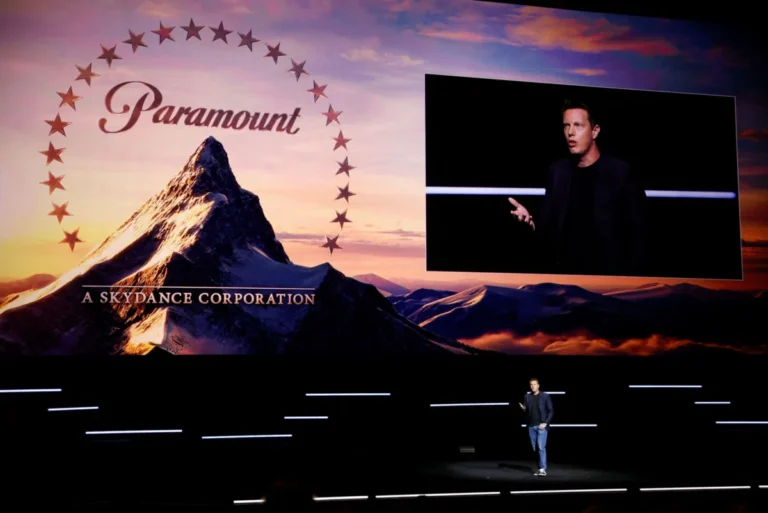
Recent industry activity underscores this trend. Paramount Global and Skydance Media completed their merger last year, creating a more integrated content powerhouse. Earlier this month, the Department of Justice granted approval for a $110 billion deal involving Warner Bros. Discovery, further concentrating market share. Additionally, Fox Corporation recently entered an agreement to acquire the streaming platform Roku for $22 billion, highlighting the premium being placed on distribution technology.
Mike Cavanagh addressed these pressures during Monday’s investor call, noting that the pace of change in the media and telecom landscapes is accelerating. "We simply don’t see these conditions changing anytime soon," Cavanagh remarked, suggesting that the spinoff is a proactive measure to ensure NBCUniversal and Sky are not hindered by the slower-growth profile of the cable connectivity business.

Financial Structuring and Long-term Implications
To facilitate a smooth transition, Comcast has outlined a specific financial roadmap. During the spinoff process, the company will pause its share repurchase program to preserve capital. Furthermore, Comcast intends to retain an ownership position of up to 19.9% in the new NBCUniversal for up to one year following the completion of the transaction. This stake is intended to be monetized "tax-efficiently" over time, providing the parent company with a significant liquidity event in the future.
The dividend policies for both companies will be finalized and disclosed closer to the completion date. Analysts suggest that the split will allow the market to value the two businesses more accurately based on their specific growth profiles. The connectivity business is expected to be valued as a stable, cash-flow-heavy utility, while the media company will be judged on its content library, theme park attendance, and streaming subscriber growth.
This is not Comcast’s first foray into restructuring this year. Earlier in 2024, the company completed a separate spinoff of its portfolio of cable television networks and digital assets—including CNBC and MS NOW—into a new public company called Versant Media. This previous move served as a precursor to Monday’s broader announcement, signaling a long-term commitment to shedding assets that no longer fit the core connectivity model.
Challenges and Future Outlook
While the spinoff offers opportunities for growth, it also presents significant challenges. The new NBCUniversal will face the daunting task of scaling Peacock to profitability in a saturated market. Furthermore, the theme park division, while currently lucrative, requires massive capital expenditures to maintain its competitive edge against rivals like Disney.
For the core Comcast business, the challenge lies in the stagnation of the broadband market. With high penetration rates and increasing competition from 5G fixed-wireless providers, Comcast must find new ways to drive revenue through its mobile and business services segments.
The separation remains subject to rigorous regulatory scrutiny. Given the current administration’s stance on media consolidation and antitrust issues, the one-year timeline is ambitious. However, because the move involves a "spin-off" (divestiture) rather than a "merger" (aggregation), it may face fewer hurdles than recent horizontal integrations in the industry.
As the media landscape continues to fracture, Comcast’s decision to split represents a high-stakes bet on specialization. By unburdening its media assets from its cable infrastructure, the company hopes to create two leaner, more responsive entities capable of surviving—and thriving—in an unpredictable digital future. Shareholders and industry observers alike will be watching closely as the one-year countdown to the birth of the new NBCUniversal begins.